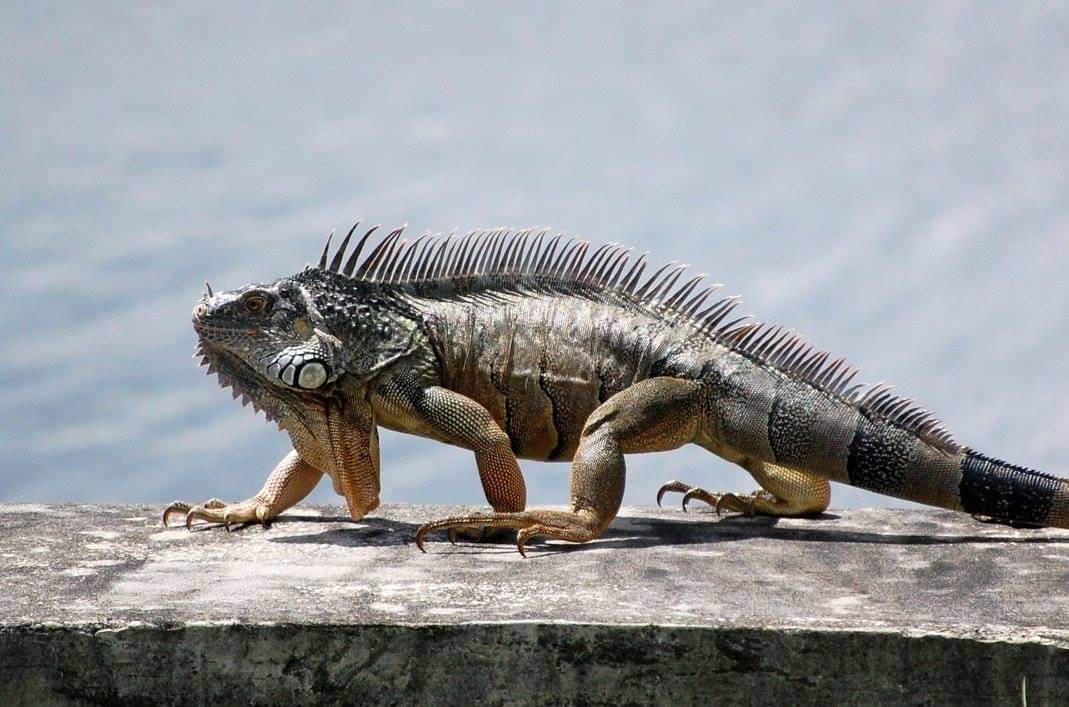
Herpetofauna (sometimes shortened to “herps”) refer to reptiles and amphibians. We get the word “reptile” from the Latin repere meaning “to creep”. The word “amphibian” comes from the Greek amphíbios, a combination of amphi, meaning “both kinds” and bios meaning “life”. So it literally translates to “both kinds of life”, since they have both an aquatic and terrestrial stage of life. Being in Florida, I unfortunately encounter many herps that have been introduced into the region, many times through the pet trade. While they can be interesting to see, these invasive species compete with native species for resources and prey upon local populations. I thought I would start with some of these since they are exotic and interesting, then move on to some of the natives.
I’ll start with a lizard that you are almost guaranteed to see if you visit the more southern part of Florida. It’s the green iguana (Iguana iguana). The name comes from the Spanish version of the word “iwana” which is what the Taino (an indigenous people of the Caribbean) called them. The juveniles are a piercing green color, which helps them blend in with vegetation until they are large enough to defend themselves. The adults develop large spikes which deter would be predators. They also have powerful legs with sharp claws, and strong tails which they use to whip potential threats. The bright color of the juveniles makes them popular in the pet trade. However, what pet stores won’t tell you is that they grow to around five feet long, sometimes reaching over six feet and weighing over 20 pounds. When they get too large to take care of, people release them into the wild. Since the tropical climate of Florida is similar to their native range of southern Central America and northern South America, they have thrived and established populations throughout the state. While this has helped spread the species throughout the state, they originated in the keys, having come over on ships from South America carrying fruit. They are detrimental to many protected species of plants, insects, and other wildlife, including the burrowing owl, which will be described in a separate album. Efforts to control this species include hunting activities and “amnesty days”, during which pet owners can surrender their unwanted pets to the fish and wildlife commission, rather than releasing them into the wild.

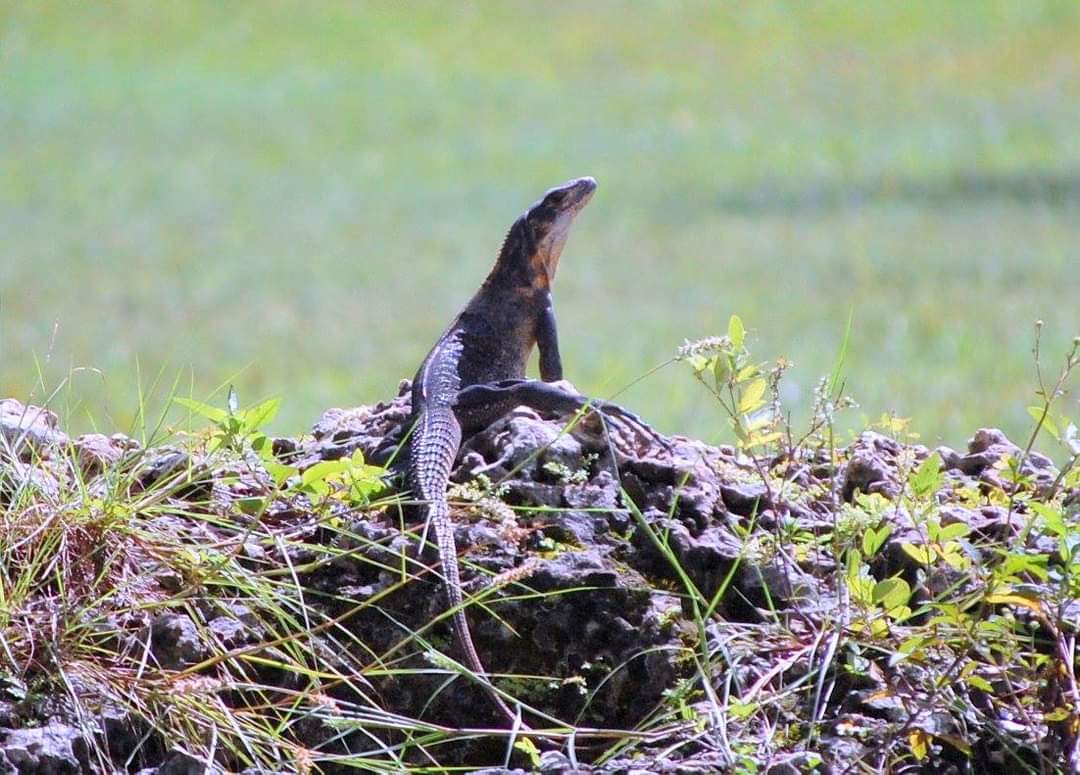
Another less common, yet equally troublesome, iguana species is the Mexican spiny tailed iguana (Ctenosaura pectinata). The genus is a combination if the Greek ctenos, meaning “comb”, and saura, meaning lizard. This is in reference to the spines on the back that resemble a comb. The species name also refers to this comb look as it is the Latin word for “combed”. They are smaller than the green iguana, reaching just over three feet for females and four feet for males. In addition to the ecological damage, this species has been known to chew through electrical and telephone cables. On Gasparilla Island, off the southwestern coast of Florida, there is a population estimated at around 12,000 individuals that are believed to be the descendants of just three pets that were released on the island in the 1970’s.
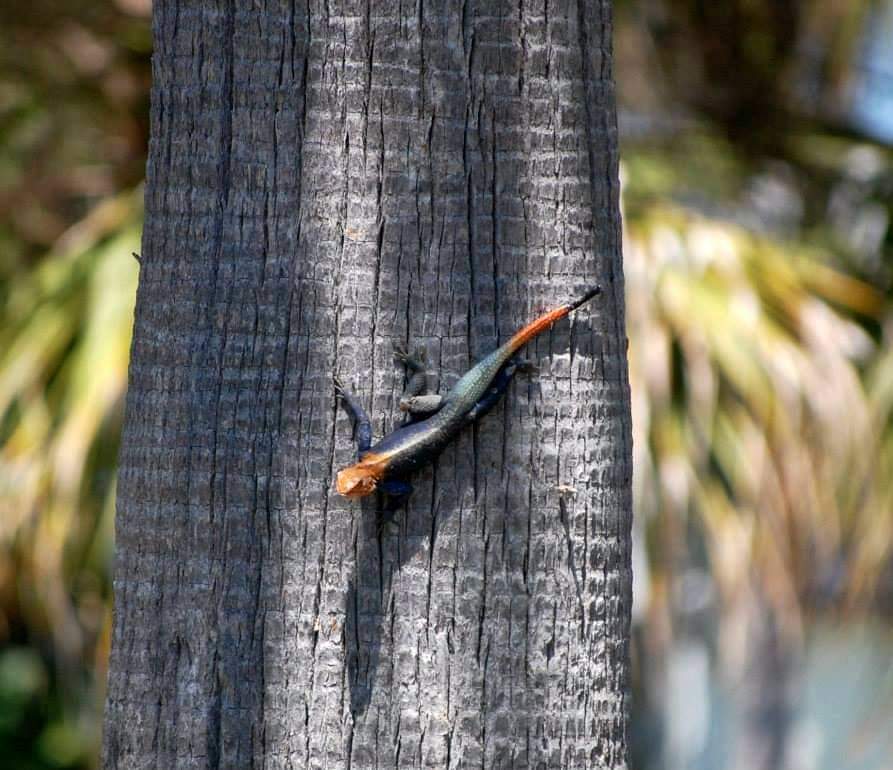
This one is a strange one. I took this photo sometime in 2014 and didn’t have another siting until just the other day (November 2020). Not having any idea what it was, I resorted to googling “lizard” and the various colors I saw on it. Eventually I found it to be a red-headed rock agama (Agama agama). Much like the green iguana, the scientific name is simple. However, I have yet to find out where the name actually comes from. This is another species that has been introduced through the pet trade. As you can see, they are very colorful and are easier to keep, as they only reach a maximum length of about a foot.
A very common lizard here in Florida is the brown or Bahamian anole (Alonis sagrei). The species name is a tribute to Spanish botanist Ramón de la Sagra who, in addition to being a notable botanist, is also credited with writing the first anarchist’s journal El Porvenir (The Future). In this particular photo, you can see the fleshy extension of the neck called a “dewlap”. A male anole will produce the dewlap to attract a mate or claim ownership of territory. The brown anole is so common in Florida that many people don’t realize it is actually an exotic, invasive species. Native to Cuba and the Bahamas, it has established itself and spread very quickly through the southern US. The biggest problem that it causes is that its presence has negatively affected the behavior of the native Carolina or green anole (A. carolinensis), which is unfortunately found so infrequently now that I don’t currently have a photo of one.

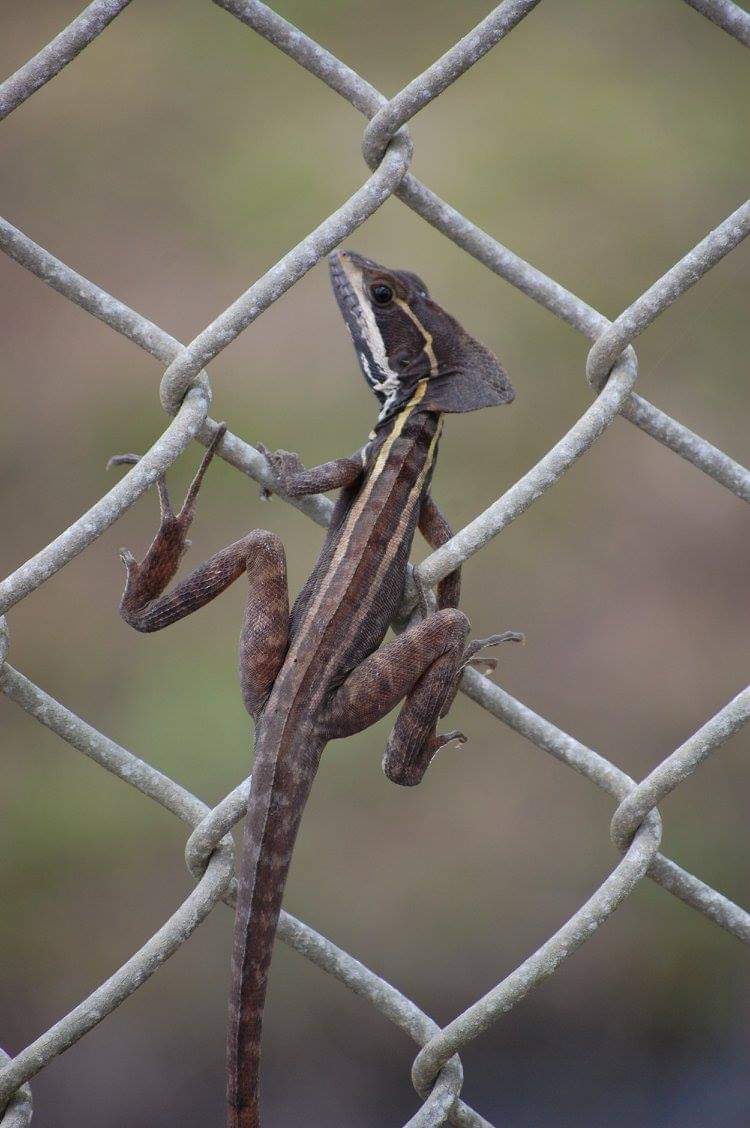
I’ve saved my favorite invasive lizard for last. I know I shouldn’t have a “favorite”, but it is important to remember that these animals may be causing a problem here, but somewhere they are fulfilling a valuable niche in the local ecosystem. As such, when you take out the fact that they are invasive and just focus on the animal itself, some of them can be quite amazing. Such is the case with the common basilisk, or Jesus Christ lizard (Basiliscus basiliscus). The name comes from the Greek basiliskos meaning “little king”. That’s because it is based off a mythological creature that was the culmination of several different animals, one being a lion. The backstory is interesting. However, what makes this particular species so interesting to me is the reason it is called the Jesus Christ lizard. It can literally walk on water. More appropriately, it can run up to 15 miles per hour across the water for a short distance. This is due to the large flanges on the back legs, which create a large surface area that keeps the lizard from sinking. The individual in this photo is a bit smaller, as they can grow up to 2 1/2 feet long.
Lizards aren’t the only herps to invade this area. There is a very large toad called a marine or cane toad (Rhinella marina) that has not only been devastating to the local ecosystem, but is also a danger to pets. The genus name is a combination of the Greek rhino and Latin suffix –ella, which together mean “little nose”. This is actually a bit controversial as many herpetologists prefer to use the original genus Bufo. When this species was first discovered it was mistakenly thought to inhabit both freshwater and marine habitats, which is where the species and common names come from. The other common name, cane toad, comes from the reason the species was introduced in the first place – to control the cane beetle (Dermolepida albohirtum) which was destroying sugar cane fields. The adults have poison glands in their skin, which make them potentially deadly to domesticated animals. Likewise, their tadpoles are toxic if ingested. Additionally, it competes with the much smaller, native southern toad (Anaxyrus terrestris). The one in the photo is a bit small, as they can get up to six to nine inches and can weigh over five pounds.

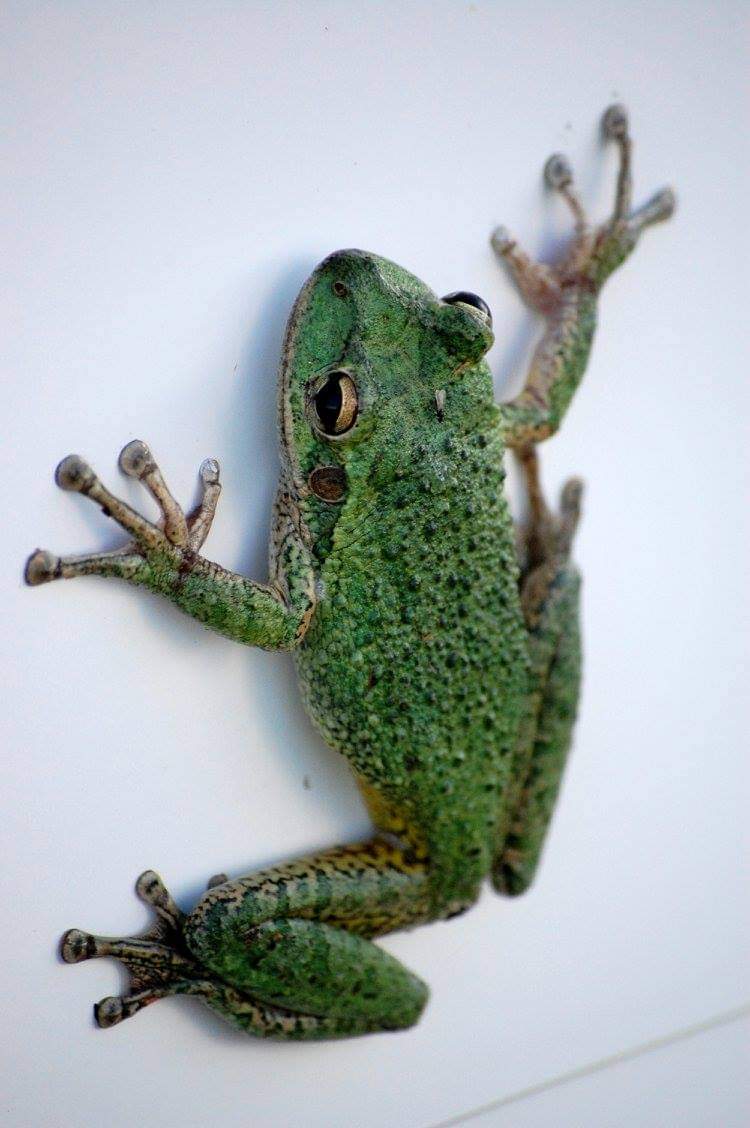
Another somewhat common invasive amphibian here in Florida is the Cuban tree frog (Osteopilus septentrionalis). The genus name comes from the Greek osteo– meaning “bone”, and pilos meaning “felt cap”. Literally translating to “bone cap”, this is due to the unique trait of the skin on the head being fused to the skull, which is an adaptation that helps prevent water loss in that area. The best information I can find on the species name is that is the Latin for “northern”. In addition to Cuba, the Bahamas, and the Cayman Islands, it is debated that this frog may have been native to Key West, and may have established itself through the rest of the state through the construction of SR-A1A in the 1940’s. In addition to out-competing the native green tree frog (Dryophytes cinereus), they can also be harmful to humans as the toxins secreted from their skin is irritating to the eyes. I generally hear this species before seeing it. The call is rather loud, sounding like a cork turning inside a wine bottle.
 BJ Quinton