Transitioning from herps to mammals, I thought I would bring up a couple of mammals that are actually quite frequently found in gopher tortoise burrows. I’ll start with one that is seen so frequently, it is often overlooked as a pest. However, it is actually a fascinating animal for a variety of reasons. If the animal itself isn’t found in a burrow, we will often find leaf litter, pine needles, and Spanish moss, which it uses for bedding. I’m talking about the Virginia opossum (Didelphis virginiana). The word “opossum” itself is derived from an old Native American term wapathemwa, meaning “white animal”. The genus Didelphis is a combination of the Greek di meaning “two” and delphis meaning “womb”. This is due to the unique way that baby possums develop. Newborns are born in just under two weeks and are no larger than a nickel. They climb into the pouch (or second womb) to develop for another few months. It is in the pouch that the mother provides the milk to her young. The teats are arranged in an unusual way. Rather than being aligned symmetrically on either side of the body, they are arranged in a circle of twelve with another one in the center. When they are older, they will crawl onto the mother’s back. When one falls off of her back, whether on purpose or by accident, it is on its own (a great reason not to disturb them if you see them).
Another unique trait of this species is their ability to “play possum”. When threatened, this species hisses, drools, and shows its teeth (50 of them – the most of any North American land mammal), as the one in the photo is doing. However, when stricken with extreme fear, it will “play dead”. What most people don’t realize is that this is actually involuntary. The muscles tense, the heart rate slows, and even the breathing can get so shallow it is hardly recognizable. Additionally, it may secret a foul-smelling fluid, adding to the illusion of a dead animal. Sometimes the recovery can take several hours. This is why it is so important to try to avoid what may look like roadkill on the side of the road. There are two main myths about possums that are completely untrue. One is that they hang by their tails when they sleep. While they do have prehensile tails, they use them for balance and as an extra sort of hand to hold onto branches. And while they can be picked up by their tails, they do not hang from them. Another is that they are rabies carriers. In reality, the opossum’s body temperature is so low (mid-90’s), that is is extremely unlikely that the virus can survive.
One last interesting fact I feel I need to sneak in here – opossums have a protein in their blood which neutralizes snake venom, basically making them immune to venomous snake bites. They are currently being studied to see how this might aide in producing antivenoms.

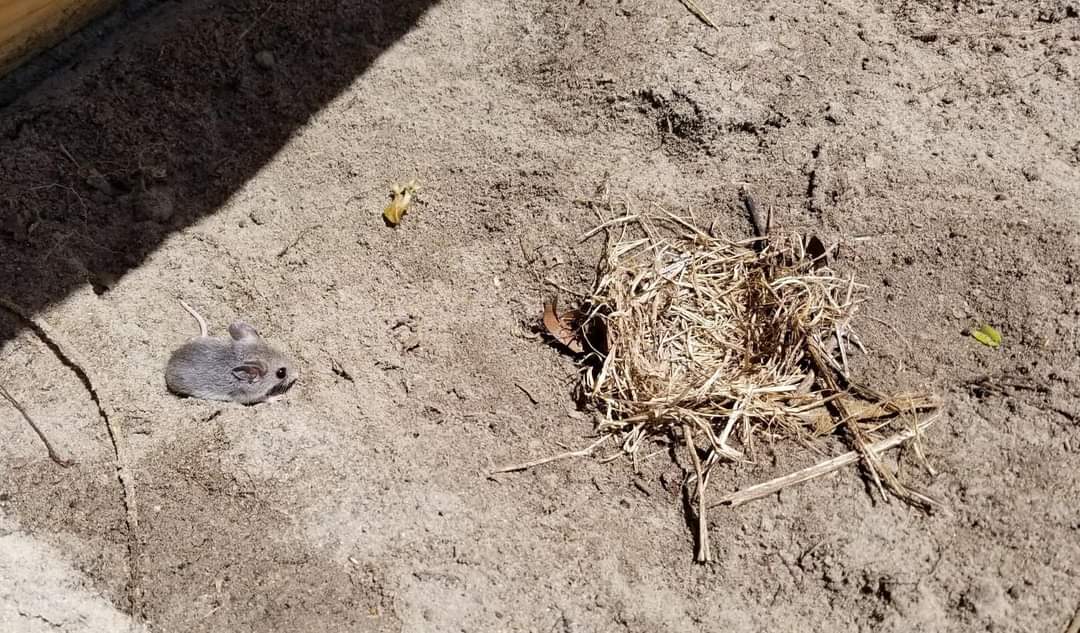
Mice are what we more commonly find in tortoise burrows. Mice belong to the rodent family, named for the Latin rodere meaning “to gnaw”. One that is very common, not only in tortoise burrows but really anywhere they can find a hiding place is the house mouse (Mus musculus). Like the opossum, they will bring grass clippings and other debris into a burrow to make a nest. The one below was just pulled out of a burrow and is a little disoriented, but we monitored it and when it got its bearings, it took off for another hiding spot. Below that is one with a nest that I found under a board.

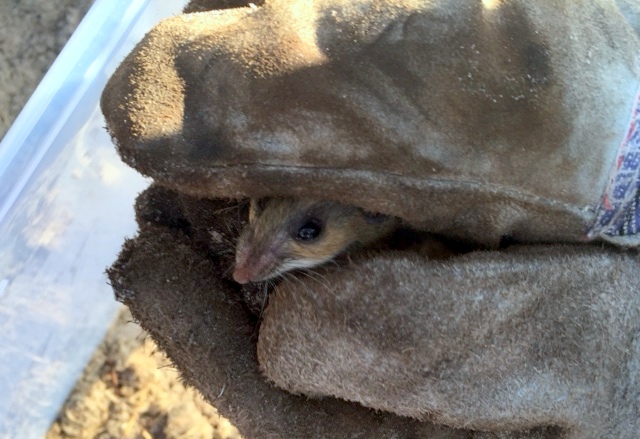
Another mouse that we sometimes find in tortoise burrows is the cotton mouse (Peromyscus polionotus). When one of these is found, it is very important that we take a very close look at it. At first glance, the cotton mouse looks very similar to the Florida mouse (Podomys floridanus). While it was delisted a few years ago (actually just days before this photo was taken), the Florida mouse used to be a state listed species and it is good practice to record whenever one is observed. The way we were able to tell this was a cotton mouse and not a Florida mouse was by looking at its feet. Mice have small foot pads called “plantar tubercles” on the bottoms of their feet. The Florida mouse has five of these tubercles on each foot, whereas all other mice have six.
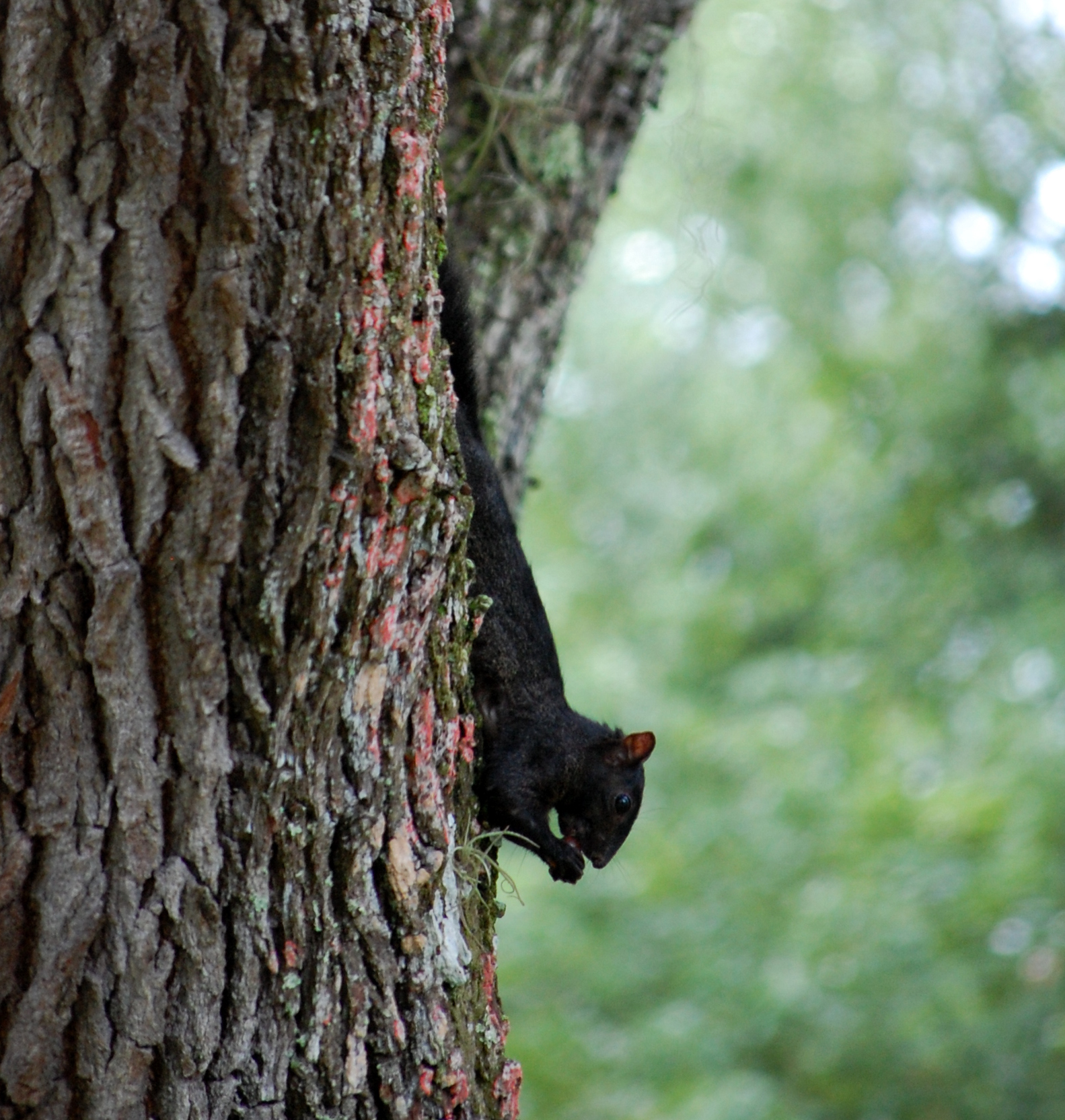
It’s funny, when you hear the word “rodent”, for many people rats and mice are the only things that come to mind. However, there is another rodent that is extremely common throughout Florida and most of the eastern US. That is the Eastern gray squirrel (Sciurus carolinensis). Even when you aren’t seeing these guys brazenly running in front of your car or trying to steal from your bird feeder, you’ve probably heard their calls. Squirrels have a few different alarm calls that you may be familiar with and just never realized it. The fist is called a kuk and is basically a short, high-pitched bark. Often following this is a sound known as a quaa, which is like a squeaky, drawn out kuk. Finally, they have a moan which is also drawn out but less raspy than a quaa, sounding similar to a squeaky door hinge. Studies have shown that these calls, in combination with tail movements, warn approaching intruders and can signal to other squirrels potential dangers, including the specific type of predator.
While squirrels usually eat seeds, nuts, berries, etc., they will occasionally like frogs, insects, and smaller mammals and birds. They have also been known to gnaw on antlers, turtle shells, and bones to gain extra minerals that their normal diet lacks. That’s likely what is happening in the photo below, where I found a squirrel nibbling at a chicken wing bone it found in a park. Below that is what is known as a “melanistic” gray squirrel. Out of the hundreds of thousands of squirrels I must have seen in my lifetime, this is the only one I’ve ever encountered with melanism. This is the condition of the dark pigment in the skin, known as melanin, having increased development, giving the entire animal a dark black color.

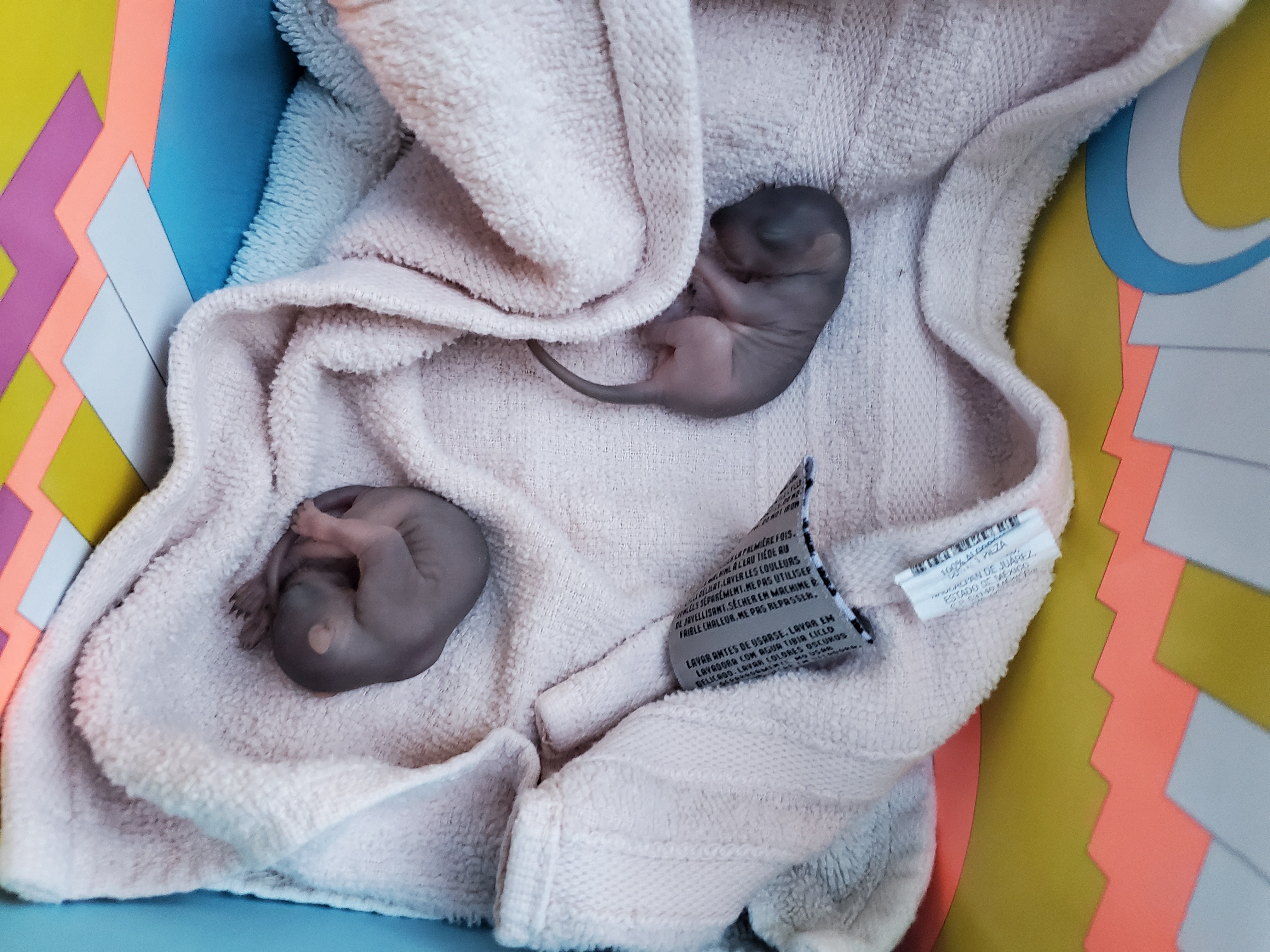
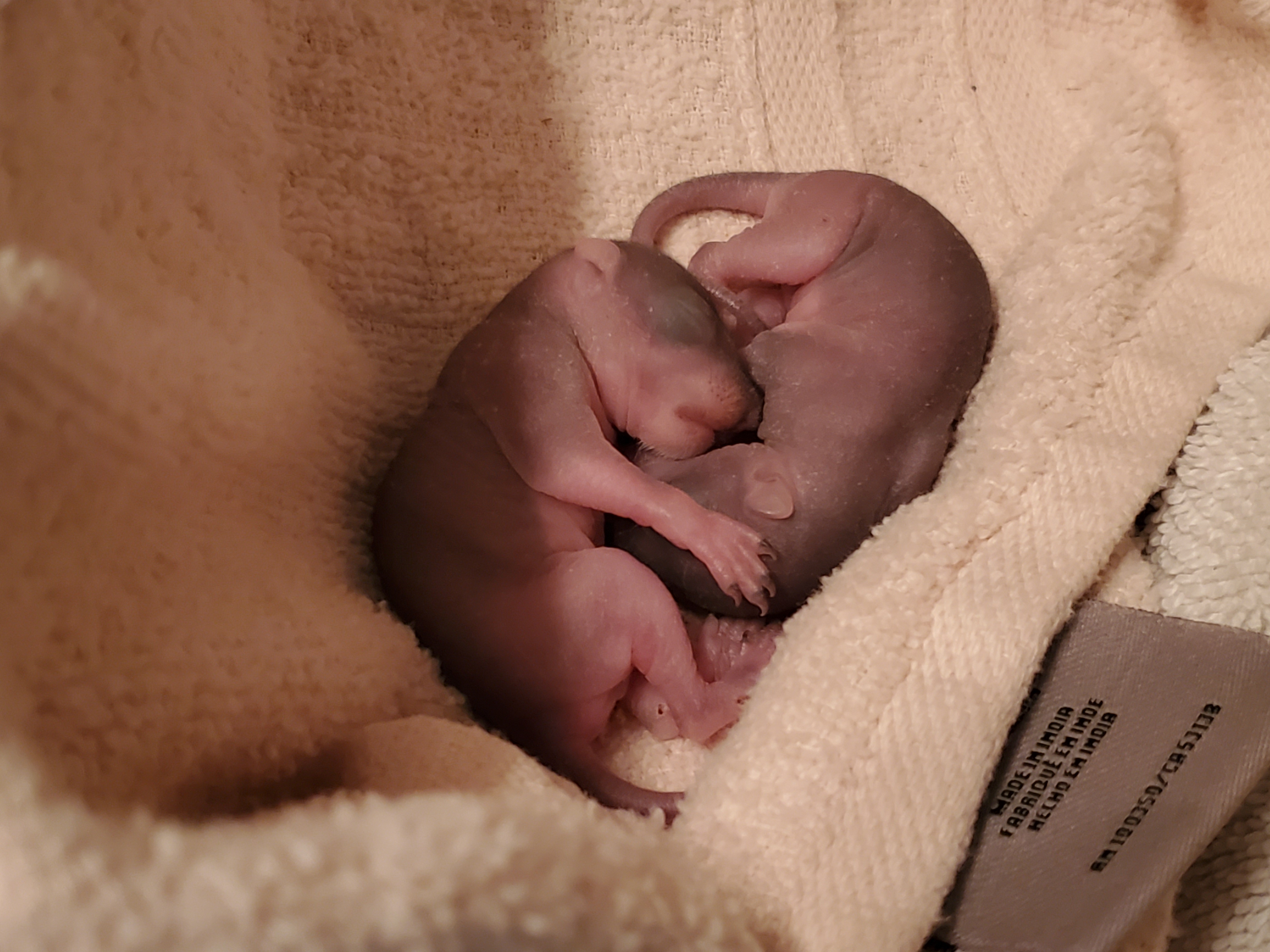
Squirrels nest in trees building their nests, which are called “dreys”, out of sticks, leaves, and grass. They will typically have between one and four young, which are referred to as “kittens” or “kits”. I was walking my dog one morning and came across a some kits on the sidewalk next to a nest that appeared to have fallen from a nearby tree. The best thing to do if you ever find baby squirrels outside the nest is to leave them alone and play a squirrel call. The idea is that the mother will see her young are in danger and retrieve them. However, not only did this not work, but the way the nest was on the ground and away from the tree made me think the mother might have been grabbed by one of the many hawks in the area. So I picked them up and put them in a box with a little heating pad until they could be picked up by a wildlife rehabilitation clinic. In the time it took for them to get to me, they had actually clung to each other. Based on the lack of fur, but the appearance of darker skin color, I estimated them to be between seven and ten days old.

Many animals can be viewed as pests, yet can be pretty amazing if you take the time to learn more about them. A great example of this is the raccoon (Procyon lotor). They are also affectionately know as “trash pandas” and were once aptly described by comedian John Oliver as “essentially just kleptomaniac possums who steal your trash with their spooky little doll hands”. The raccoon gets its name from the term aroughcoune, meaning “animal that scratches with its hands” in Powhatan, an ancient, now extinct, language from the Virginia area. The scientific name is Latin and translates roughly to “pre-dog washer”. The “washer” refers to the raccoon’s behavior of foraging in the wild along shorelines. They will find something in the water, then pull it out and inspect and rub it with their front paws, removing unwanted materials, making it look like they are washing the item. In captivity, raccoons will often retrieve a food item, then bring it to a water source and dunk it in the water before consuming it. This behavior has not been observed in the wild. It is believed they do this because it is their instinct to gather food from a water source. So when they are provided food, they feel compelled to dunk it in the water so that the rest of their behavior is similar to the wild behavior, something known as a fixed-action pattern.
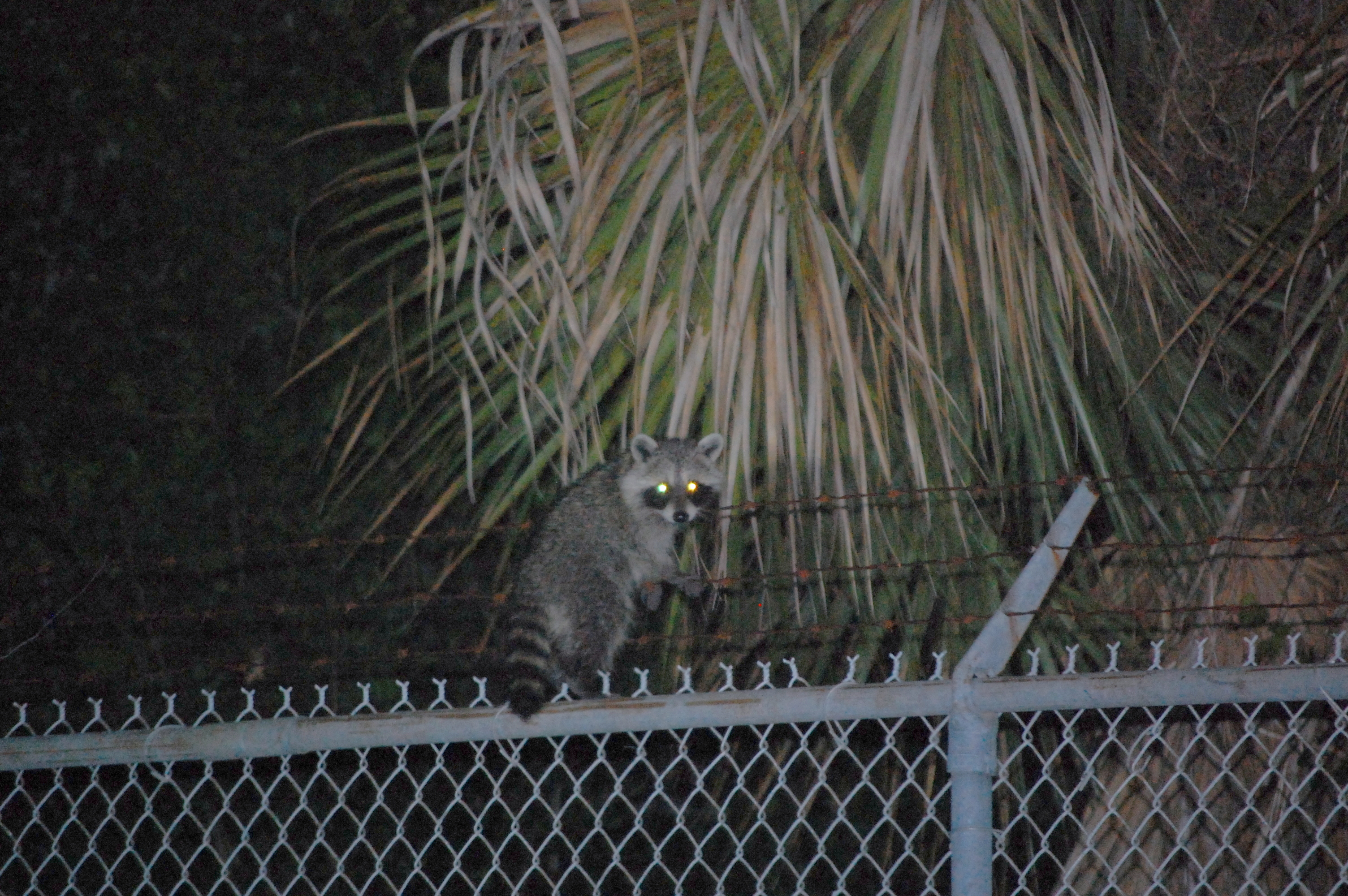
But there is more to the raccoon than just its name. One of the things that makes them so unique is that they have a fully functional thumb. While not opposable, it does help increase grip. Not only does this allow them to open containers, it also helps them grip objects, making them great climbers. The photos aren’t great because they were taken at night. But I have seen first hand how these creatures can very easily scale a fence. In addition to being able to climb up the fence, their strong back feet allow them to climb down the fence just as easily. I also saw one grab and unhook the barbed wire from the outrigger.
Fun side fact – notice how the eyes are shining brightly, like what you see in a cat. That is because, like cats, raccoons are nocturnal. Nocturnal mammals have a reflecting layer in their eyes called the tapetum lucidum (Latin for “shining layer”). This helps direct light in such a way that makes it easier to see at night. Basically, it reflects light into the retina, making more light available for sight. Anything not reflected to the retina is reflected out, causing the shiny eyes.

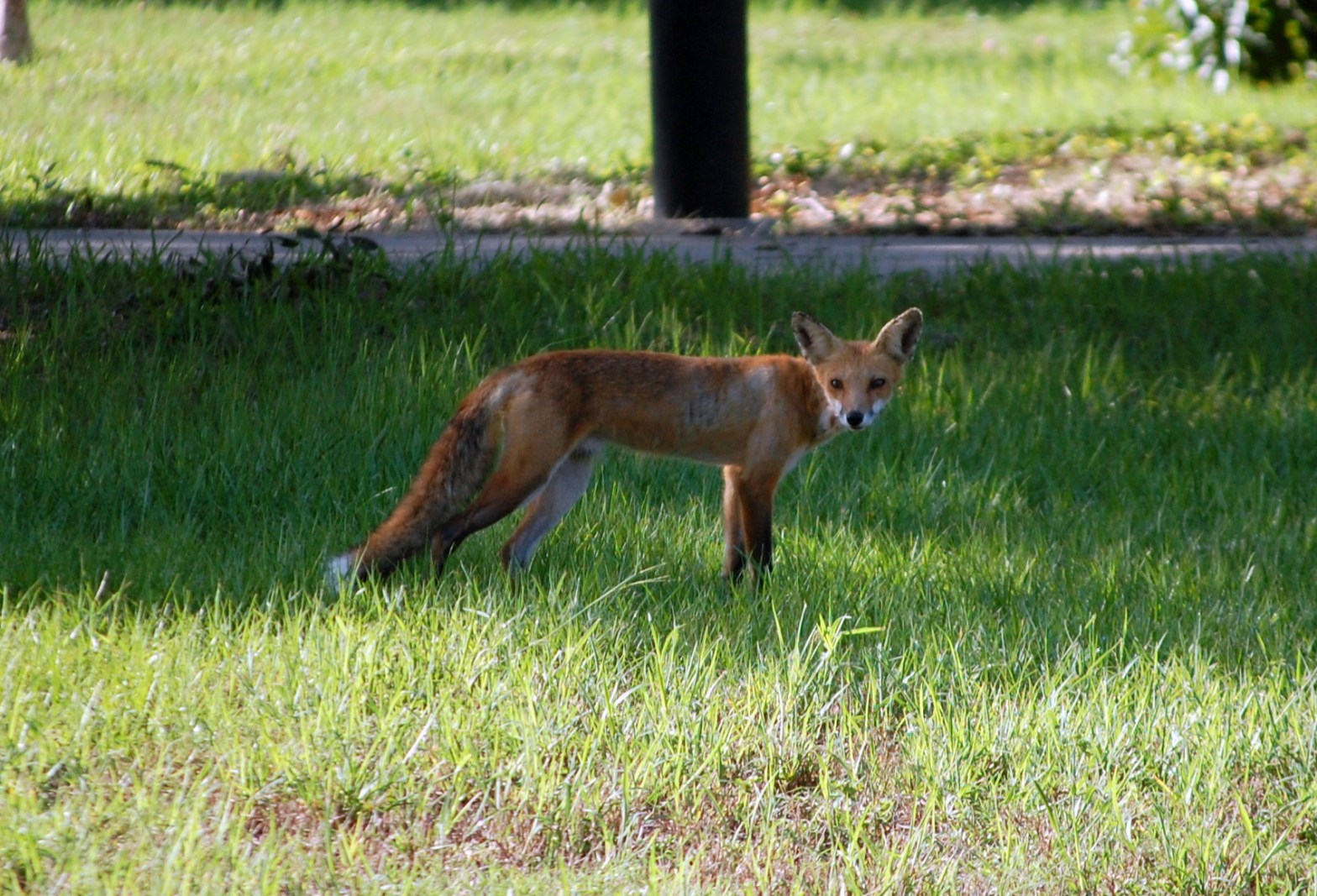
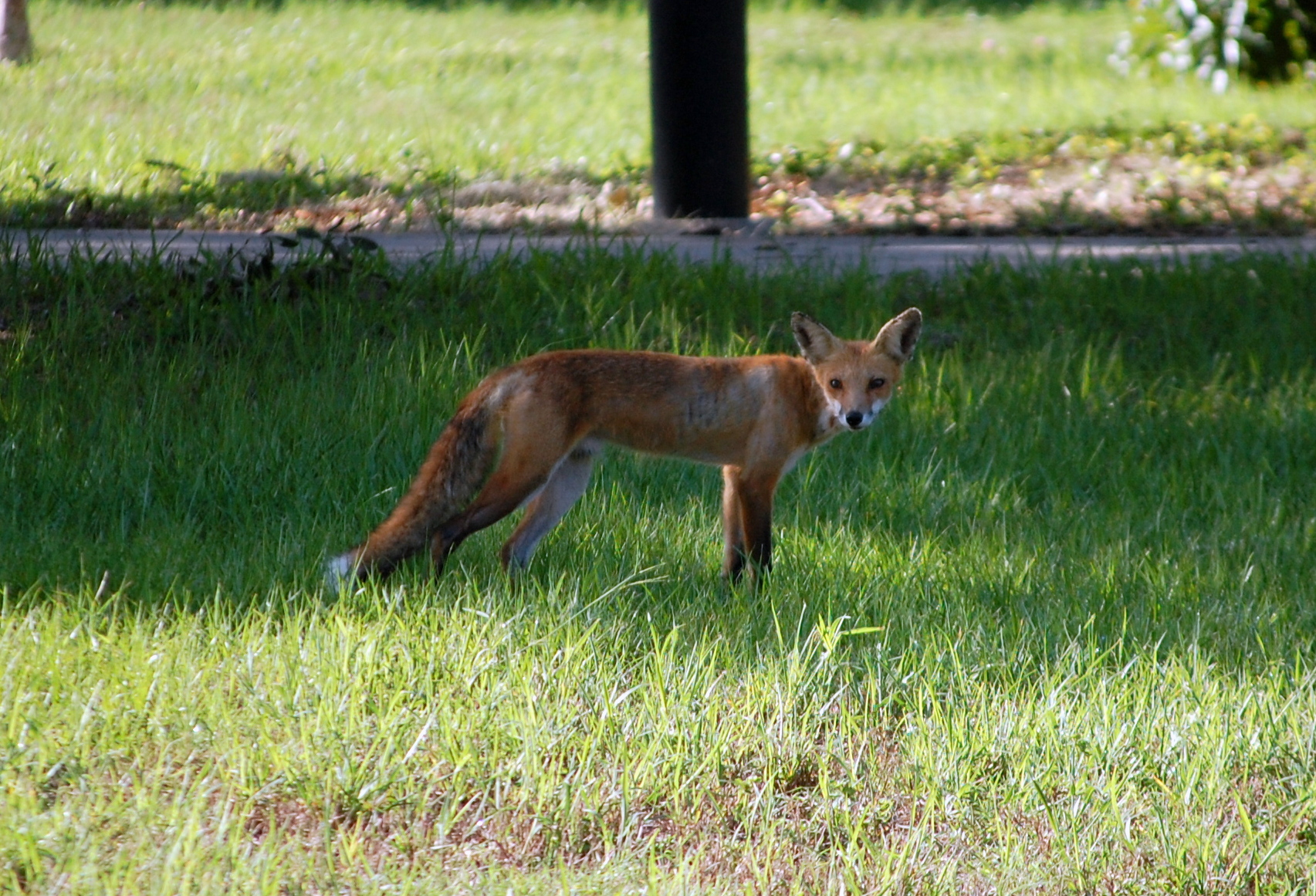
I realize that not everyone shares my love of the less pretty animals, so I thought I would close with some of our more “cute” mammals here in Florida. The first two are a bit cryptic, so they aren’t seen as often as some of the others. These are our two fox species, the gray fox (Urocyon cinereoargenteus) and the red fox (Vulpes vulpes). The gray fox can be distinguished from the red fox by the gray markings on the back and face. However, the most immediate difference, even to the untrained eye, is the tip of the tail which is black on the gray fox and white on the red fox.
The gray fox’s genus Urocyon is Greek for “tailed dog” and the species cinereoargenteus is Latin for “grey” or “silver”. It is one of only three canine species that can climb trees using its hooked claws. They have been known to create dens in hollowed out trees as high as 30 feet above the ground. Unlike the raccoon, it does not have the ability to turn its feet around and descend head first. Therefore, it descends backwards.

The scientific name of the red fox is simply the Latin word for “fox”. It’s where we get terms such as vulpecular meaning resembling a fox, and vulpine meaning related to foxes. Unlike the gray fox, the red fox makes its den underground, digging deep burrows, similar to the gopher tortoise.
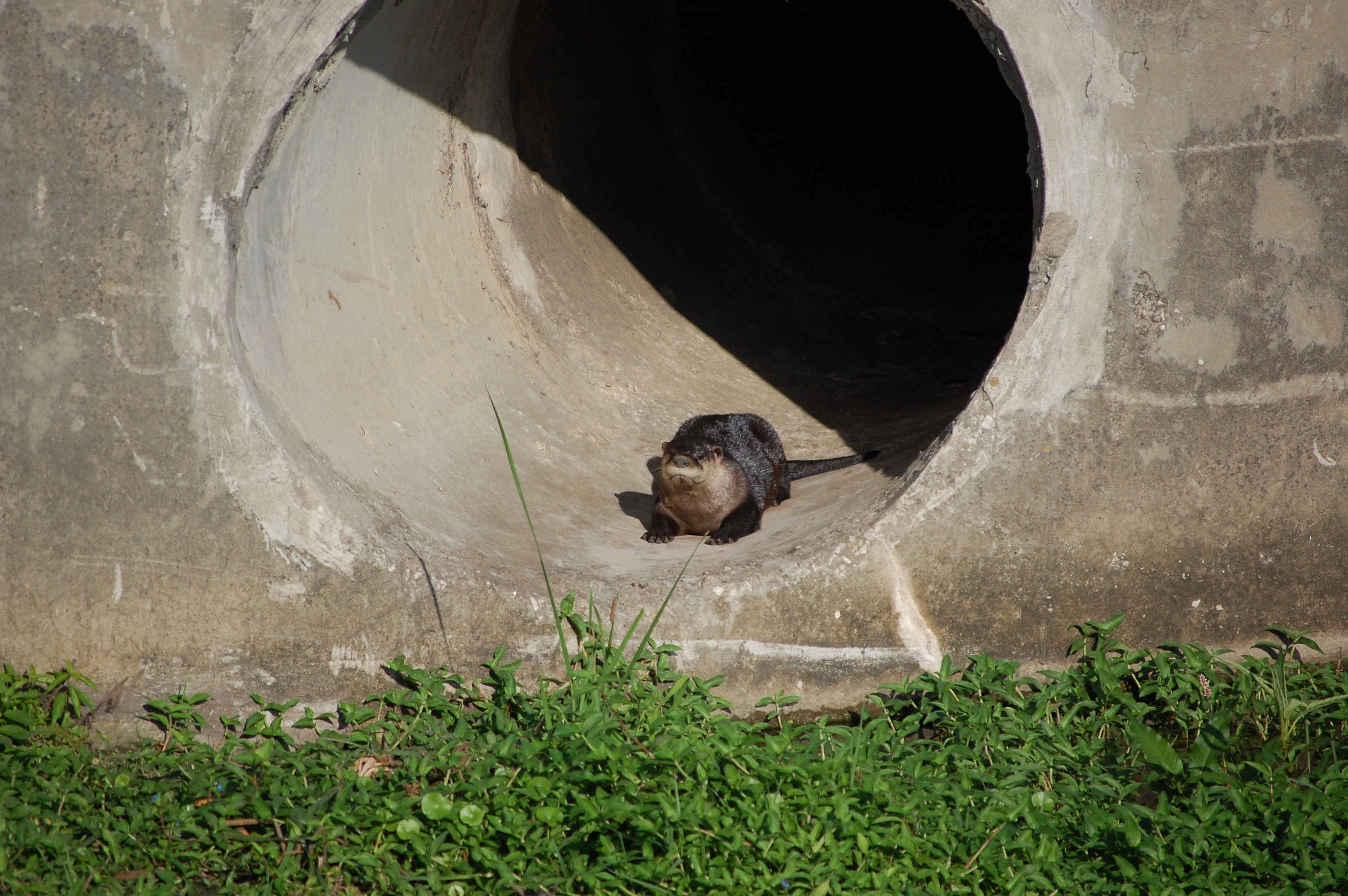
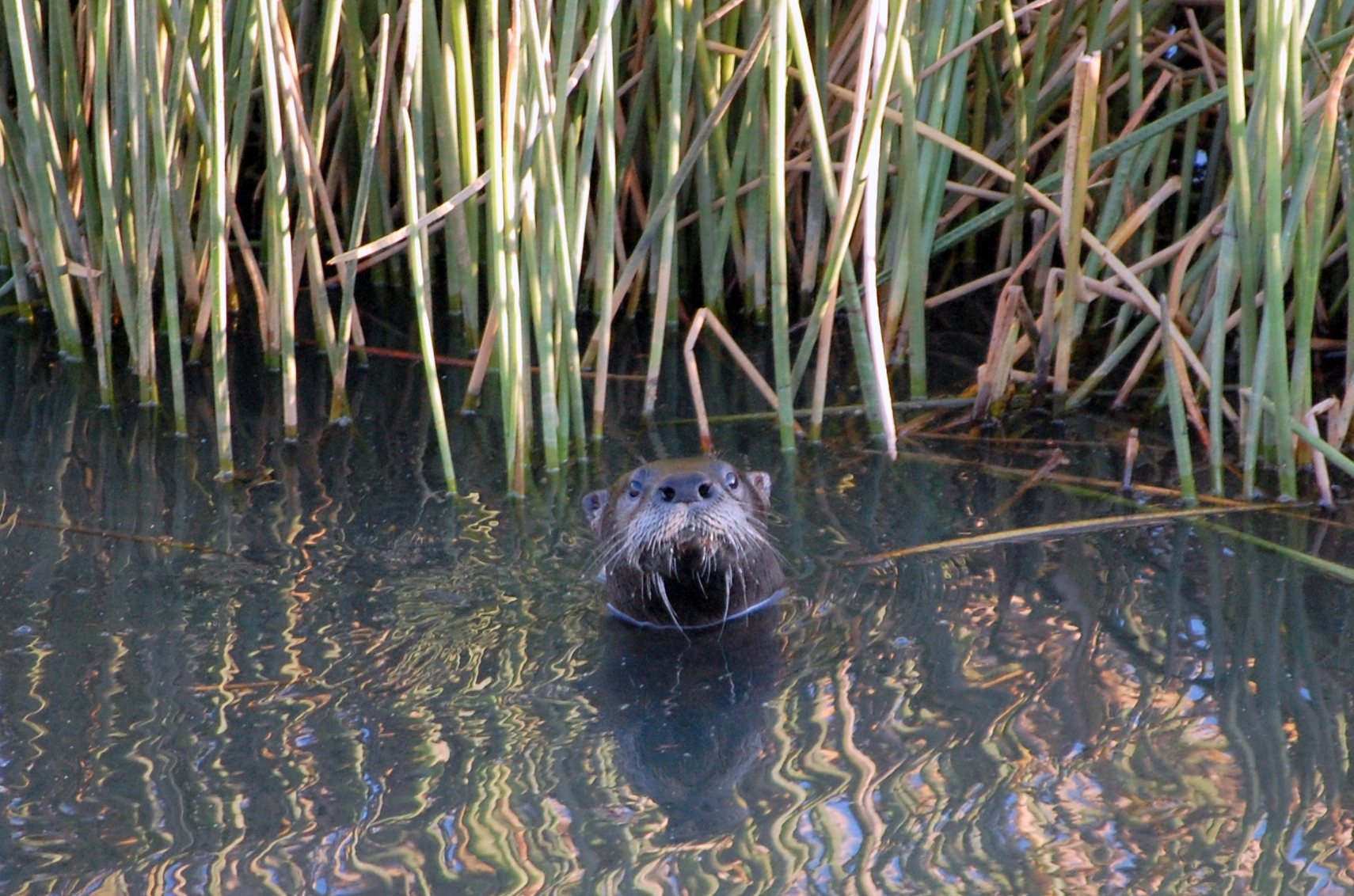
For my final Floridian mammal, I thought I would go with what is revered as one of the most lovable mammals here in Florida, the river otter (Lontra canadensis). This species is often a favorite at zoos and aquariums due to their playful nature. I have witnessed this even in the wild firsthand where I saw one on a river bank playing alone with a rock. Even after noticing me, it played with the rock for several minutes before I left the area. Otters’ eyes are equipped well for underwater vision, but it makes them very nearsighted on land. As a result, otters will frequently approach humans rather closely, not realizing what they are seeing. They have a nictitating membrane that covers the eyes and protects them while swimming, a trait they share with many other animals including cats, birds, and reptiles.
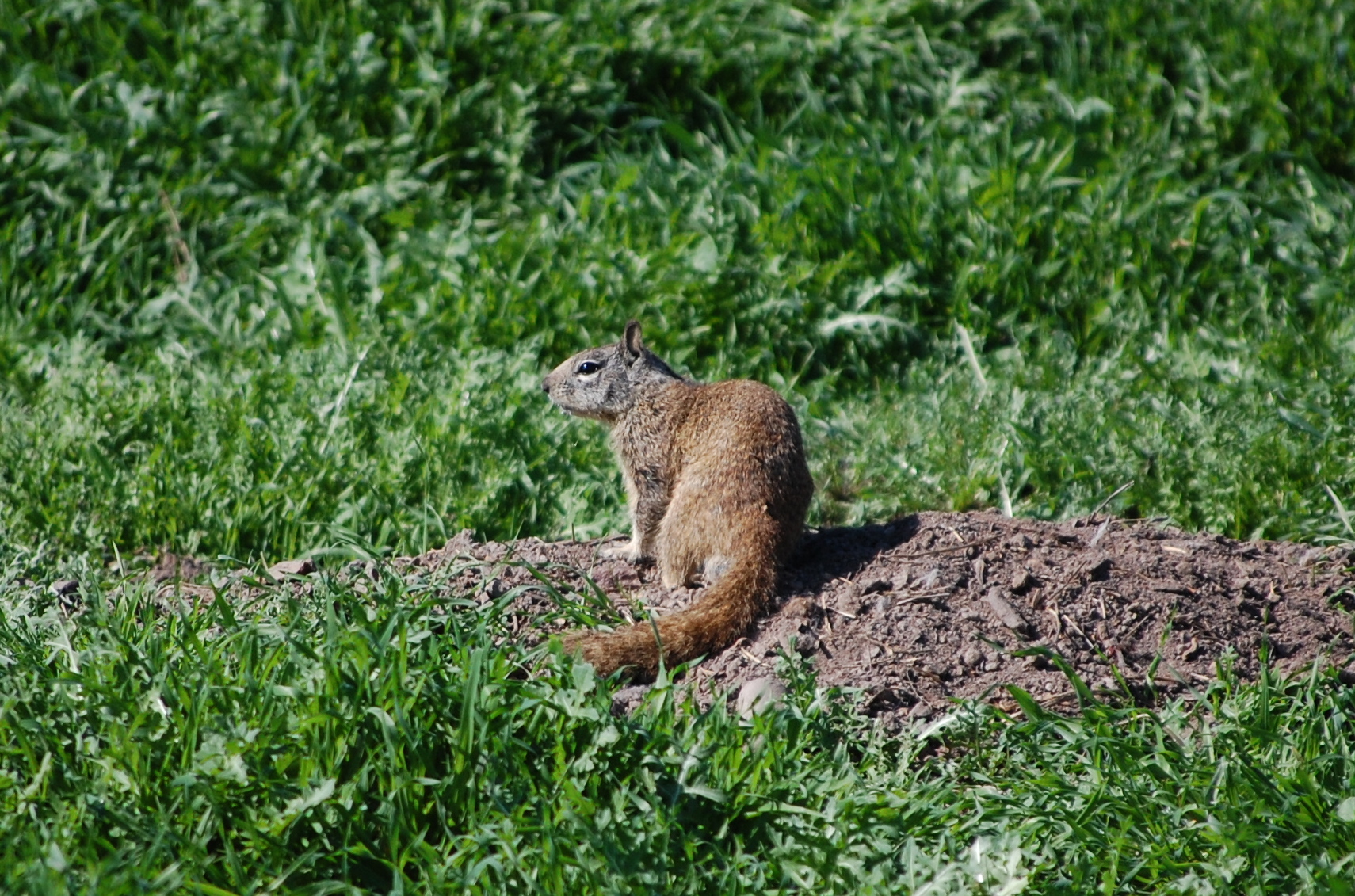
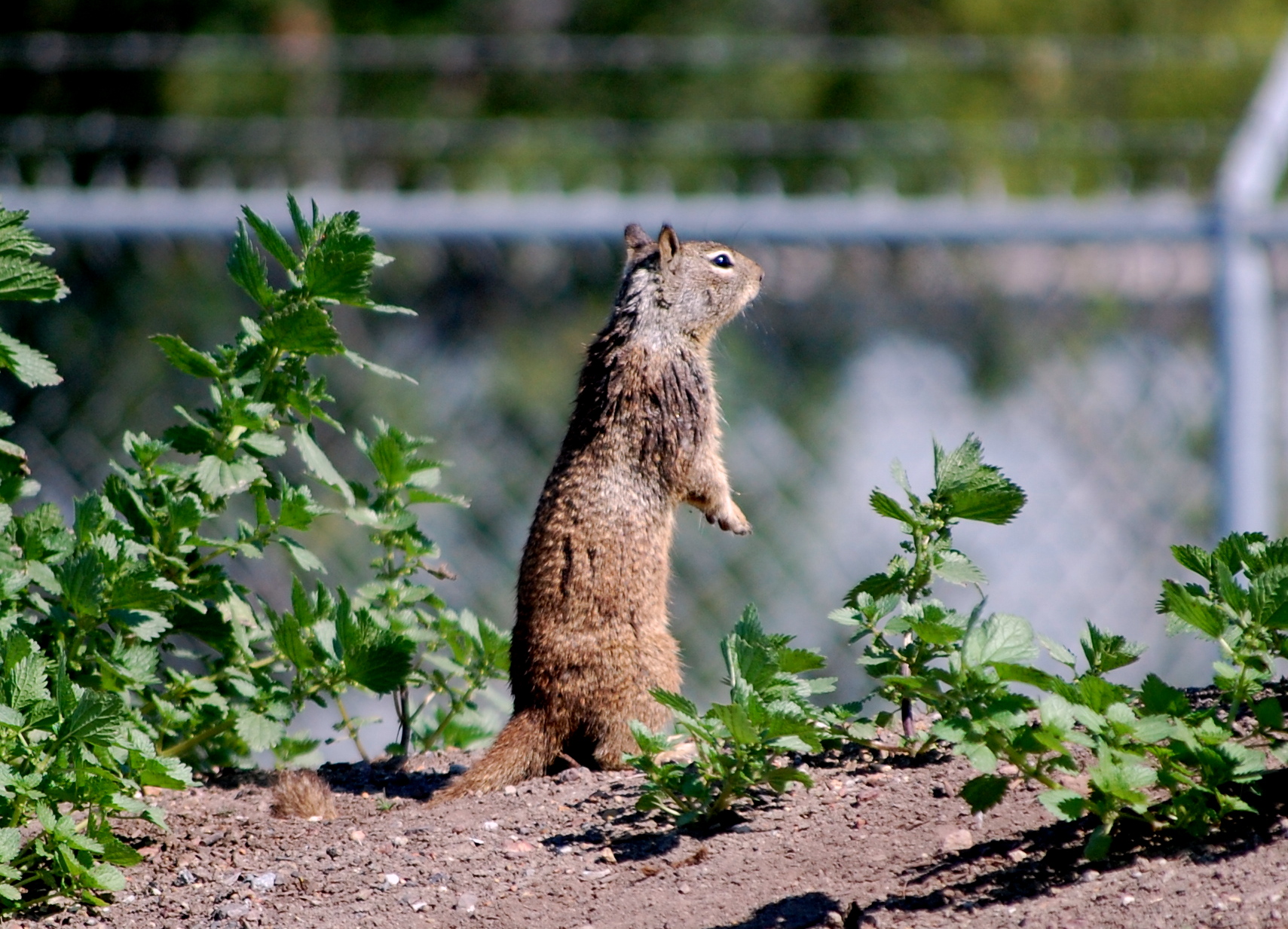
Notice I said that was going to be my last Floridian mammal. I’ve had the privilege of working in other parts of the country as well, including California which is the home of the California ground squirrel (Otospermophilus beecheyi). The genus name is a combination of the Greek otos meaning “ear”, spermatos meaning “seed”, and phileo meaning “love”. This is due to their preference for eating seeds and their ears being more predominate than those of the genus Spermophilus. Considered by some as a pest due to their tendency to feed on ornamental plants, ground squirrels live in burrows, much like gopher tortoises and burrowing owls. One of the most interesting aspects of the ground squirrel is its defense against predators, namely rattlesnakes. They exhibit a behavior known as “tail-waving”, where they will swish their tails back and forth rapidly, creating a dense heat signature. The rattlesnake, which relies on heat sensing to find their prey, will mistake this signature as being produced by something larger and faster and will often times not pursue it. They are also very vigilant, standing upright and scanning the landscape for potential threats.
 BJ Quinton