While I love and appreciate all type of wildlife, there is one group that really captured my interest over the past few years – birds. There are so many interesting facts just about birds in general. Most know that the bones of birds are hollow, but it’s not that simple. There are internal struts throughout the bones that help maintain structural integrity. The air spaces in some bones are also directly connected to the lungs and air sacs. They have a cyclical, continuous respiratory system, allowing for fresh air to pass over the lungs during both inhalation and exhalation. Their taste buds are on the roofs of their mouths. They only sleep one side of their brains at a time, literally sleeping with one eye open. They have muscles on either side of their syrinx (equivalent to larynx, AKA “voicebox”, in humans) allowing them to make two separate sounds simultaneously. I could go on and on. But I’ll let other facts creep in as I talk about each species individually. In this post I’m focusing just on birds in general and won’t be talking about the species in each photo.
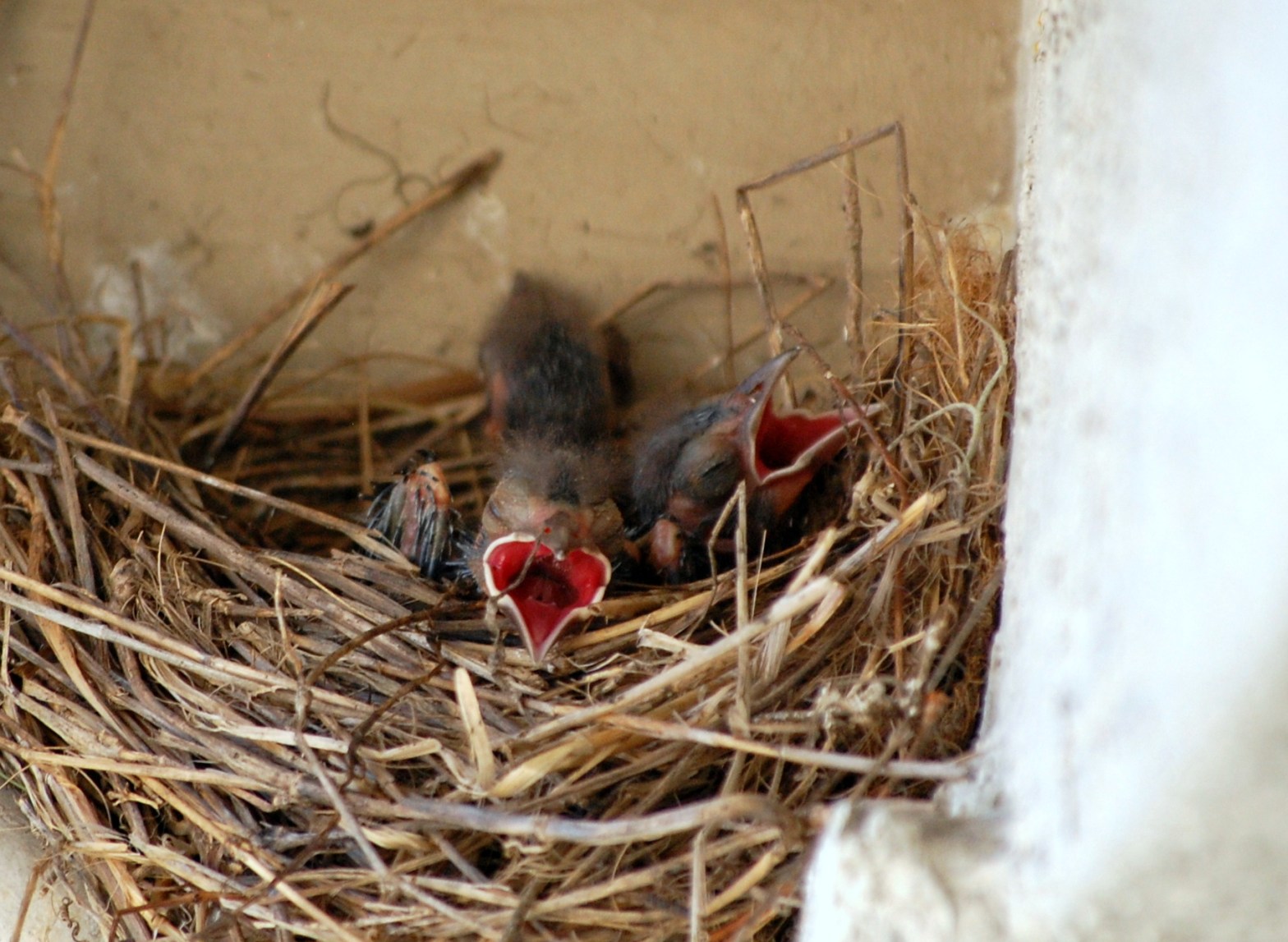
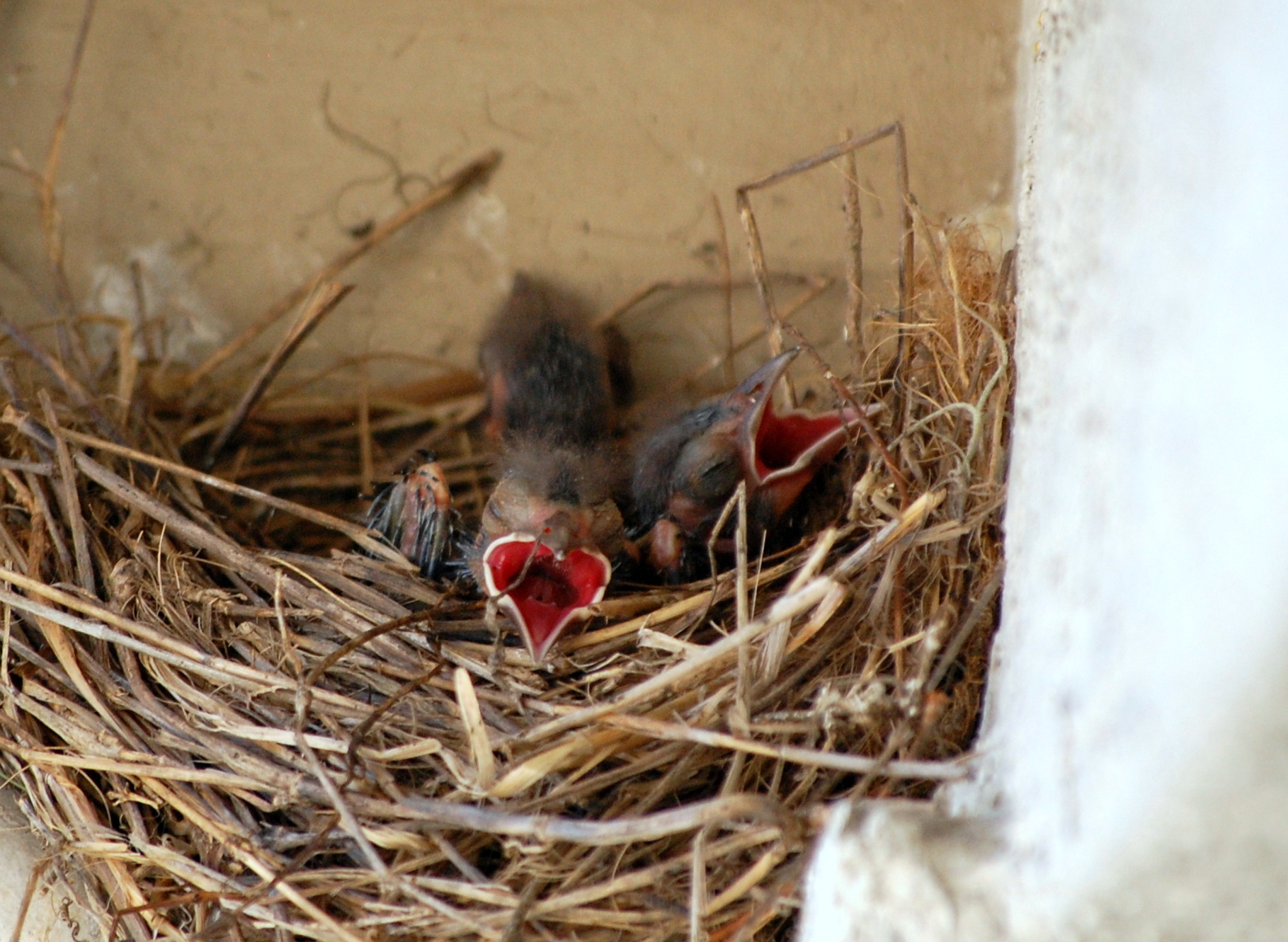
I’ll start with reproduction. Without getting into the messy details of how mating occurs in birds (feel free to look up the “cloacal kiss” if you really are interested), I’ll start with baby birds after they have hatched. There are basically two varieties of chicks with a wide range of hybrids in between. These two varieties are known as altricial and precocial. Altricial chicks are featherless, have no means of temperature regulation, and are born with eyes closed. Precocial young are feathered, can regulate temperature, and are much less dependent on the parents for food. You may recognize the bright yellow border around the mouths of the altricial chicks. This is known as a “gape flange” and serves two purposes. First, it serves as a bright target for the feeding parent to aim for when feeding. Second, it is filled with sensitive nerve endings that, when touched, stimulate the baby bird to open its mouth widely. Below are examples of altricial and precocial young, respectively, each with the same approximate age (approximately one week). I feel I should point out that, as always, I did not coax the parent away from the nest. I noticed a pattern of the parent leaving for food, kept track of the amount of time the young were left unsupervised, and got in a quick photo while the parent was gone, never disturbing the parent or young in the process.

When talking about the river otter, I mentioned something called a nictitating membrane. Where this membrane is used to protect the otter’s eyes underwater, in birds it serves more as protection from dust and other debris in the air, as well as when foraging. It can also be blinked to moisten the eye or wipe away debris, which is what is happening here. Usually you don’t see this happening because it happens so fast. This was just an incredibly lucky shot taken at exactly the right time.

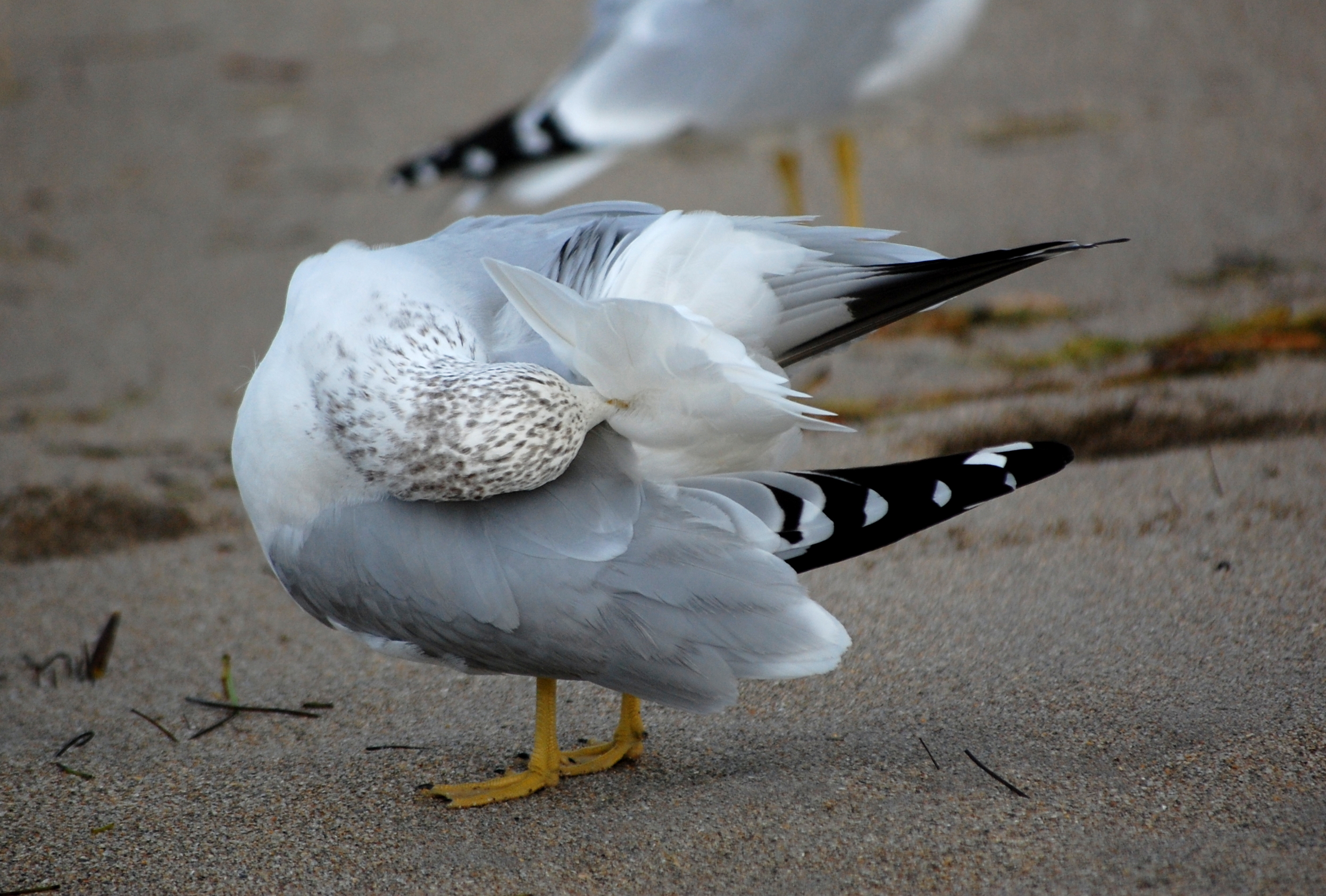
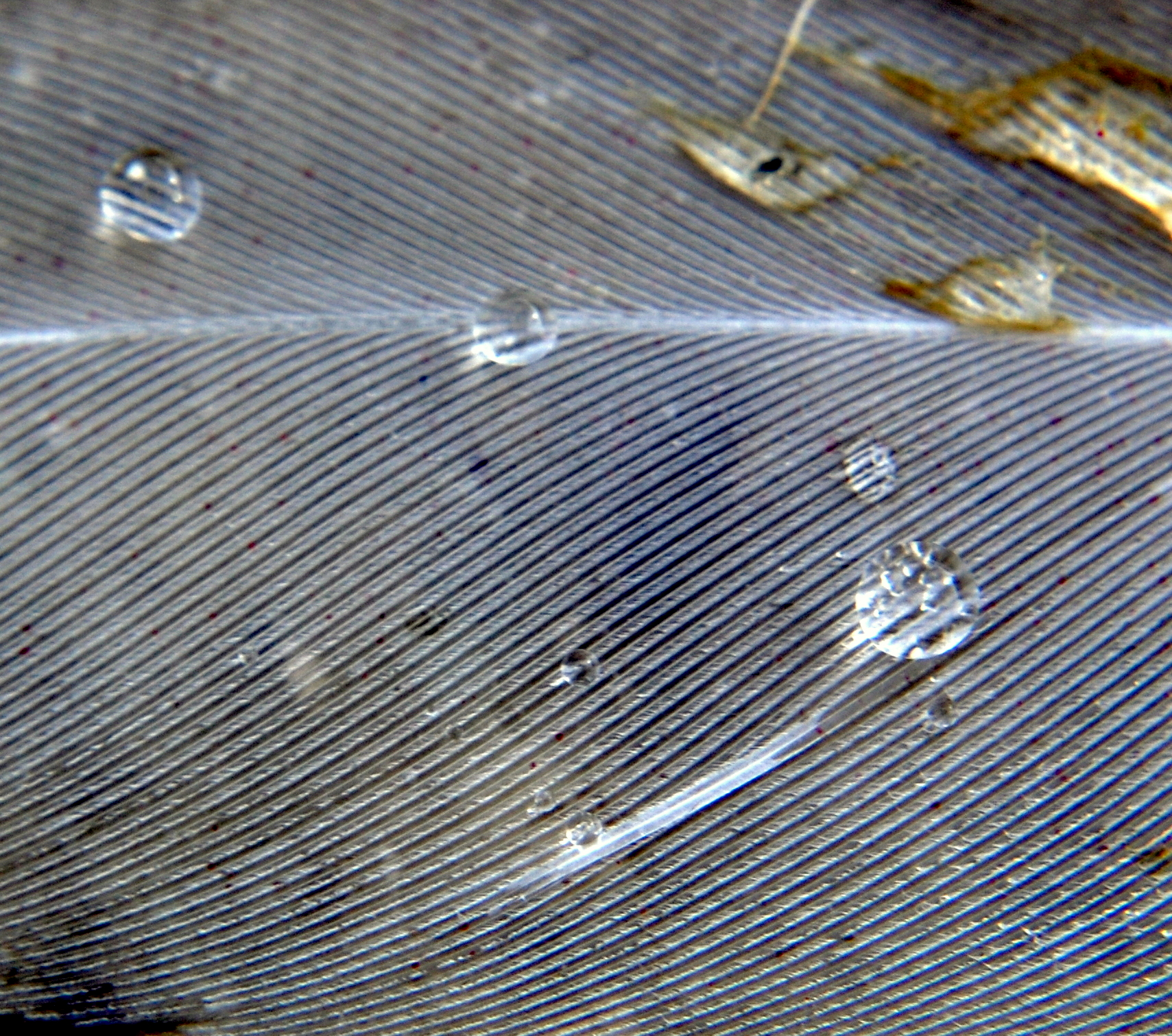
Sticking with the theme of cleanliness, everyone has seen birds preening. However, many people don’t realize just how fascinating of a behavior this actually is. Aside from picking away pests and dirt, birds have to maintain the integrity of their feathers. There are actually several increasingly small parts that make up a feather. The main stem is called a rachis. From here, small outcroppings called barbs stretch out like the branches of a tree. Each barb also has outcroppings called barbules. These barbules are interwoven amongst each other with tiny hooklets. Each of these microscopic components make up the seemingly solid feather. These hooklets will separate from each other periodically and the bird needs to preen in order to “zip” them back together. In the second photo below, you can see where one of the barbs has come loose near the bottom. If you zoom in enough, you can just barely see the sort of frayed look of the barbules.
Two other interesting maintenance behaviors that birds will do are anting and rousing. Anting, which I’ve never personally observed, is when a bird will rustle around in an ant bed, prompting the ants to crawl around the bird’s interior skin where they will feed on microparasites. The term “rouse” refers to when a bird extends it’s feathers and shakes. When dogs and cats do this, it is a mental realease – sort of “shaking it off” when they are over stimulated. However, when birds do this, it is a hygienic behavior where they are shaking out dead skin cells, dirt, etc. from under the dense feather layer.
One final interesting thing about birds in general (before I go into what is likely going to be an array of bird related posts) is what they are best known for – flight. Working at airports and being a drone pilot, I have had to learn a little bit about human flight. Learning about the physics of bird flight, they are remarkably similar. When flying a plane, there is something known as an “angle of attack”. This has to do with the angle at which the wing is hitting the oncoming air. Increasing the angle of attack can make a plane climb, or slow down to the point of stopping altogether (something very bad in the case of an airplane). If you take the time to watch a bird land, you will notice the same thing occurring. Some birds do it so quickly that you can’t even really see it happening. The photos below show a hawk flying straight, where the wings are nearly horizontal, and just prior to landing, where the angle of attack has been increased to the point of stopping just in time for the bird to land softly on the post. Note also the spread tail feathers, creating further drag to slow the bird down.


 BJ Quinton
