One of the first groups of birds that I had the pleasure of working with full time consisted largely of birds of prey. Like the appendages of the praying mantis, the adaptation of the feet to grab prey is know as “raptorial” which is why birds of prey are also known as raptors. Which bird species technically belong to the raptor guild can get a little fuzzy. Just because a bird hunts for and consumes prey does not necessarily mean it fits in the definition of a raptor. For example, black skimmers hunt fish, loggerhead shrikes catch insects and reptiles, woodpeckers will find grubs in the small crevices of trees. While all of these birds catch prey, they are not considered to fall into the category of birds of prey, mainly because their prey are small relative to their body size. At the same time, some birds do fall into this category that feed on carrion and, therefore, technically don’t need to hunt their prey. These would include vultures, caracara, and condors.
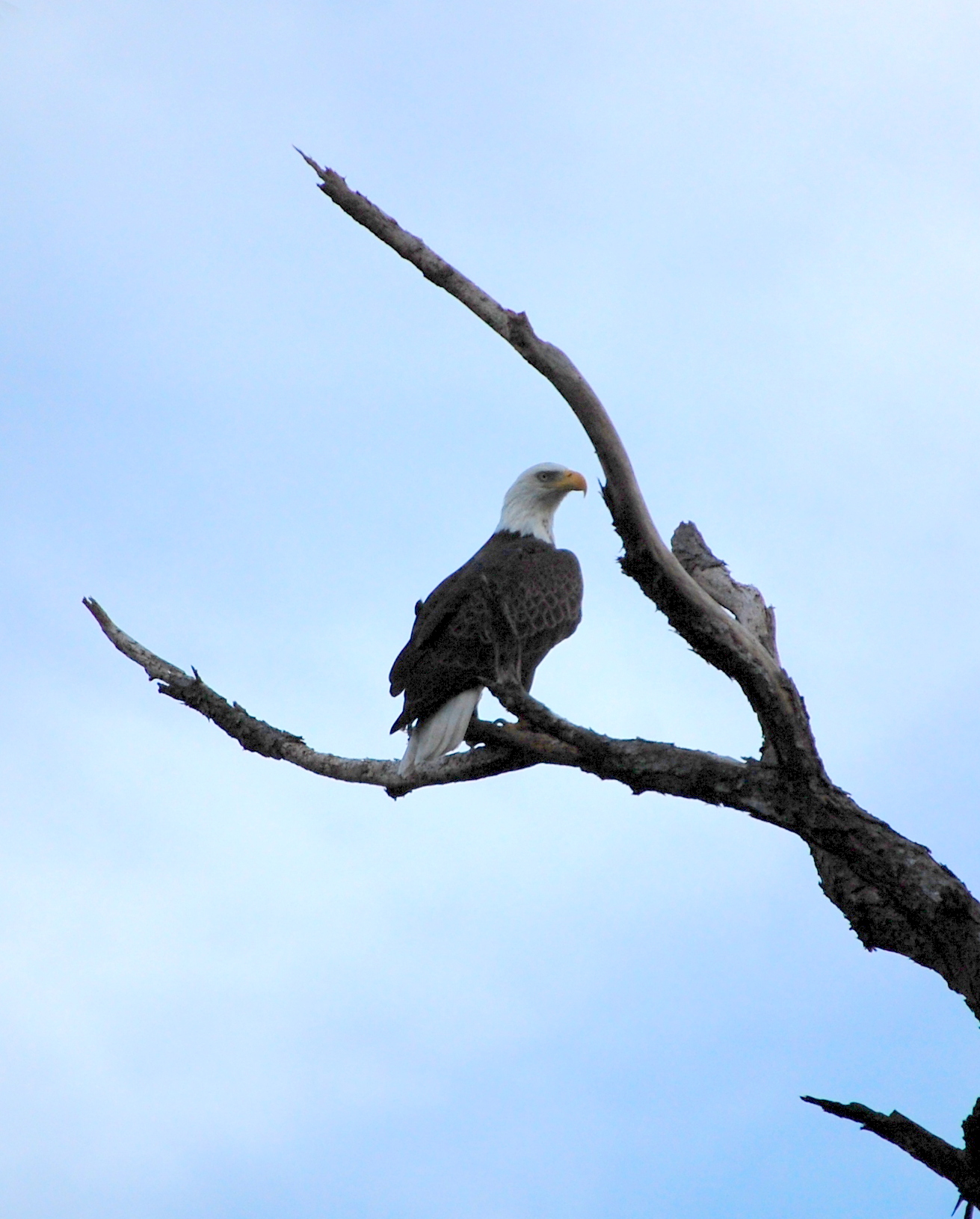
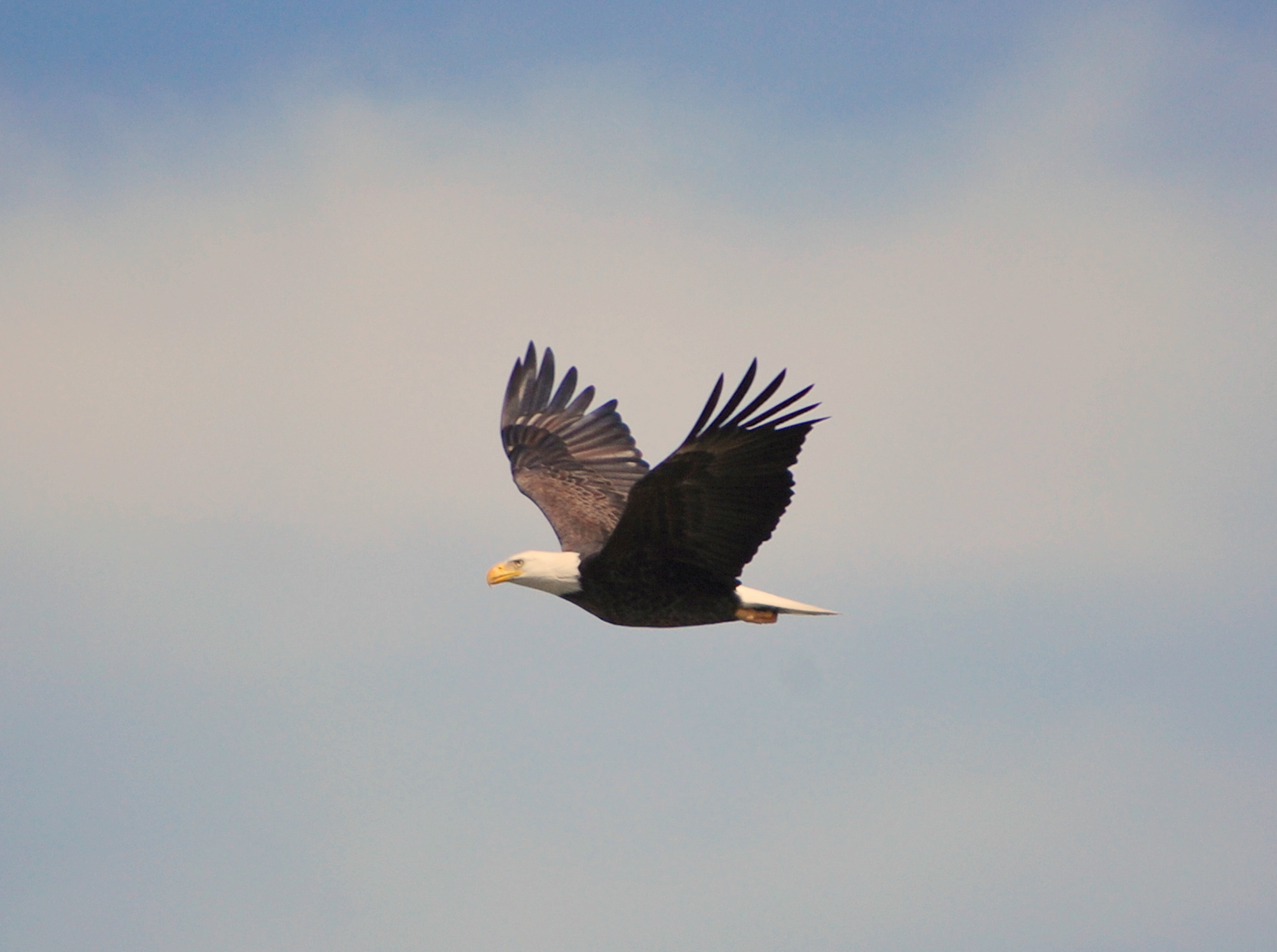
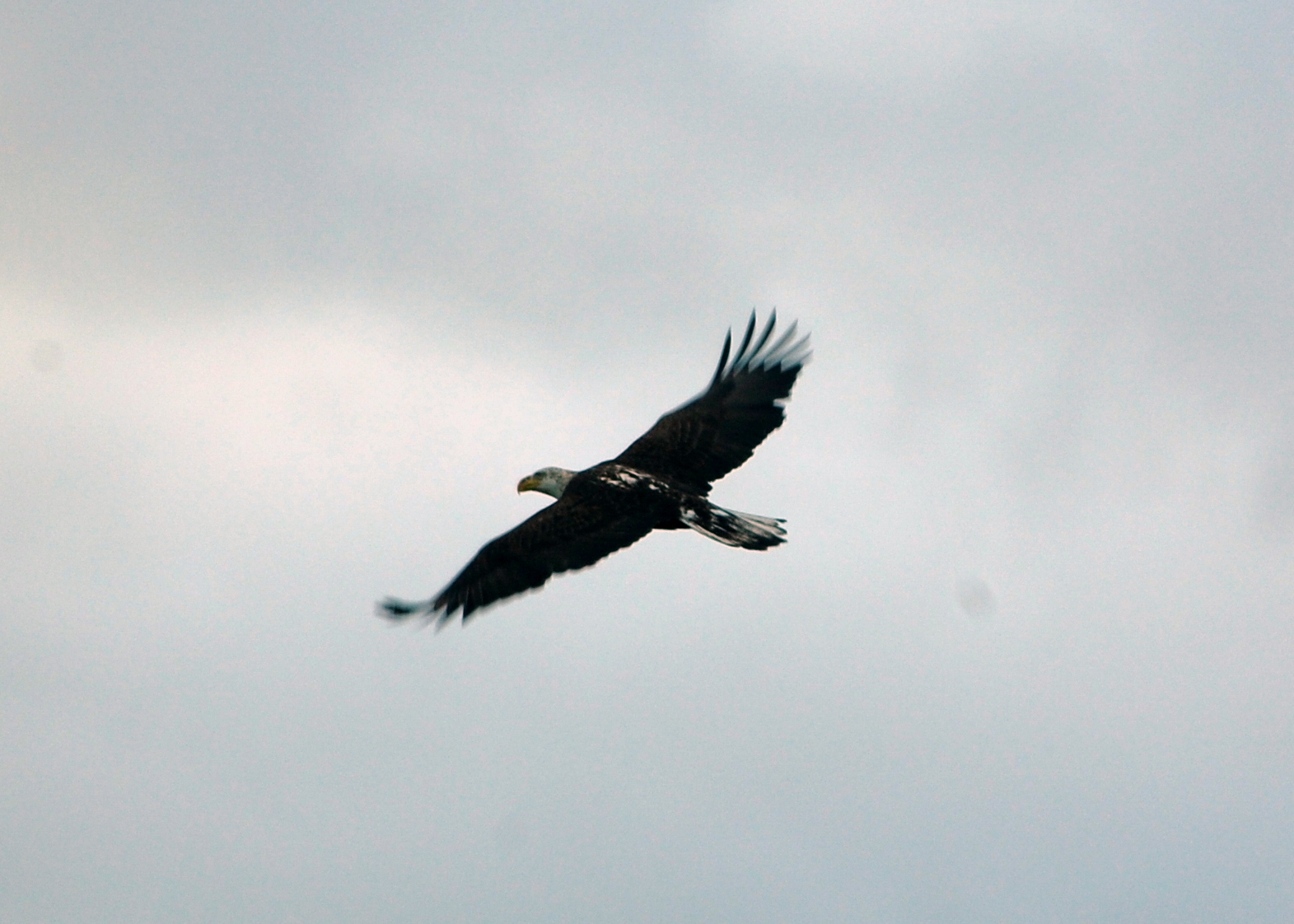
What better raptor to start with than our country’s national symbol, the bald eagle (Haliaeetus leucocephalus). While the bald eagle is clearly not bald by the modern meaning of the word, it gets its name from the more ancient term “balde” which meant white. The genus is a combination of the Greek hali meaning “sea” and aetos meaning “eagle”. The species name is a reference to the white head, being a combination of the Greek leukos and kaphelos which together mean “white headed”. Juvenile bald eagles don’t have the white head or the white tail at first. In fact, it is well into adulthood before they really get their adult plumage, with the full white occurring in their fifth year of life. The last photo shows a young eagle in the late stages of developing the adult plumage.
Fish are a large portion of the bald eagle’s diet. In order to maintain a good grip on their slippery prey, in addition to talons, they have small bumps all over the bottom of their feet called “spicules”. In addition to fish, they can be found hunting reptiles or even feeding on carrion. They have also been observed harassing other birds of prey into dropping their food item, then stealing it, all while in flight.
The call of a bald eagle is rather squeaky and not at all the majestic whistle that you hear when one is soaring in the sky in a movie. The call that you hear is actually that of the red-tailed hawk.
One final interesting thing about bald eagle is their nest fidelity. They will usually revisit the same next every season and tend to add more nesting material to it. Since they add to it every time, these nests can get very large. The Guinness Book of World Records lists a bald eagle nest as the largest bird nest in the world. It was found right here in St. Petersburg, FL. It was measured at 9 1/2 feet wide, 20 feet deep, and weighed nearly 4,500 pounds.
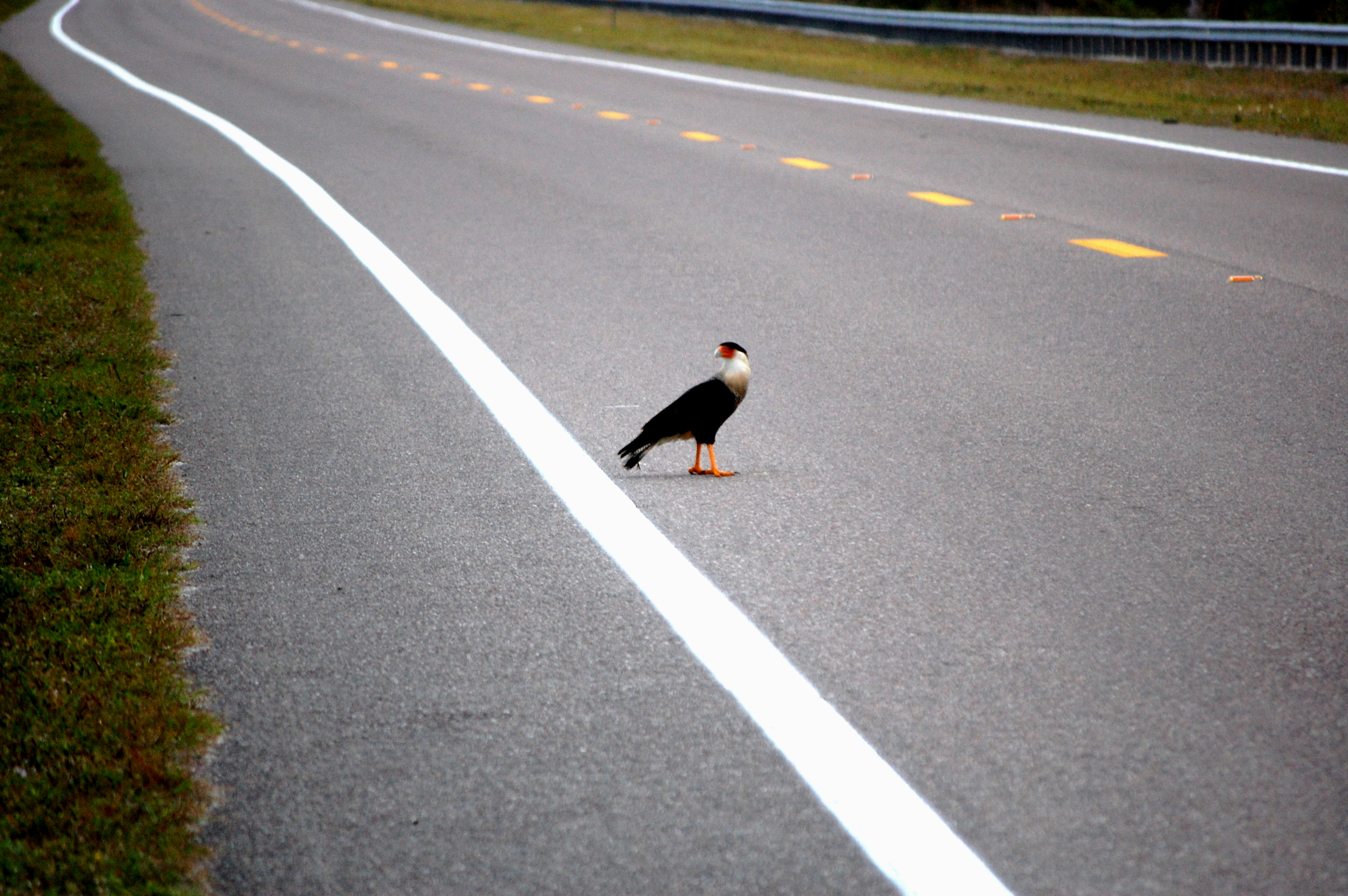
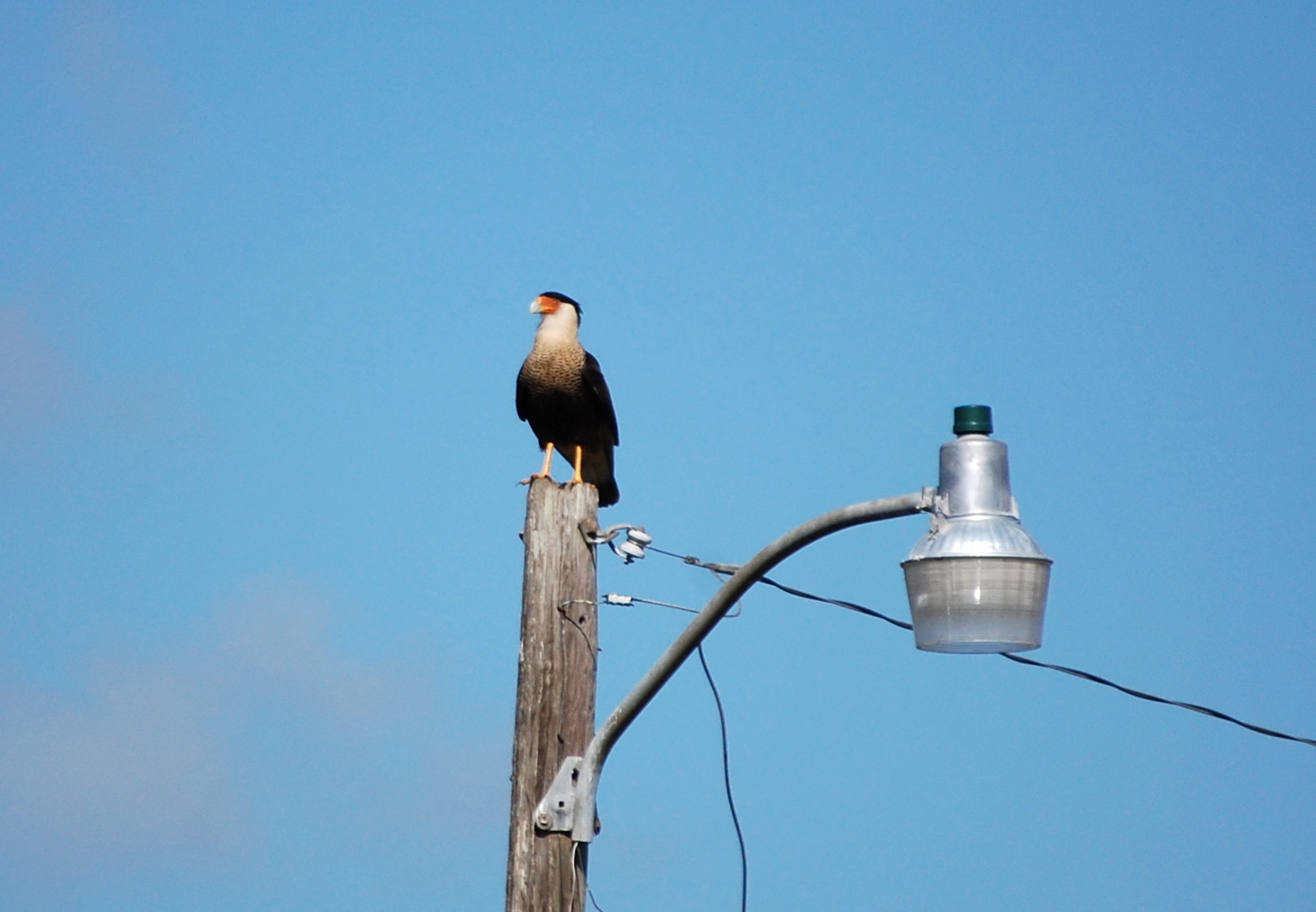
Although, as mentioned, this next bird is kind of in the gray area when it comes to identifying it as a bird of prey, it is an easy transition from the bald eagle for a couple of reasons. For one, in addition to its small live prey, it also feeds on carrion. Additionally, it is also known as the “Mexican eagle”. That would be the Crested Caracara (Caracara cheriway). If you’ve read through some of my other posts, you’ve probably noticed one of the things I love to do is learn where scientific names come from. This one was a little difficult. The best I could find is that caracara is a Tupi name for “noise mangler” or “shrieker” likely due to its loud call (third one down in the link). Apparently cheriway is just the name that the indigenous people of Venezuela used to call them.
The main range of the crested caracara is through Central America and through some portions of Texas and Arizona. The Florida population is isolated mainly in the central to southern portion of the state. This isolated population is what’s known as a “relict” population. During the last glacial period, the Gulf of Mexico was actually a savanna. So the crested caracara lived in a contiguous piece of land that stretched from Florida to Mexico. However, as temperatures rose and the gulf began to fill with water, it created a divide between the populations, causing the isolated one we have today. This species is still very important to the ecology of Florida. Their preferred habitat includes open pastures with scattered cabbage palms, where they make their nests. Unfortunately, this is also the type of land that is readily developed which has caused a severe decline in their available habitat. As a result, they are now federally protected.
The two best photos I have happen to be of adult birds. There are two main giveaways as to the age of these birds. First is the feet and legs which are orange or yellow in adults and a light gray in juveniles. Second is the fleshy patch on the face between the beak and the eyes, an area known as the “lore”. This is more of a pink color in juveniles and is typically bright orange in adults, although this can also change based on health and stress levels.
The caracara is a very unique bird. Some people struggle to put them in a category. Are they hawks? Are they eagles? Well, actually they are in the falcon family. What makes that especially interesting is the caracara is the only falcon that collects material and builds its own nests. All other falcons utilize existing nests that were abandoned by other species. Apparently caracaras are very picky about which items they will use. While I haven’t seen this myself, other biologists have told me they have observed them picking up several pieces of material, examining them, and discarding them before selecting just the right one.
Since these birds are federally protected, surveys are required in order to ensure that the species is not adversely affected due to development projects. One of the most rewarding components of these surveys is when we do what are known as “productivity surveys”. When in the course of the initial survey it is determined that there is an active nest onsite, the nest is monitored for success. This includes looking for the presence of eggs, young, feeding and fledging behaviors, etc. that indicate a successful breeding season. Caracaras nest in dense cabbage palms. Even if we know a nest exists, it’s nearly impossible to see due to the dense nature of the vegetation. We also need to observe it from far away so that we don’t alter their behavior in any way. This means finding just the right angle to be able to see what is going on. We got lucky enough to observe one nest to see exactly the sort of behaviors we hope for. There were two healthy adults feeding two healthy young. The video was taken with a cell phone through a spotting scope, so the quality isn’t great. But, if you look toward the center, you can see two small heads bobbing around and the one on the right being fed. At the time of this video, the young were still mostly covered in down feathers, the short sort of “fuzzy” feathers. Another biologist told me during a subsequent survey they were observed to have developed pin feathers. These are the more mature feathers that haven’t lost their sheaths, so they resemble pins (this can be seen on one of the chicks in the nest in my previous post). This indicates they are developing well and the breeding season has thus far been successful.
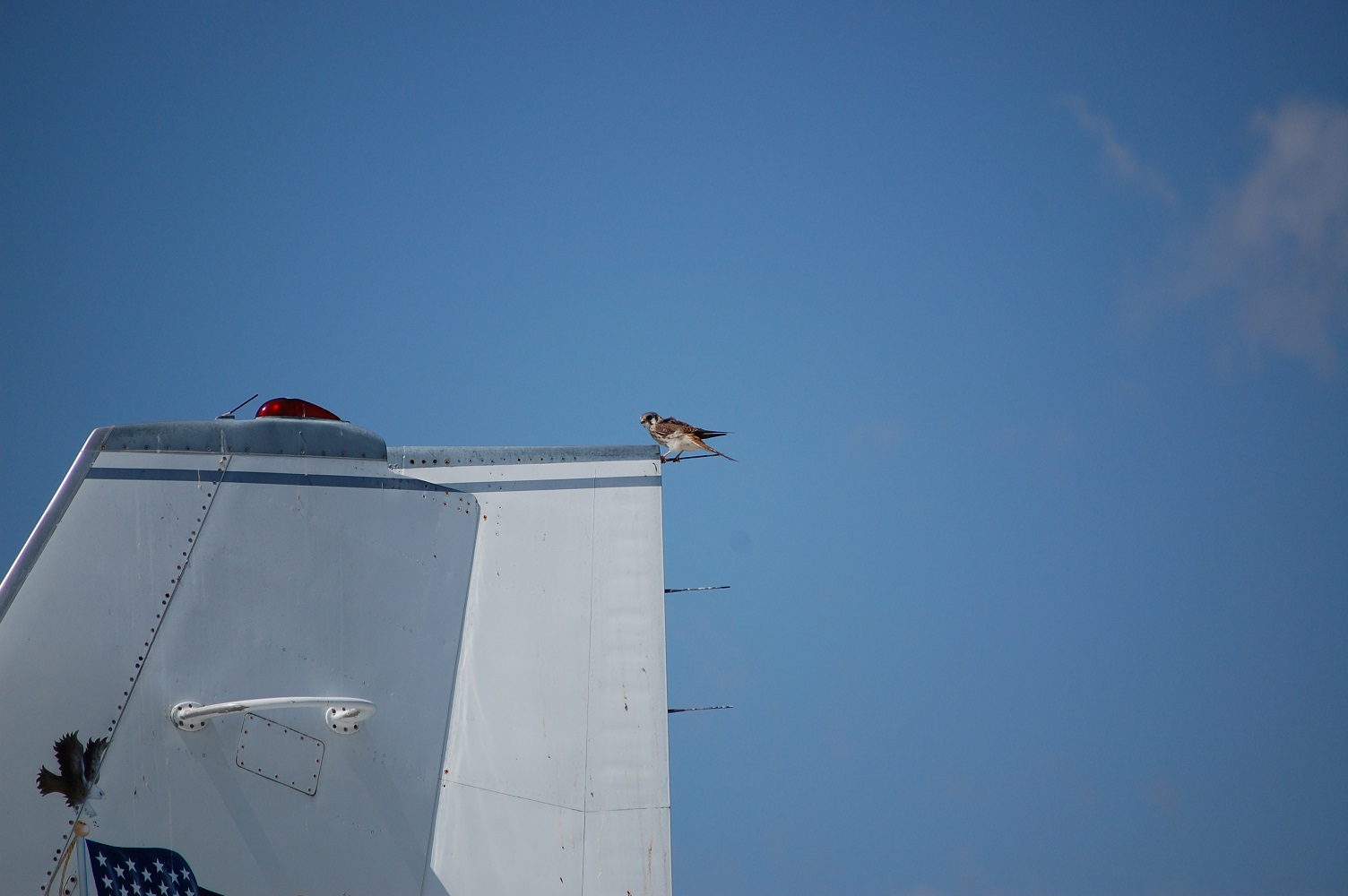
There are three other falcon species in Florida. The merlin is the only one that I have only seen briefly and have so far not been able to photograph. The most common during certain parts of the year is the American kestrel (Falco sparverius). Also know as the “sparrow hawk” due to its small size, the kestrel gets its genus name from the Latin falco meaning “falcon” which in turn comes from the Latin falcis meaning “sickle”, from it’s sickle shaped beak. The species name is the Latin sparverius which means “pertaining to a sparrow”.
While they aren’t the only birds to practice this behavior, kestrels can be identified pretty readily over open grassy areas performing a behavior known as “kiting”. This is where they will fly up and flap their wings to hover in place while they search the ground for prey. They have also been known to swoop in on insects that are attracted to stadium lights, even being featured in some sports highlight footage.
The final falcon species we have in Florida is the only one with the word in its name. That is the peregrine falcon (Falco peregrinus). The Latin peregrinus means “wanderer” or “stranger”. It’s a bit of an odd choice, but it has to do with the sport of falconry. It was discovered that young birds on their first migration (wandering) were better suited for falconry than birds taken straight out of the nest. While I don’t have a pretty photo of one, I did get to see one in action. The following photos show why they are a favorite choice in the sport of falconry and why they are often the choice of falconers at airports. They are a highly effective means of harassment and dispersal of unwanted birds on airfields, where this encounter happened to take place. There were a group of a dozen or so crows foraging in the grass near a runway. The falcon swooped in and chaos ensued. While we never saw a successful grab, it certainly rid the area of the crows and they stayed away for the remainder of the day.


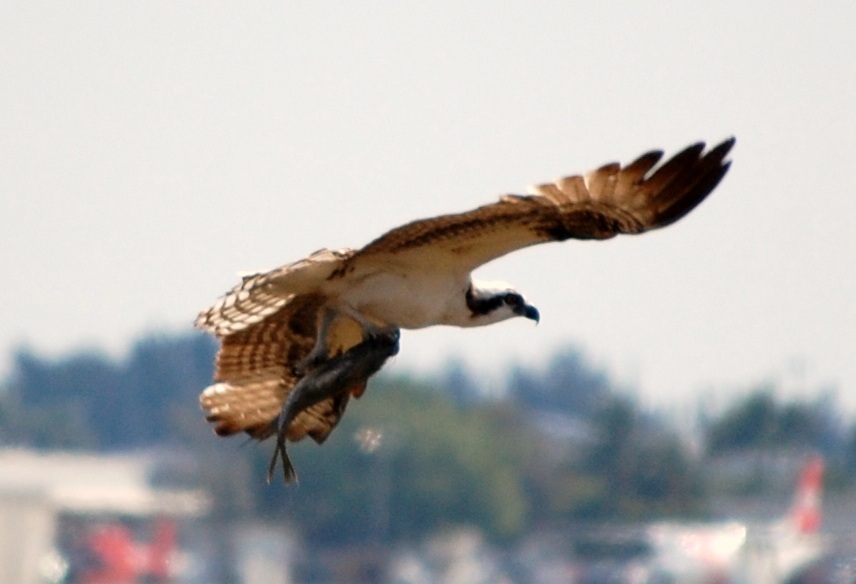
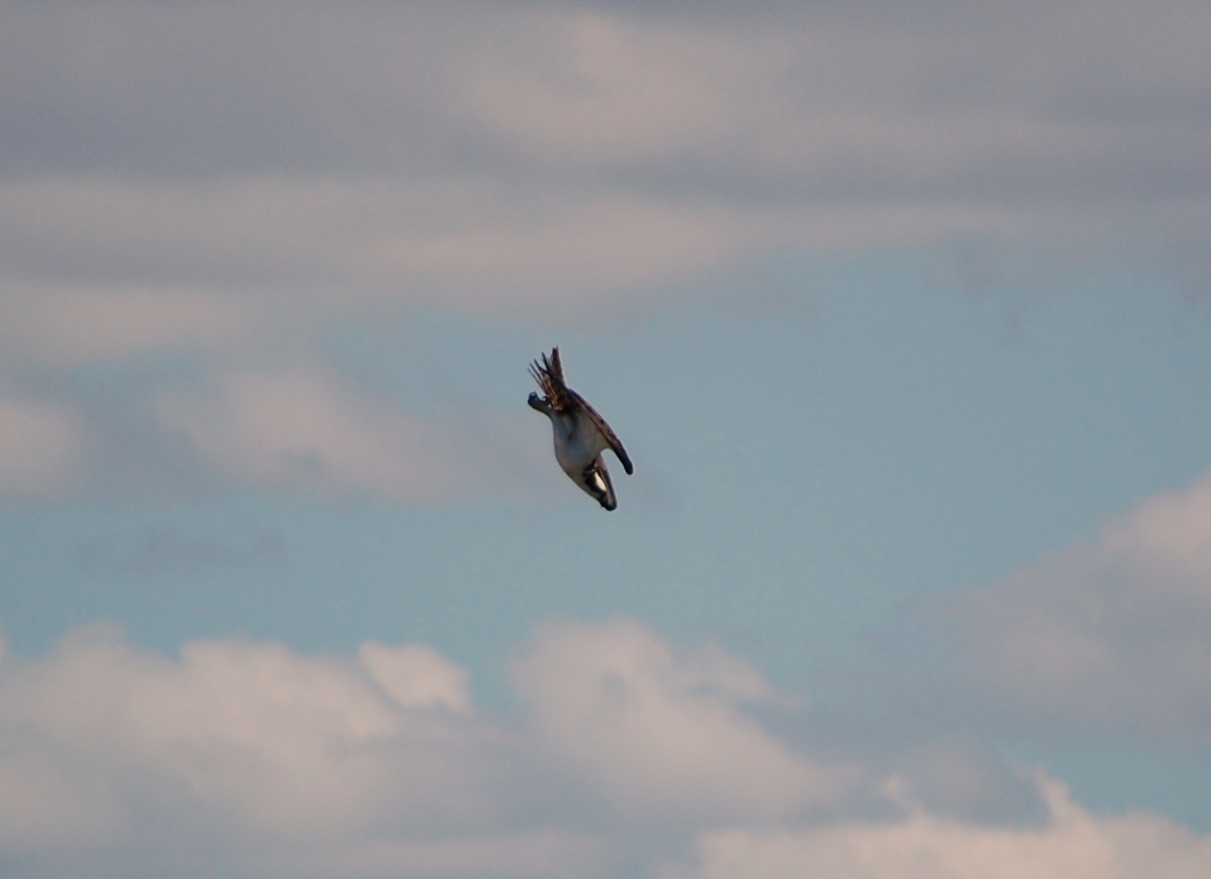
As I mentioned before, kestrels aren’t the only birds to exhibit the kiting behavior. Sometimes you can see ospreys hovering high in the air, waiting for that perfect moment to strike. This one happened to do it close enough to where I was that I got to watch it hover, then tuck in its wings and dive. Unfortunately for this one, the catch was unsuccessful. This is actually more common than you might think. Birds of prey actually miss around 9 out of 10 attempts. That’s why they are so tenacious when they do make the catch, sometimes even putting themselves in harm’s way to make sure they don’t lose their meal. However, ospreys are among some of the best hunters in the bird of prey world and have a much higher success rate of about 1 out of 4.
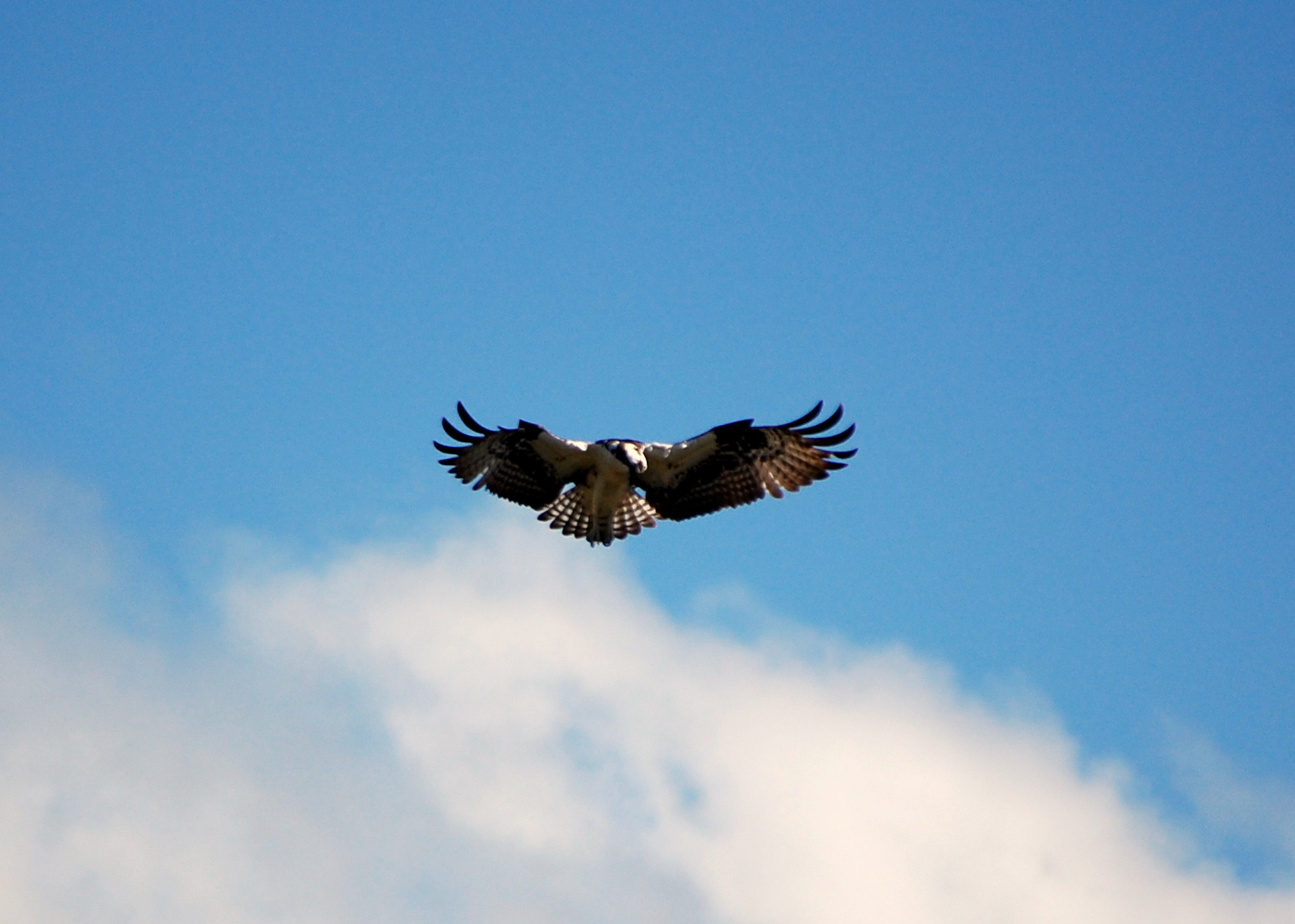
But back to the bird itself. The osprey (Pandion haliaetus) is a common bird here in coastal Florida. They are often seen nesting on light poles and other structures in parking lots near a water source. In the Tampa Bay area, they can frequently be spotted eating fish on the light poles on the various bay bridges. The origin of the name “osprey” is debated, although my favorite claim is that it originated from the Latin ossifragus which translates to “bone breaker”. The osprey used to belong to the Falco genus when it was first described, but was put in its own genus Pandion in the early 1800’s. The origin story is a little long and convoluted, but I’ll do my best to keep it brief. There were two King Pandions in Greek mythology. One had a son named Nisus who had a purple lock of hair that made him immortal. One day his daughter betrayed him and cut off this lock of hair and, when he died, he transformed into a sea eagle. The species name has the same back story as the genus name of the bald eagle, but is spelled slightly differently.
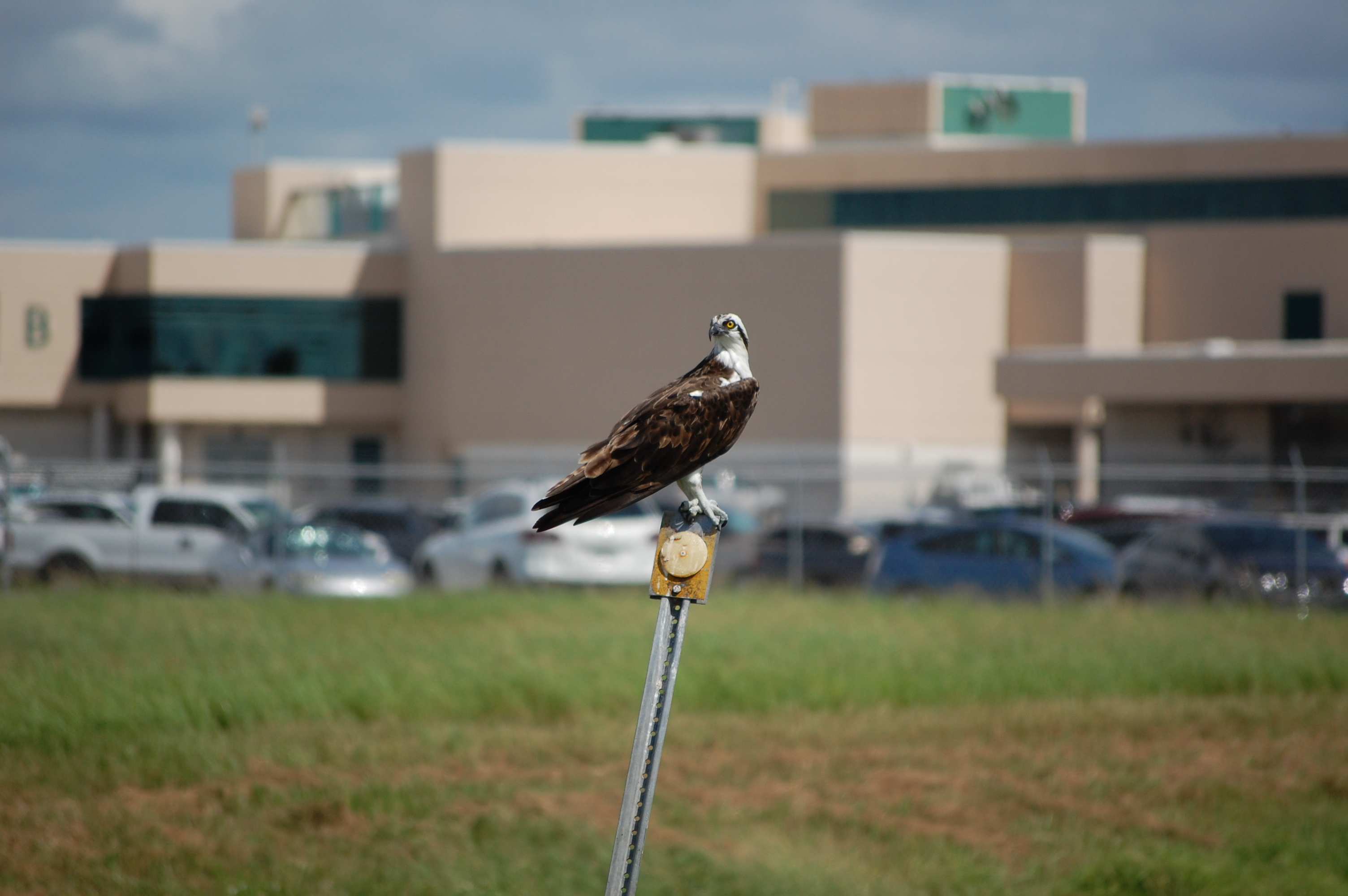
One of the most interesting things about ospreys is their feet. The talons are rounded, rather than grooved, and the outer toe is reversible. Other diurnal birds of prey have three toes in the front and one in the back. The osprey has two in the front and back, a trait they share with owls, that helps them hold on to their slippery prey. You might notice in the photo below that the osprey is holding the fish oriented with the head facing forward. This wasn’t just a lucky shot. They all do this in order to cut down on the wind resistance.

There are many hawk species here in Florida. However, the two most common are the red-shouldered hawk (Buteo lineatus) and the red-tailed hawk (Buteo jamaicensis). Ordinarily I don’t put two species in the same paragraph. However, these two share the same genus, Buteo. This is another one with a somewhat disappointing back story. Apparently Buteo is the species name for the common buzzard, Buteo buteo, but there is no explanation I could find that explained that any further. This does present an opportunity to point out why calling vultures “buzzards” can be a bit confusing. While it is sort of a slang term for a vulture, buzzard is the actual name of a hawk in other parts of the world.
The red-shouldered hawk gets its species name from the Latin lineatus, which means “marked with lines” presumably due to the linear pattern on the tail and the barred (broken line) pattern across the wings and chest. It is common throughout the eastern US and can readily be identified through its call. It’s also common to see them being mobbed by their nemesis, the crow, a behavior in which the crow will dive bomb and harass the hawk into leaving a particular area. They are also known to steal food from each other. However, they have also been known to join forces and work together to chase away great horned owls. The photo below is of a young red-shouldered hawk. If the background looks familiar, it’s because this is the same bird that was used in the introduction to birds when describing the “angle of attack” during flight.
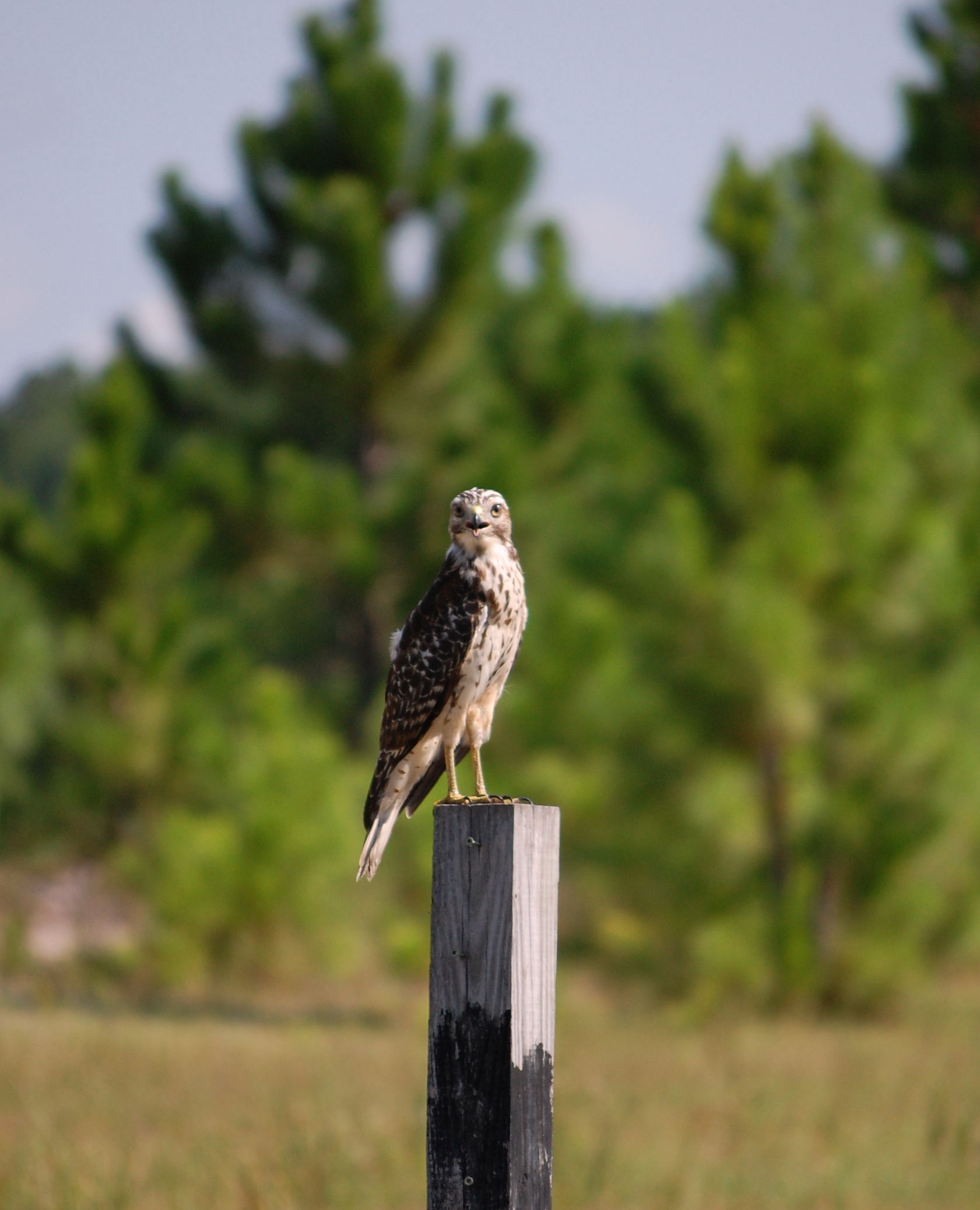
The red-tailed hawk gets its species name, as you might have guessed, from Jamaica, where it was first described. As mentioned earlier, it is the call of this bird that is usually associated with bald eagles in TV and movies for dramatic effect. Red-tailed hawks can also be seen being mobbed by crows. One study showed that crows and other mobbing birds can tell by the size of the crop when a hawk is getting ready to hunt and prefer to mob during this time. The crop is an organ in the neck/chest area that grinds prey to separate the meat from bones, feathers, etc. When a bird has recently eaten, this area is large and the feathers are somewhat distended, rather than flat and smooth.

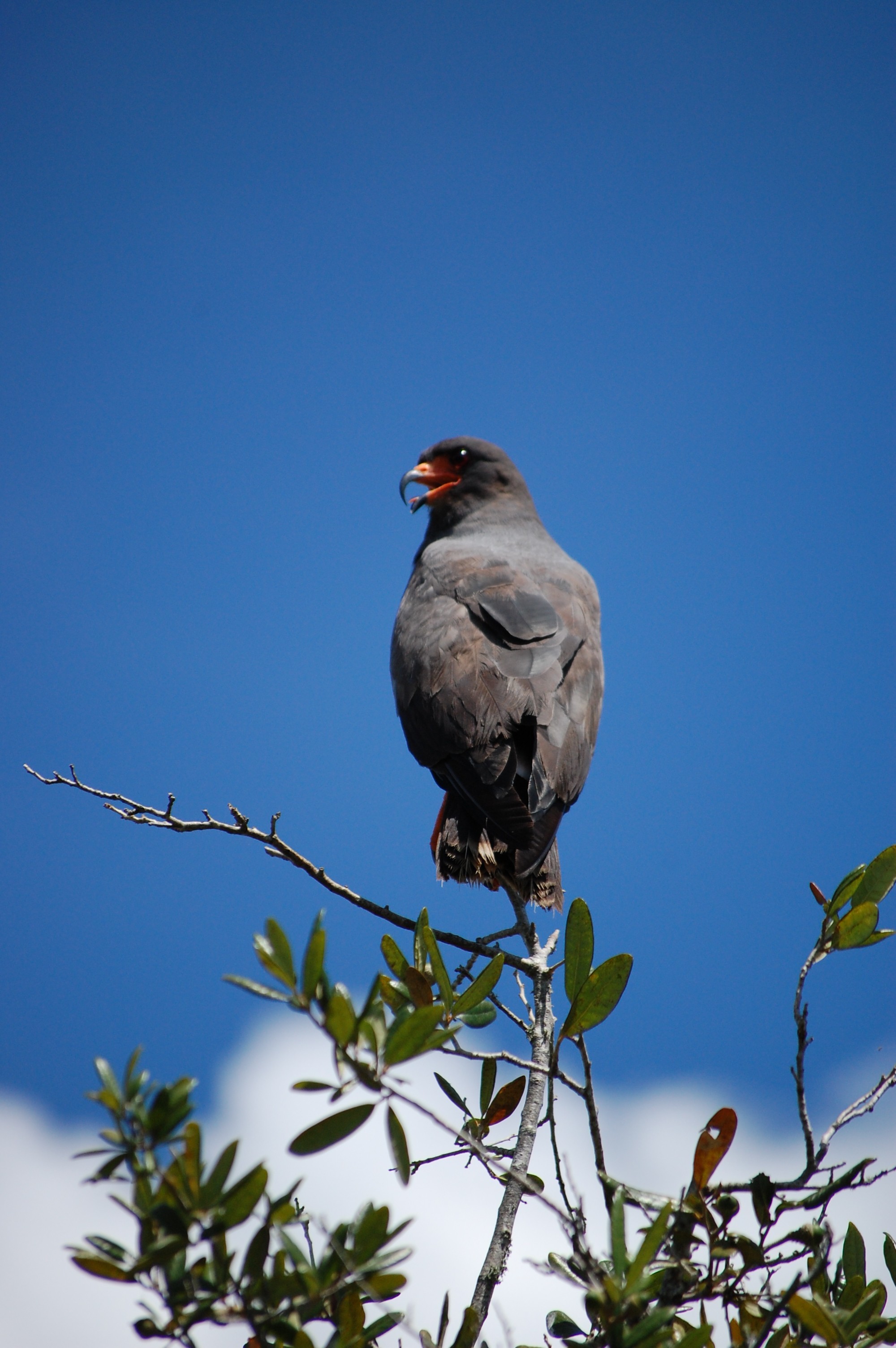
One of the most striking birds of prey, in its adult form, is the snail kite (Rostrhamus sociabilis). The genus name comes from the Latin rostris meaning “billed”, and hamus meaning “hooked”. The species name is the Latin sociabilis, which translates to “sociable”. They use their sharply curved bills to remove the fleshy part of their main prey, apple snails. There are several species of apple snails in Florida, most of which are invasive. You can often see their eggs on the sides of reeds in marshes or on the sides of docks. They can sometimes be green or a pale to bright pink and vary in size. The eggs of the native Florida apple snail are white and larger than the others. That’s why we ask, if you come across large white snail eggs, that you do what you can not to disturb them.
I mentioned that the adult snail kites are striking. Although you can’t see it in these photos due to the angles, they have bright red eyes as adults whereas juveniles have dark brown eyes. Snail kites are sexually dimorphic, meaning you can tell a male from a female based on physical characteristics. The photos below both represent males. The females are brown and streaked, somewhat resembling the young red-shouldered hawk pictured earlier.
While the snail kite isn’t threatened across its extended range, which includes Cuba, the Yucatan peninsula, and most of South America, wetland impacts across Florida have caused a decline locally. As a result, the snail kite is afforded federal protection as an endangered species.

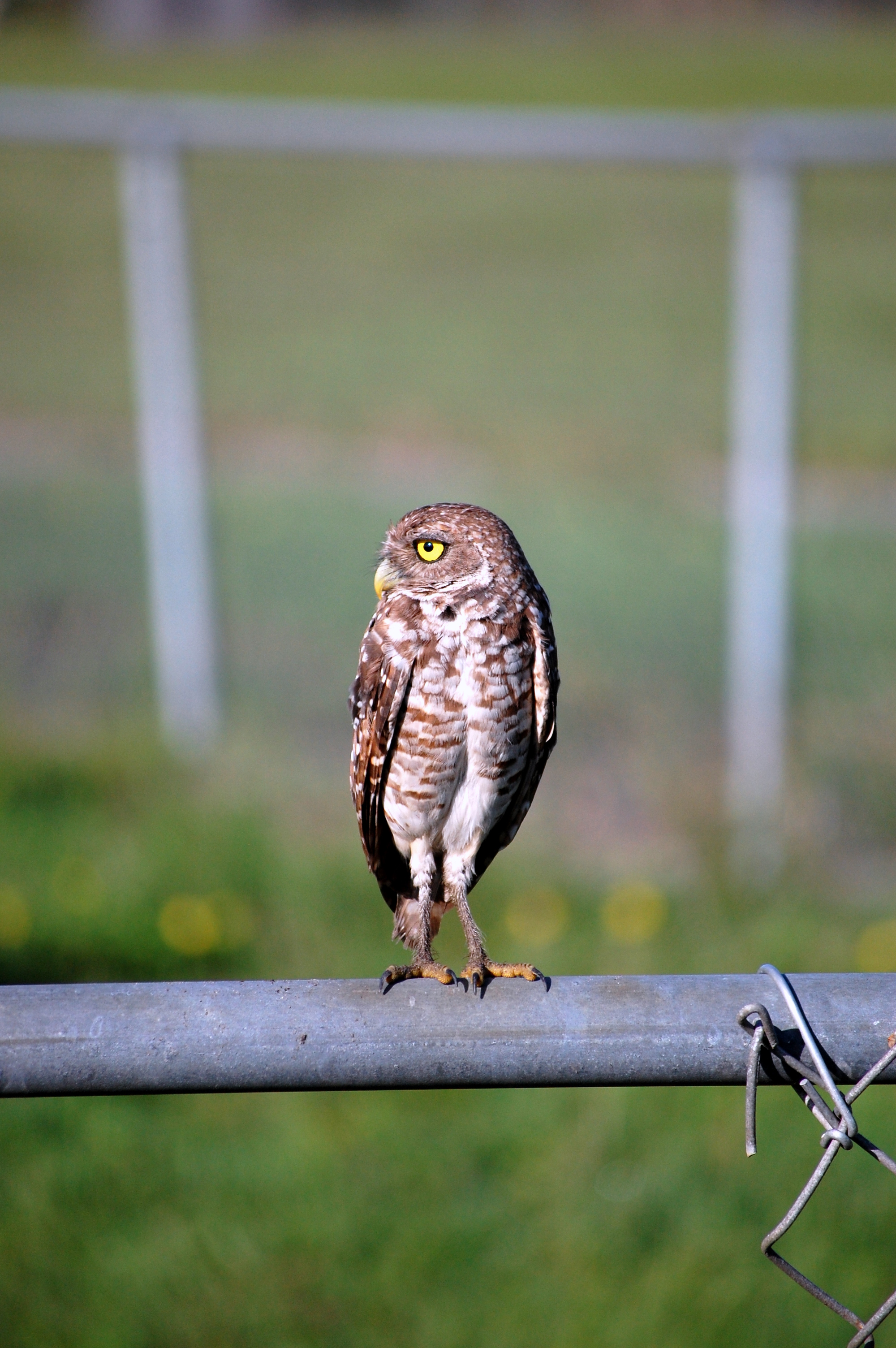
While I would love to get more photos of owls, it is a bit tough due to their nocturnal nature. However, one owl that is more diurnal (active during the day) is the very photogenic burrowing owl (Athene cunicularia). Athene is a character from Greek mythology, the goddess of wisdom, war, and liberal arts, whose favorite bird was the owl. The species name comes from the Latin cunicularius, which means “burrower” or “miner”.
Usually found huddled at the entrances of their burrows, they will occasionally hop on the tops of fences to get a better view, as the one in the photo below has done. They keep their burrow entrances very clean, clearing away any clutter that builds up over time. However, they will also decorate the burrow openings with “adornments” such as bottle caps, cigarette butts, and other small pieces of debris. I have a coworker that studied these birds and said that he has even seen a baby doll’s head used as an adornment.
When threatened, they do a rather dramatic head bobbing routine. When necessary, they will also retreat into their burrows and make sounds similar to a rattlesnake, to scare away potential threats. This is considered a form of “Batesian mimicry” which is when a harmless species will appear, through coloring or behavior as in this case, to be a threat to a potential predator.

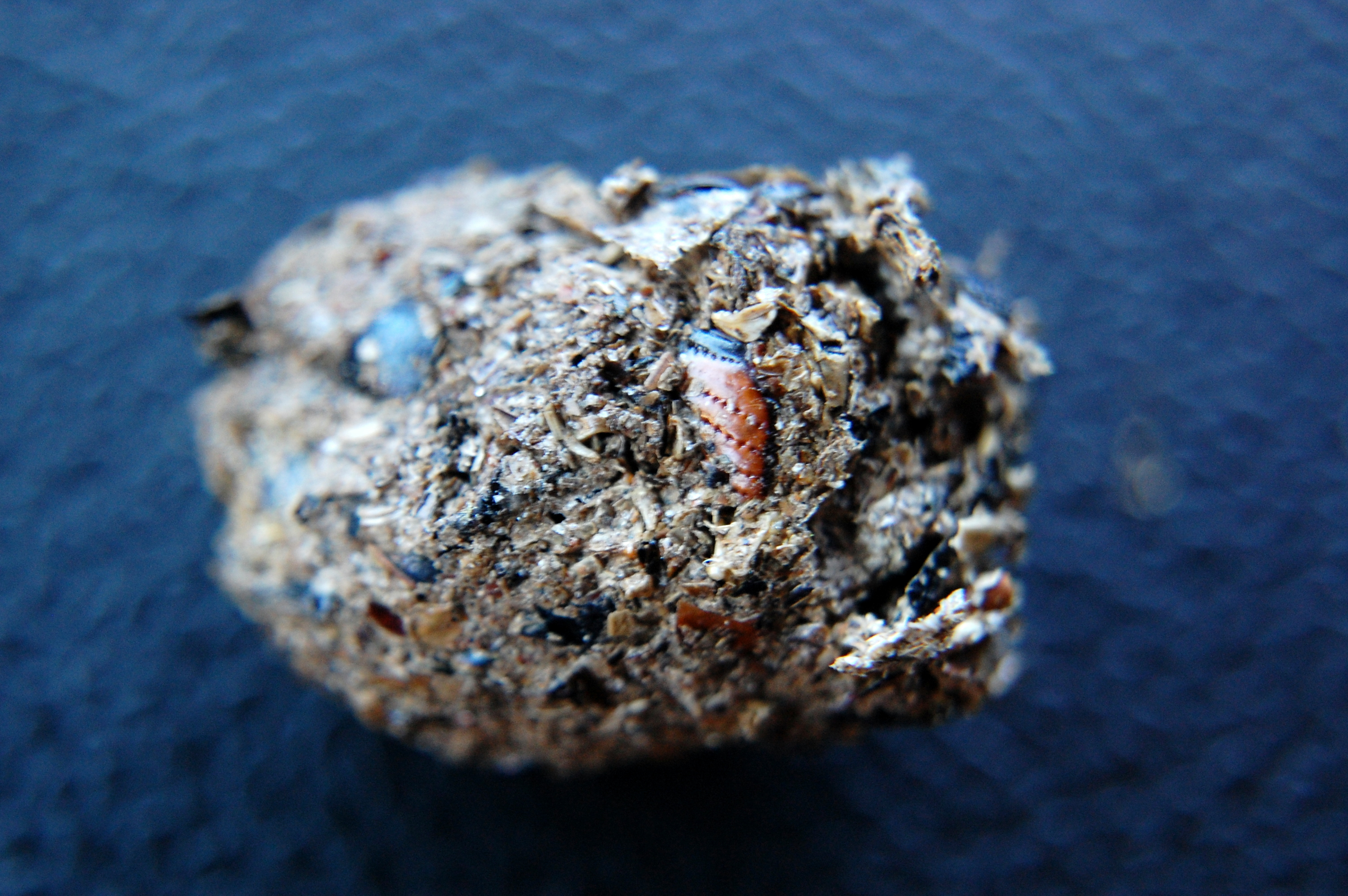
Owls were a great way to end this post because it gives me an opportunity to mention something that is widely misunderstood – owl pellets. They are misunderstood for two reasons. First, owls aren’t the only birds that leave these pellets. Not only are they left by other birds of prey, but even other birds such as crows and gulls. The second misunderstanding about these pellets is their origin. They are not, in fact, associated with fecal matter. These pellets, or “casts” as they are sometimes called, are formed in the crop that I mentioned before. When the digestible portions of the prey are removed and sent to the stomach, the leftover, indigestible material is gathered in the crop and coughed up and ejected through the mouth. These pellets can look wildly different between species and can give a hint as to the species and their diet.
For example, the photo below is from a burrowing owl. The contents included mostly insect parts. Pellets from fish eating species tend to be black and have a sort of greasy consistency. A pellet from a species that preys on small mammals would be made up mainly of hair. I dissected a pellet from one of our owls when I worked at the local zoo and found something very interesting. Despite her having a strict diet, I found a part of a frog skull. So, despite having been hand fed for most of her life, she still had the hunting skills necessary and apparently caught a frog while out in the yard.
 BJ Quinton