Almost all wildlife here in Florida depend on wetlands in one way or another. There are some bird species that not only use them as their primary habitats, but even have adaptations for living in these environments. I’ll start with some of the more common ones that you have likely seen if you live in the area, then move on to some that are a little more rare.
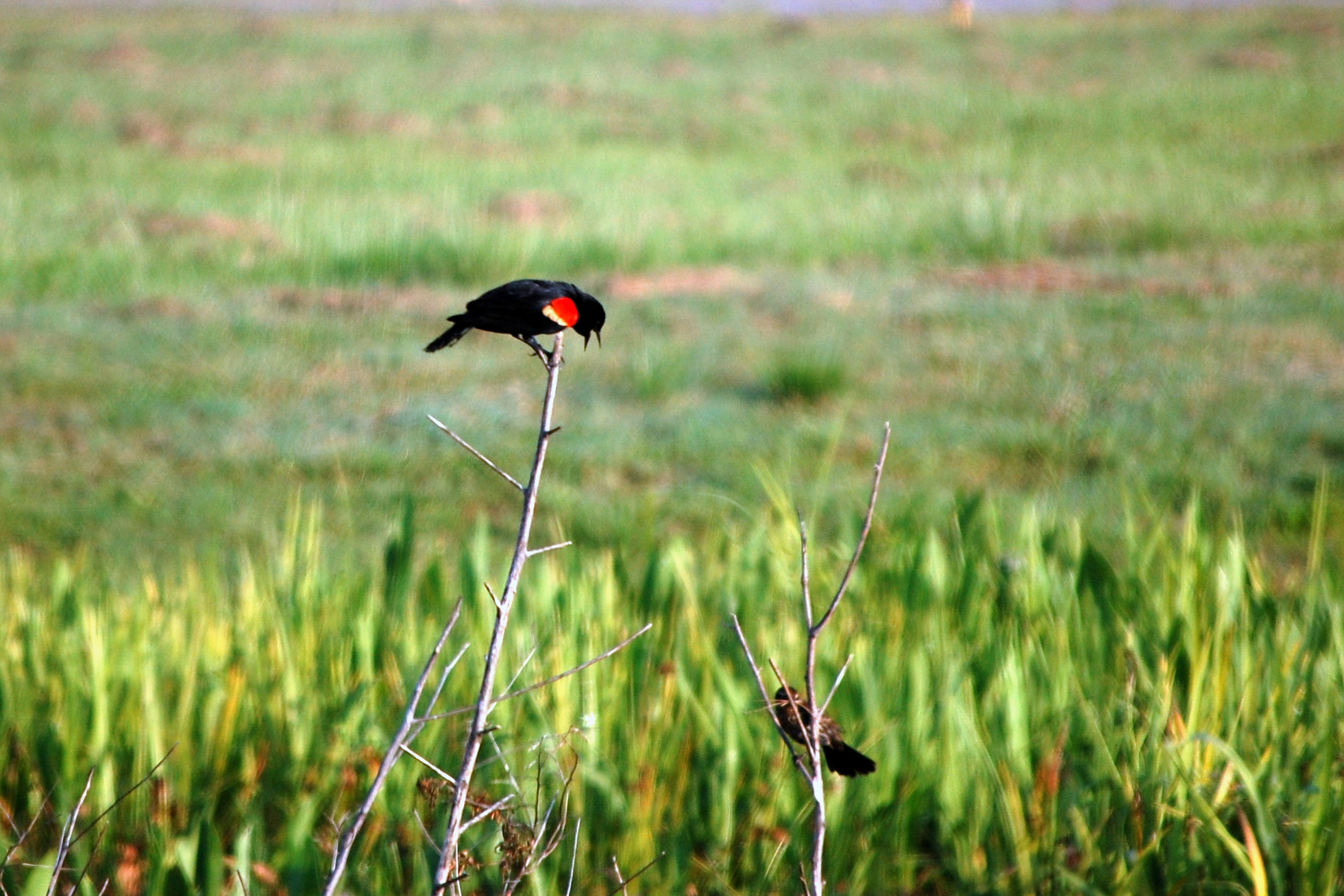
This first bird is one that is common even in backyard bird feeders, but I still find very interesting due to its markings and behavior. This would be the red-winged blackbird (Agelaius phoeniceus). The genus is from the Greek agelaios meaning “gregarious”. We often think of gregarious as a human trait. However, as a wildlife term, it refers to species that live in organized groups. You will often see and hear these large groups at night. During the day, they disperse and travel as many as 50 miles from the roosting site to forage, returning to the same site at night. The species name comes from the Greek phoinikeos meaning “red” or “crimson”. While they all have the red tips of the wing, there is a subspecies that does not have the yellow. Even those that have both the red and yellow are not all marked the same. Studies have been performed where young were removed from nests and placed in nests in a different geographic area. The study found that the young more closely resembled the foster parents than the biological parents, indicating the differences in patterns are environmentally driven. Red-winged blackbirds are sexually dimorphic. In the photo below, you can see the more colorful male calling to his female counterpart below, who happened to be gathering nesting material at the time.
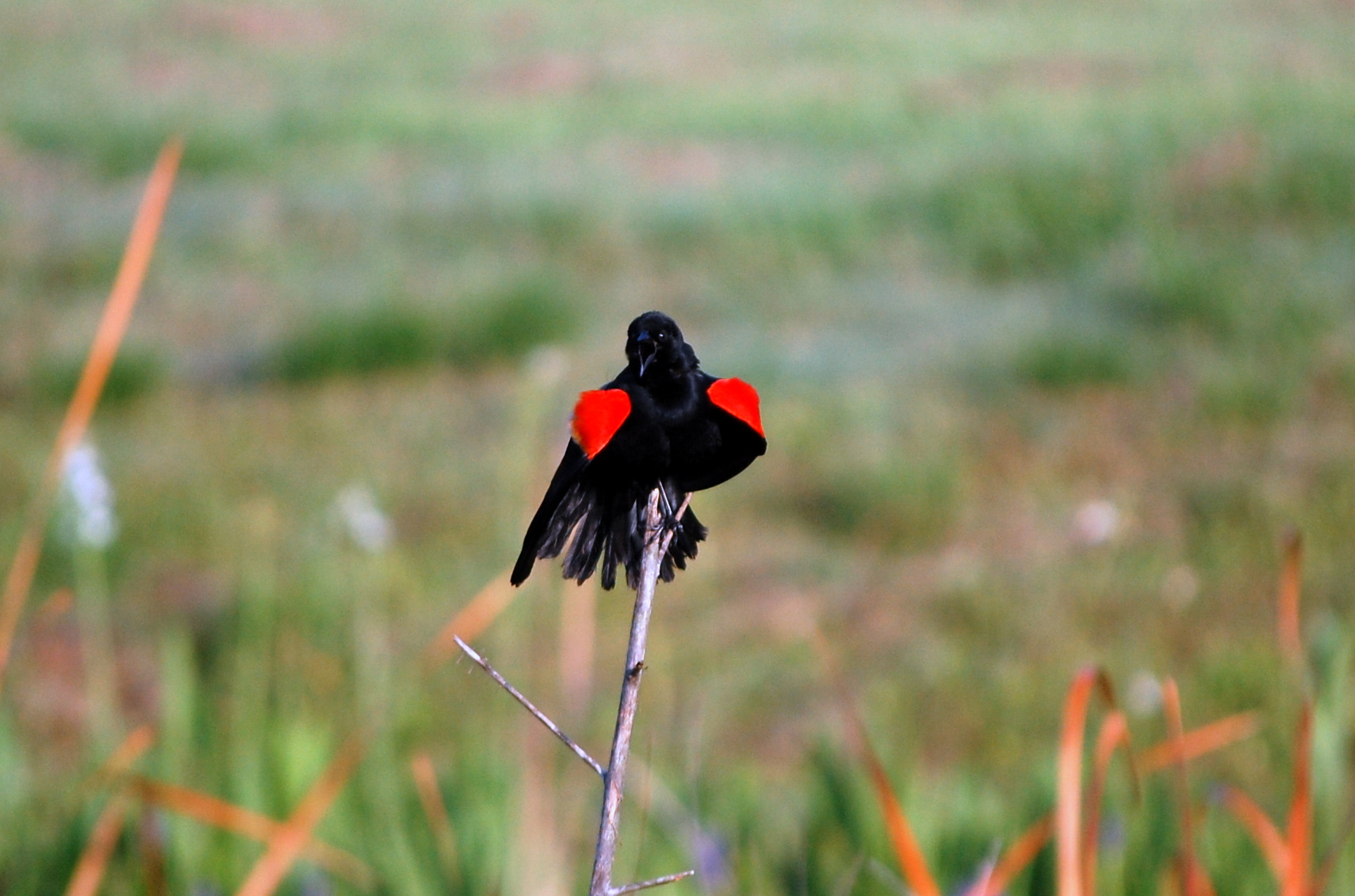
I mentioned that behavior is one of the things I find interesting about this bird. I was specifically referencing this calling behavior. As in the photo above, the male will generally get as high up as he can in order to be seen. During the last syllable of the conk-la-ree call, he spreads his wings slightly to accentuate the red feathers to show off. These bright wing spots are known as “epaulets”, named after the shoulder adornments used by the armed forces to indicate rank.
There are two rather large birds that are so common, they are often used as icons for various environmental programs and organizations. The first has been on the logo for the Tampa Bay Association of Environmental Professionals as far back as I can remember. That is the great blue heron (Ardea herodias). In Roman mythology, the town of Ardea was burned to the ground. A thin, pale bird rose from the ashes, shook the embers from its feathers and proceeded to make mournful calls. The species name is simply from the Greek erodios meaning “heron”.
Great blue herons have special fringed feathers on the chests known as “powder down. They comb these feathers with a special claw on their middle toes. This powder down can be used to clean and protect other feathers as they preen. Another adaptation of this fish hunter is the long, flexible neck. This allows the heron to strike at their prey from a distance.

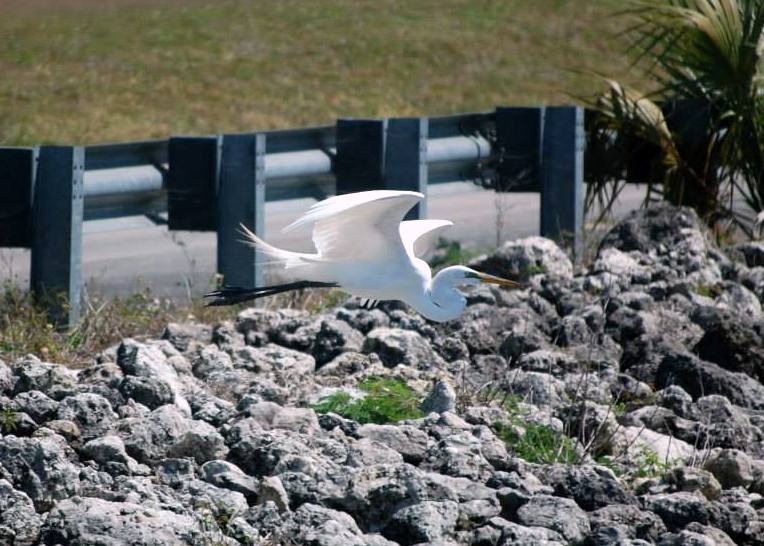
Another common, large wetland bird is the great egret (Ardea alba). The species name is from the Latin albus meaning “white”. So why is this an egret and not a heron? After all, it is in the same genus, unlike other egrets. Well, I’ve never really been able to figure out why it was moved to the genus Ardea, as it used to belong to Egretta like the other egrets. My complete guess would be because of its large size. Egrets are typically much shorter than herons, whereas the great egret is more comparable in height. There are other characteristics that make the great egret an egret and not a heron. Herons tend to have lighter legs and heavier beaks, where egrets have black legs and lighter beaks.

Much like the great blue heron has been on the logo for the TBAEP, the great egret has been the symbol for The Audubon Society. They are one of the more impressive flyers, using rather slow wing beats to fly effortlessly up to 25 miles per hour. While it is hard to see in the photo, the one pictured flying has a green lore (fleshy portion of the face between the bill and the eye), indicating this was taken during breeding season.
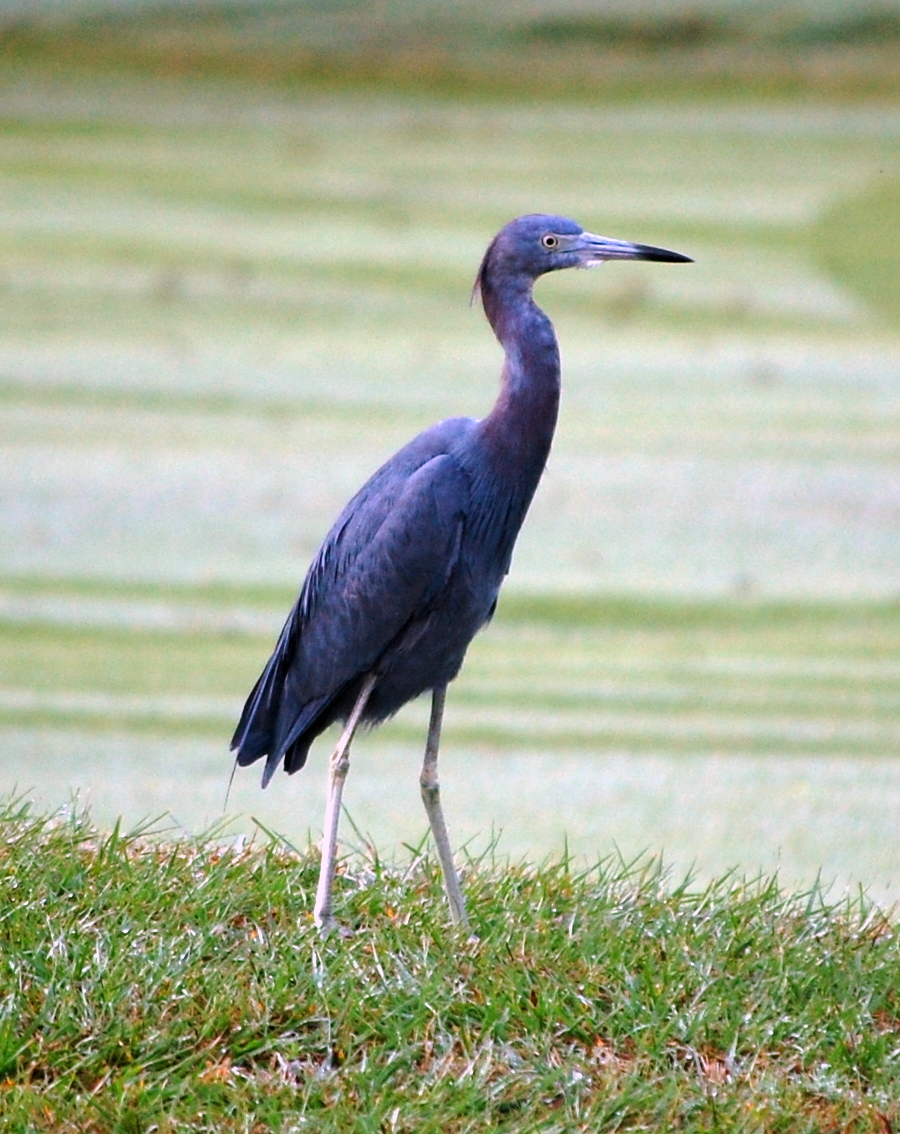
If having an egret in the heron genus wasn’t confusing enough, there are actually two smaller herons here in Florida that are in the egret genus. Again, I presume this is due to their smaller stature, despite having the other heron qualities. To the untrained eye, these two species can be easily confused. They are the little blue heron (Egretta caerulea) and the tricolored heron (Egretta tricolor). While most scientific names are of Greek or Latin origin, the genus Egretta is surprisingly from the French word aigrette, a diminutive of the same word used for the heron genus.
The little blue heron gets its species name from the Latin caeruleus meaning “blue”. As both the common and scientific names suggest, blue is the main color on this bird. In fact, it is the only color besides a hint of purple, in the right light, and black and grays. This is the main way that you can tell them apart from the tricolored heron. It is also something that may have saved the species during the “hat craze” of the early 1900’s. While other herons were being slaughtered for their showy feathers, the dark, drab colors of the little blue heron were considered not as attractive.

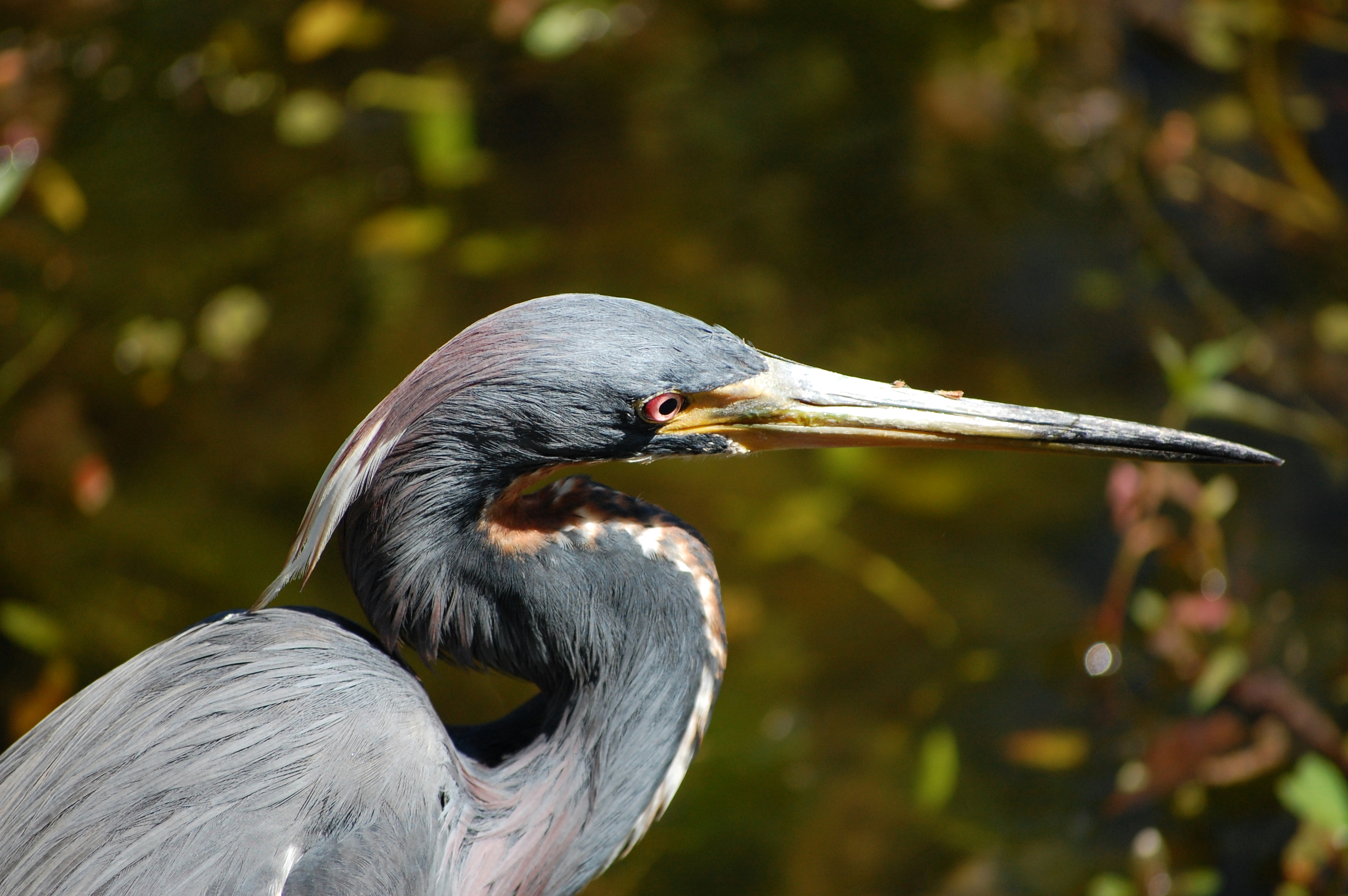
The species name for the tricolored heron is pretty obvious. In addition to the blue, there are also hints of red and, most obviously, white. While I took this photo a little too up-close to show all of the differences, one of the obvious things you can look for is the white stripe down the front of the neck.
One of the most interesting facts about tricolored herons is the behavior of the young as they develop. Much like humans, tricolored herons reaching maturity (i.e., the “teenage” years) are often moody and aggressive towards the parents. They have been known to snap at the adults when they bring food back to the nest. Unlike most humans, however, rather than snap back, the parents bow to the cranky young to appease them.
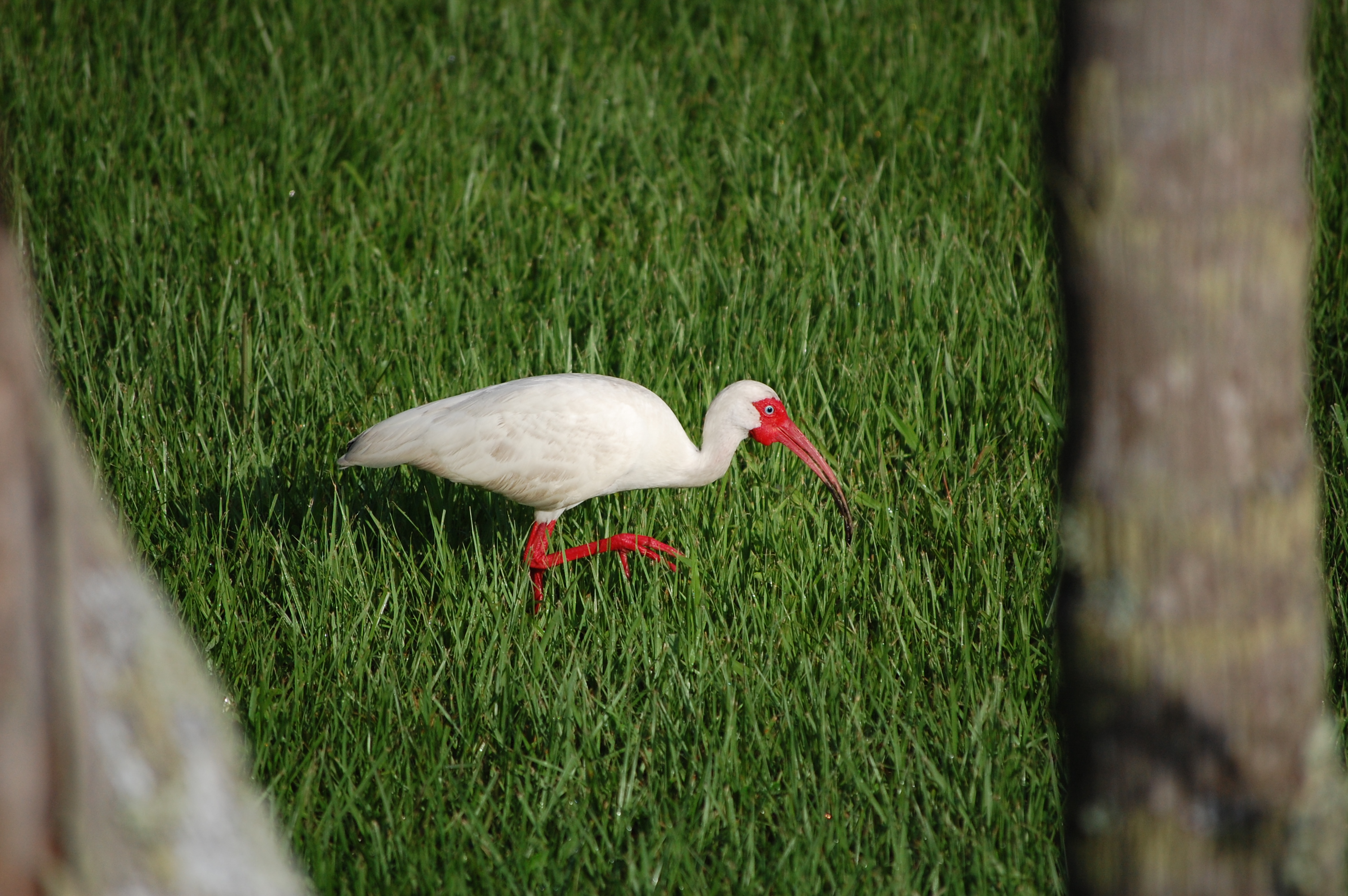
One final semi-terrestrial bird that is very common but still very interesting due to its unique adaptation is the white ibis (Eudocimus albus). When Johann Georg Wagler coined the genus name, he must have been rather impressed as it is the Greek term for “glorious”. Specifically, it is a combination of eu meaning “good” and dokimos meaning “excellent”. I would think he was probably referring to the scarlet ibis, an impressive bright red species that I have yet to photograph.
While they may not have the impressive plumage, white ibises are still very interesting birds. They have the distinctive curved beak, which they use to probe soil for insects, or probe through muck to catch crabs and crayfish. Many people think that the ends of their bills are dark. However, this is due to muck staining and not the actual bill color. When ibises are first born, their bills are straight. They don’t start curving downward until about 2 weeks old.
The University of Miami football team is known as “The Hurricanes”, but their mascot is actually a white ibis. Legend has it that they chose this bird as their logo due to its reported ability to survive deadly hurricanes.

Sticking with the theme of interesting bill adaptations, there is one bird here in Florida that in no way needs a trained eye to identify. That would be the roseate spoonbill (Platalea ajaja). The genus is from the Greek platea meaning broad. Ajaja is what the Tupi people, indigenous to Brazil before colonization, would call this bird.
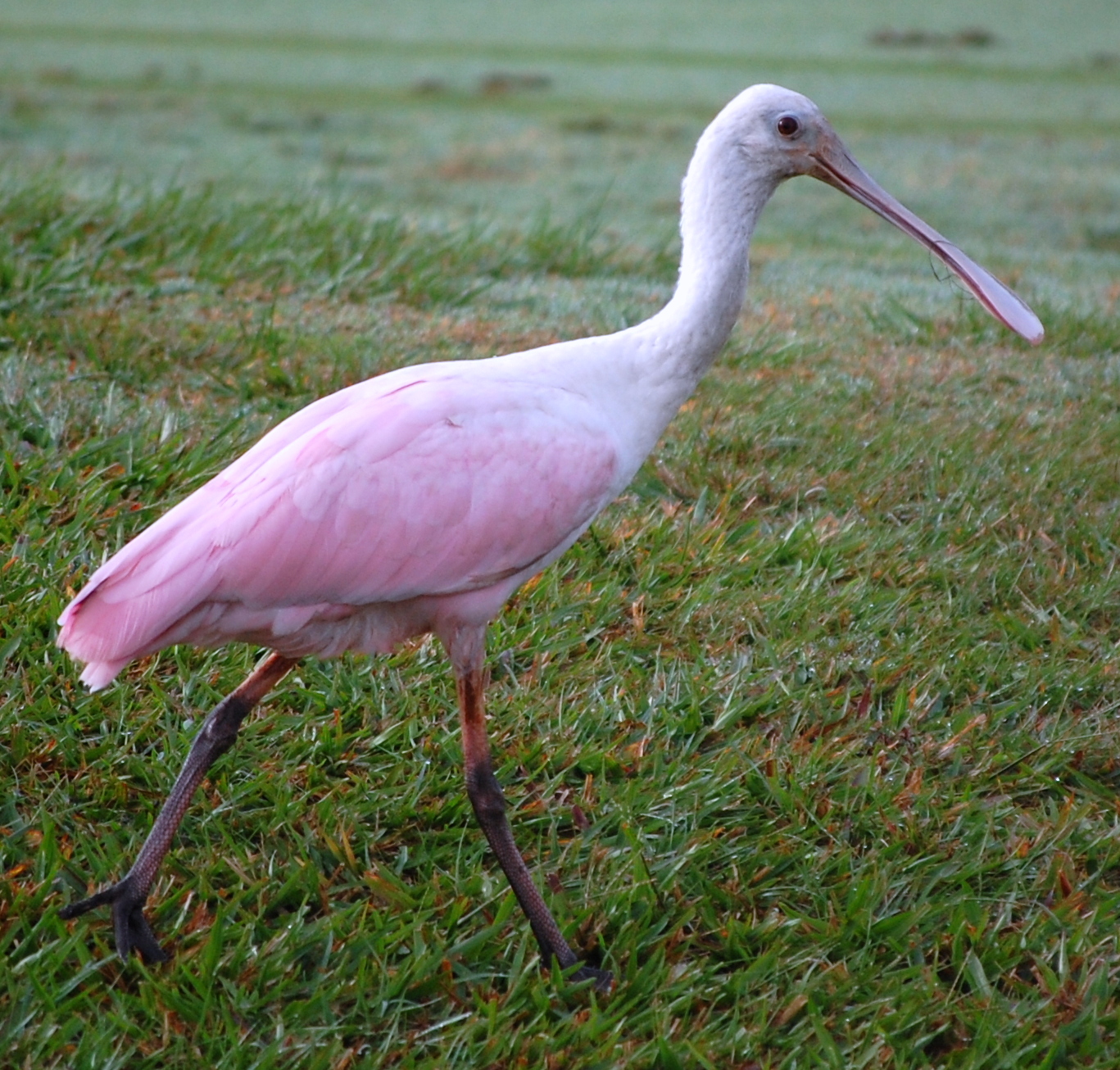
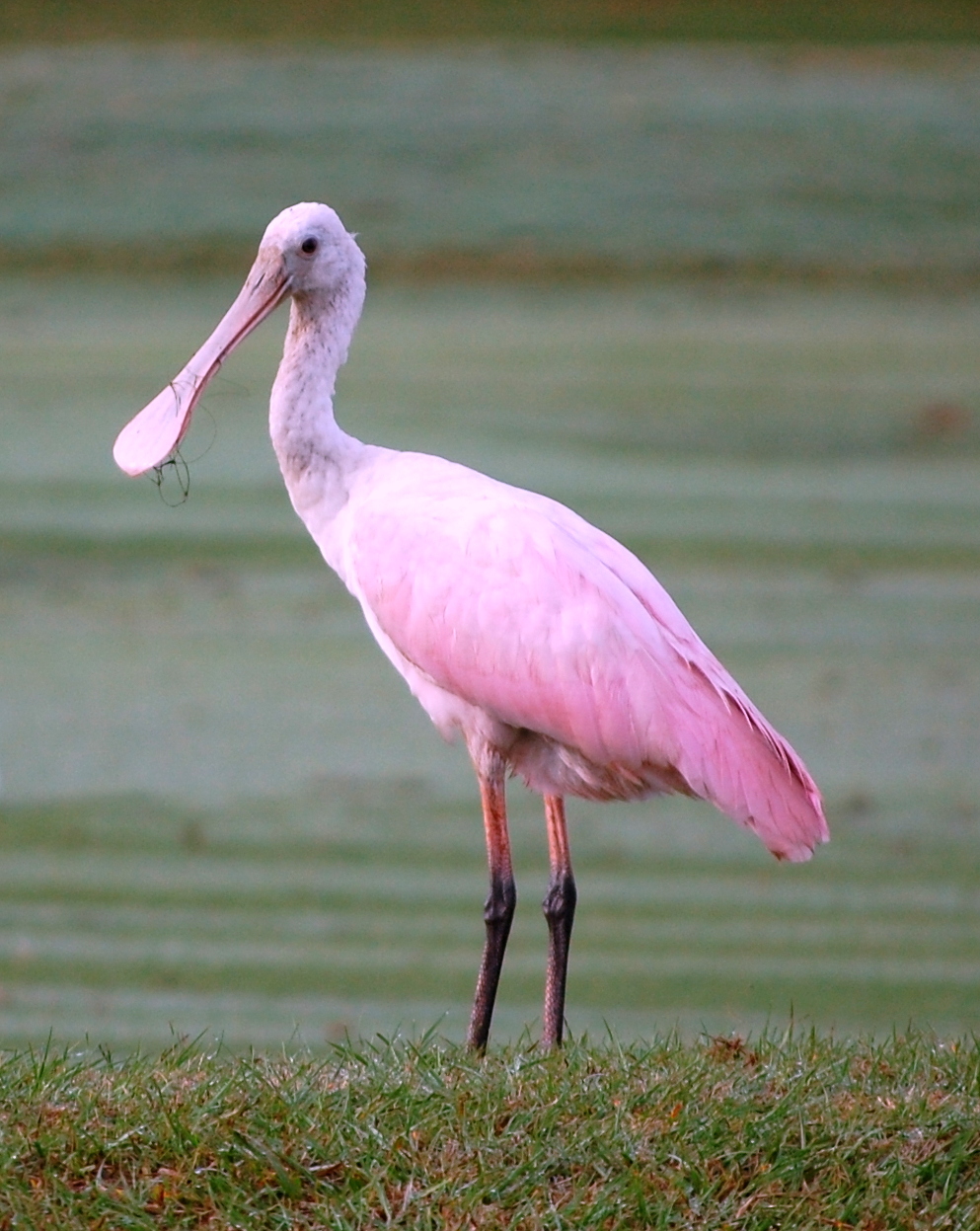
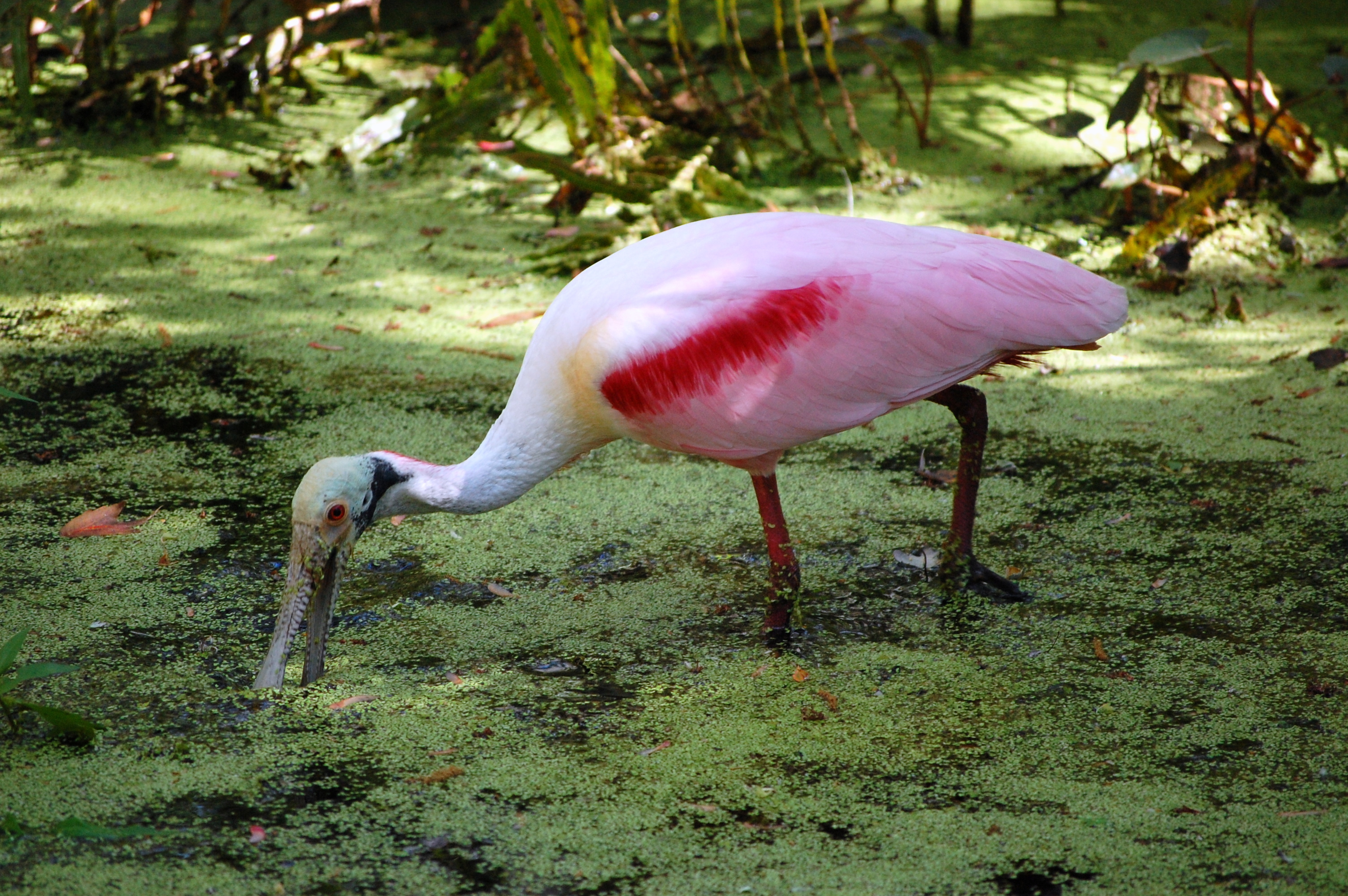
It turns out this bird has a few things in common with a couple of the other birds I’ve shared. First, like the ibis, the unique bill is not present upon hatching, but takes about a month to develop. Also, like the tricolor heron, there is a similarity in their development to that of humans, specifically men. As the spoonbill ages, it starts to bald, losing feathers on the top of the head. Something unlike the others, however, is their body position while foraging. I happened to take this photo when this bird had its head pointed downward. However, most of the time, you will see them in more of a horizontal position as their bill is more designed for scooping rather than probing. You can see how this one is opening the mouth to search through debris underwater. The diet is mainly minnows, plant debris, and crustaceans, which are what gives them the pink color, much like flamingos.

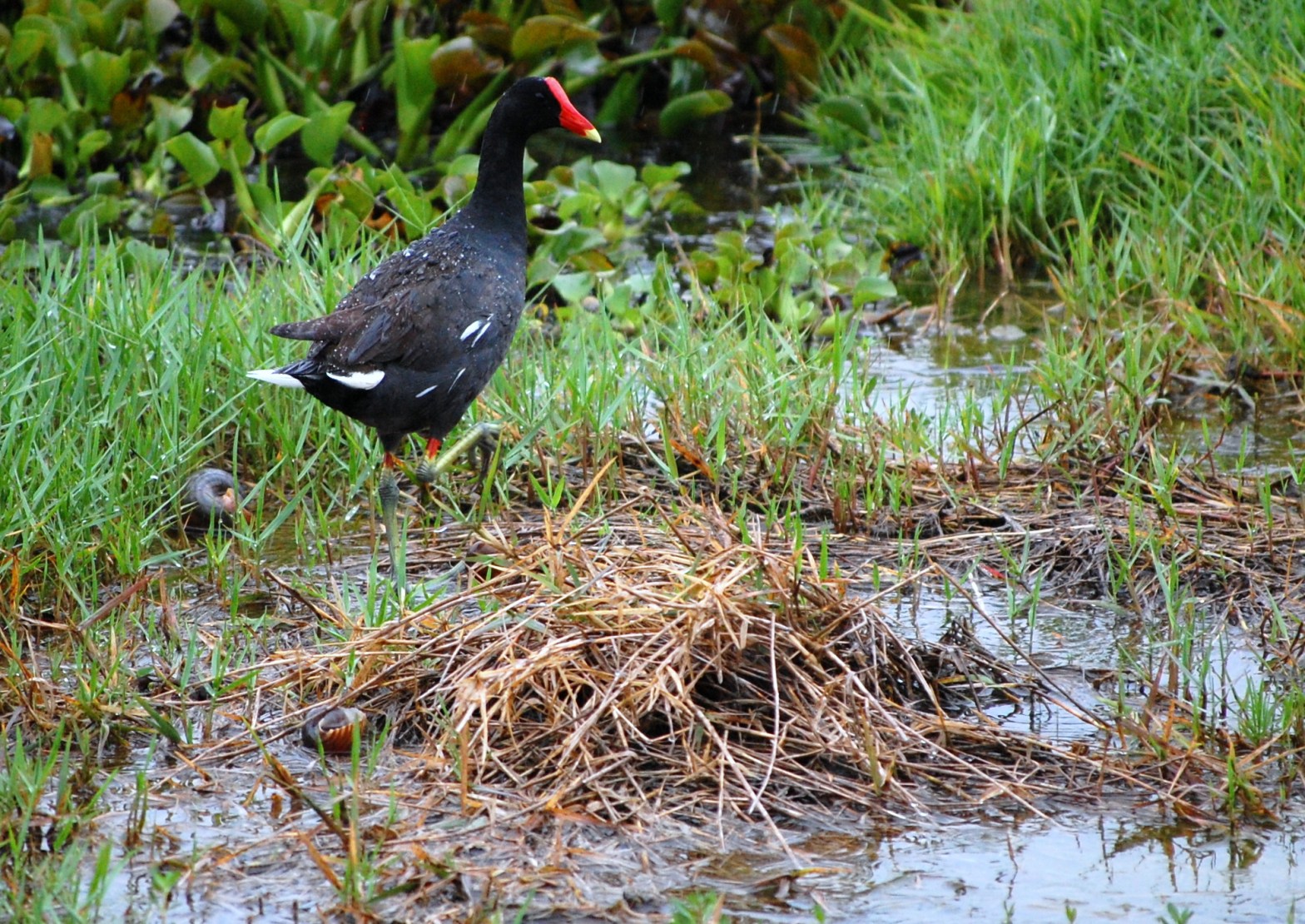
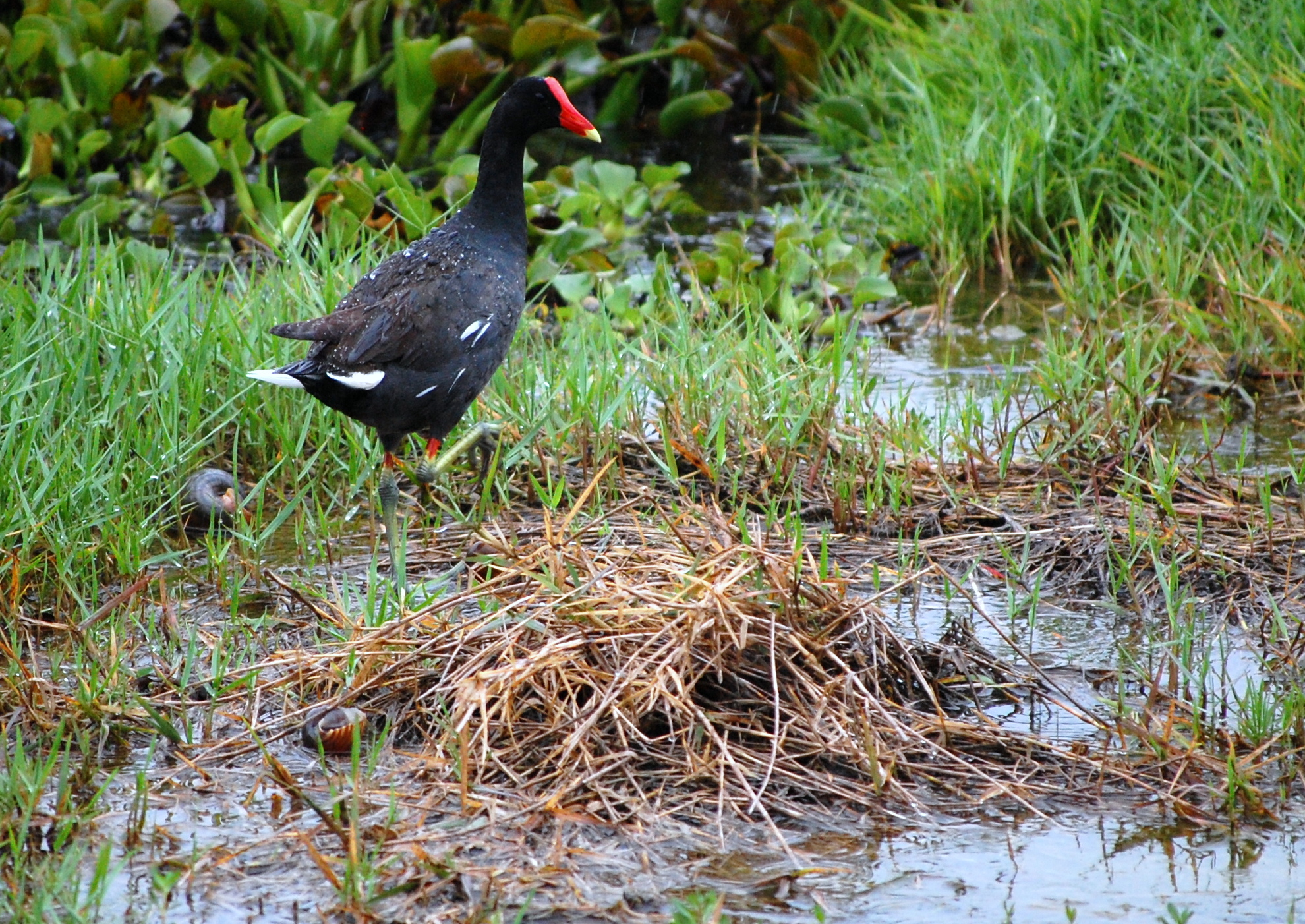
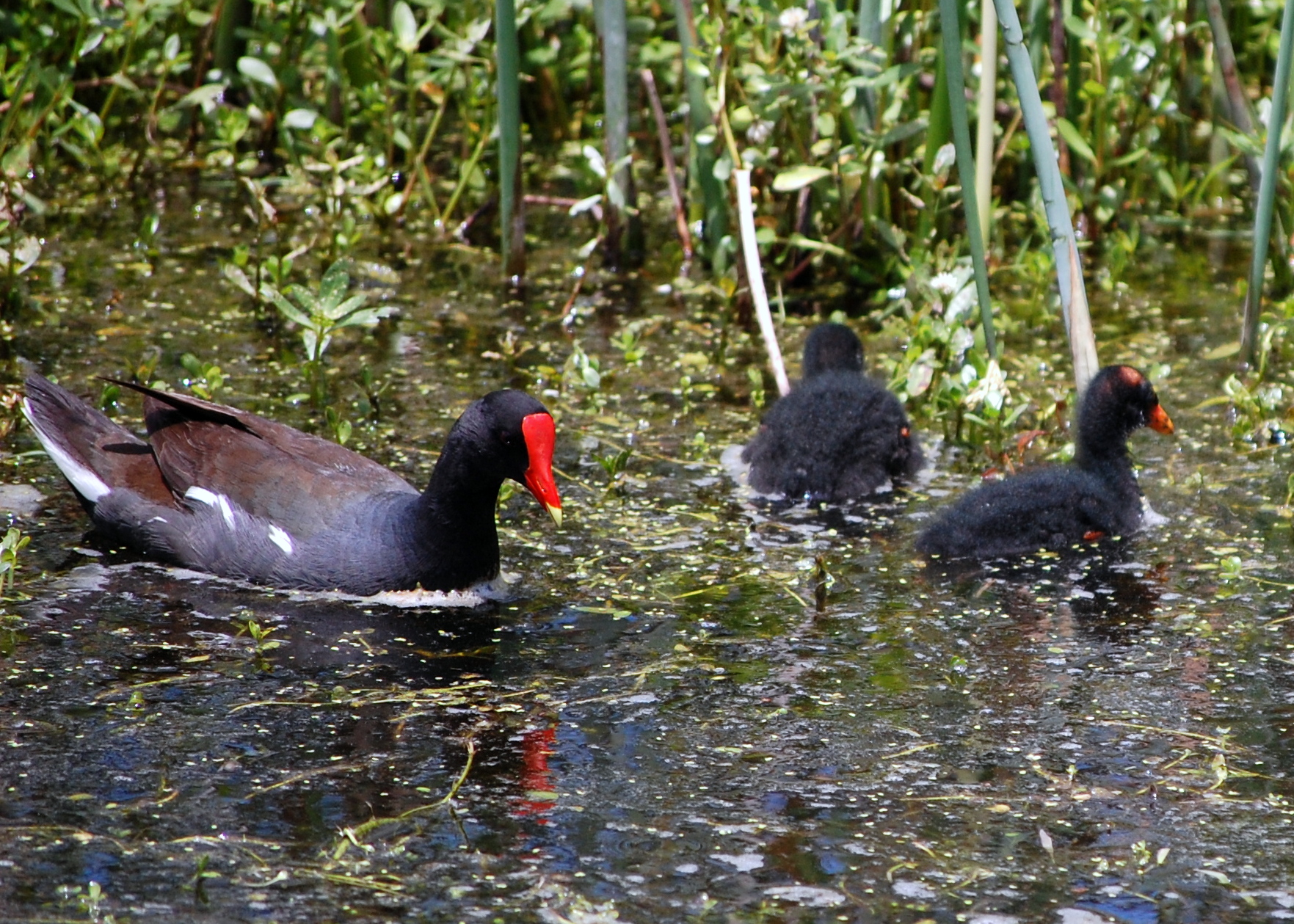
The final bird that I would say is common in this area is the common moorhen or gallinule (Gallinula chloropus). Gallinula is a Latin term meaning “little hen”. The species name is a combination of the Greek khloros meaning “green” and pous meaning “foot”. As you may have guessed, the feet (and legs) are in fact green. However, as they are usually wading or swimming, you might not get to see the legs or feet. In fact, as this species can be a bit timid, you will usually hear them before you see them. One way that you can see their uniquely robust legs is when one is near a nest, which they build on floating patches of grass as the one below. The feet need to be robust for two reasons. One, they need the large surface area for walking through muck. Also, since the feet aren’t webbed, this large surface area helps this bird to be an excellent swimmer.
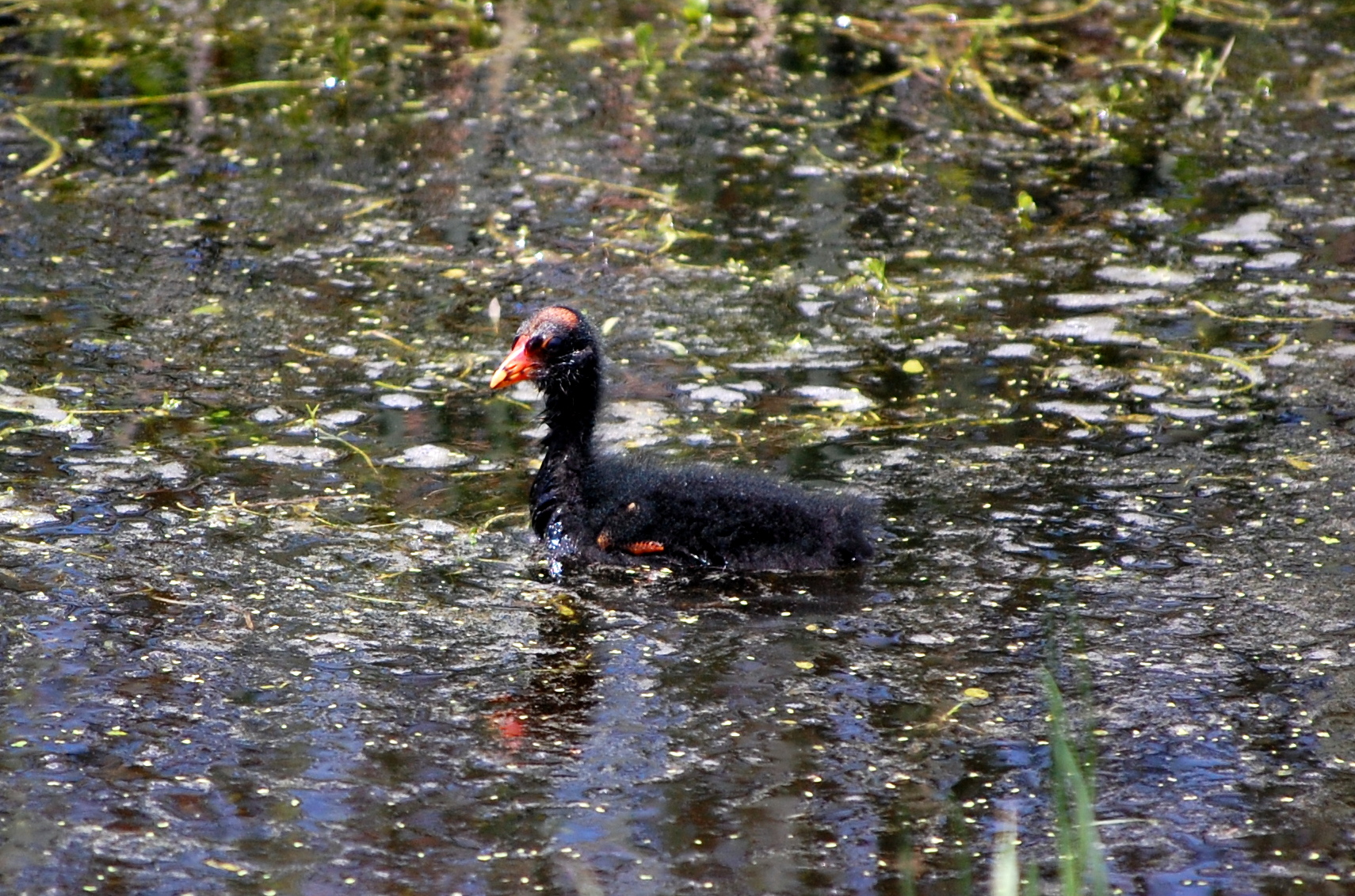
Young moorhens have spurs on their wings that they use to grip vegetation to help them get to the nest, or grab onto vegetation to get out of the water. The spurs aren’t visible in the photos below. However, in the second one, you can see the young chick attempting to grab onto nearby vegetation.
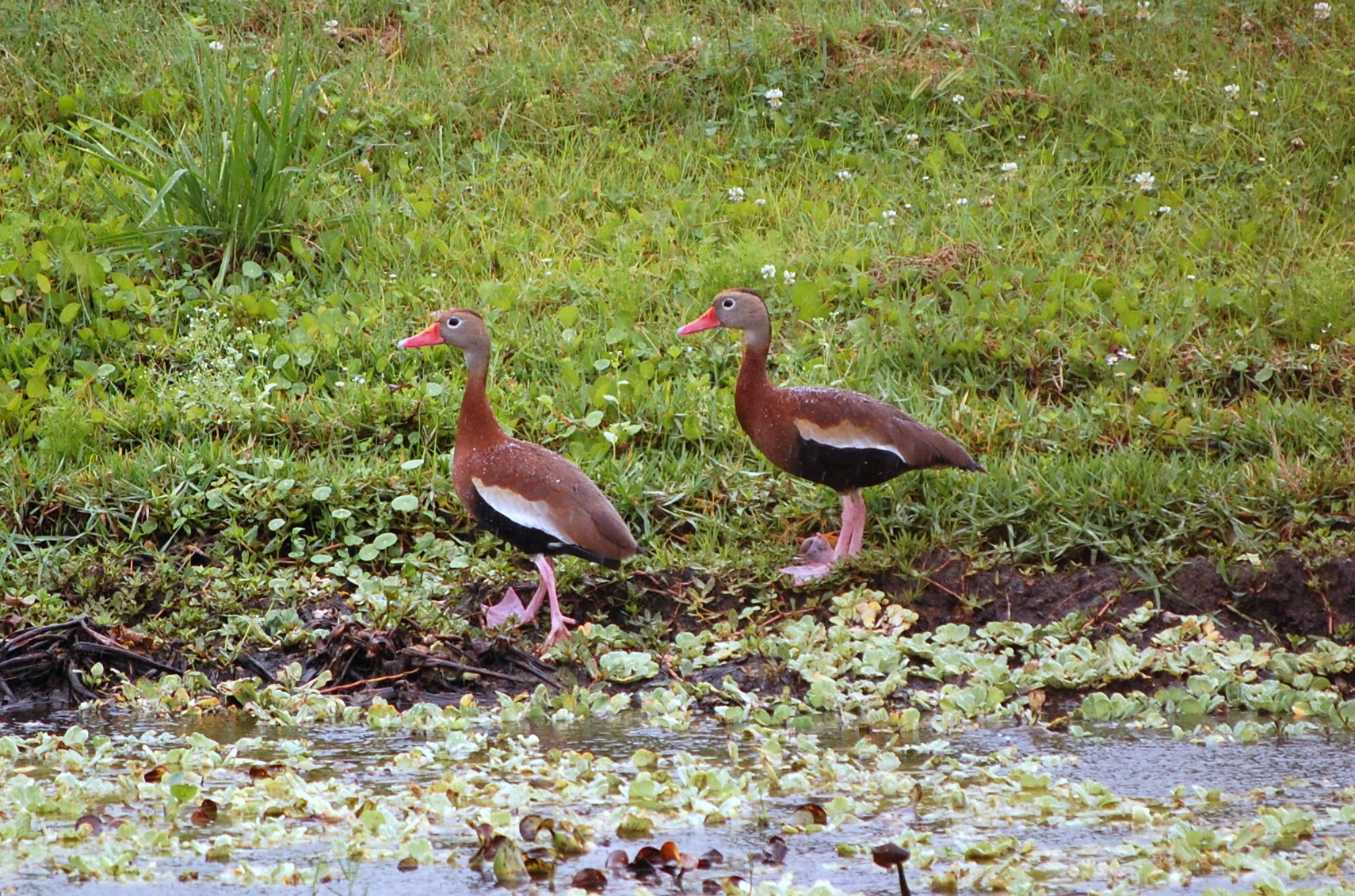
Moving on to some wetland birds that aren’t quite as common. First is a duck that, while visibly unique as well, can many times be identified for the unique call that gives them their name. This is the black-bellied whistling duck (Dendrocygna autumnalis). The genus is a combination of the Greek dendron meaning tree and cygnus meaning swan. Whistling ducks are one of a very few species of ducks that will actually perch in trees. There is also a trait that they have in common with swans – monogamy. Unlike other duck species, whistling duck pairs form very strong bonds. They also lack sexual dimorphism, another trait that they share with swans. The species name refers to the fact that these ducks would appear in the Autumn months in the area that they were initially described.
These next two birds I’ve seen so rarely that I haven’t been able to get a very good photo of either. I’ll start with one that is another with a unique adaptation – extremely long legs. This is the black-necked stilt (Himantopus mexicanus). The genus is a combination of the Greek himantos meaning strap and pous meaning foot. This was chosen due to the legs and feet looking pliant and thin as if they were cut from a leather strap. The species name is clearly a reference to where it was first described. The legs may not look impressive in the photo below due to them being mostly underwater. But imagine that, for every bit of leg you see above the water, just as much (if not more) is hidden underwater. In fact, stilts have the second highest leg to body ratio, second only to flamingos.

This final bird I was going to share in my next planned post which will be about marine birds. However, given the unique adaptation, I thought I would include it here. This is the marbled godwit (Limosa fedoa). The genus is from the Latin limosus meaning “muddy”. The species name is the Old English word for godwit. As far as the word “godwit” itself, many sources say the origin is unknown. However, one publication from the Royal Society for the Protection of Birds (basically the UK’s Audubon Society) suggests that it is a combination of the Anglo-Saxon god meaning good and wiht/wight/wihta meaning creature or animal. This is based on centuries-old records indicating that this bird was good to eat. And no, this photo is not distorted at all. The godwit’s bill is unique in that is does turn up slightly. It uses this adaptation to clip underground tubers that they feed upon.

 BJ Quinton