As promised, now that I’ve had fun with bats, I will move on. However . . . I do have to throw in just one more fun bat fact that I read, because it is just too amazing not to share. Since they have such acute hearing, when they make their initial echolocation sounds, it is so loud to them that it could actually cause hearing loss. To prevent this, when they first let out an echolocation, there are muscles in their ears that contract, separating the bones of the middle ear. So they basically make themselves deaf for that fraction of a second, after which they relax the muscles, putting everything back in place in time for the echoed sound to reach their ears.
But ok, moving on to coastal birds as promised. These can be a little tricky sometimes, so I’ll start with some that are more obvious and work my way to those that are a little harder to identify.
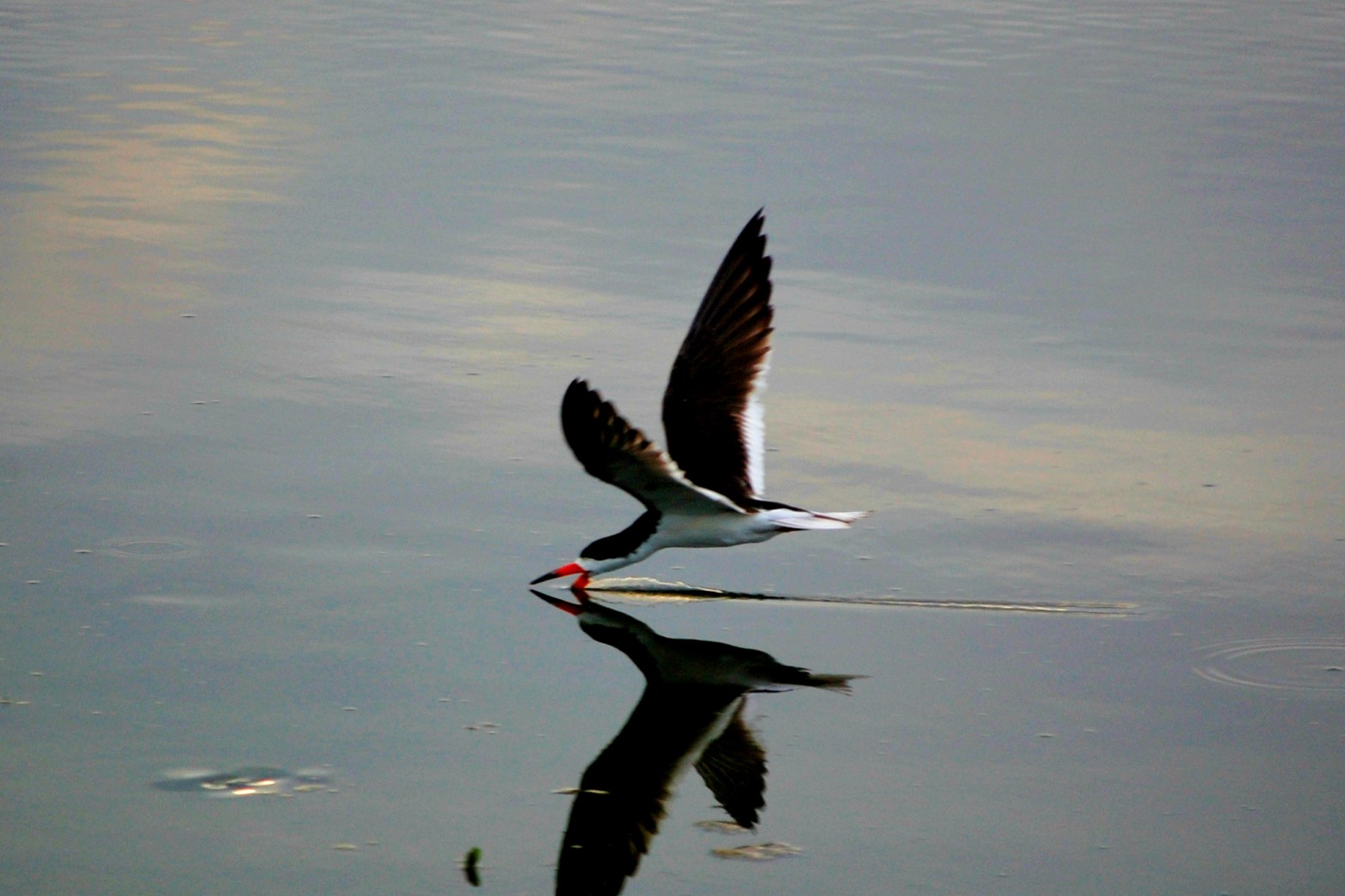
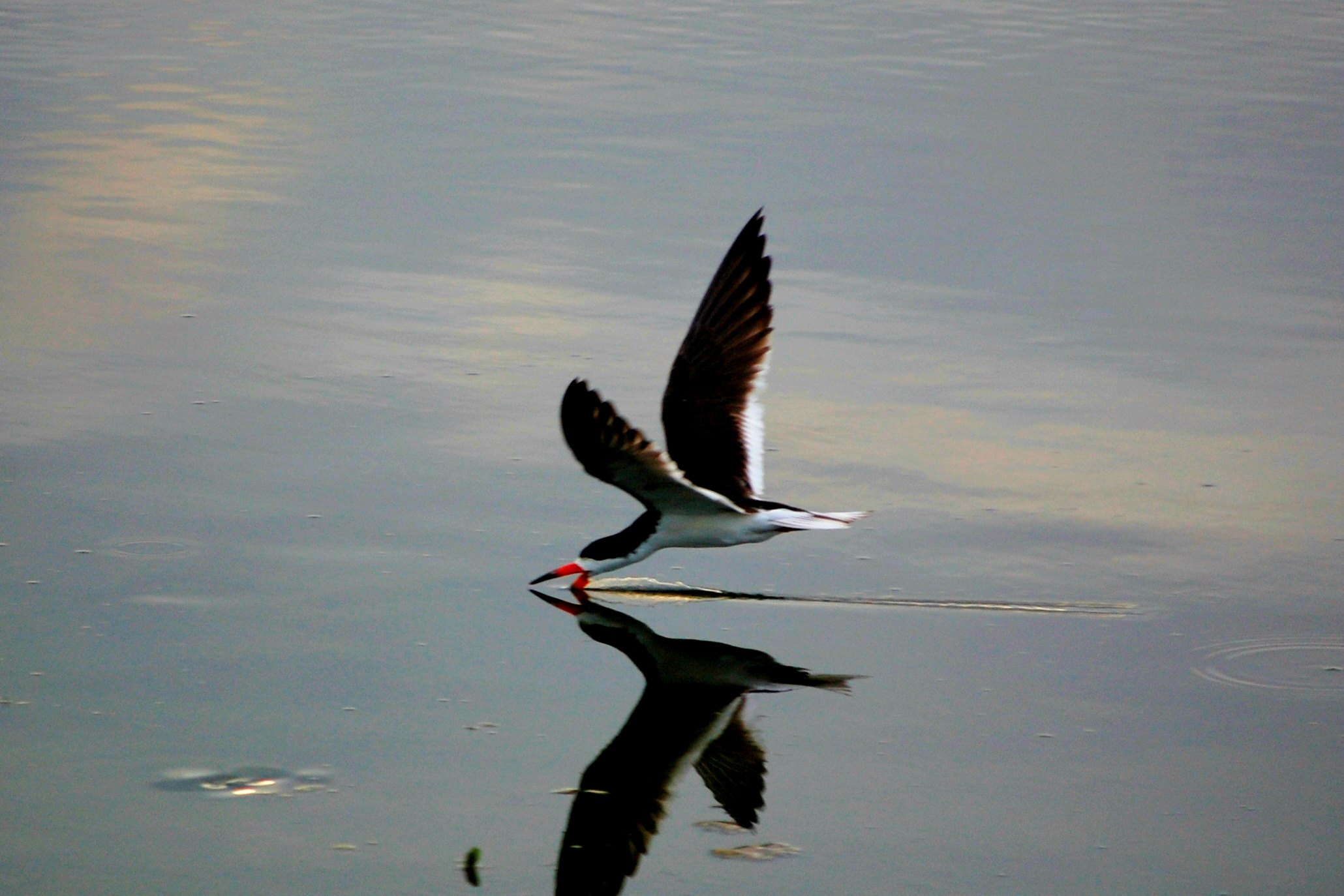
This first bird is one of my favorites and is all but impossible to confuse with any other species. This is the black skimmer (Rynchops niger).

The exaggerated underbite is where this bird gets its genus name. It is derived from the Greek rhunkhos meaning “bill” and kopto meaning “to cut off”. This is a reference to how the upper bill appears to have been cut short compared to the lower. The species name is the Latin word for black, since this is the predominant color.
The way that this species hunts is as unique as its appearance. It soars just over the surface of the water with the large lower bill dragging just under the surface. When something touches the bill, it snaps shut. The prey items can vary from small fish to crustaceans, and even insects. Since this behavior is not heavily reliant on sight, this species is mostly crepuscular (active at dawn and dusk) and can sometimes be nocturnal.
Another very easily identified bird that is frequently found in coastal areas is the American oystercatcher (Haematopus palliatus). I didn’t get a very good photo of this one, but you can see the characteristic black head with bright yellow eyes and nearly round red bill.
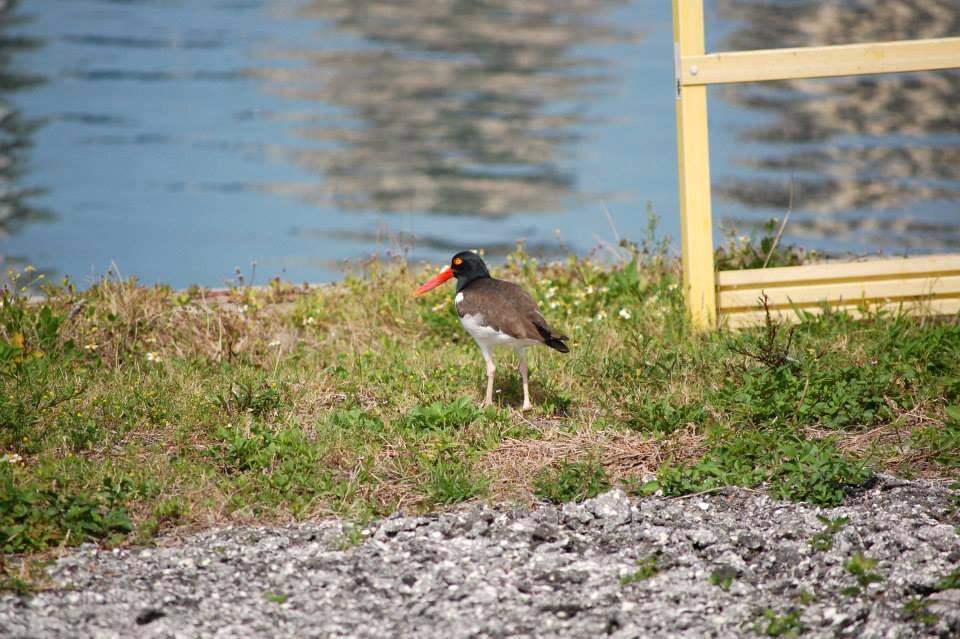
The genus name comes from the Greek haima meaning “blood” and pous meaning “foot”. I haven’t read anything on why it was given this name, but my guess is that it has something to do with the legs and feet having a pink color. The species name is the Latin for “cloaked”. Again, I can only guess that this is in reference to the dark coloring on the top of the wings.
If you think about it, the name is sort of silly since oysters are sessile. But, aside from some gulls that can crack them open by dropping them on rocks or concrete, oystercatchers are the only birds that can pry them open. This can be dangerous, however. There have been instances where an oystercatcher has attempted to open an oyster, only to have it clamp back down on the bird’s bill, trapping it in place. This can be deadly for the bird when the tide comes back in.
Young oystercatchers are a dull grey, helping them blend in with the gravel and sandy ground on which this species nests. As always, I had a telephoto lens and would never recommend getting close to a ground nesting bird’s nest.

This next bird is familiar to anyone that lives near the coast – the brown pelican (Pelecanus occidentalis). The origin of the genus isn’t very exciting. It comes from the Ancient Greek pelekan meaning…well…”pelican”. I did find one source that said the Greek word was derived from the word pelekys which means “axe”. I couldn’t find anything on how that applies to pelicans, however. The species name indicates it is found in the western hemisphere.
While the sight of a pelican is very common, their unique anatomy and often misunderstood behavior make them a very interesting bird. It appears that they dive into the water and grab their prey. However, that’s not exactly what is happening. They dive into the water to stun their prey with the impact, then quickly open their mouths to pull the prey in. Upon surfacing, they let the water drain from their pouches before swallowing their meal. The trachea and esophagus are actually found on the right side of the neck. If you watch closely, a pelican always dives onto their left side, so as to protect these organs.
Another interesting part of their anatomy is the pouch itself. I remember my grandfather would say a little poem when he saw a pelican. He only said the first couple of lines, but the full thing goes as follows:
“A wonderful bird is the pelican.
His beak can hold more than his bellican.
He can hold in his beak enough food for a week.
But I’ll be darned if I know how the hellican!”
I always assumed it was just a myth. But it is actually true that their pouches have a higher capacity than their stomachs. I took this photo at a beach in Flagler County. I noticed that one individual had a dark underbelly, where the other was white. I thought I would research this and find it was significant to telling sex or subspecies, etc. It turns out some just have different coloration from others.

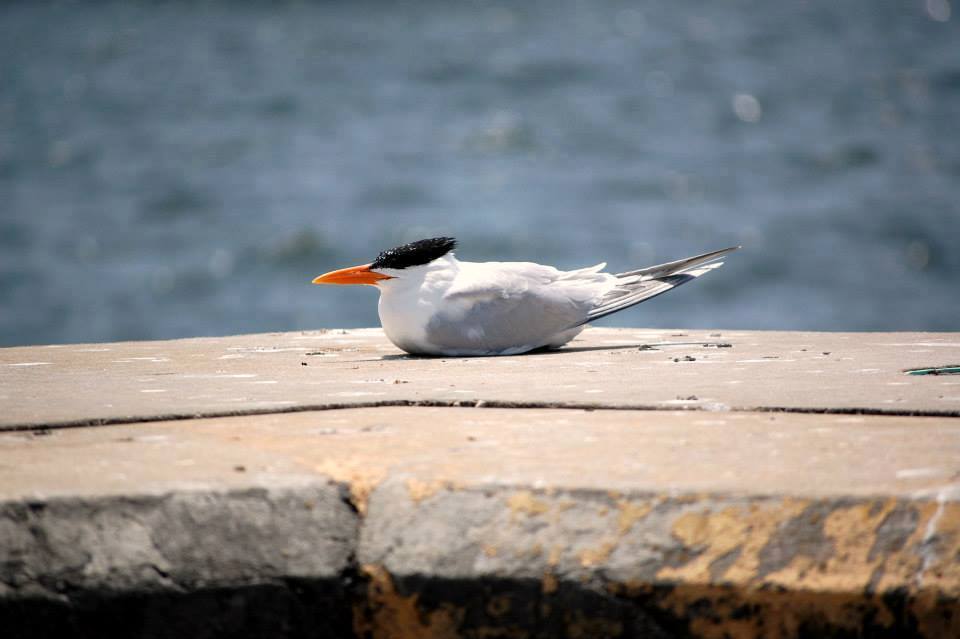
There are several tern species in Florida. However, the one that is most easily identified in the royal tern (Thalasseus maximus). The genus is the Greek word for “fisherman” where the species is Latin for “greatest”, likely because this is the largest of the tern species in Florida.
Royal tern chicks leave the nest just one day after birth and congregate by the thousands in groups called crèches (a British term for “nurseries”). Much like I mentioned with the Brazilian free-tailed bats, the parents will only feed their young and are believed to be able to find them in the crowd by recognizing their call. Side note: the bats also have these nurseries and they are also known as crèches.
When first forming a colony, royal terns exhibit a very strange behavior known as “panic” or “dread”. All breeding birds in the colony will go eerily silent (they are noisy birds) and slowly rise up at once and fly over the colony area for around 20 minutes before returning. It is currently unknown why they do this.
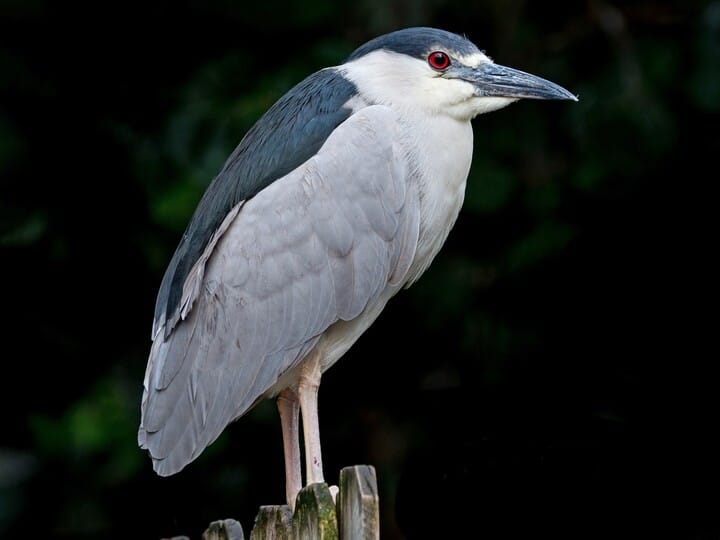
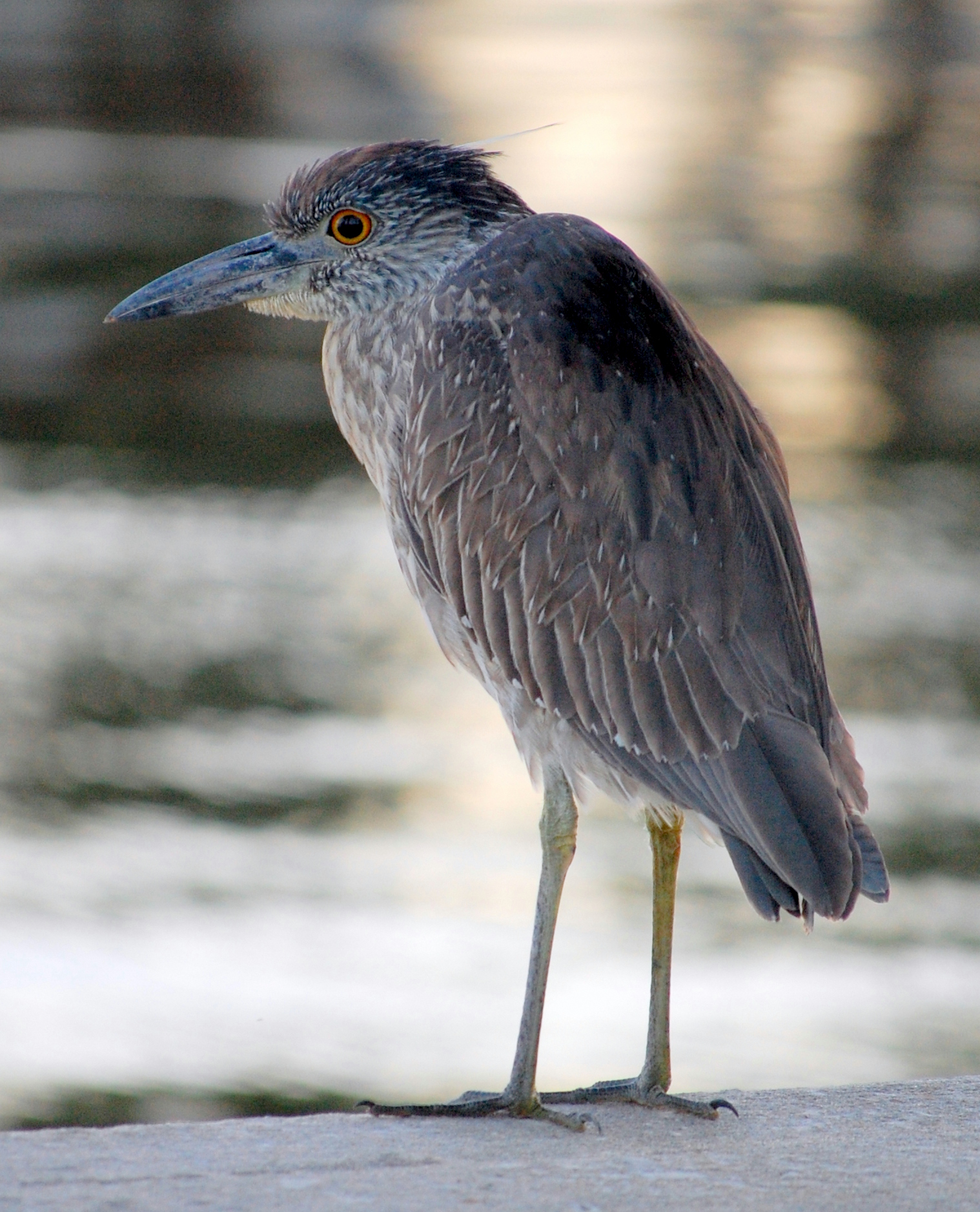
With this next bird, we start to get into the realm where it can be a bit harder to identify them. This is the yellow-crowned night heron (Nyctanassa violacea). The reason that this one can be hard to identify to a novice is its similarity to the black-capped night heron, which has a black top to the head and is more grey than streaked.
The genus comes from the Greek nux meaning “night” and anassa meaning “queen” or “lady”. The species name comes from the Latin violaceus meaning “violet-colored”. There are several plant species with the species name violacea which all, of course, have a purple color. Why this bird was given that name is a mystery to me. My best guess would be that the gray areas give off some sort of violet hue in the right light. The reason behind the genus and common names is the foraging behavior. Most animals in general have a schedule based on the time of day. Night herons feed on crustaceans that are best found near times of high tide. Therefore, they can be found foraging a few hours before and a few hours after high tide, even if that means foraging in the middle of the night.
This first photo is of a juvenile. Telling the yellow-crowned from the black-capped can be a little difficult. I could tell this was a yellow-capped based mainly on the bill. This bird has an all black bill. A juvenile black-capped night heron would have more yellow in the bill. Some other, more subtle differences from the black-capped include differences in the streaking pattern, slightly darker eyes, and a thinner neck (although this one has it tucked in).
The adults are easier to tell apart. A black-capped night heron has black on the top of the head and on the back, with a white neck and gray underside. The yellow-crowned night heron has a fully black head except for the yellow top and a white streak along the cheeks. The rest of the body is mostly gray with some streaks in the wings. This particular bird was engaging in a behavior known as “gular fluttering” that you may see birds doing on hot days. This is where a bird will open its mouth and flutter the gular (throat) tissues, allowing air to quickly pass over them releasing body heat, similar to a dog panting.

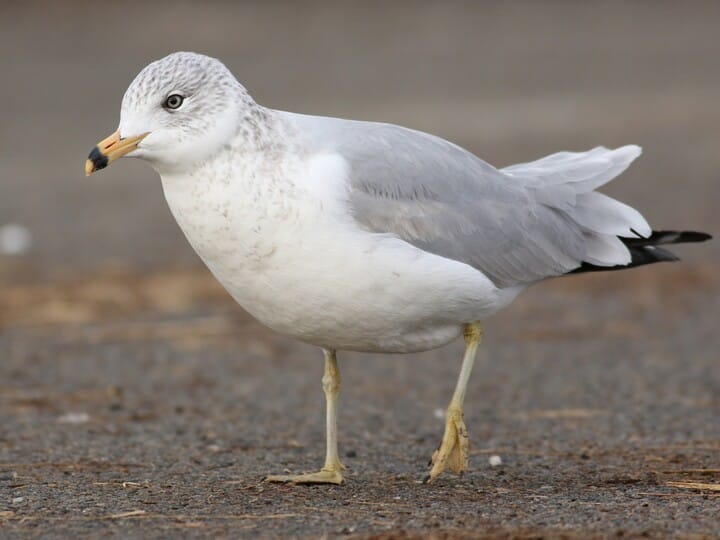
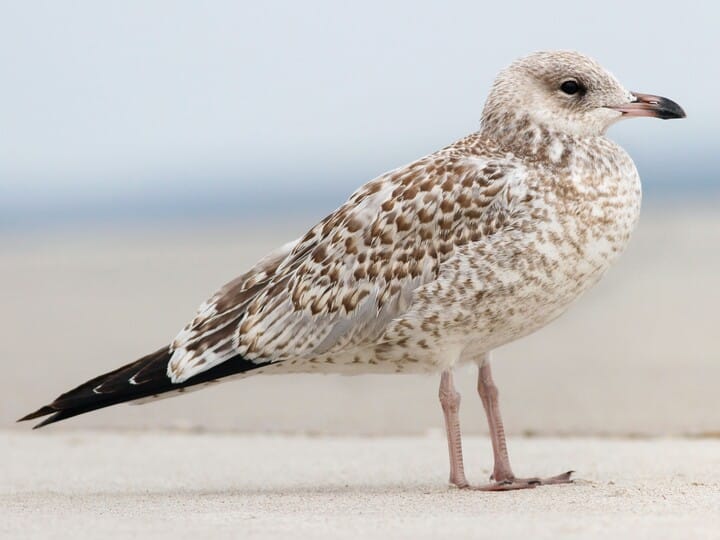
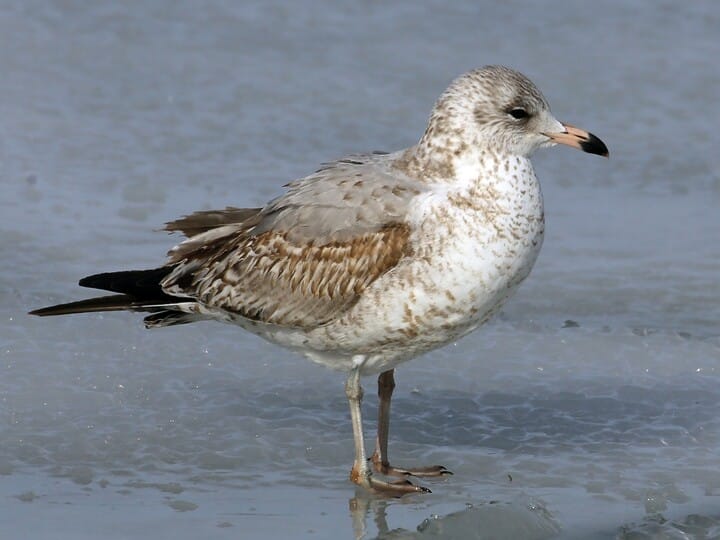
Gulls can be a difficult group of birds to identify, especially depending on the time of year and age of the bird. In fact, many people don’t even know there are different species. They just refer to them all as “seagulls”. The one below is a great example of the difficult nature of identifying gulls. It took me a while to figure out what was going on with this one. In Florida, most of our gulls have either yellow or black bills. I saw this one with a black tip and wasn’t sure what to make of it. We do have a ring-billed gull here, but it has a black ring, not a black tip. So I thought maybe this could be a juvenile bird. However, the juveniles have brown patches on the wings, not the gray shown here and in adults. That’s when I learned that these birds change their plumage for the first couple of years of life. There is a “first winter” plumage where the brown patches are retained, but some of the gray feathers start to appear, then the “second winter” plumage which is what we see below. The following winter, this one will have the full adult look, with the ring around the bill.
The ring-billed gull (Larus delawarensis) gets its genus name from the Latin word for “large seabird”. The species name references the Delaware River, where this species was likely first described.

This next series of photos aren’t the best, but I thought it was interesting to see how different species can interact. Crows and gulls are opportunistic feeders, eating just about anything they can find (I’ll talk about crows in another post). They are all often seen in the urban environment rooting through trash or sometimes stealing directly from the tables of people eating outside. After a large event near an airport, I was observing bird activity before they had a chance to clean up the debris left behind. There were two crows that were looking through the trash on the ground (there is one behind the paper – it picked it up to see what might be underneath).
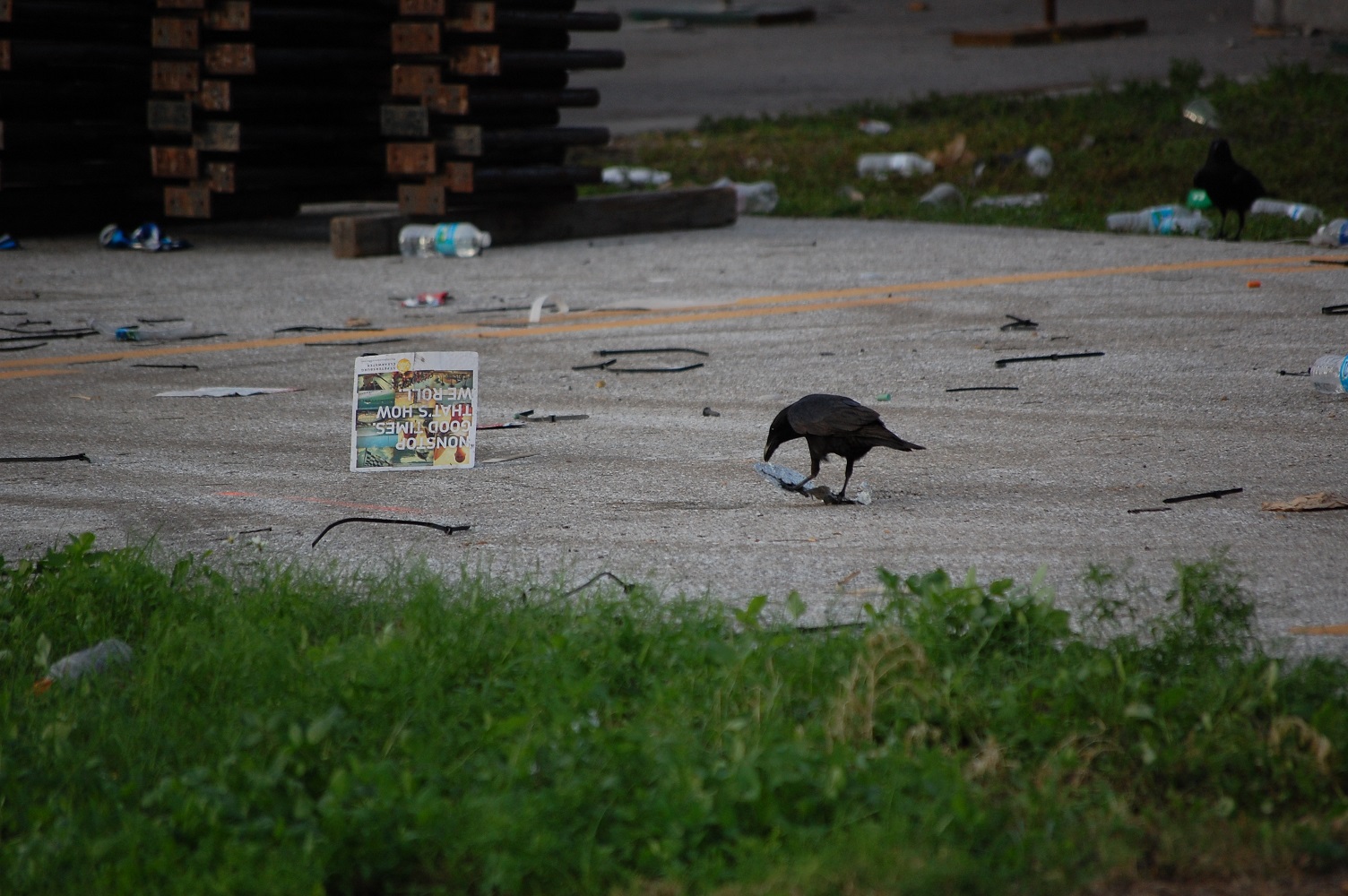
The one crow left but the other stayed, having seemingly found a good meal. One gull walked by undeterred.

But then another showed up, curious about what goodies might be available.
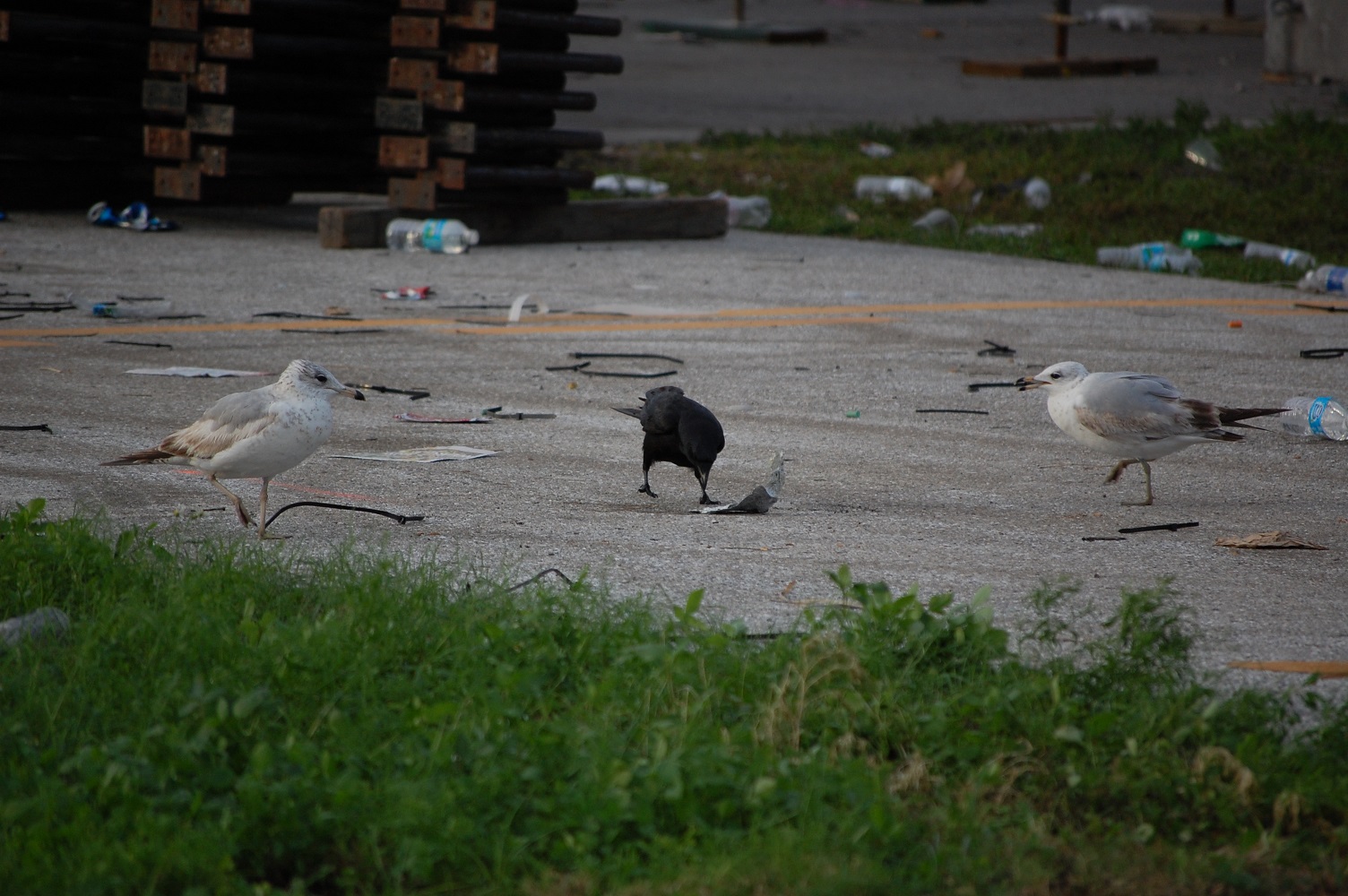
Next thing I knew, a fight broke out!
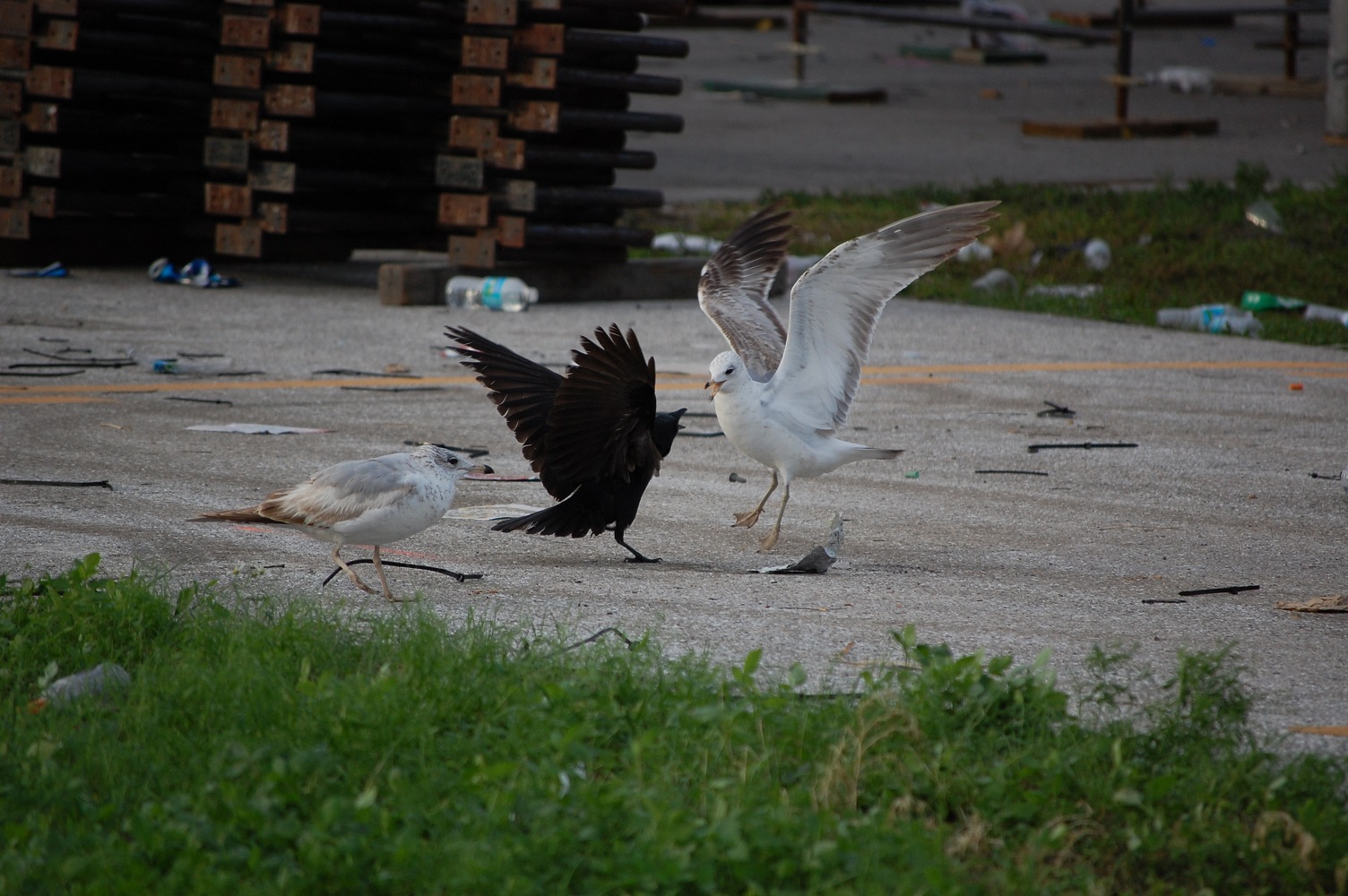
The second gull wasn’t much help.
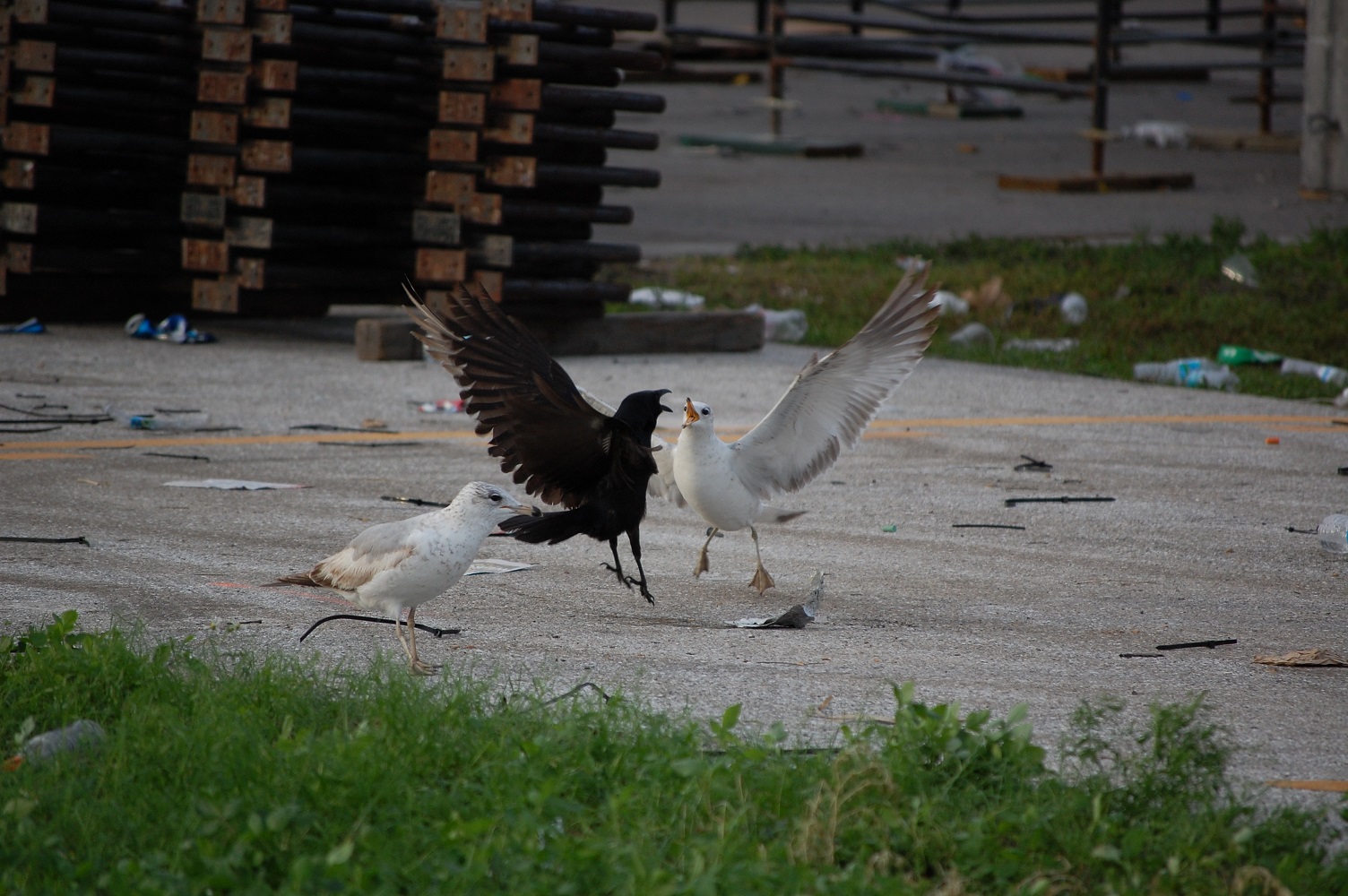
Despite appearing to be at a disadvantage in this last shot, if I recall correctly, the crow stood its ground and eventually the gulls left.

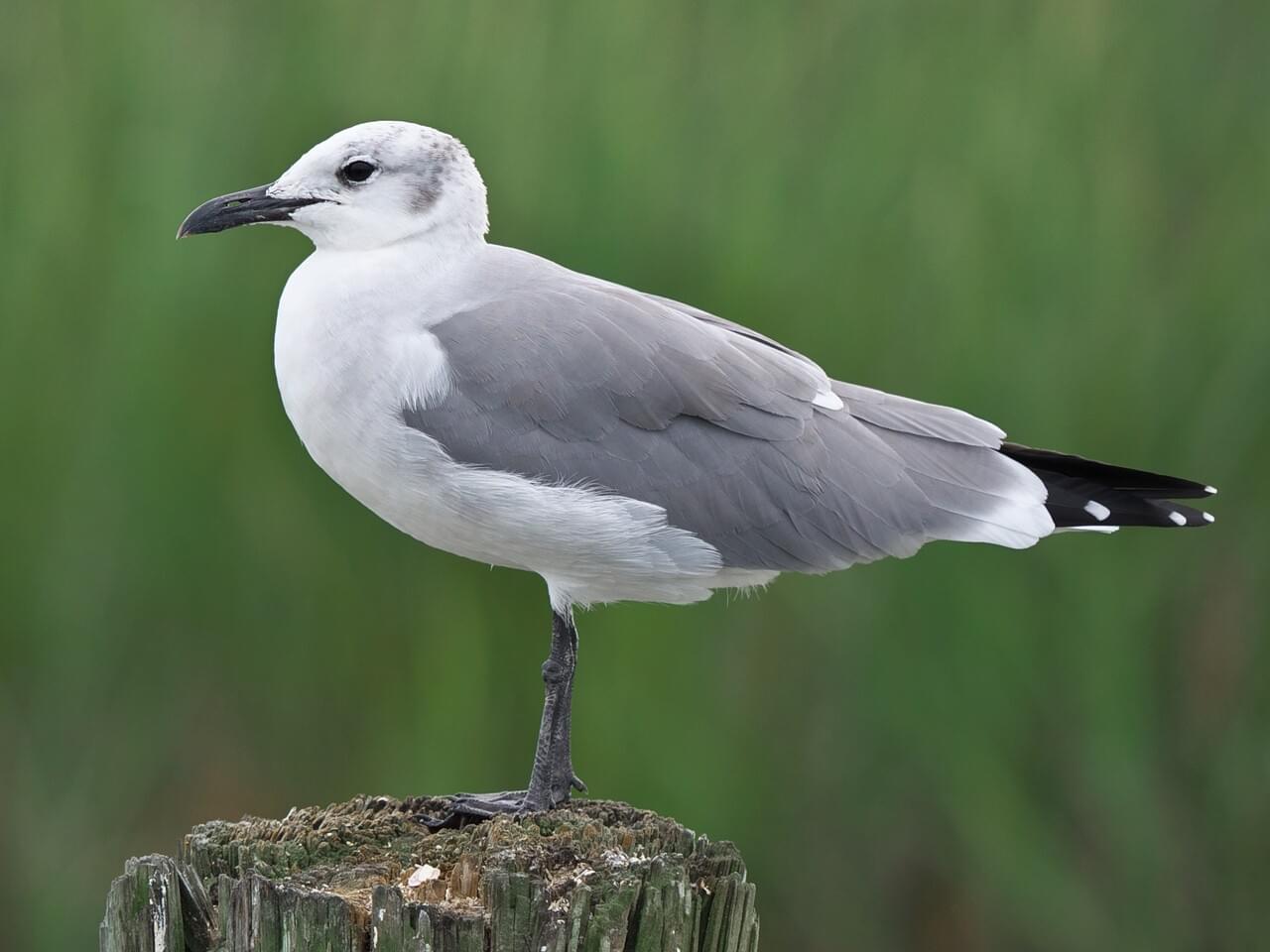
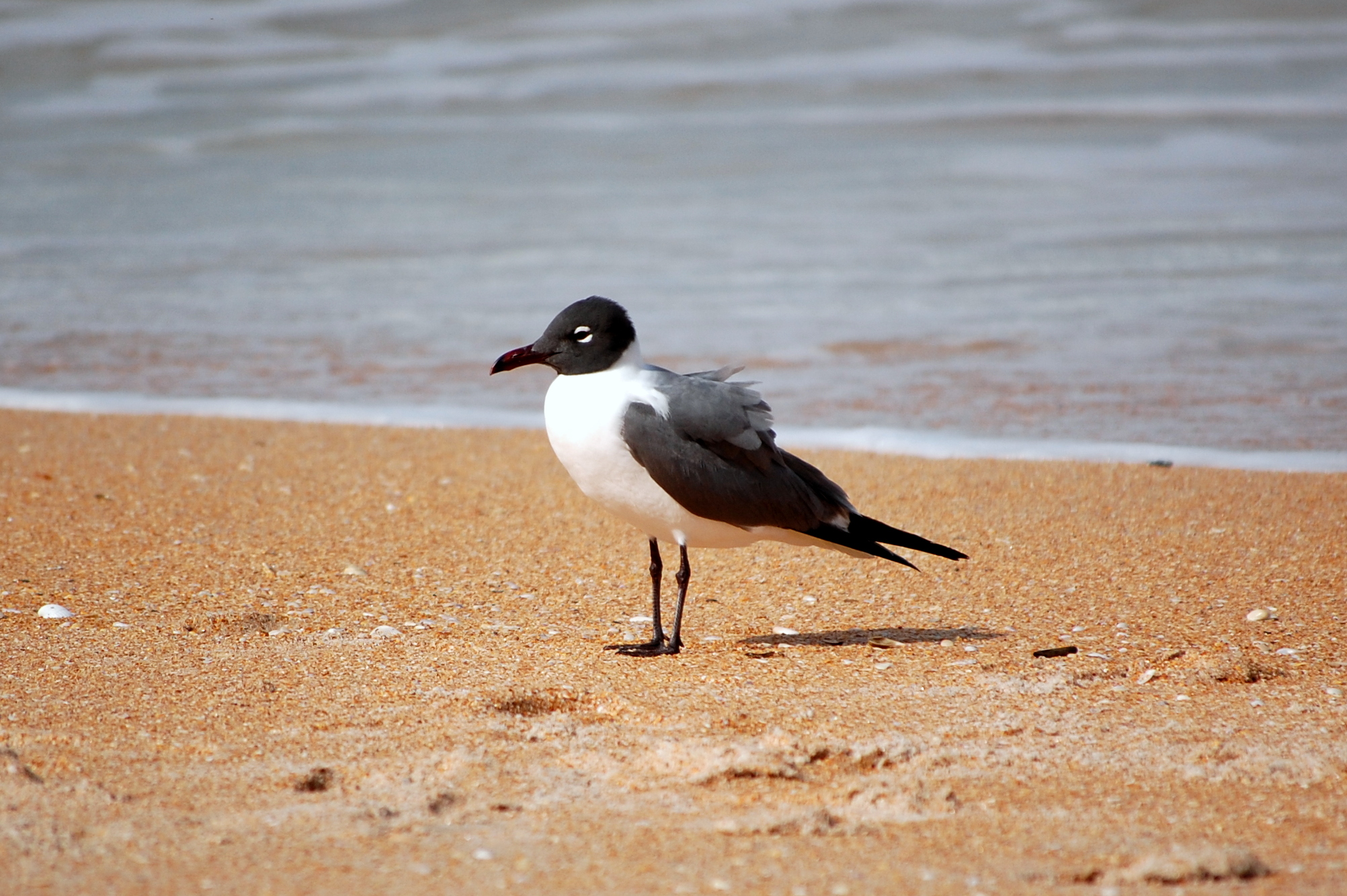
Another gull that is most easily identified based on its somewhat obnoxious call is the laughing gull (Leucophaeus atricilla). If the genus sounds familiar, it is very close to the species name for the bald eagle, leucocephalus, and has a similar background. It comes from the Greek leukophaios meaning “whitish-gray”. While the species name for the bald eagle referred to the bald head, you can clearly see this one has a black head. This makes this breeding adult easy to identify. However, non-breeding adults aren’t as obvious and, aside from the bill, look very similar to the ring-billed gull. The species name also refers to the plumage, coming from the Latin ater meaning “black” and cilla meaning “tail”.
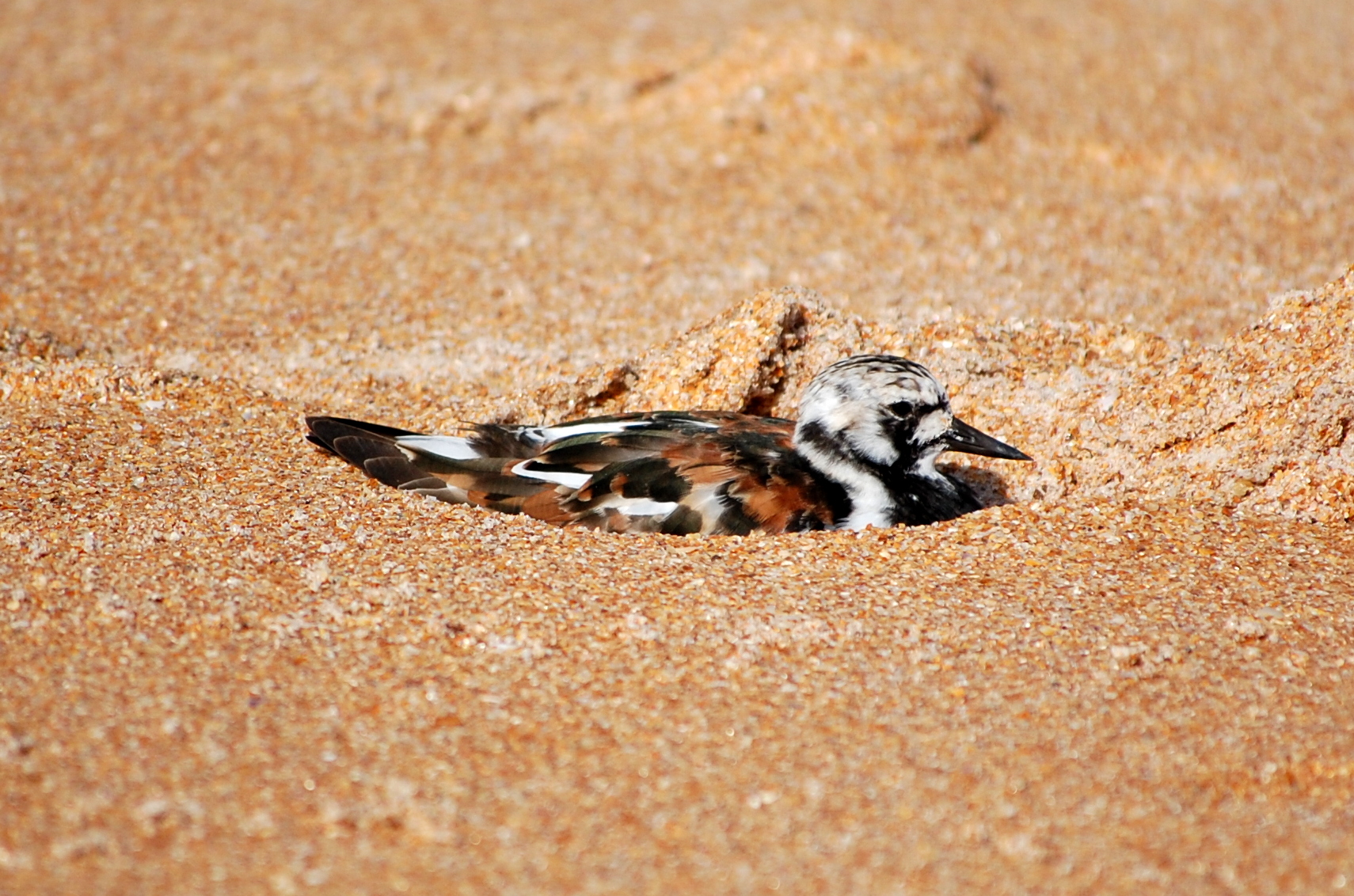
This next bird can be rather easy to identify if you spend a good amount of time on the beach. At first, you might think of it as just another sandpiper or other small shorebird, especially if the first one you see is a non-breeding adult, like in this first photo. However, if you see a breeding adult, you will likely notice the beautiful reddish-orange feathers that gives this bird it’s name – the ruddy turnstone (Arenaria interpres).
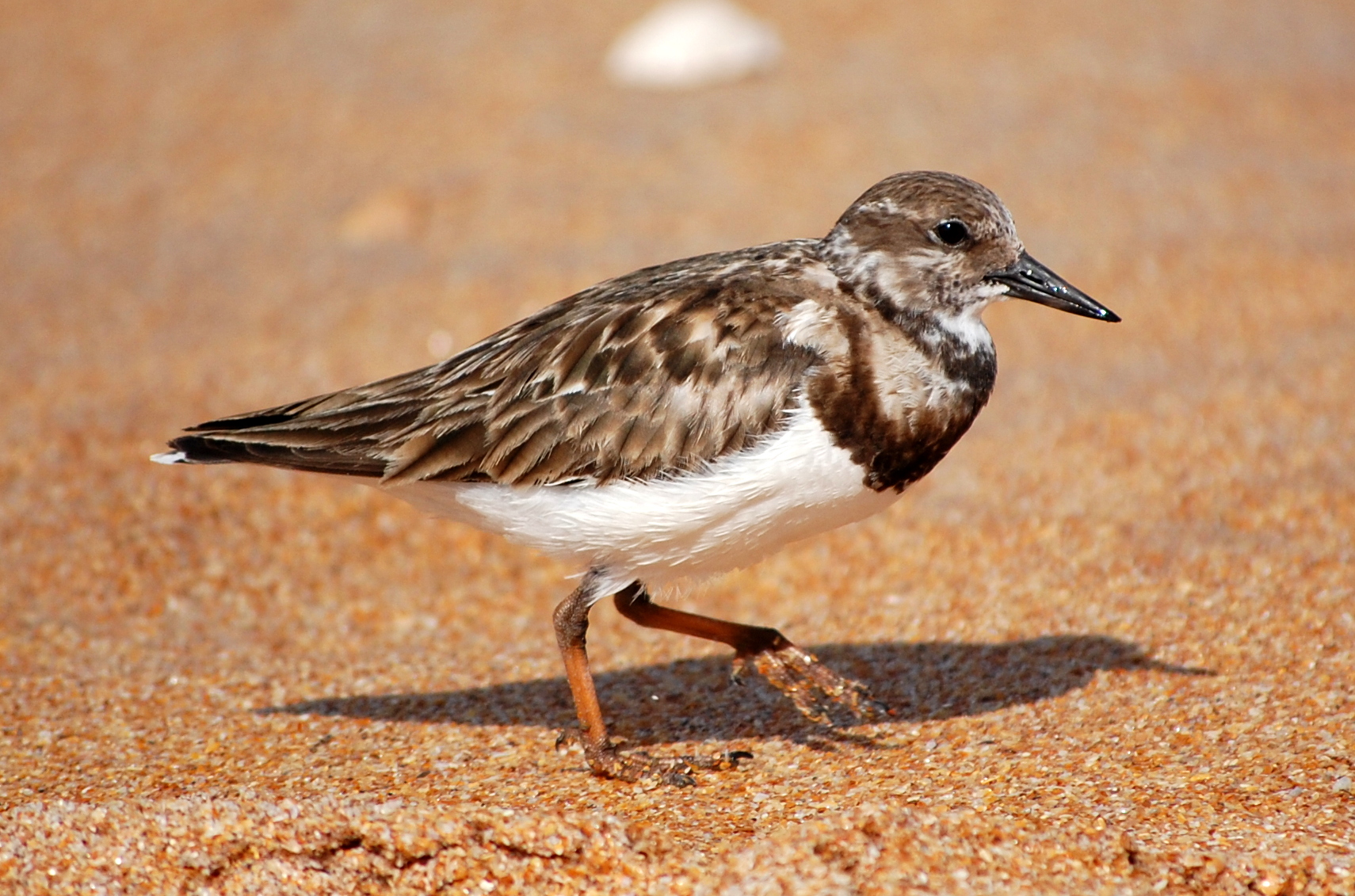
The genus comes from the Latin arenarius meaning “relating to sand”. The species name is the Latin word for “messenger”. This is another one that left me wondering what this bird has to do with a messenger. It turns out it was a mistake made by Carl Linnaeus during a trip to Gotland, an island off the coast of Sweden. He had heard of the word tolk being used to describe another shorebird, the common redshank. In the Gotland dialect, tolk refers to the legs. However, in traditional Swedish, it means “translator” or “interpreter”.
The common name refers to the foraging behavior. This bird will flip debris, including stones, to find insects and crustaceans hiding underneath. They can often be found in areas with very slippery rocks. They have specialized feet with tiny spines to help them keep a grip. Rather than hide in the rocks, the one below found a perfect place to tuck in and rest – a footprint left by someone that walked through the area just moments before.
This final bird is in a group that is so difficult to identify, that I’m not even 100% confident in my identification. However, I am fairly certain that this is a sanderling (Calidris alba). The genus is derived from the Ancient Greek kalidris, a term used by Aristotle to describe gray shorebirds. The species comes from the Latin albus, simply meaning “white”.
Several sandpiper species look very similar. The reason I identified this as a sanderling is because of the mottled look to the wing feathers. Other sandpipers have more uniform feathers. If this is in fact a sanderling, it joins the ruddy turnstone as one of the most widespread shorebirds, nesting in the arctic and wintering in tropical climates.
This is another bird that frequently produces pellets or casts. After seeing one forage on the beach, you may notice it cough up a tiny pellet full of sand and shells from crustaceans.

 BJ Quinton