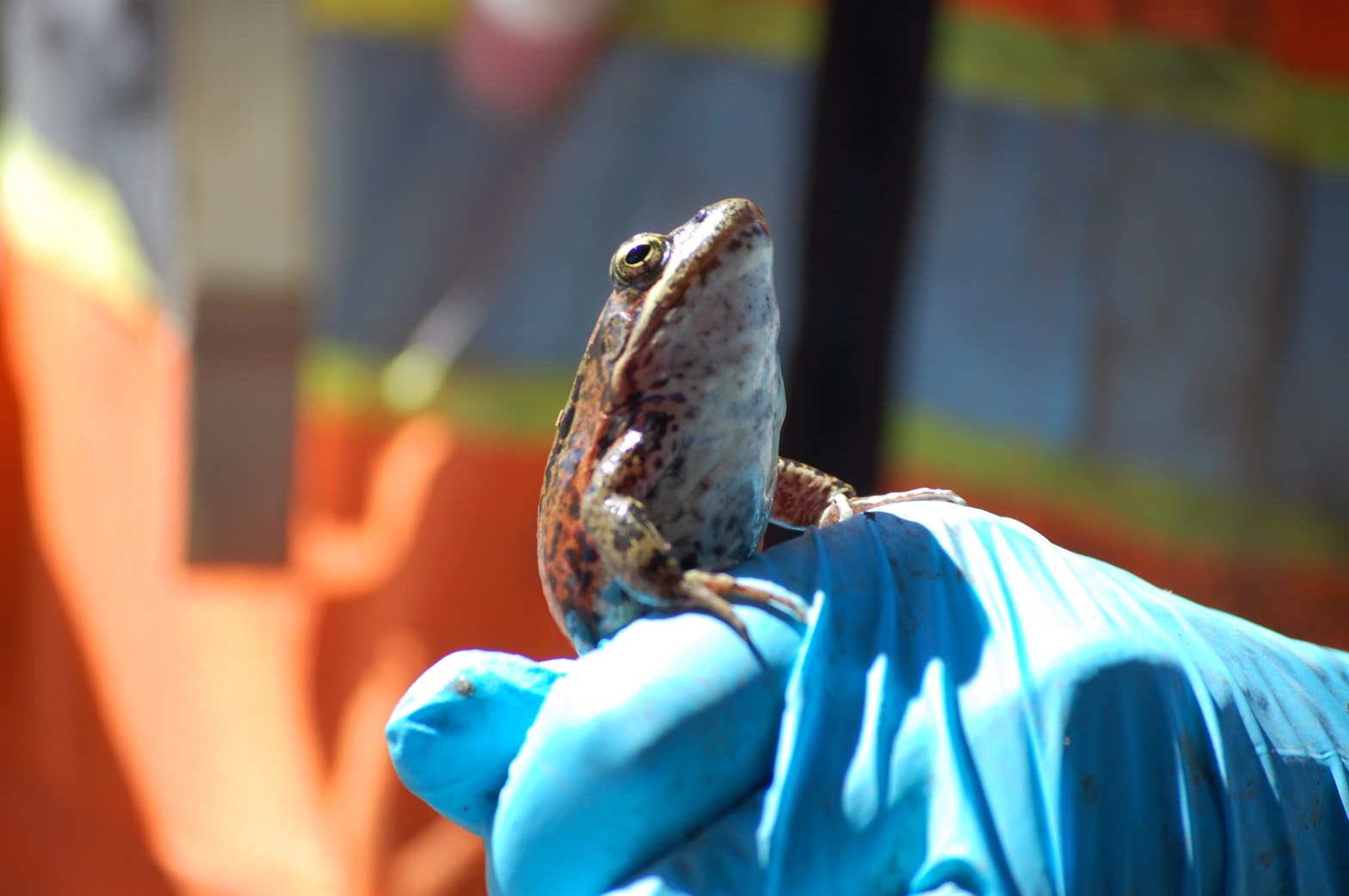
One of the privileges of my job that I never take for granted is the opportunity to visit other places. Most of the time that includes various parts of Florida. With Florida’s unique form, one can see a vast array of habitats and wildlife without leaving state boundaries. However, on rare occasions, I get to visit other states as well. With my company being based out of California, I’ve gotten the chance to visit there a few times. I’ve mentioned the California ground squirrel in my post on mammals. I recently had the chance to go back to a different part of California to observe some work being done, not with mammals, but with frogs.
My last trip to the state was to San Diego, in the extreme southern portion of the state. Like Florida, California’s long shape spans a great length from north to south. In fact, while Florida spans an impressive 6.5 degrees of latitude, California stretches across nearly 9.5 and makes up the majority of the west coast of the continental US. So it’s no surprise that the two places I visited were very different experiences.
San Diego or, more specifically Otay Mesa, was a dry desert environment. In addition to the ground squirrels, I observed urban species such as house finches, horned larks, and ravens. My latest visit was to San Francisco. While the names are very similar (so similar that, to my frustration, I am constantly confusing the two), the environments were quite different. San Francisco is approximately 450 miles to the northwest of San Diego. One look at an aerial image and you can see that the landscape of the state changes drastically across these miles. So it’s no surprise that the scenery contained more grasslands and wetlands with wildlife including white kites, herons, and, of course, frogs.
These frogs weren’t just hopping around everywhere I went. I was actually given the opportunity to observe some restoration activities along a water conveyance system. Usually, in my field, when we hear the term “restoration”, we think of restoring an area back to its natural state. In this instance, they were restoring its hydrologic function to prevent catastrophic flooding in the area. I say “they” because, while it was my company doing it, it was a nearby job in which I wasn’t involved. As a field guy, it killed me not to get in there and get dirty with them. However, not only had I not packed the proper attire, but these biologists have been trained in the identification and handling of the two species I’m about to explore. I was, however, very thankful to be able to witness this.
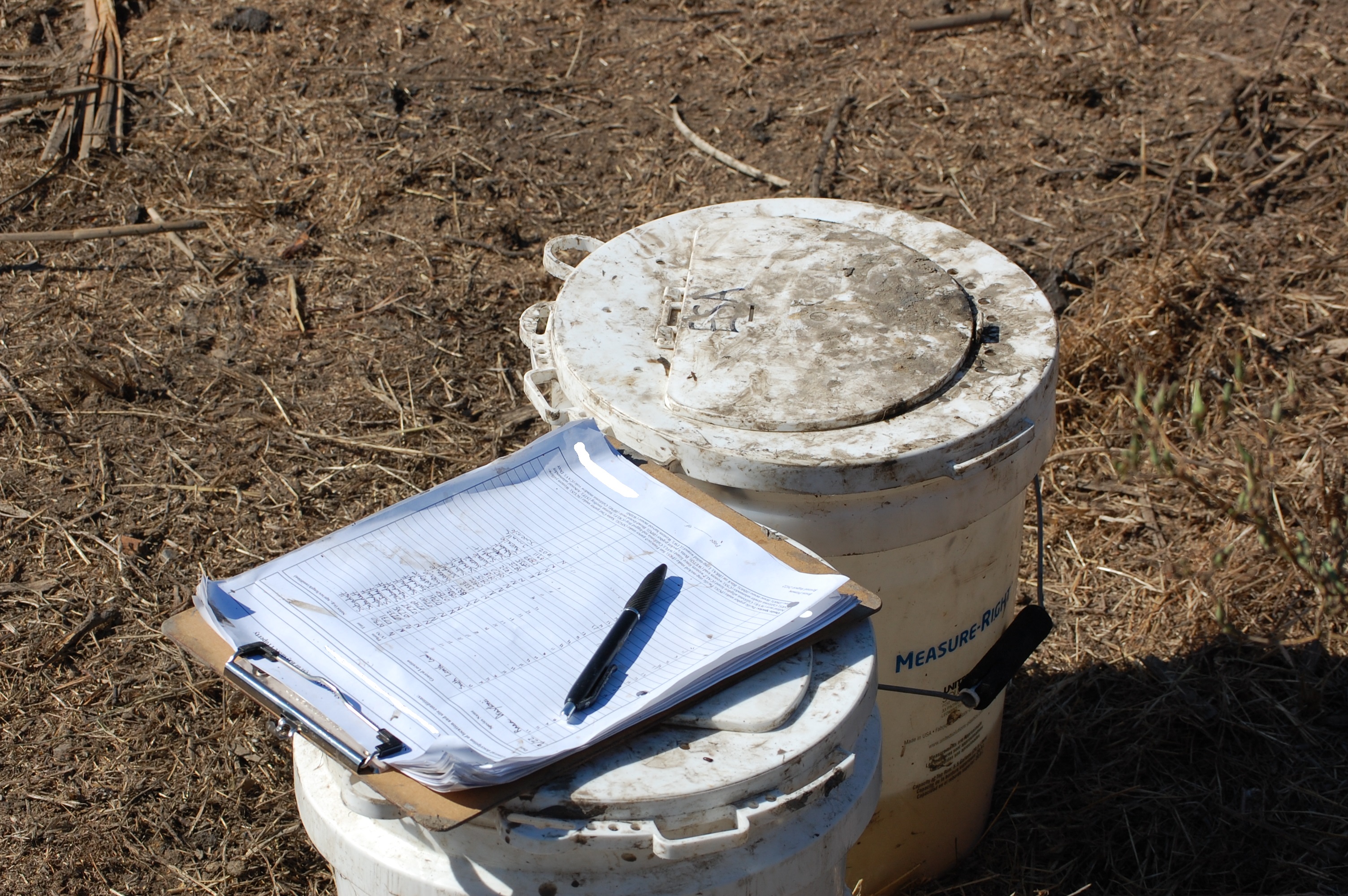
The restoration included the removal of the thick vegetation which had been accumulating along the banks over the years. The first step included simply excavating the vegetation from the banks. The bucket was then lowered to the ground where the first group of biologists would look for any initial signs of the frogs.
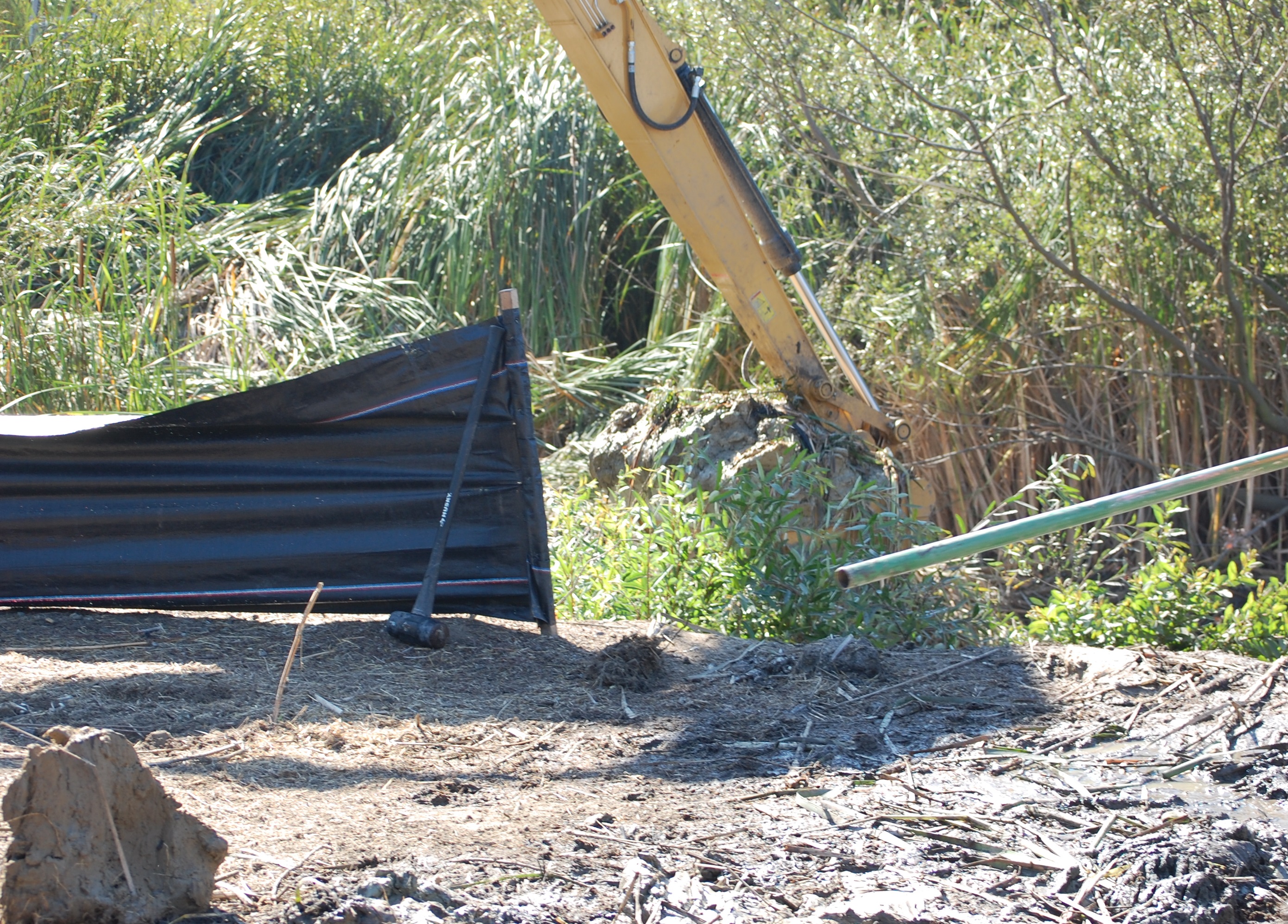
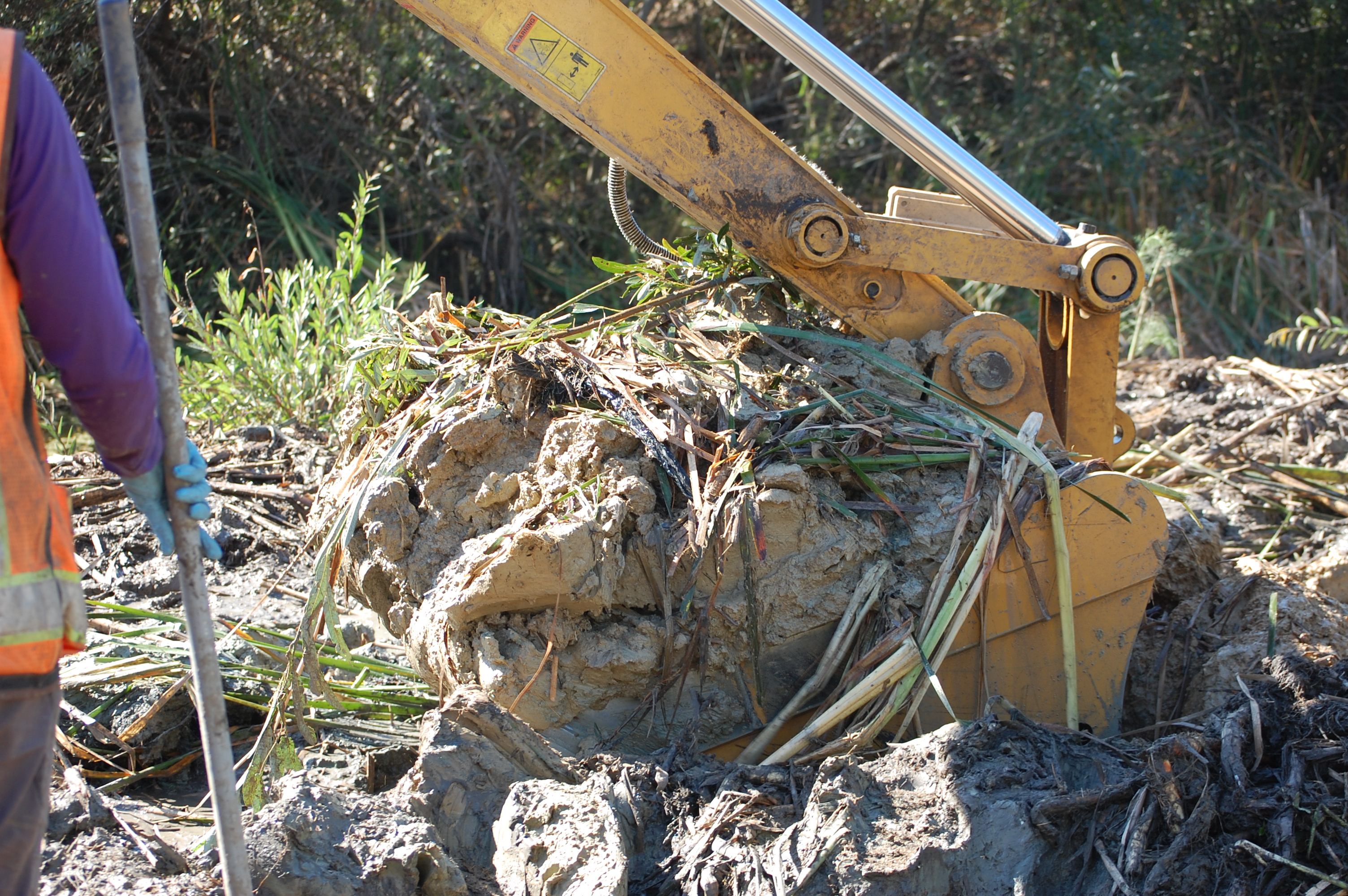
At the second stage, the bucket was emptied onto the ground where the second group would use rakes to pull the vegetation apart to find any frogs hidden deep within. There were two species found in the area and each were recorded, then handled and released in two different ways.
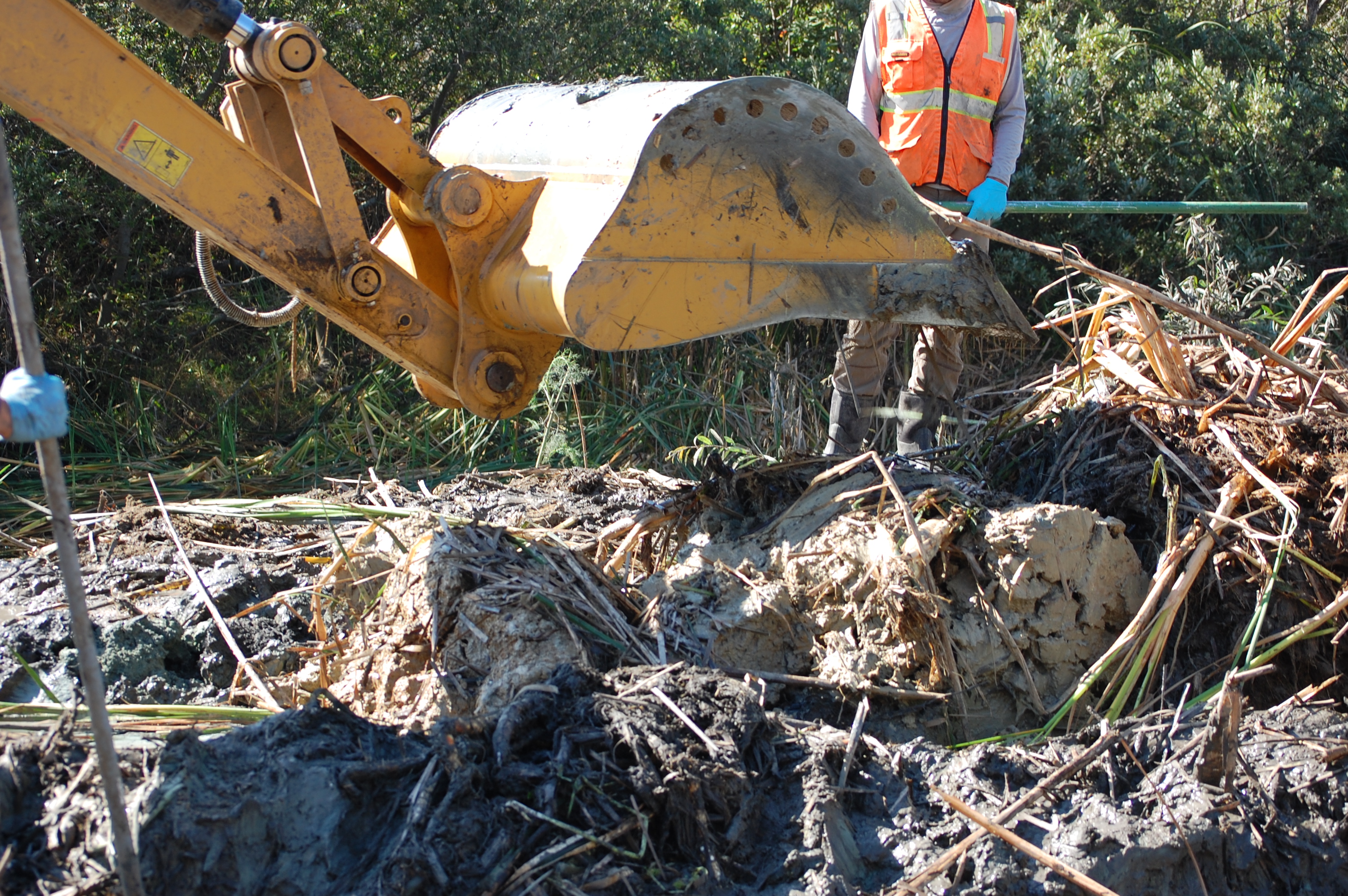
While I admit it started out a bit boring (of course they were finding frogs left and right and it suddenly stopped when I got there), it was all worthwhile when I was finally introduced to the first frog – the smaller and less protected Pacific chorus frog (Pseudacris regilla).
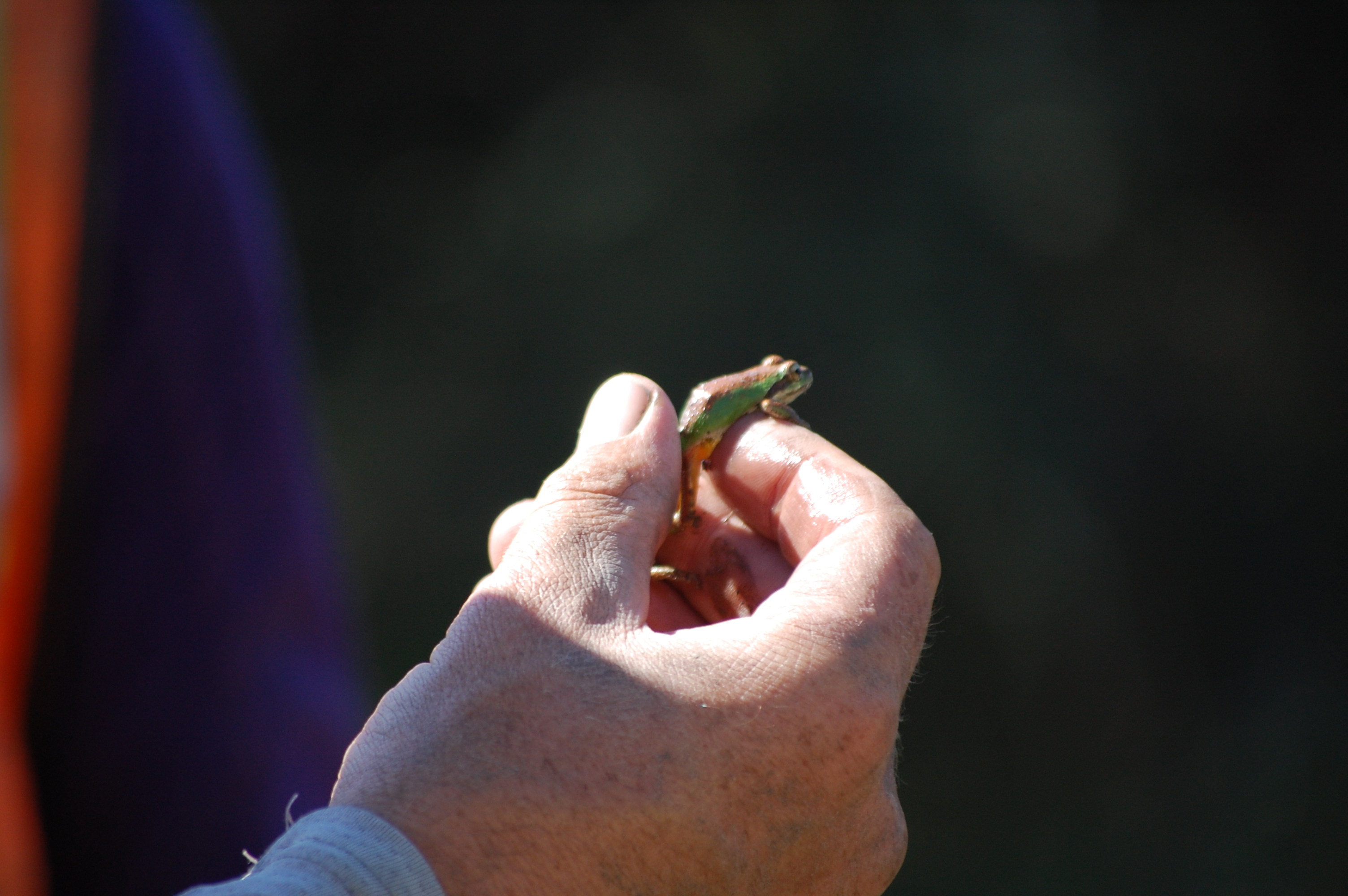
The genus comes from the Greek psuedes meaning “false” and akris meaning “locust”. This is apparently due to the call these frogs make that can easily be mistaken to be coming from an insect. I couldn’t find much on the species meaning other than it is an obsolete spelling of the word rejilla, the Spanish word for grill or grate. One of the most interesting things I read about this species has to do with the color morphs. It was once believed that there were two different species – one green and one brown. Later it was discovered that this species can change their colors. They do so not based on the color of the area that surrounds them, but rather on the brightness of the background. There is also a blue morph which is so rare that one is housed in the Humboldt State University Museum of Natural History.
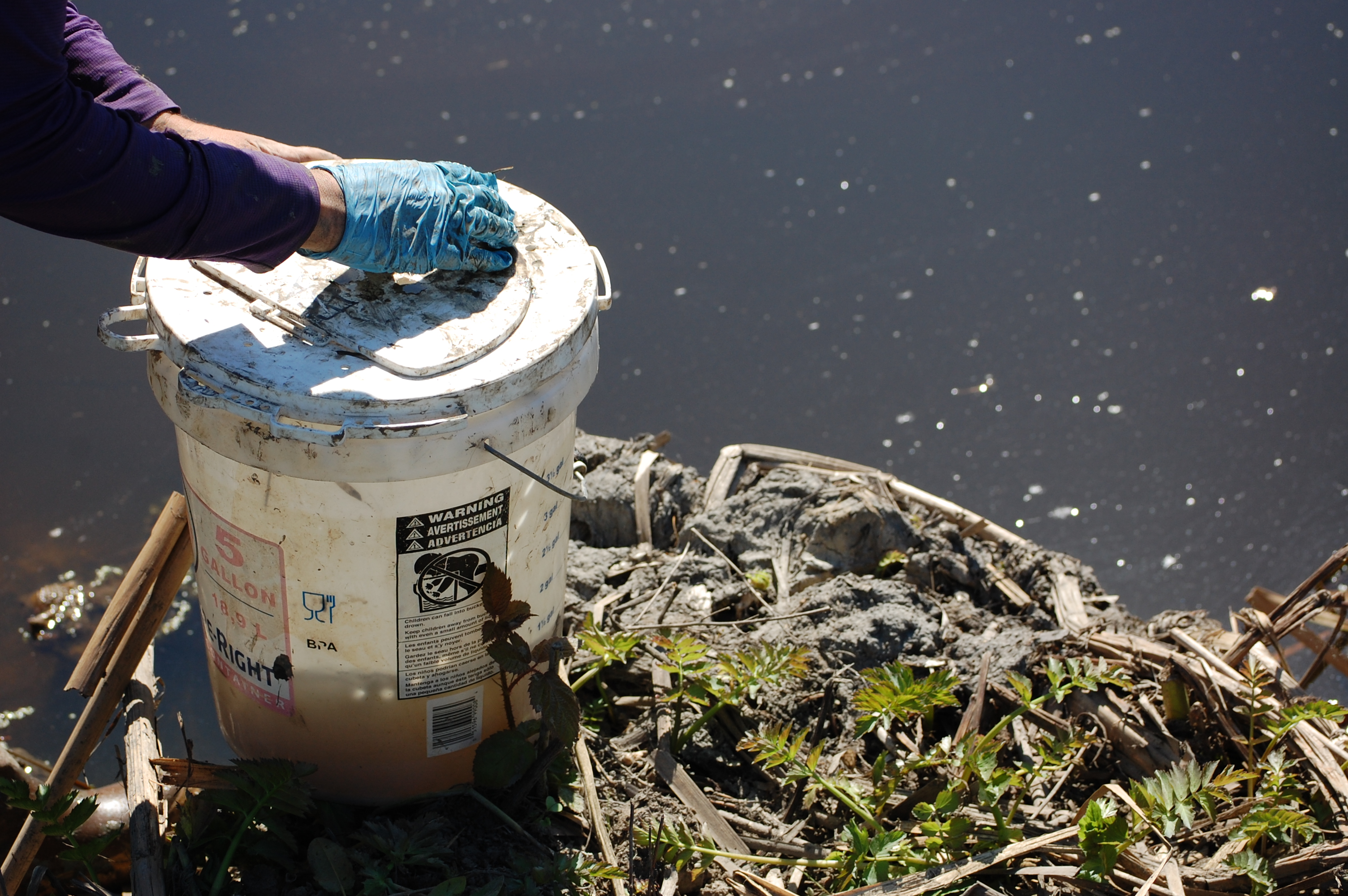
This frog is actually the most common in the western US and is even the state amphibian of Washington. As common as they are, it is our position as biologists to conserve all native wildlife to the extent practicable. Therefore, these guys were carefully placed in a bucket and taken to an area downstream and released.
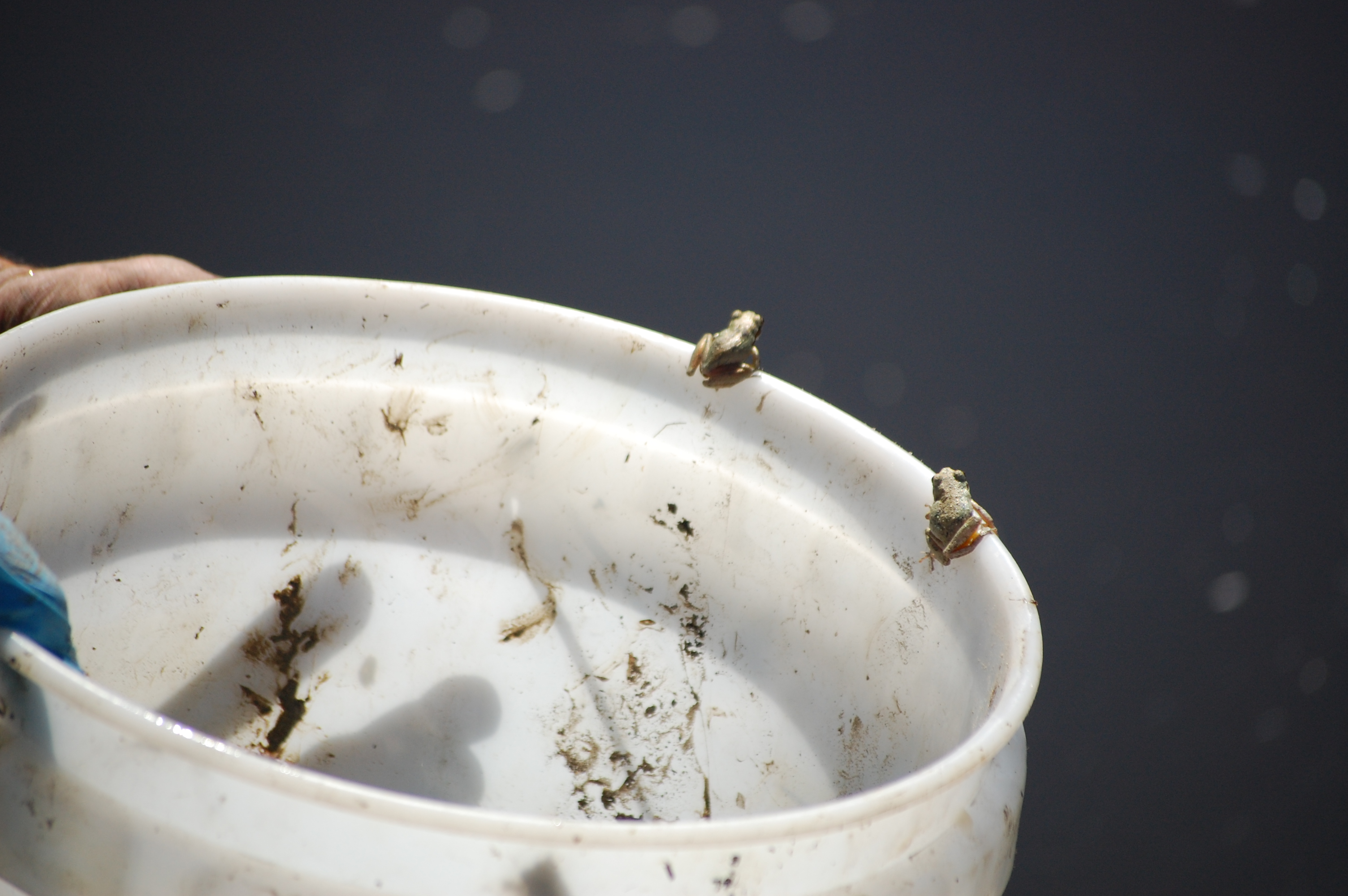
I was very pleasantly surprised at how long they hung out on the rim of the bucket and on the ground, giving me the opportunity to take a bunch of photos of them in the light of the sun. You can see in the third photo how difficult they can be to spot.
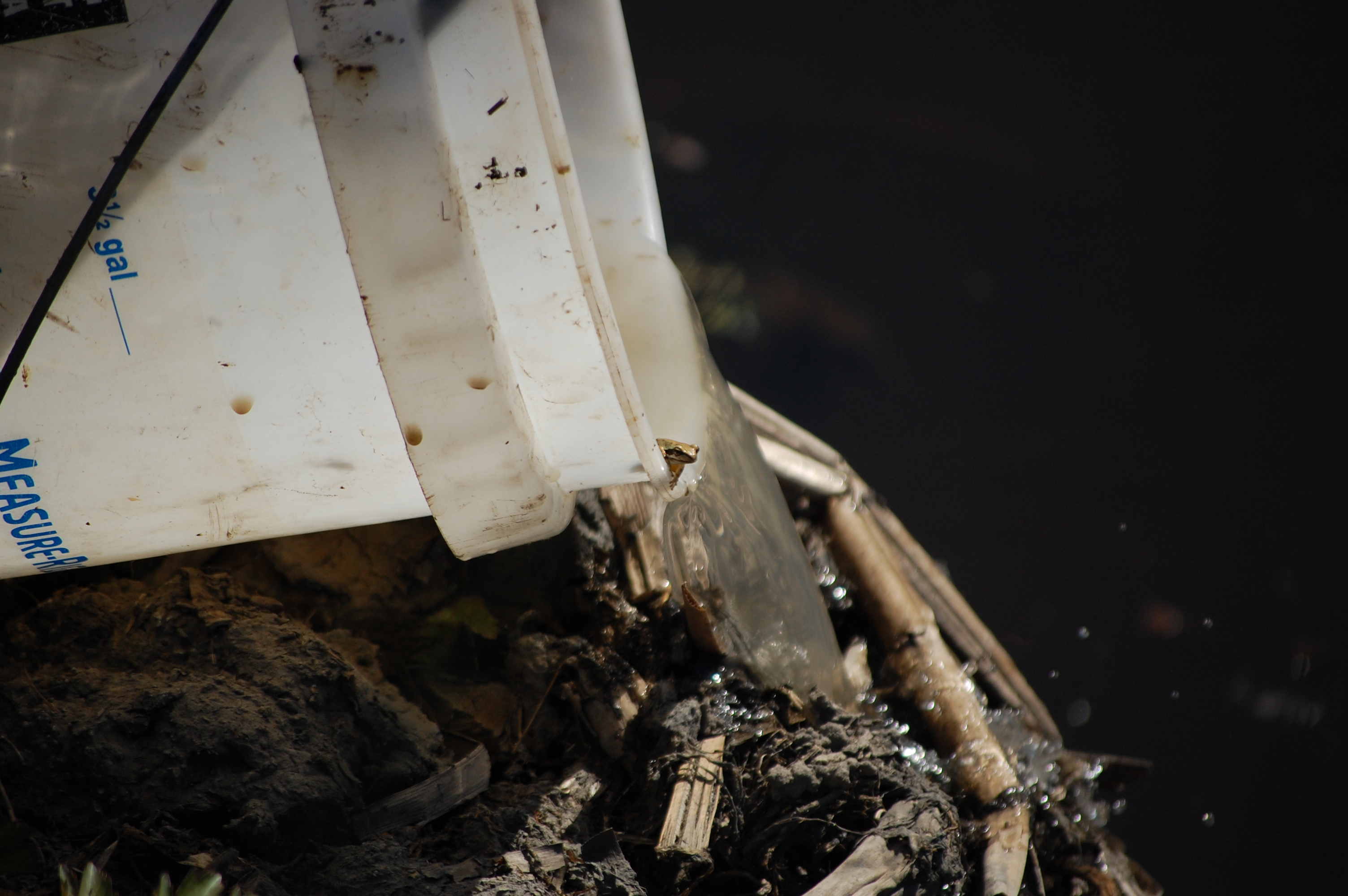
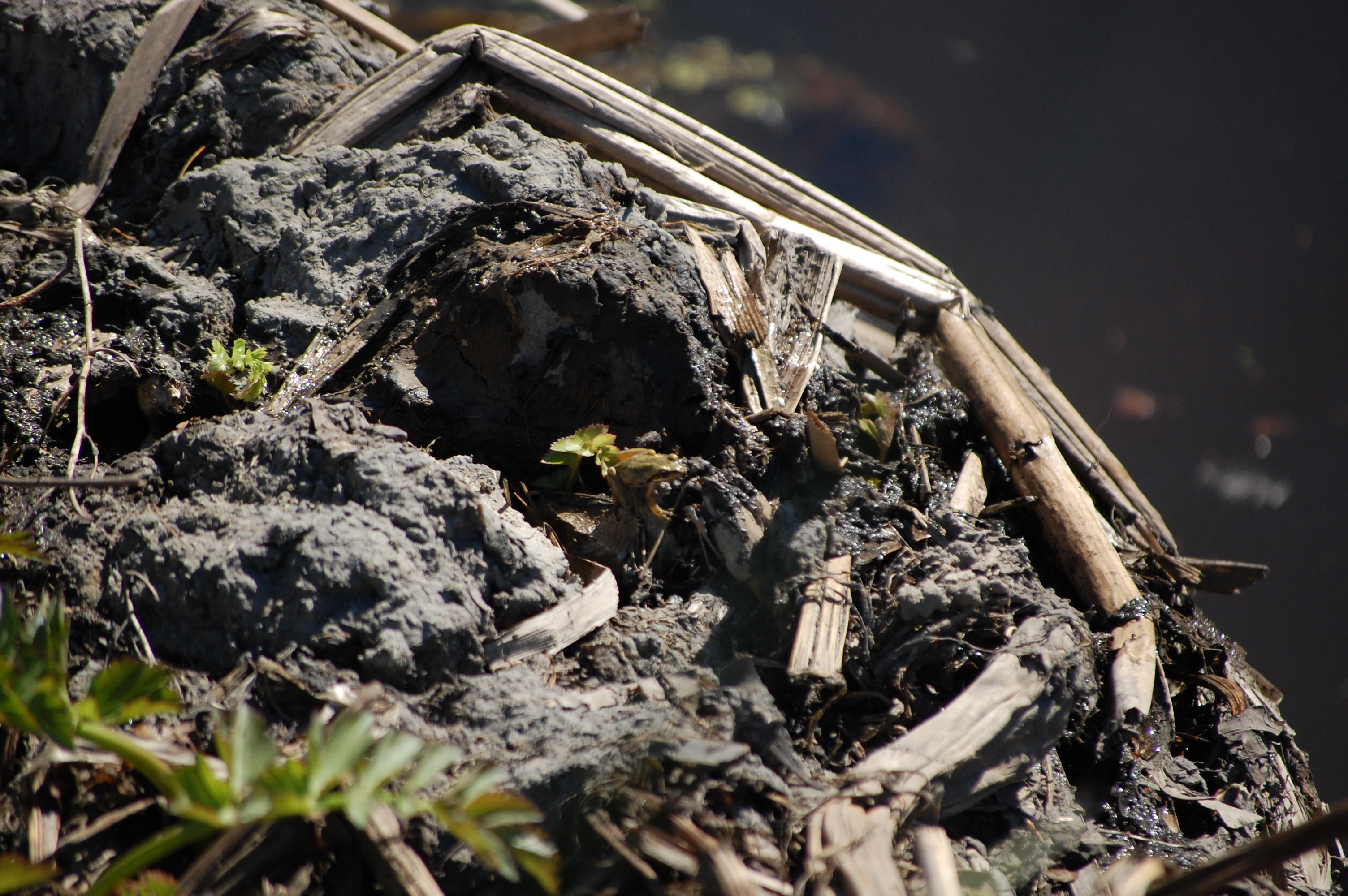
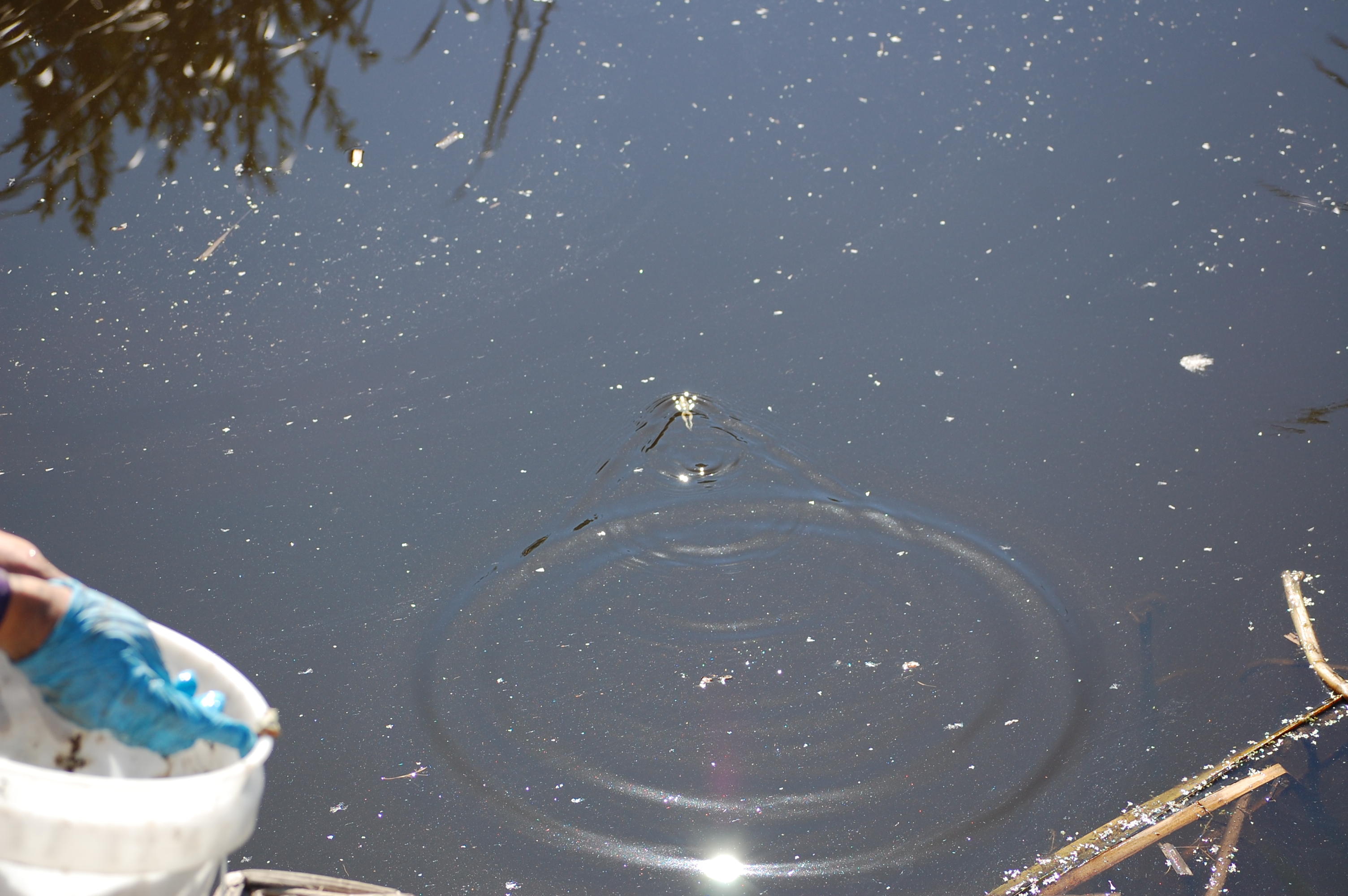
Eventually, sometimes with some coaxing as you see in the foreground, they would hop into the water and take off. They were so fast that I found it difficult to get a shot of them swimming. It’s a little overexposed from the sun, but I did get lucky with this one showing the long legs that give them the fast propulsion. You can even see the large ripples from the initial drop in the water and the smaller ripple from the initial kick.
While the pacific chorus frog is the state amphibian for Washington, the other species encountered during this experience was the state amphibian for California itself – the state and federally protected California red-legged frog (Rana draytonii).
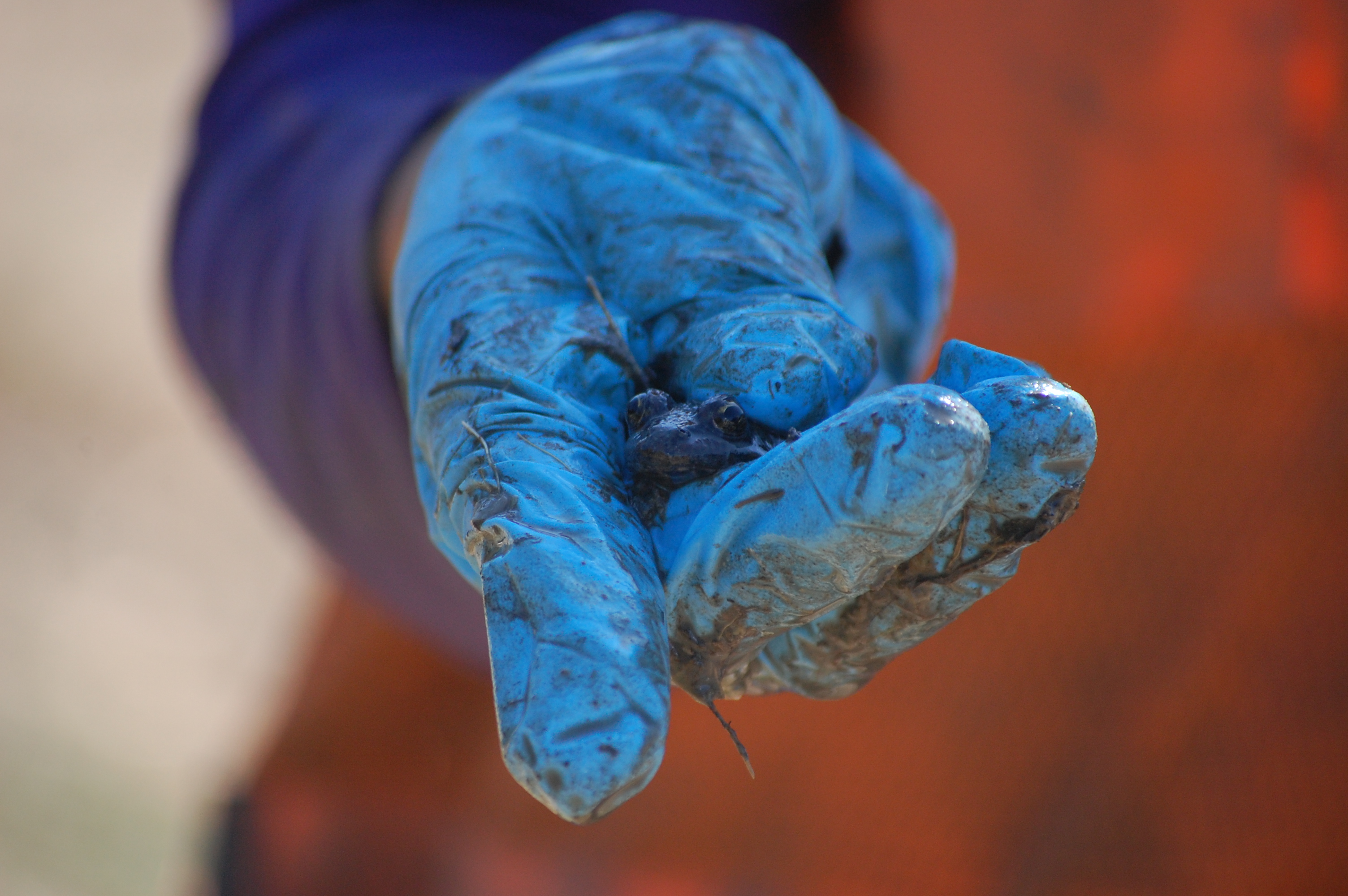
You’ll notice the use of gloves while handling this species. While some biologists prefer to use gloves when handling any species, it is actually a requirement for this one. They are susceptible to viruses which can accidentally be spread between individuals during processes like these. As a result, each time an individual is captured, not only are gloves changed, they are also transported one at a time in a mesh bag. It’s just one of many steps taken to fight the uphill battle of conserving this species. Like with the Florida bonneted bat, this species has both the human influence of habitat destruction and its own biology working against it. The time of metamorphosis is quite long, taking them around seven months from hatching to become adult frogs. Sometimes they can overwinter extending this metamorphosis to 13 months.
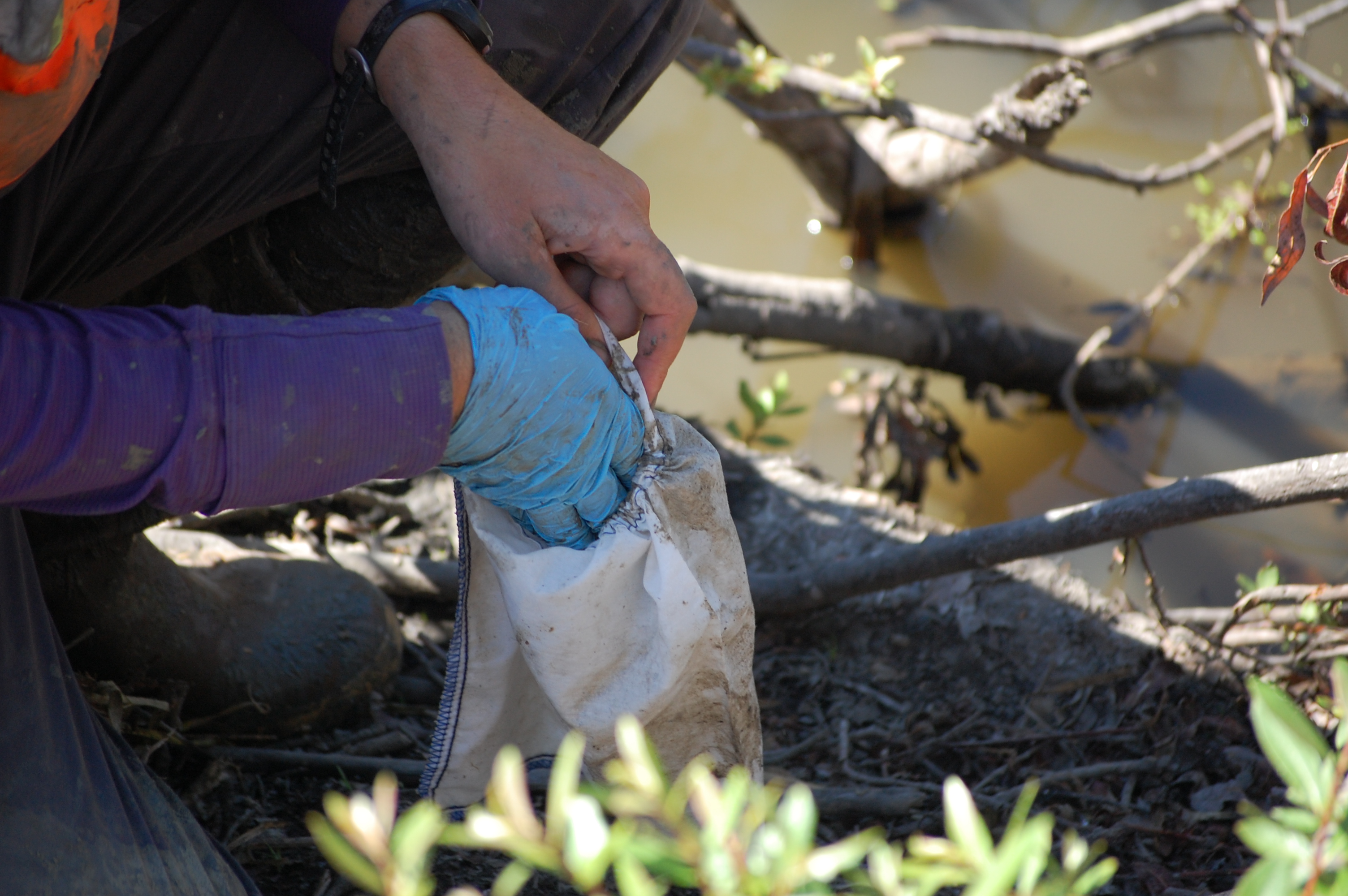
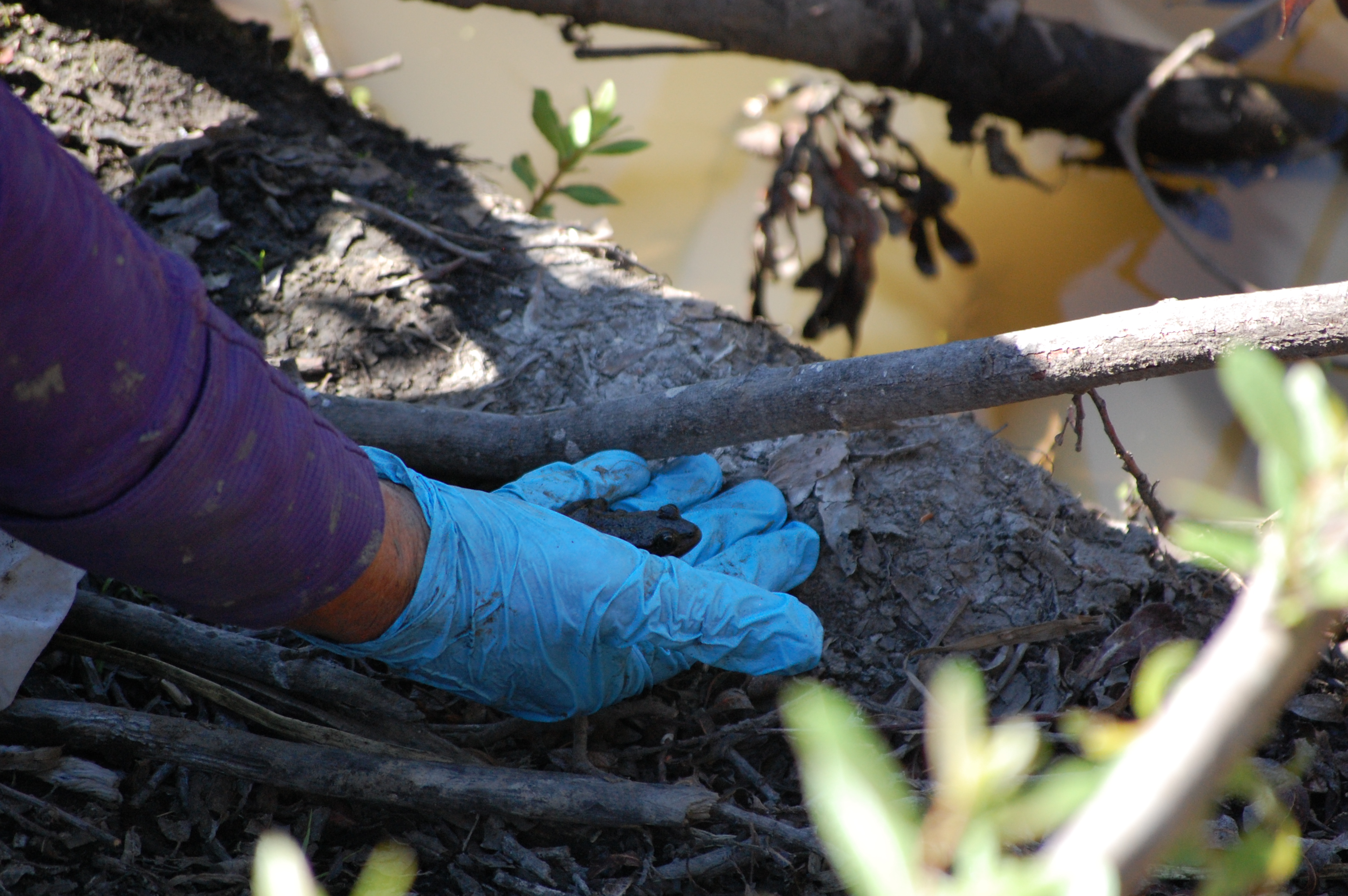
Like the other species, this individual took a little convincing to leave its handler for the water. However, much unlike the other, this one jumped into the water and stayed still for several minutes. From what I’ve read, this is a common behavior for this species when approached by a predator. They’ve also been known to exhibit what’s known as an “unken reflex“. This is where amphibians with brightly colored underparts will flip over and/or arch their backs to reveal these brightly colored areas.
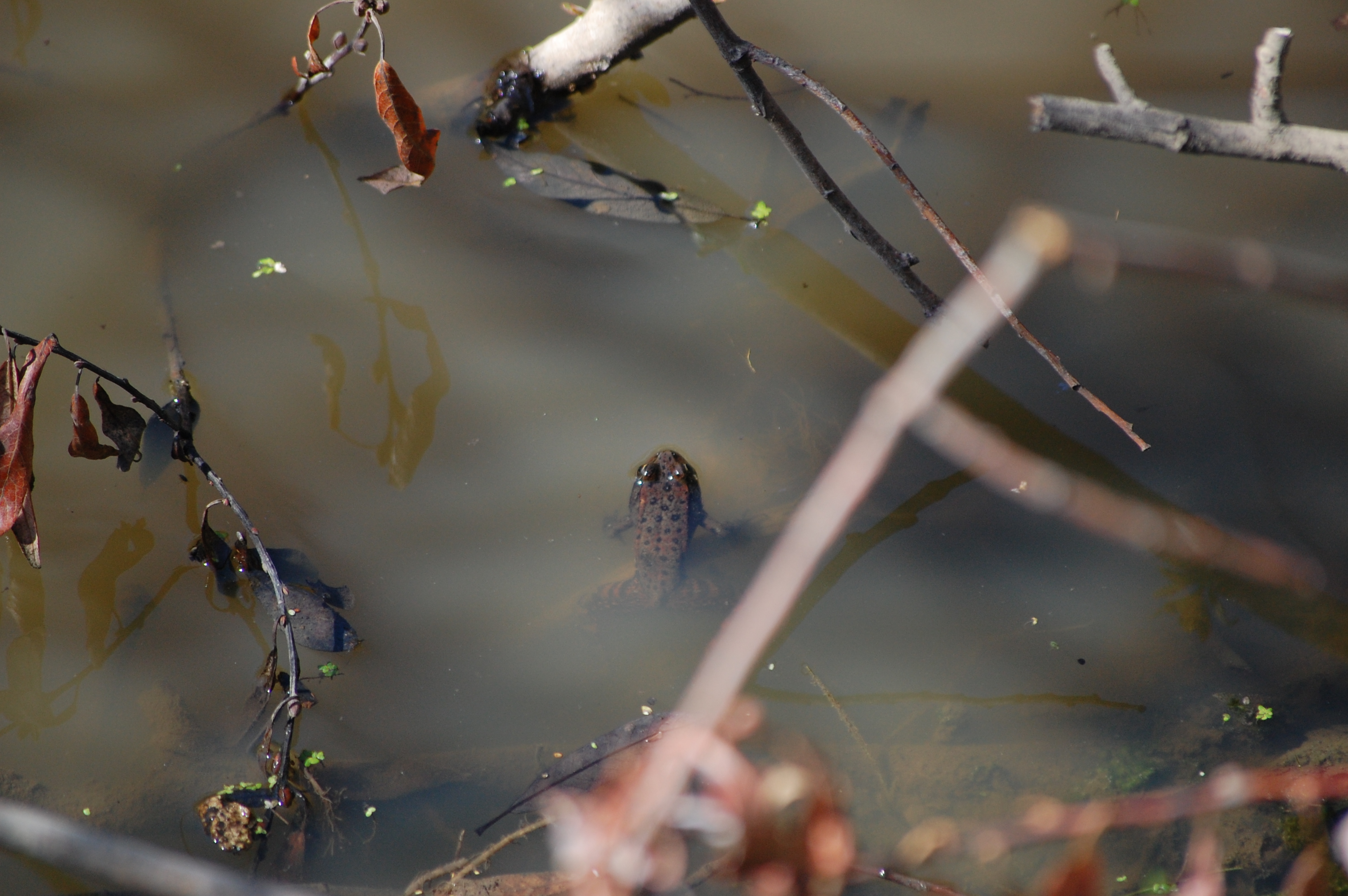
We didn’t see the bright colors on this one, and with good reason. The smaller size and obvious dorsal spots indicate that this is a juvenile. The undersides of the juveniles are typically more yellow. Although I didn’t get to see the bright red markings, I felt privileged to get to witness the species and said my goodbyes and headed to the airport to catch my flight home. Had it been any more than a minute later, I would have left never getting to see the impressive colors. However, as I waited for my ride, I was called over by one of the biologists who had just captured a full adult. While my Uber was literally driving toward us, I snapped a couple of very quick shots while they examined it.
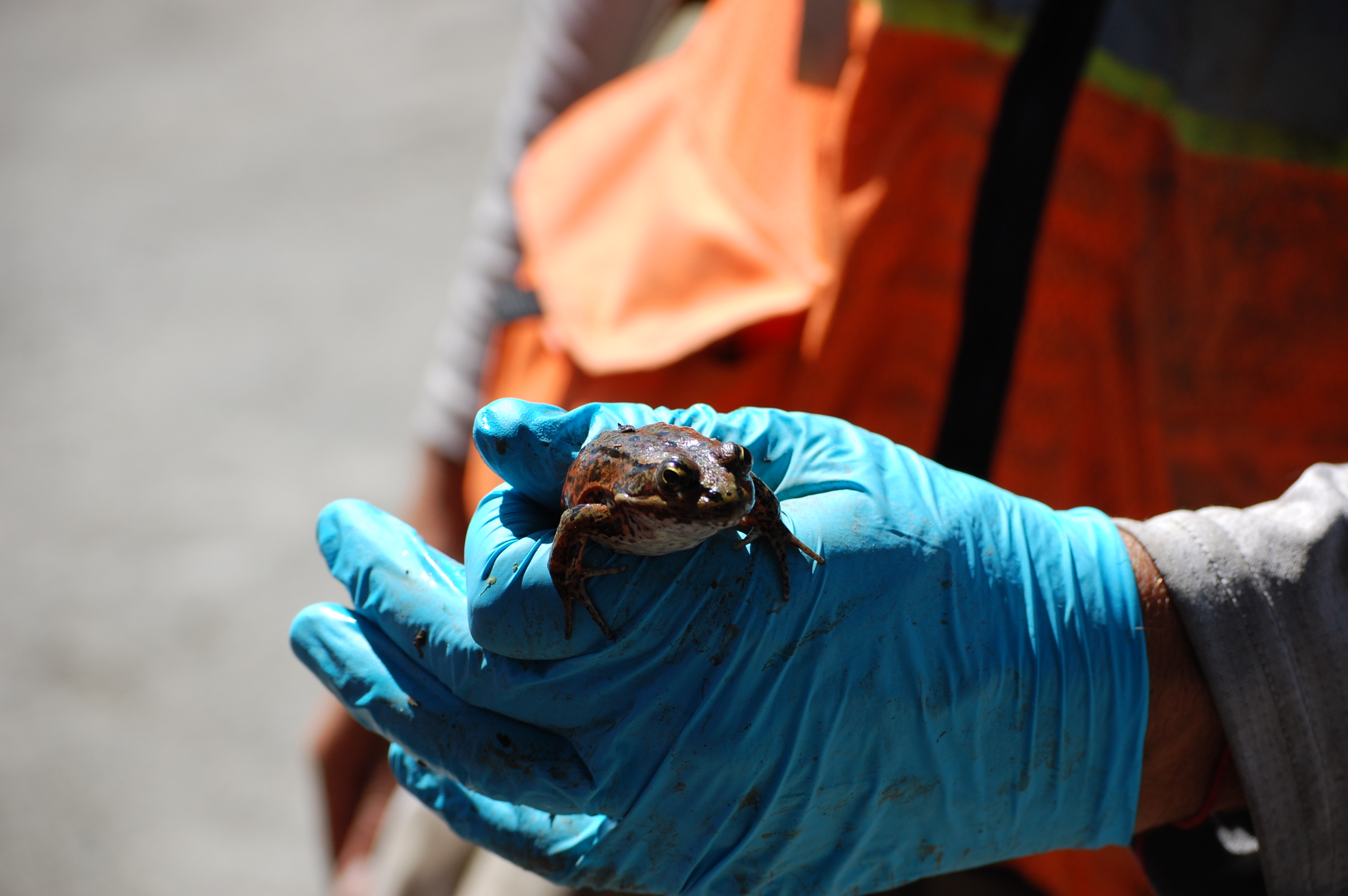
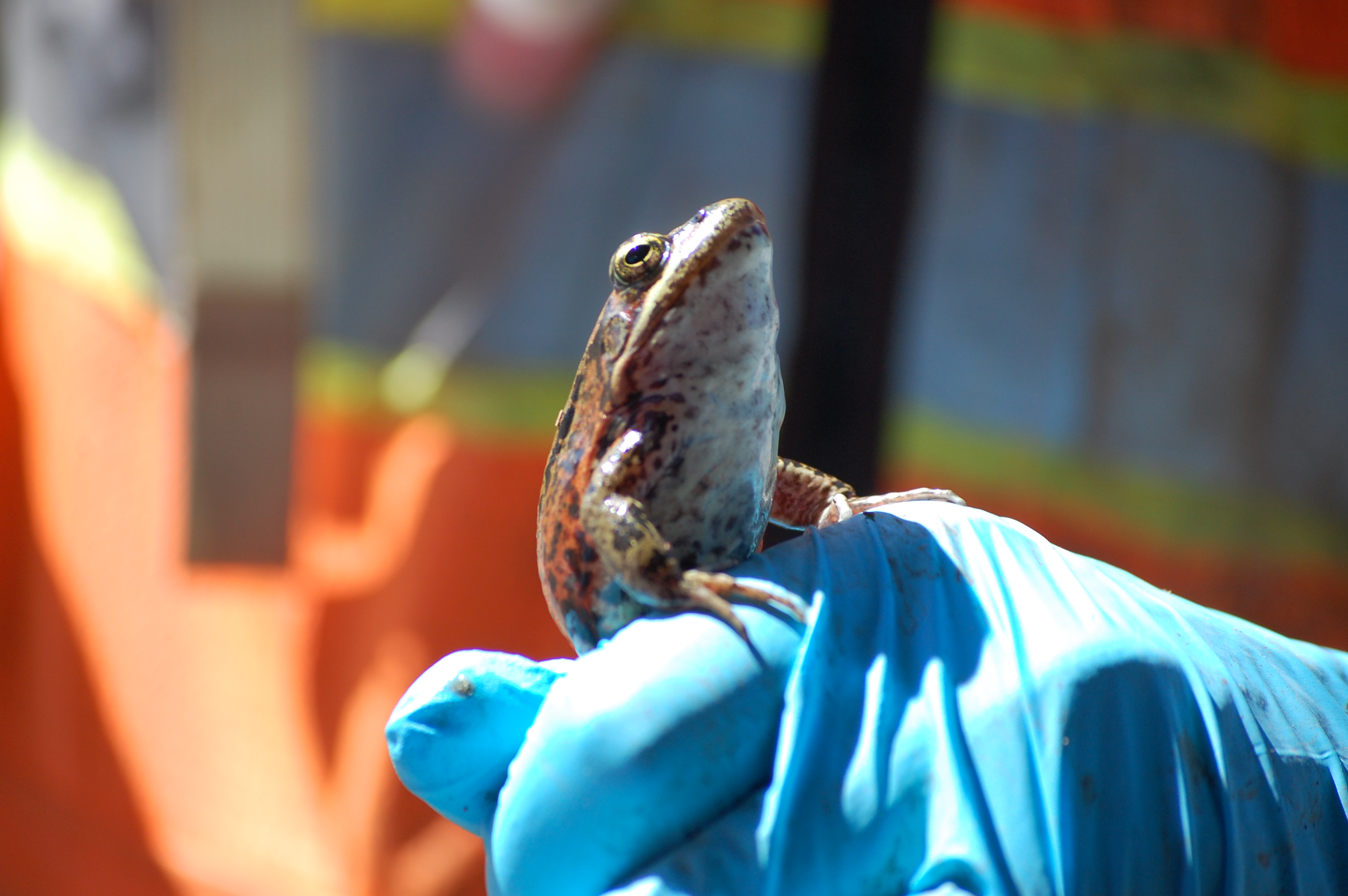
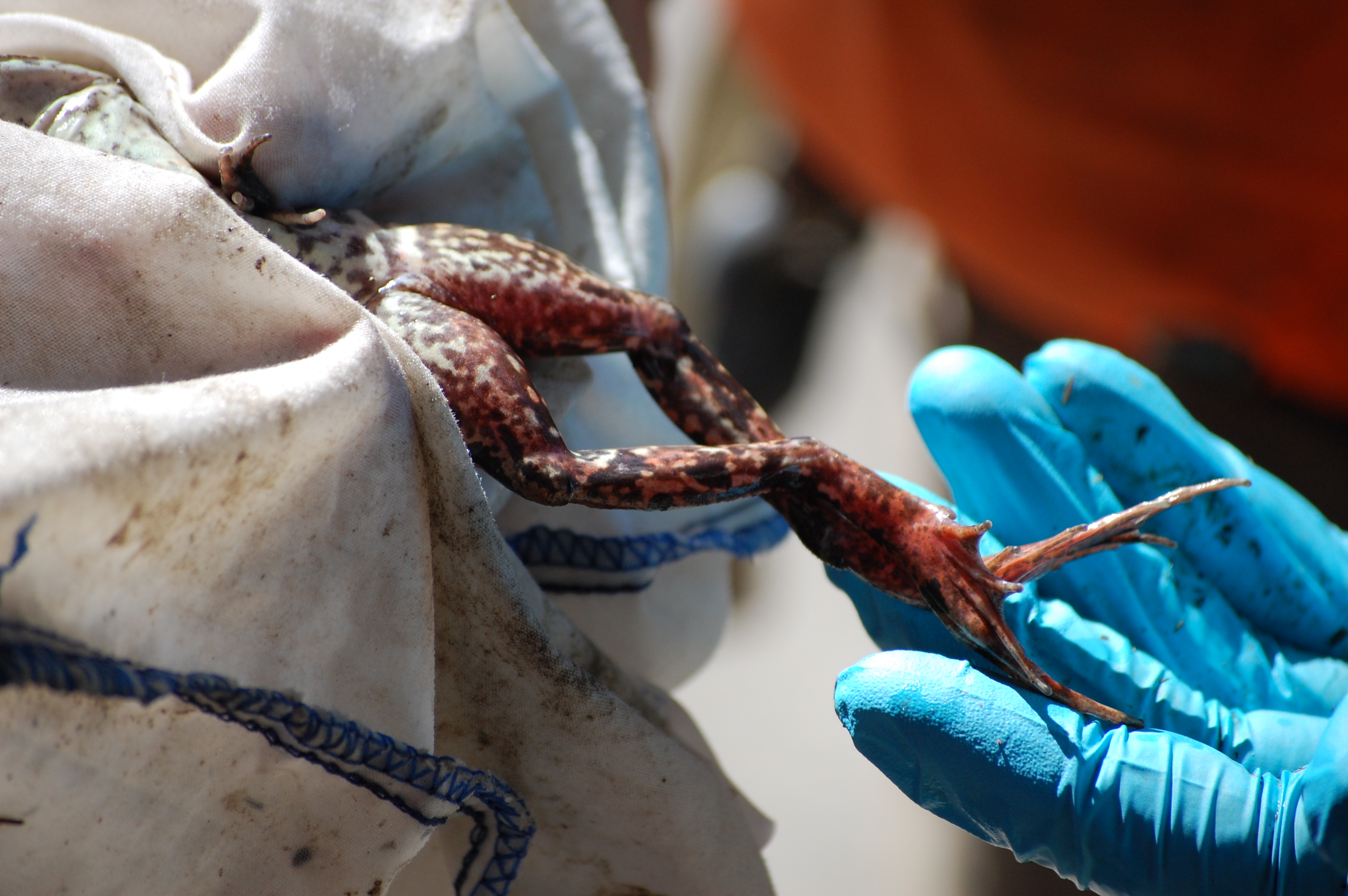
Of course we hate to think about a species disappearing. I generally like to prepare for the worst and hope for the best. Part of preparing for the worst is to take every opportunity to experience and, when possible, assist with their conservation. According to the last species recovery plan from the USFWS, these frogs are currently only found in 256 waterways. I am very grateful to the biologists out there for giving me the opportunity to experience this one.
 BJ Quinton

