I realize it’s been a while since I’ve posted! Not only has life been busy, but I’ve also reached the point where I’ve shared so much, I haven’t seen too many new things worth writing about. However, during a recent survey for the southeast American kestrel, I had the privilege of coming across a bird that I have mentioned in a previous post – the red-bellied woodpecker.
This bird has always been one of my favorites. It’s fun to watch its silly antics and it has a very interesting call. They are numerous throughout the eastern US, so hearing them in the area is a pretty common thing and not necessarily a sign that you’ll end up seeing anything exciting. But there were two recent instances in the field where we got to see two different stages of their development within the nest.
First, a little background on what we were doing to see these guys. The southeastern American kestrel (Falco sparverius paulus) is a state protected subspecies of the American kestrel (Falco sparverius). Since they are protected, it is important to survey for their presence when impacts to their habitat are expected. The subspecies is nearly impossible to differentiate from the others based on physical characteristics. Therefore, we have to survey during the time of year when the others have migrated north (March – September; surveys are done May – July). Surveys are done with what’s known as a “peeper cam”, a downward-facing camera on a telescoping pole. We check cavities in snags (dead trees) and timber power poles.
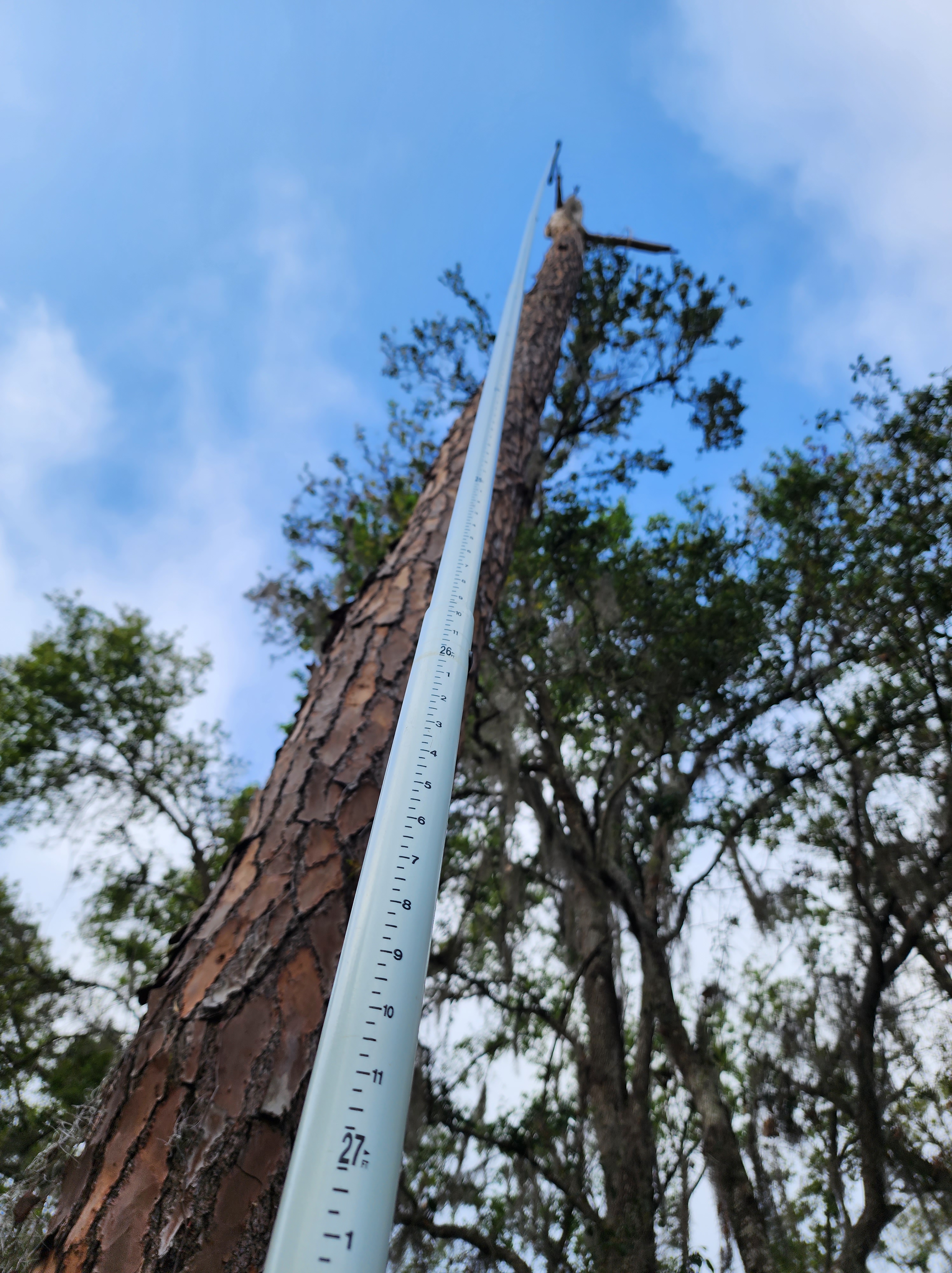
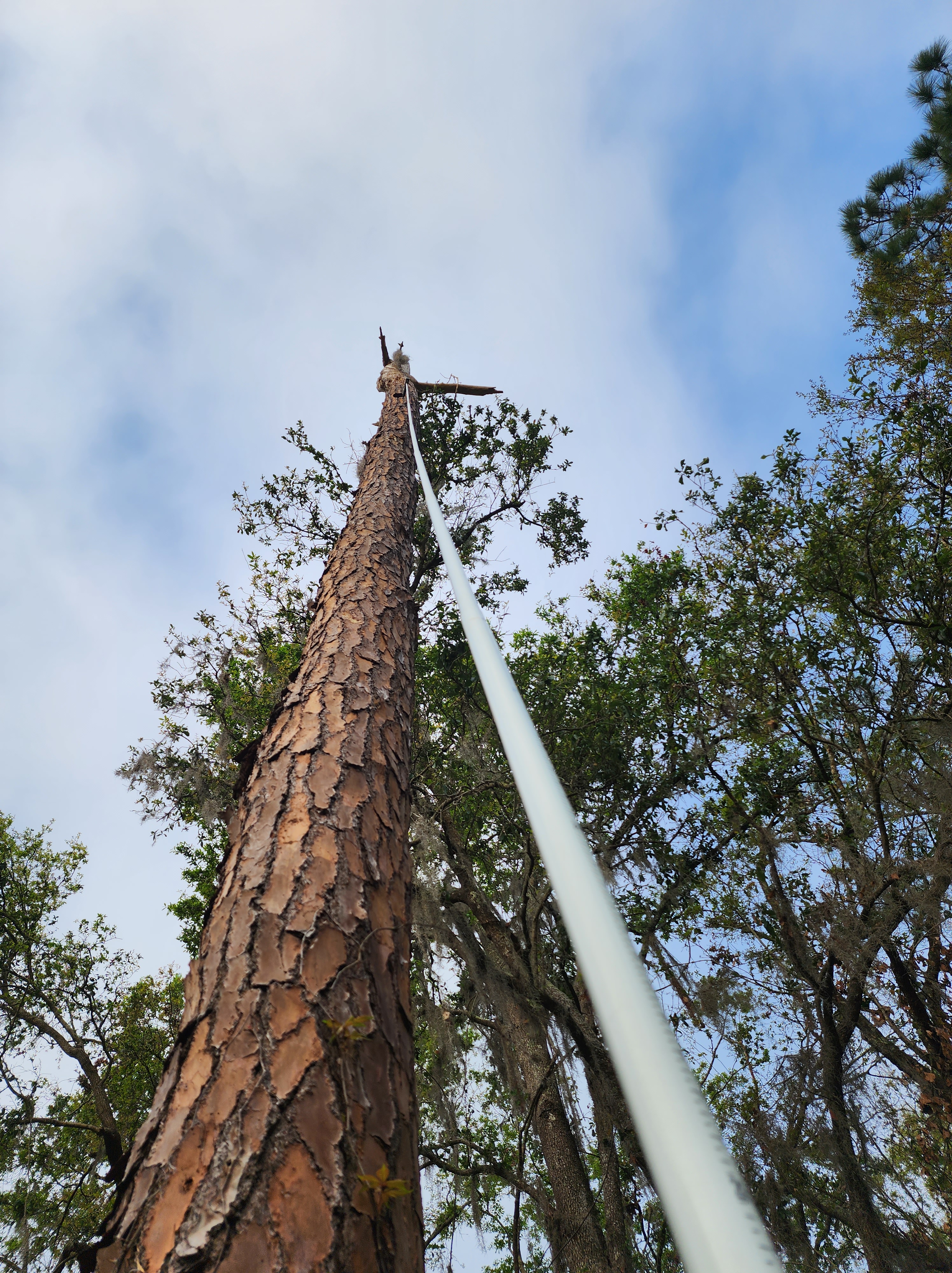
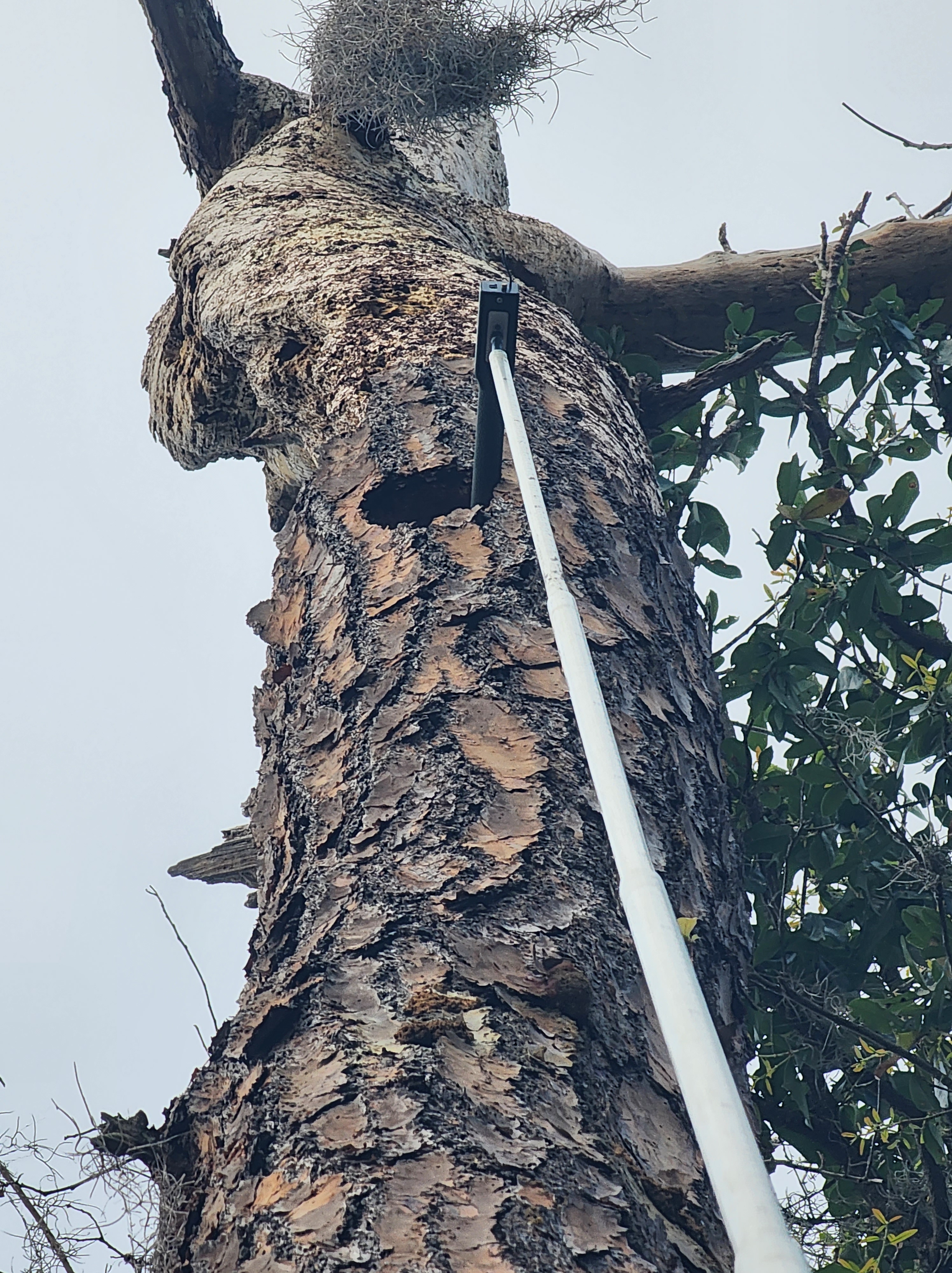
I don’t have video of our first encounter. We placed the camera in the cavity and saw nearly full-grown birds. We saw the black and white feathers and immediately recognized them, pulling the camera so not to disturb them. On another project later on, I decided to turn the camera on. There are around two minutes of video that I cut out because getting the 1-inch camera into a 2-inch cavity when it’s 30 feet up on a wobbly pole is no easy task. What you see here are very newly born red-bellied woodpecker chicks. You can see we pulled the camera the moment we realized what it was. I can tell they are newly hatched (possibly even that very morning) due to their lack of any developed features, and even connected yolk sacks. I should mention that the date and time stamps are wrong on the video.
You may be wondering how we knew so quickly that these were not kestrels. If you’ve read my previous posts on baby birds, you’ve seen that some are precocial (born with down feathers and eyes open) and others, like these, are altricial (born naked with eyes closed). Kestrels are precocial so, as soon as we saw the closed eyes, we knew this was not the species we were looking for. A few other birds use these cavities as well. However, when we were done, we saw the parent bird enter the cavity to check on her young, which is why we knew these little guys were red-bellieds.
 BJ Quinton