
Valentine’s Day is almost here, and it just so happens that I had a set of circumstances that made it perfect timing for a post like this. Let me give a little bit of background on what those circumstances are. First, you may have noticed that I put “love” in quotes, which I did purposefully. I just finished a book by Dr. Greg Graffin, a man who has managed to maintain a life both as a professor, lecturing at UCLA and Cornell, and as the front man of one of the most successful punk bands in the world. The book tells of how the worlds of punk rock and science have more in common than one might think. While the former rejects authority in general, the latter is something that can be broadened by questioning traditional thoughts and forming conclusions based on your own observations. Dr. Graffin, while admitting he is “technically” an atheist, prefers the title of naturalist. By taking a naturalist point of view, one can look at the world based on scientific evidence of how life formed and continues to develop through time, without the sometimes contentious topic of faith and religion. Towards the end of the book, Dr. Graffin discusses things like love and how those feelings fit into the idea of beings that have developed traits meant to increase “fitness”. Clearly, as humans, we feel love for our families. Does this feeling occur in other species, or is it all an adaptation that has developed to continue the propagation of the species? This is why I added the quotes to the title. While reading Dr. Graffin’s book, I found a reference that led to yet another book that I just recently started. It discusses not just love, but general consciousness in animals. It will dive into what consciousness is, why it might have evolved to what it is in humans, and which, if any, other species feel the same level of consciousness that we do. Maybe I’ll have better answers when I finish it. For now, I’ll be asking questions throughout this post.
Another circumstance that led to this writing was some caracara monitoring that I did this week. We were monitoring a pair with a nest near a construction zone. We basically watch them throughout the day and record their behaviors, ensuring that the construction does not have an adverse effect on their breeding behavior. Clearly, this pair was not at all bothered by it. I’ll get a bit anthropomorphic during this post, something that I usually shy away from as a scientist, but something I also recognize can be useful for engaging people and helping them find a connection with this species. Caracara is a great species to parallel with humans when it comes to mating behaviors. They are monogamous, generally mate for life, and they share parental responsibilities (females tend to care for the young a little more, but both are involved with incubation, feeding, etc.).
As I mentioned, the purpose of this monitoring was to determine if the construction was affecting the birds. As a result, it was very important that we didn’t do anything ourselves to alter their behaviors. Not only did we remain as quiet as possible, but we kept ourselves at a distance. Therefore, these photos aren’t the best and are sometimes oversaturated, a necessary edit I did to make them show as more than mere silhouettes. With all this said, here is a little bit of a caracara “love” story that I had the pleasure of observing.
After a 4:00AM wake up call, I made the 2 1/2 hour drive from Tampa to Vero Beach. Just as the sun was breaking through the clouds, we saw the first bird fly in and land on a power pole.
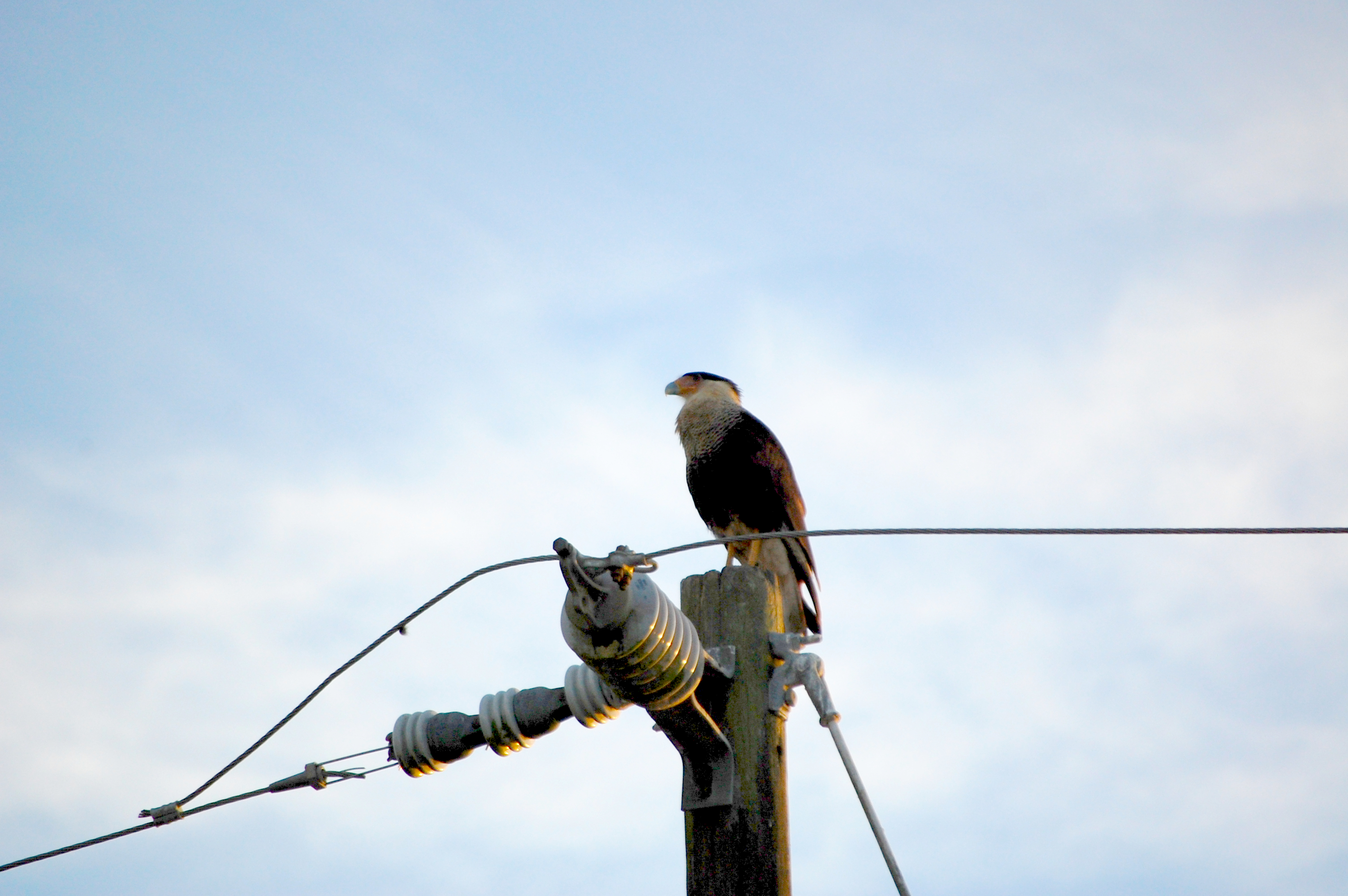
Almost immediately we started hearing the raspy call of the other bird from within a nearby cabbage palm. We assumed that the one on the pole was the male and it was the female still sitting on the nest. Within moments, she joined her mate on the pole.
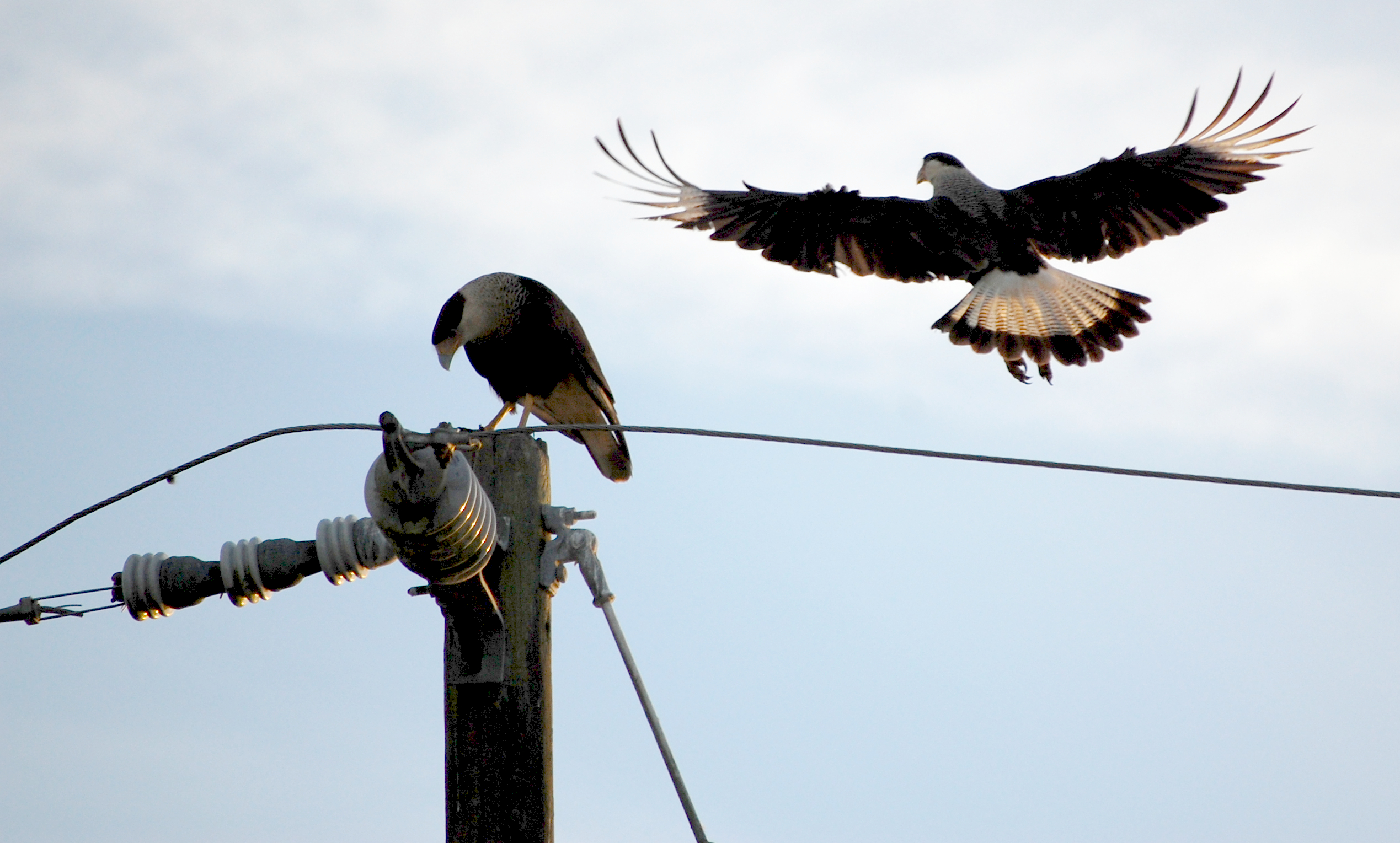
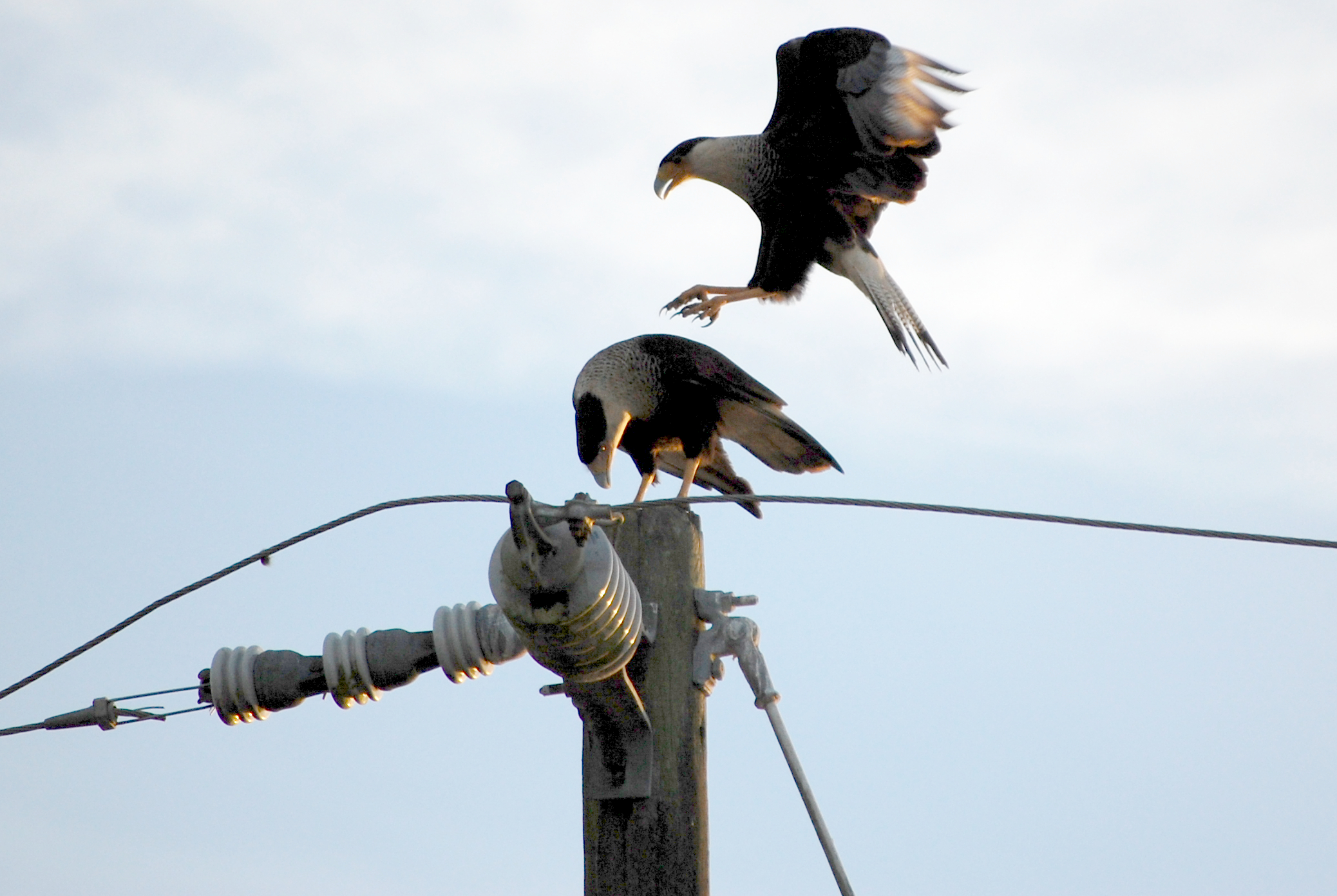
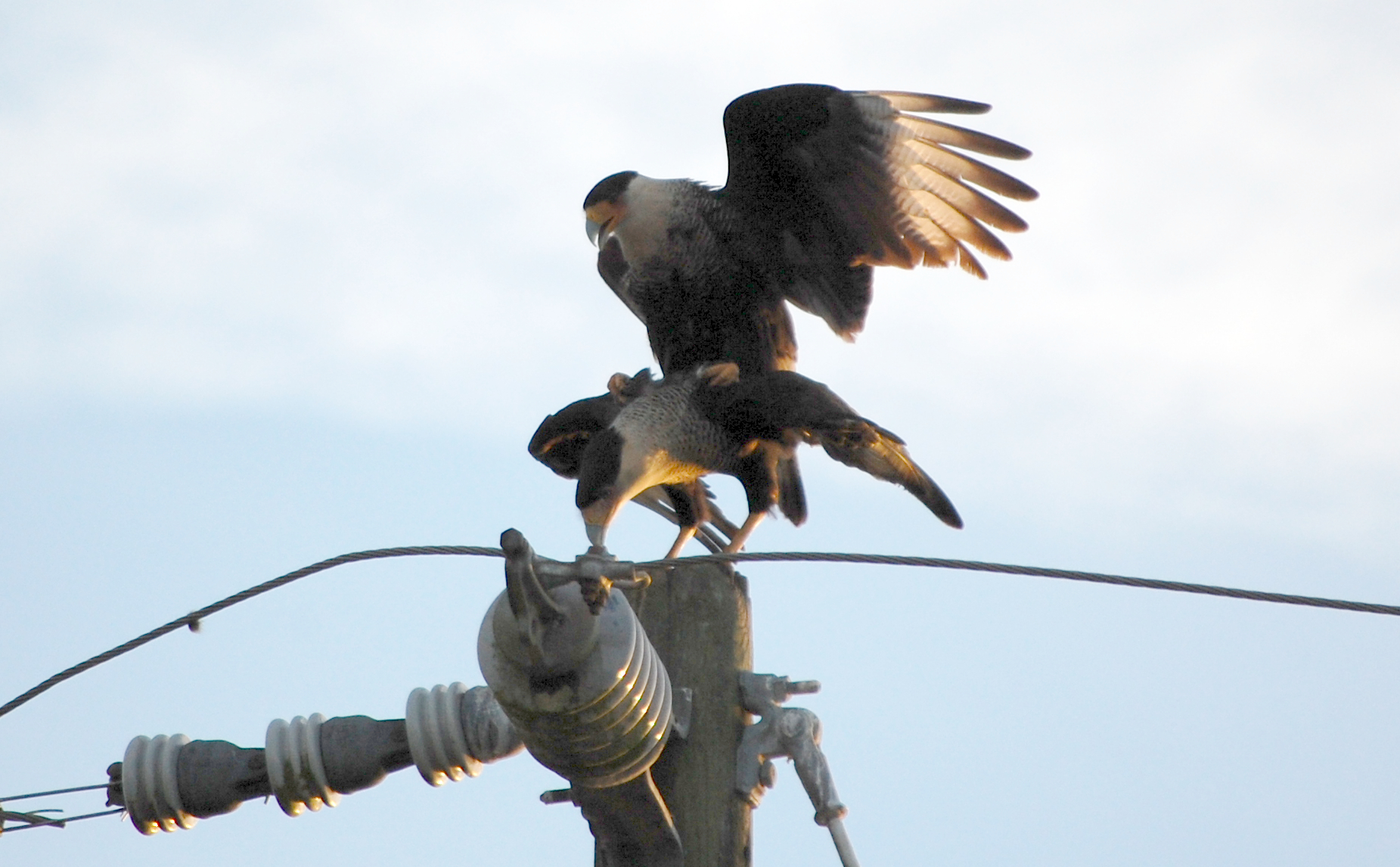
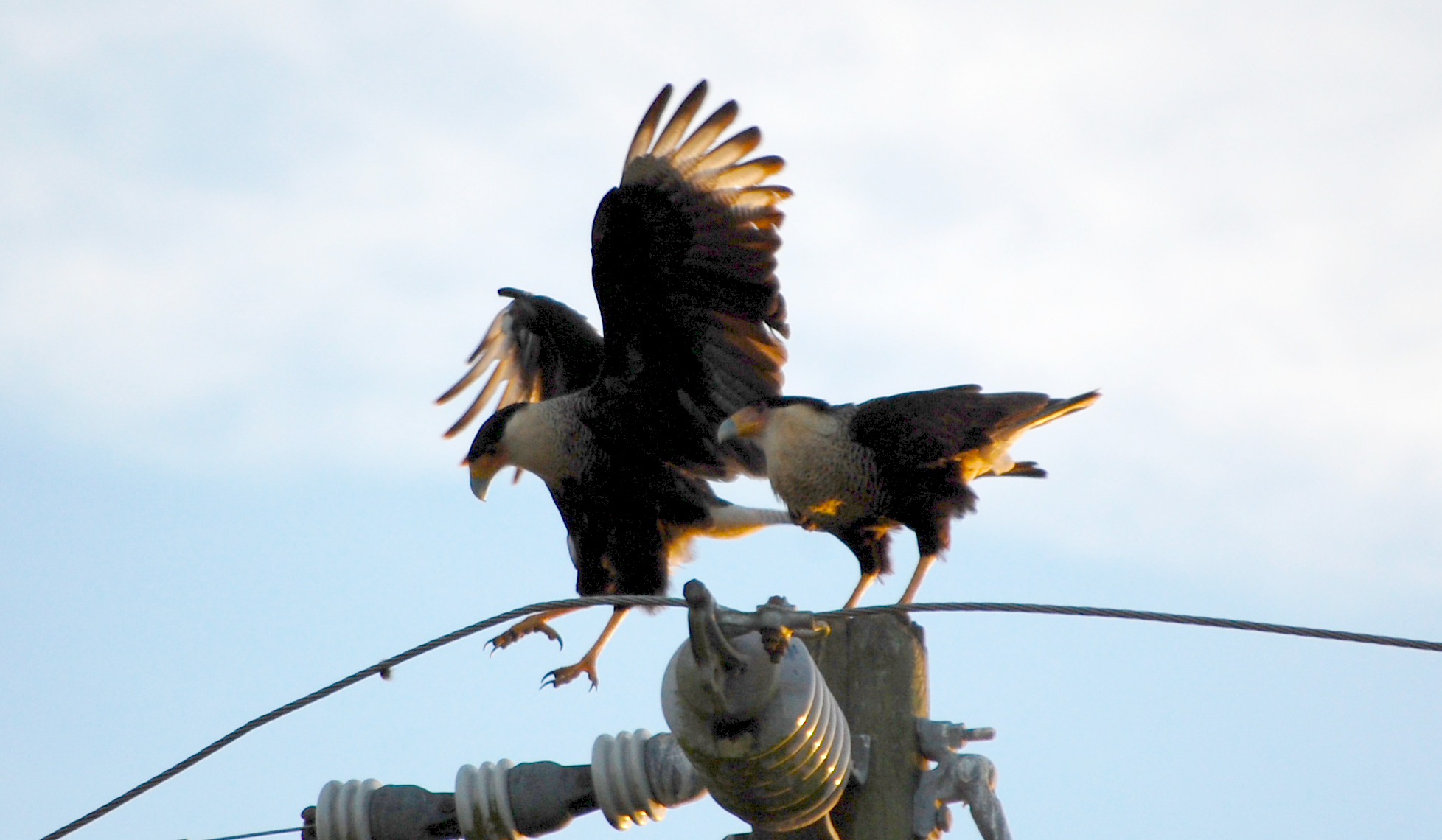
When we saw them together, we felt good about our assumption. Since caracara are not sexually dimorphic (the males and females look the same), it can be difficult to tell which is which. However, it’s a general rule in the bird of prey world that males are slightly smaller than the females. Once we had the chance to see the two next to each other, it did appear that the one that came from the tree was slightly larger. When she first appeared, she actually jumped on top of the male. From what I understand, it’s not clear why the female might do this to the male. Harris hawks out west will stand on top of each other in a behavior known as “stacking” to get a better view across the desert landscape. However, I don’t see why this would be necessary when standing on a tall pole. Whatever the reason, it didn’t last very long and she quickly hopped off.
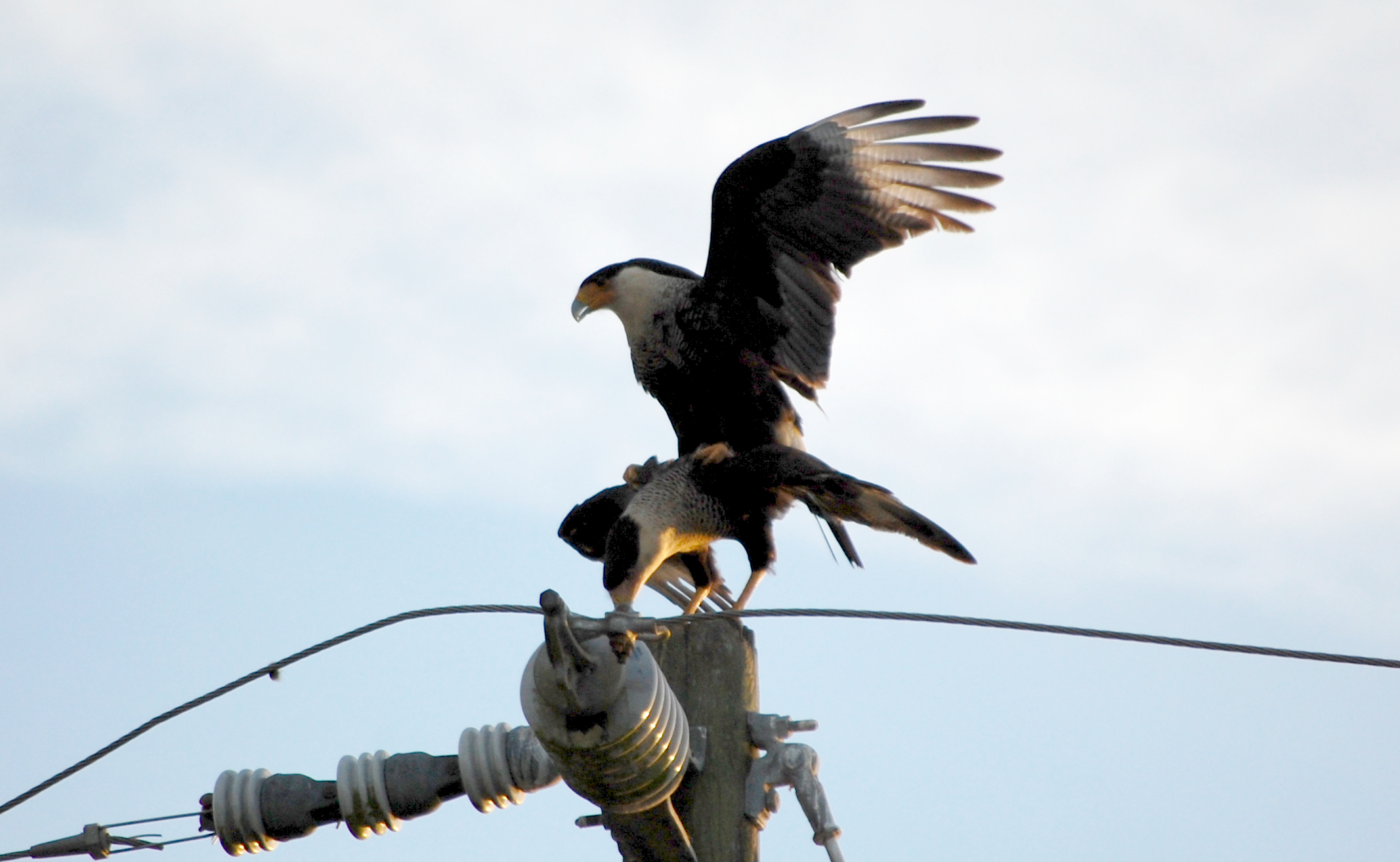

What happened next was both interesting and, since we are being anthropomorphic . . . cute. She began to reach over and preen him. While this was happening, I started having those questions about conscious thought and love and how they may or may not exist in the animal world. Was she actually showing affection? Or was she grooming him to make sure he is as healthy as possible to raise the young? Either way, it was quite the sight to see. There will be a video at the end of this post showing them up close (complete with construction noise to prove how little it bothered them).

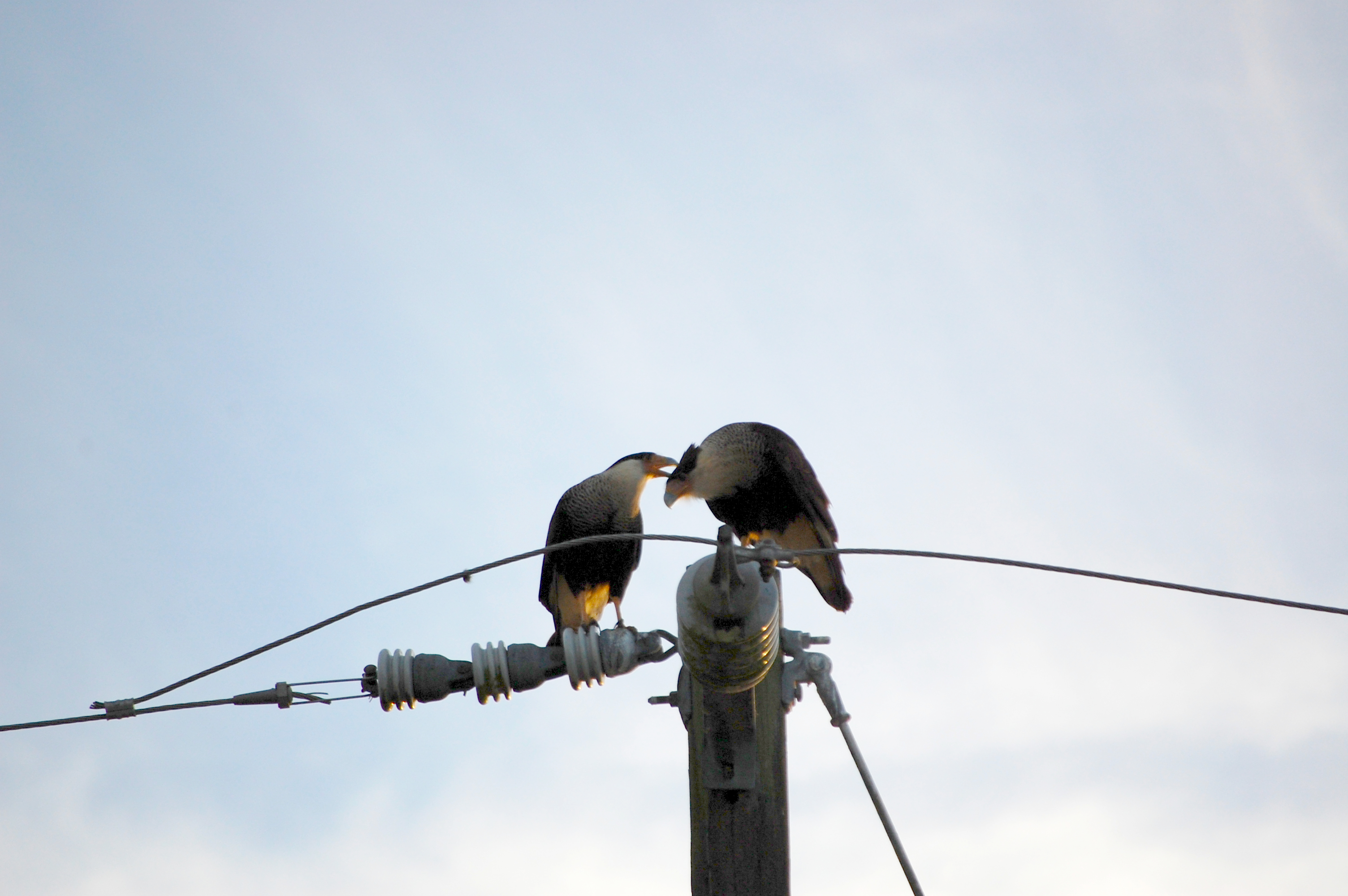
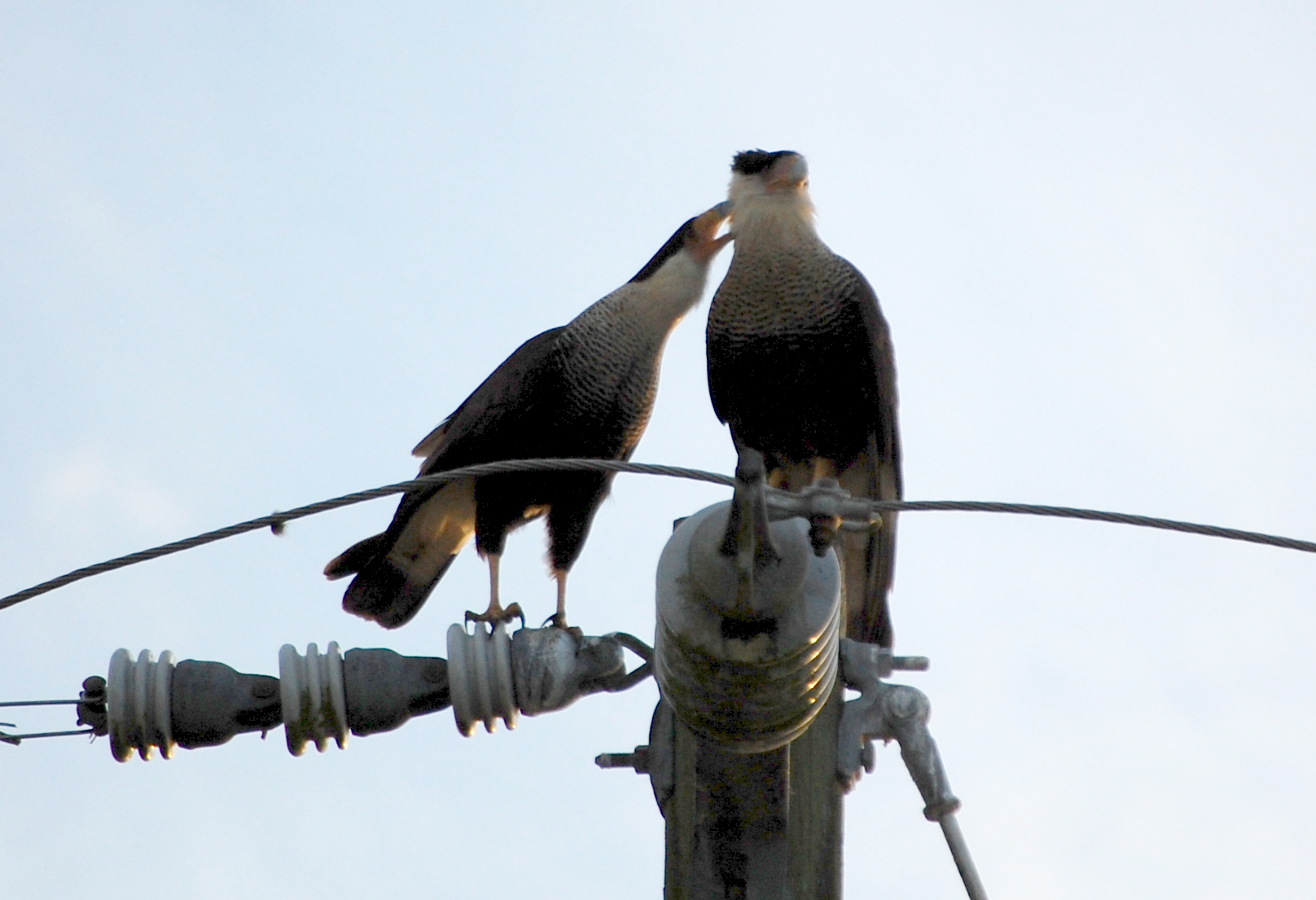
The male, being a gentleman, then returned the favor.
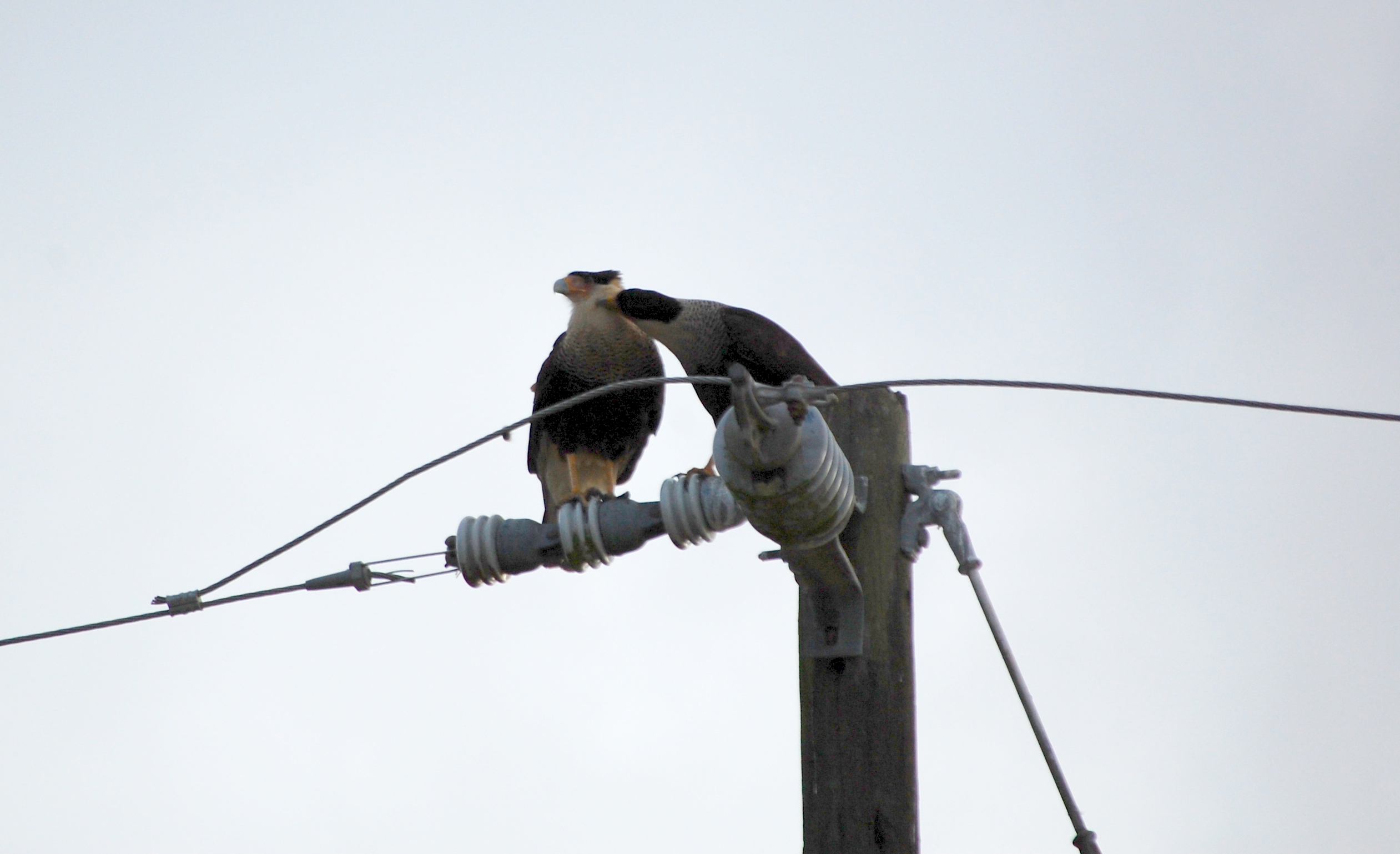
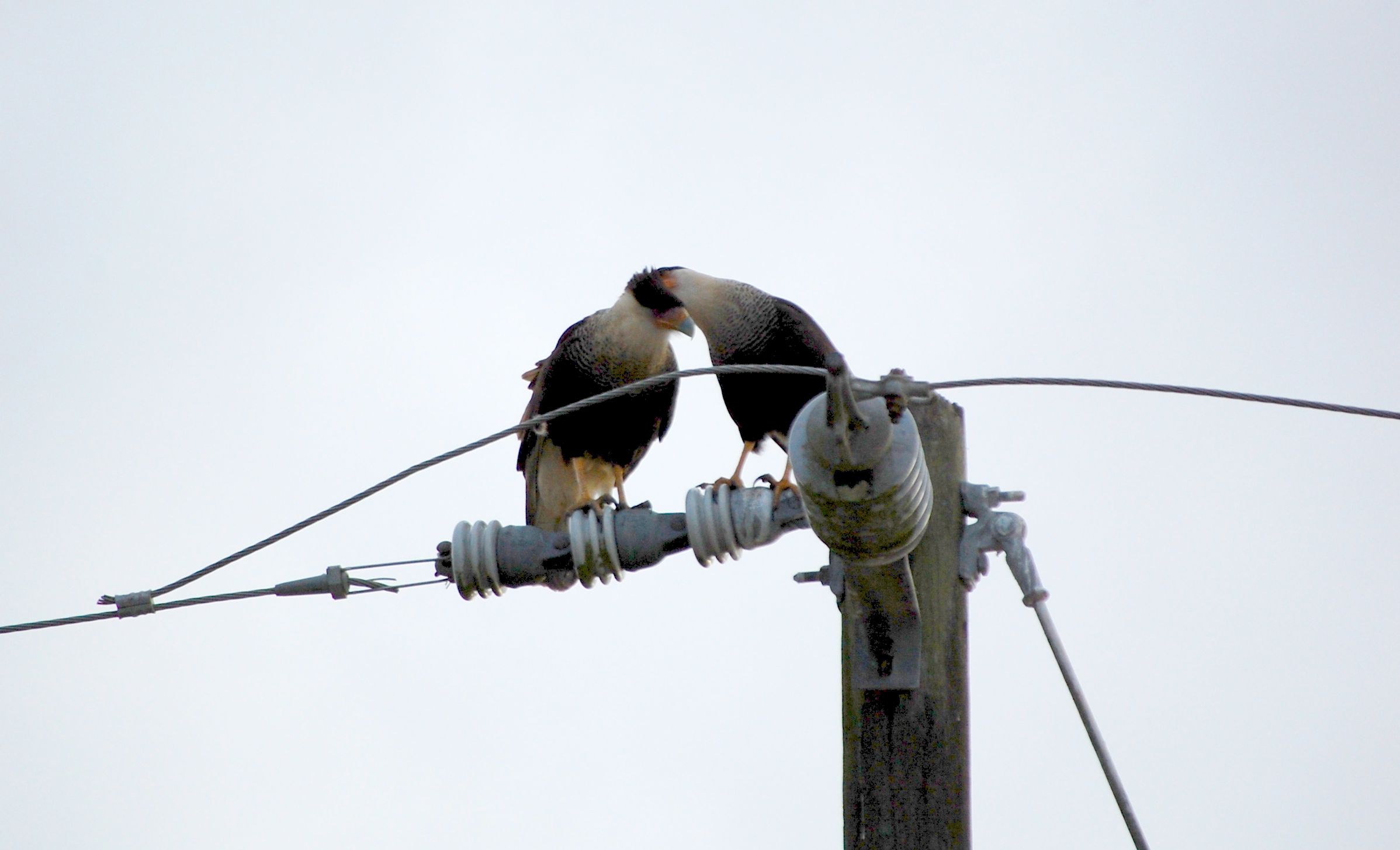
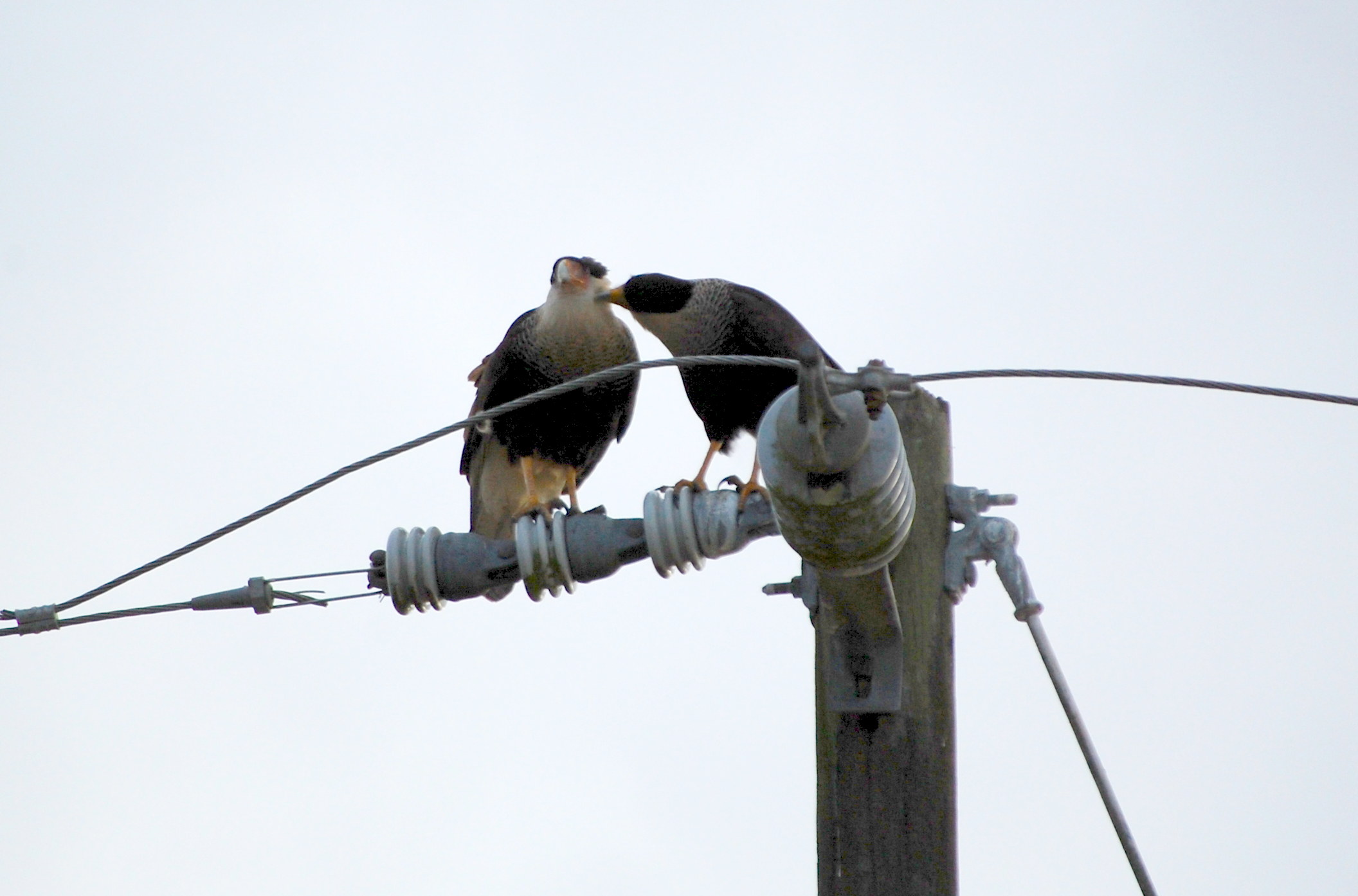
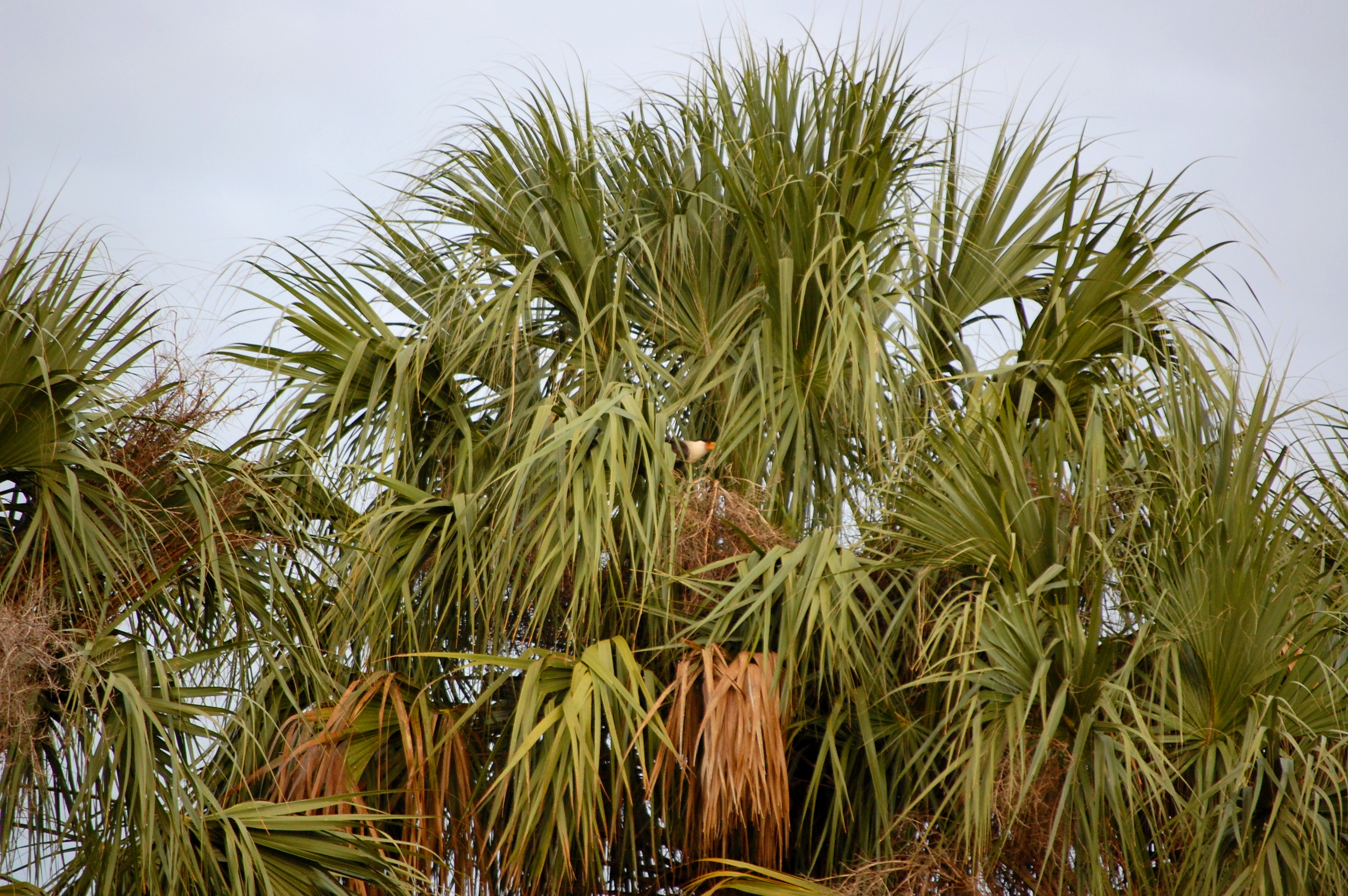
After some time, the male left to get food while the female went back to the nest. This photo shows how well hidden their nests are. She’s barely visible in the center of this photo anyway. When she hopped inside to get to the nest, she disappeared immediately.
Moments later, he returned and brought her some breakfast. I couldn’t tell what it was, but it appeared to be maybe part of a mouse or other tasty morsel.
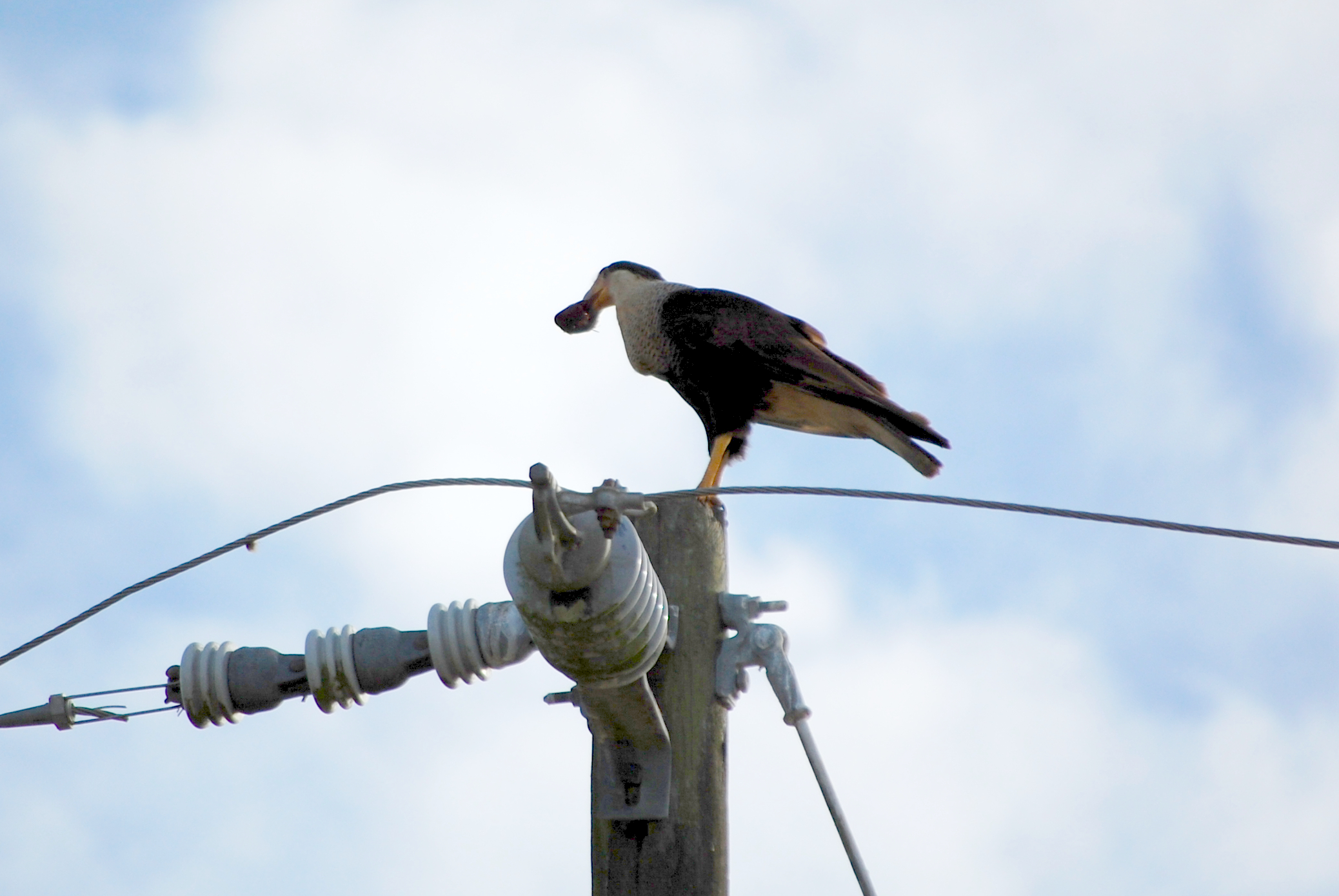
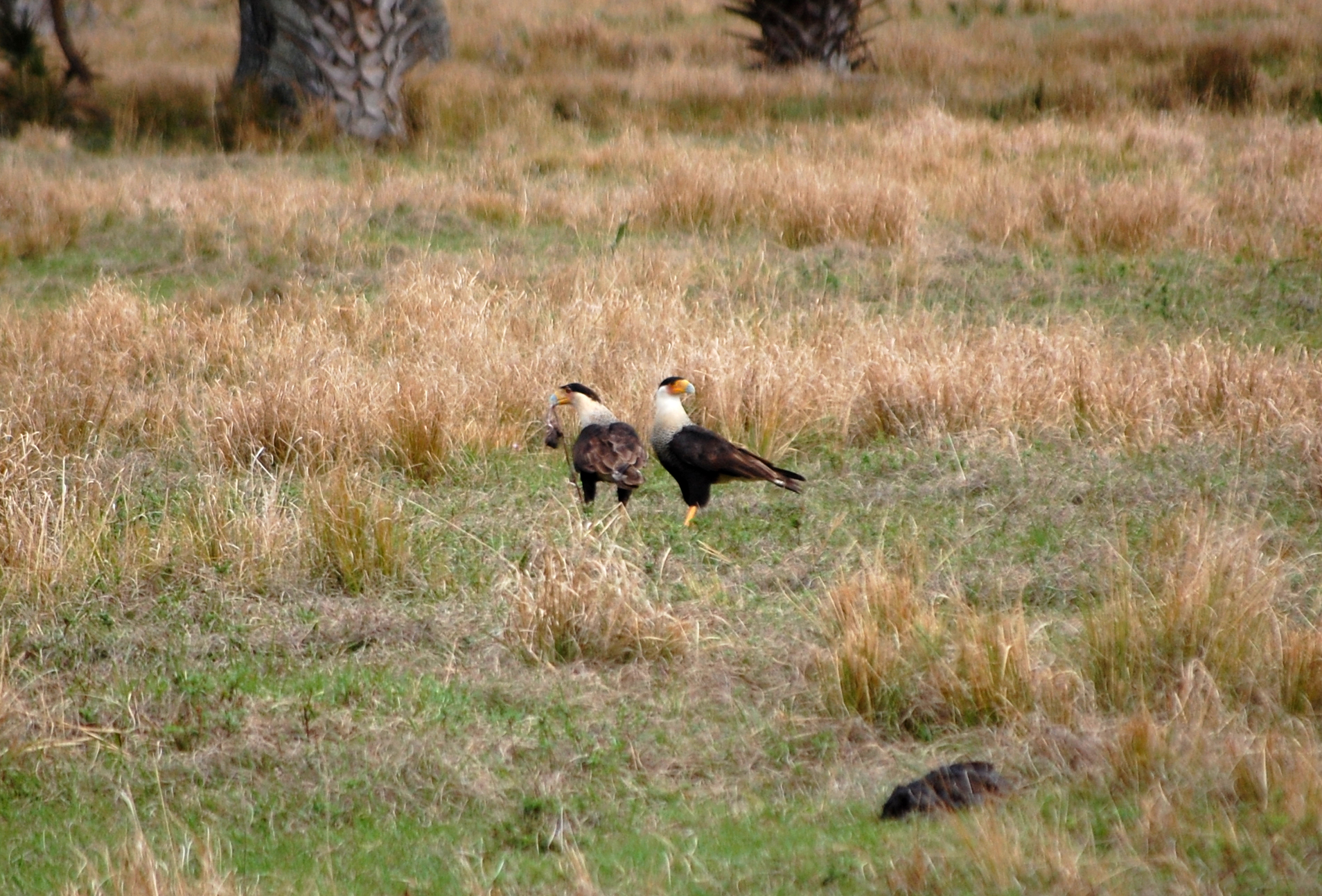
Whatever it was, it got her attention and she left the nest, first stopping at their favorite pole. At this point, he had already taken the treat down to the ground in a nearby pasture.
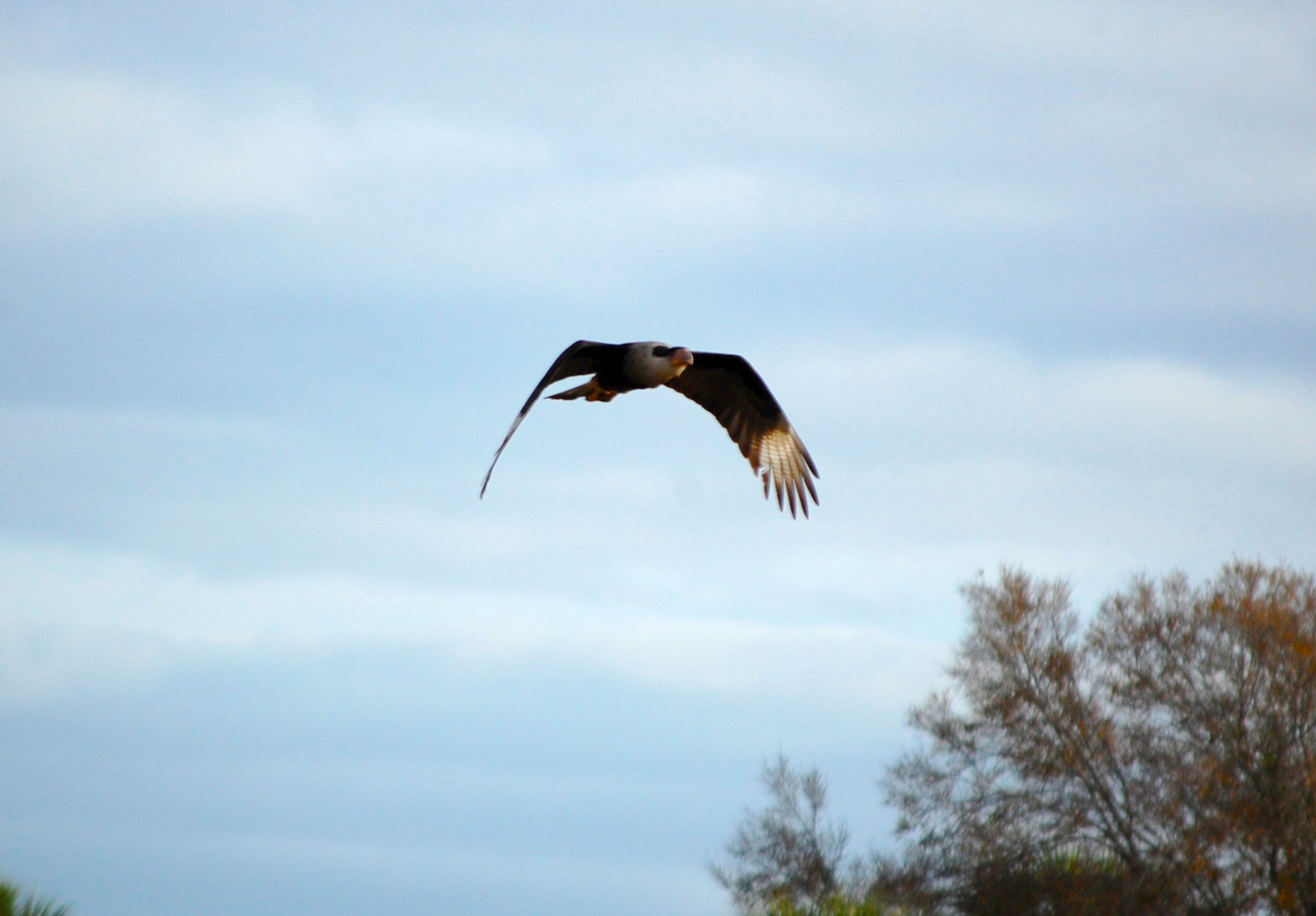
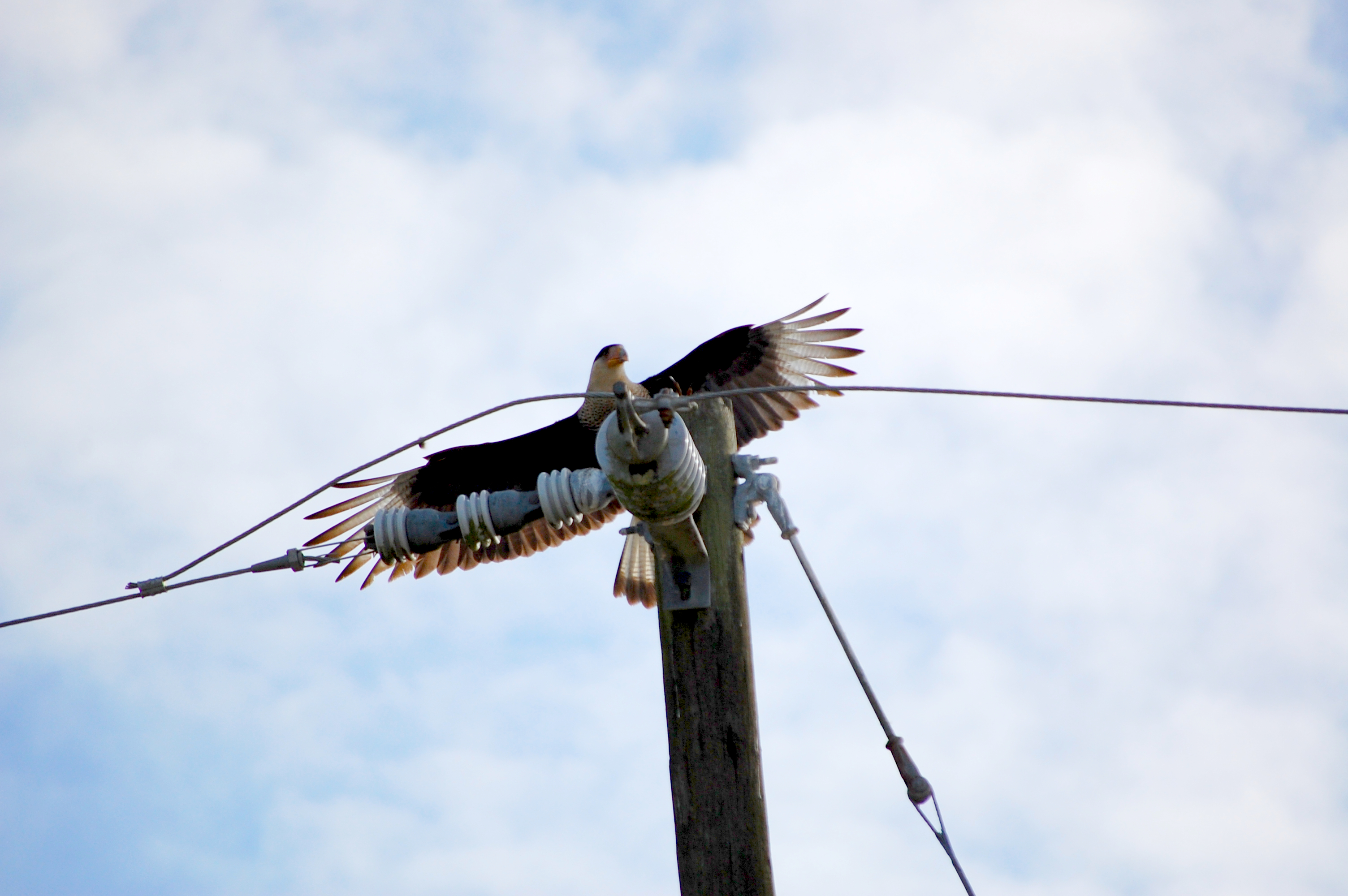
After a quick breakfast together, they left the pasture. This time, they switched roles with the male going to the nest to incubate while the female returned to the pole.
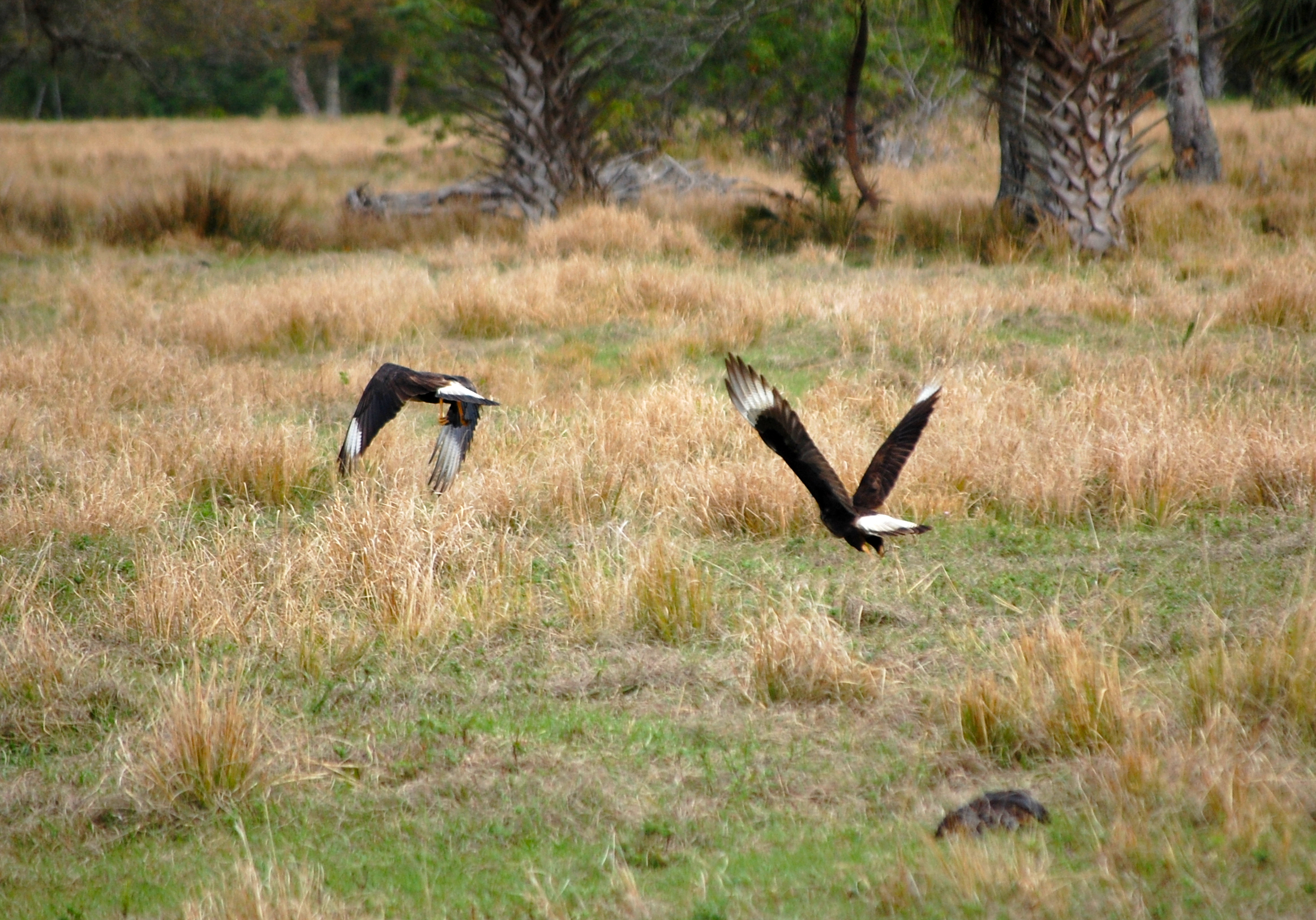
Upon reaching the pole, she had a whole routine prior to her flight.
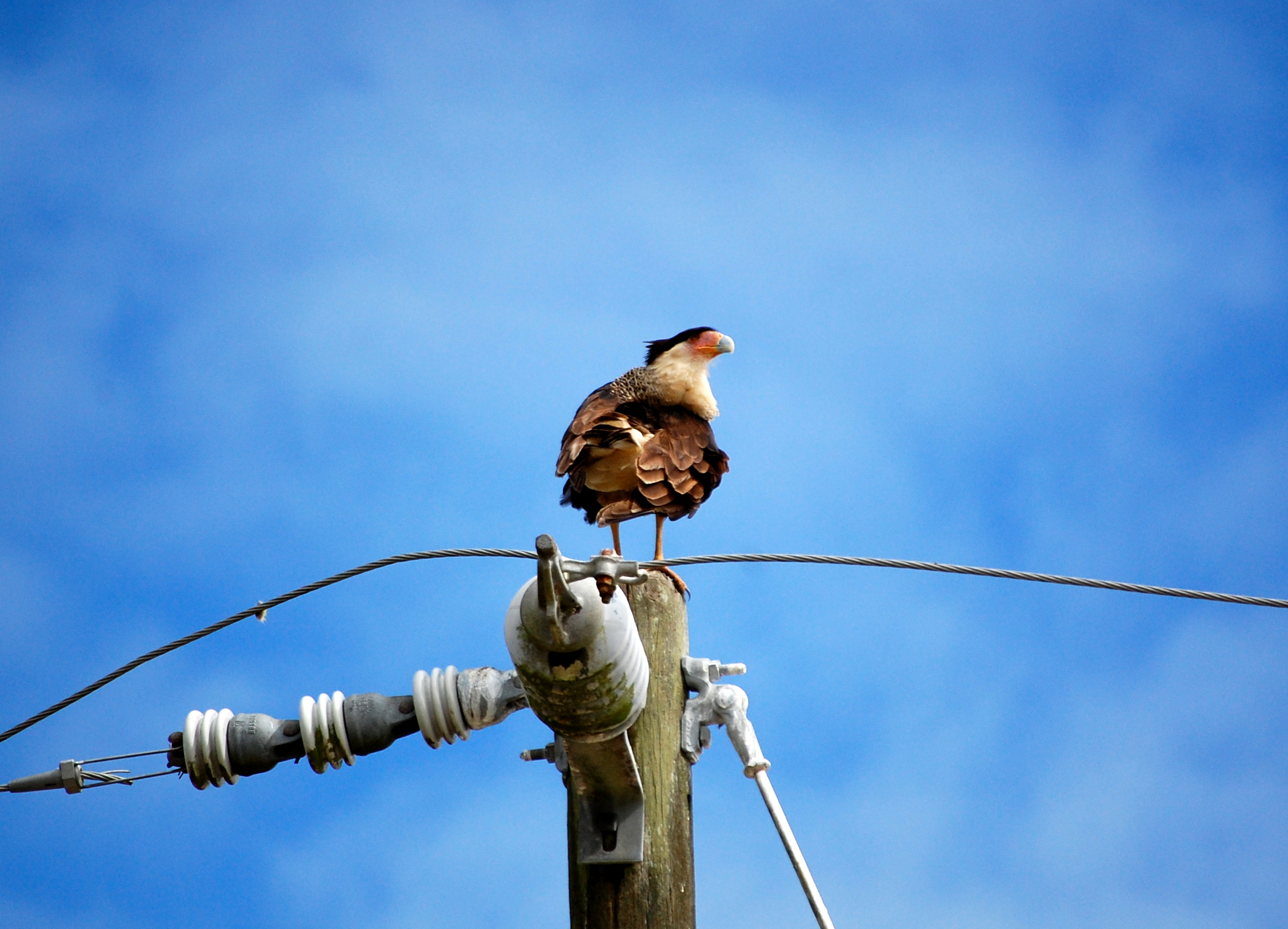
First, a little self care.
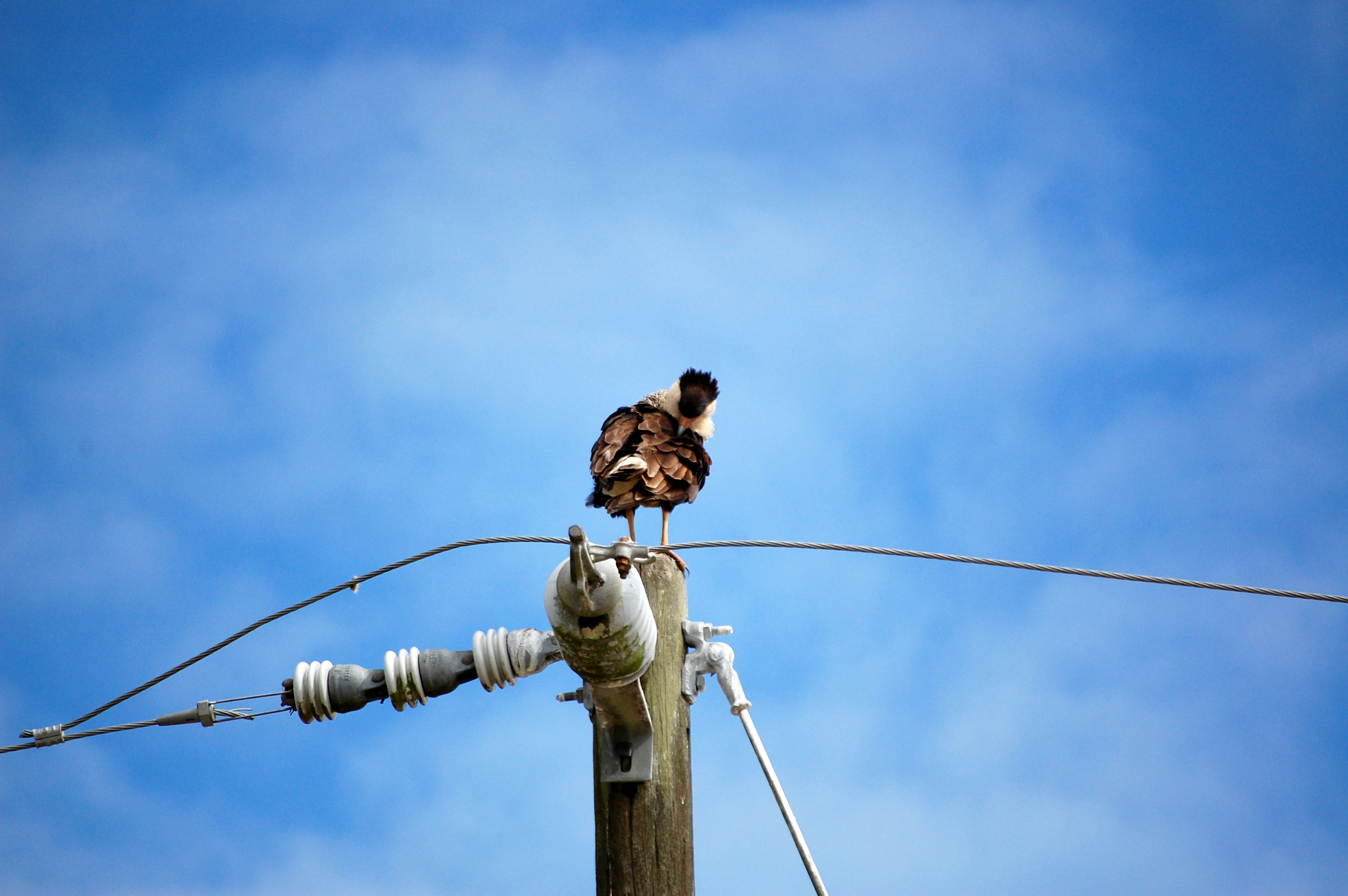
Some scratches . . .
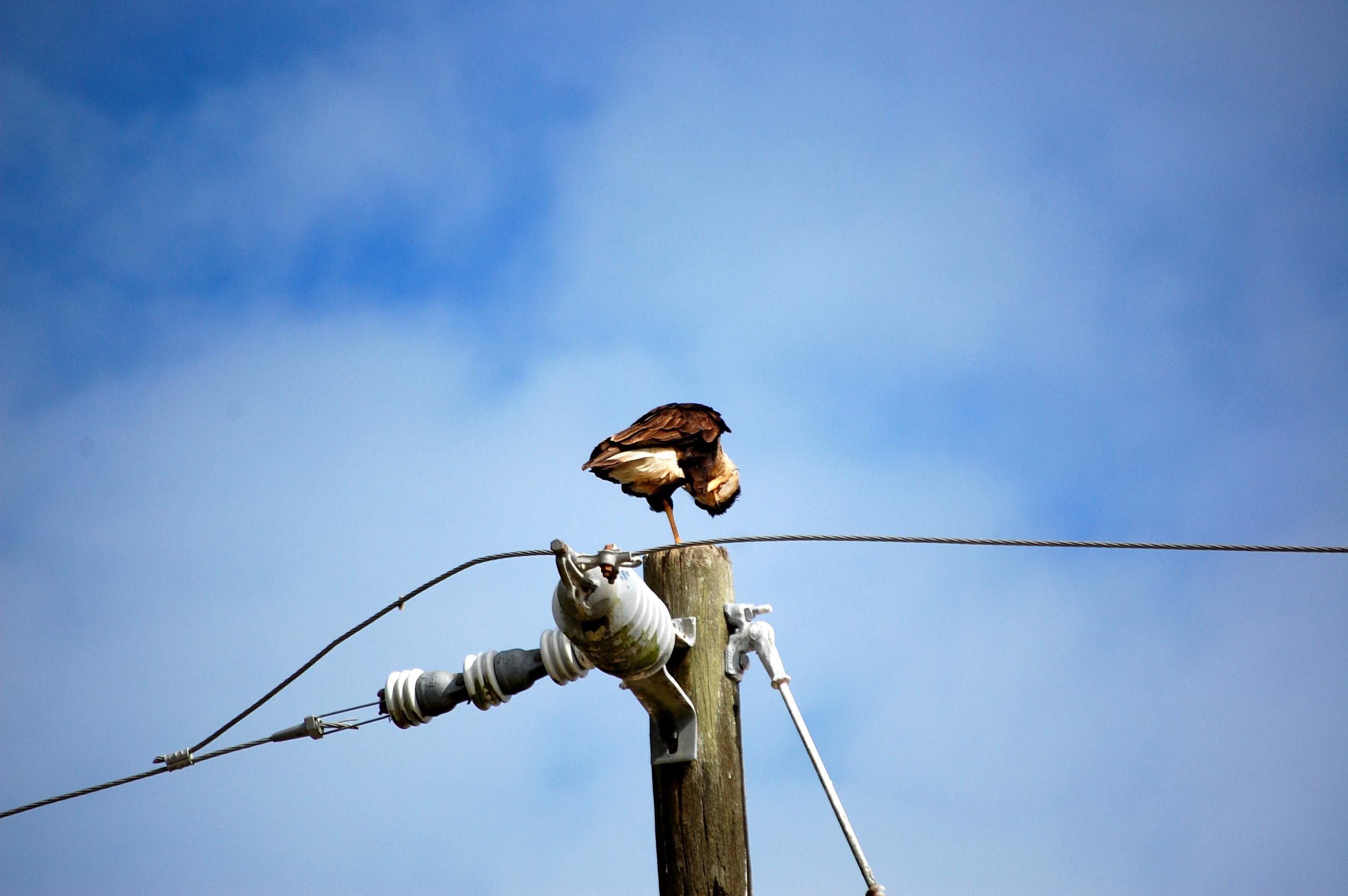
Taking care of the wings . . .
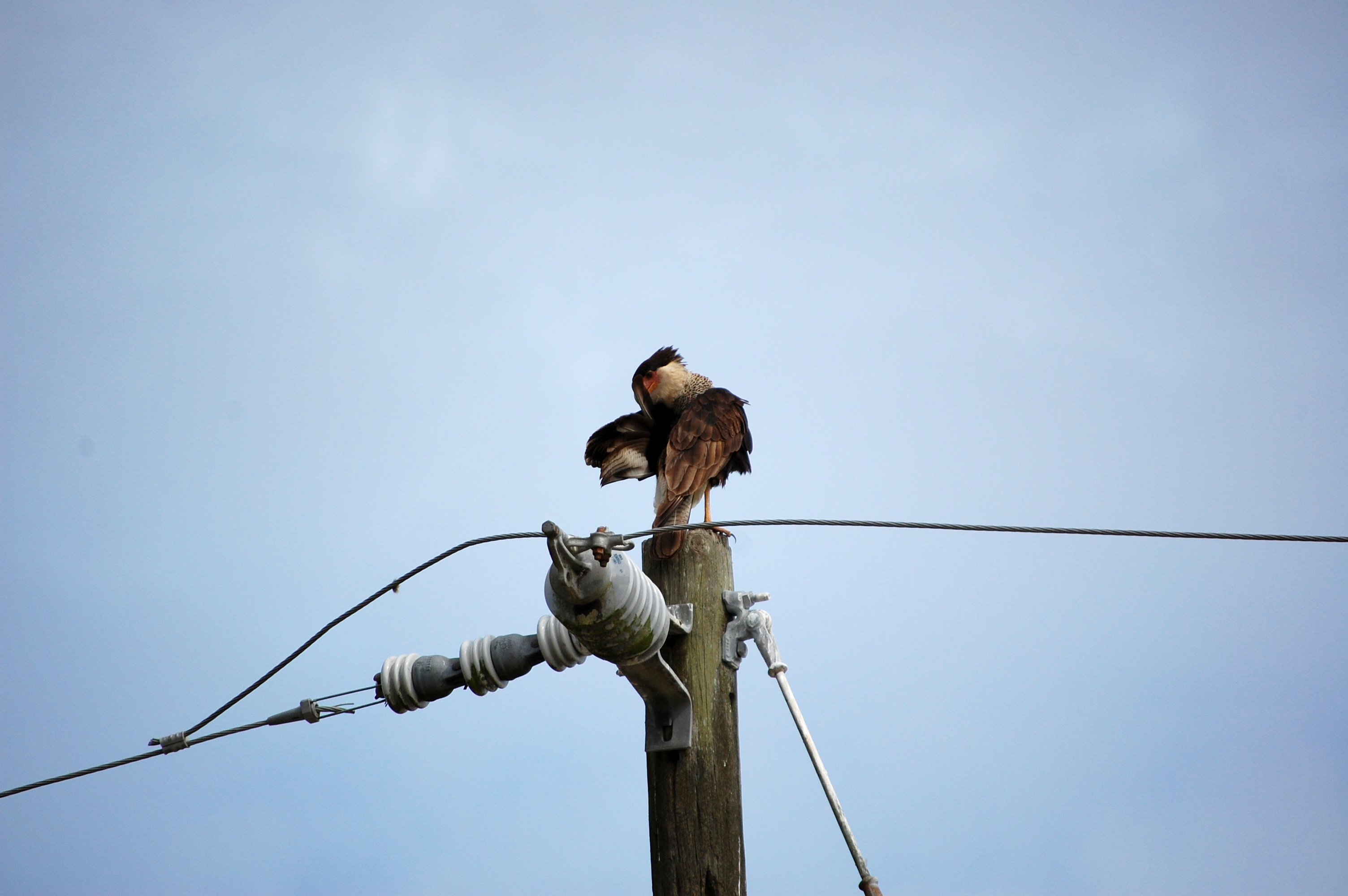
And the tail . . .
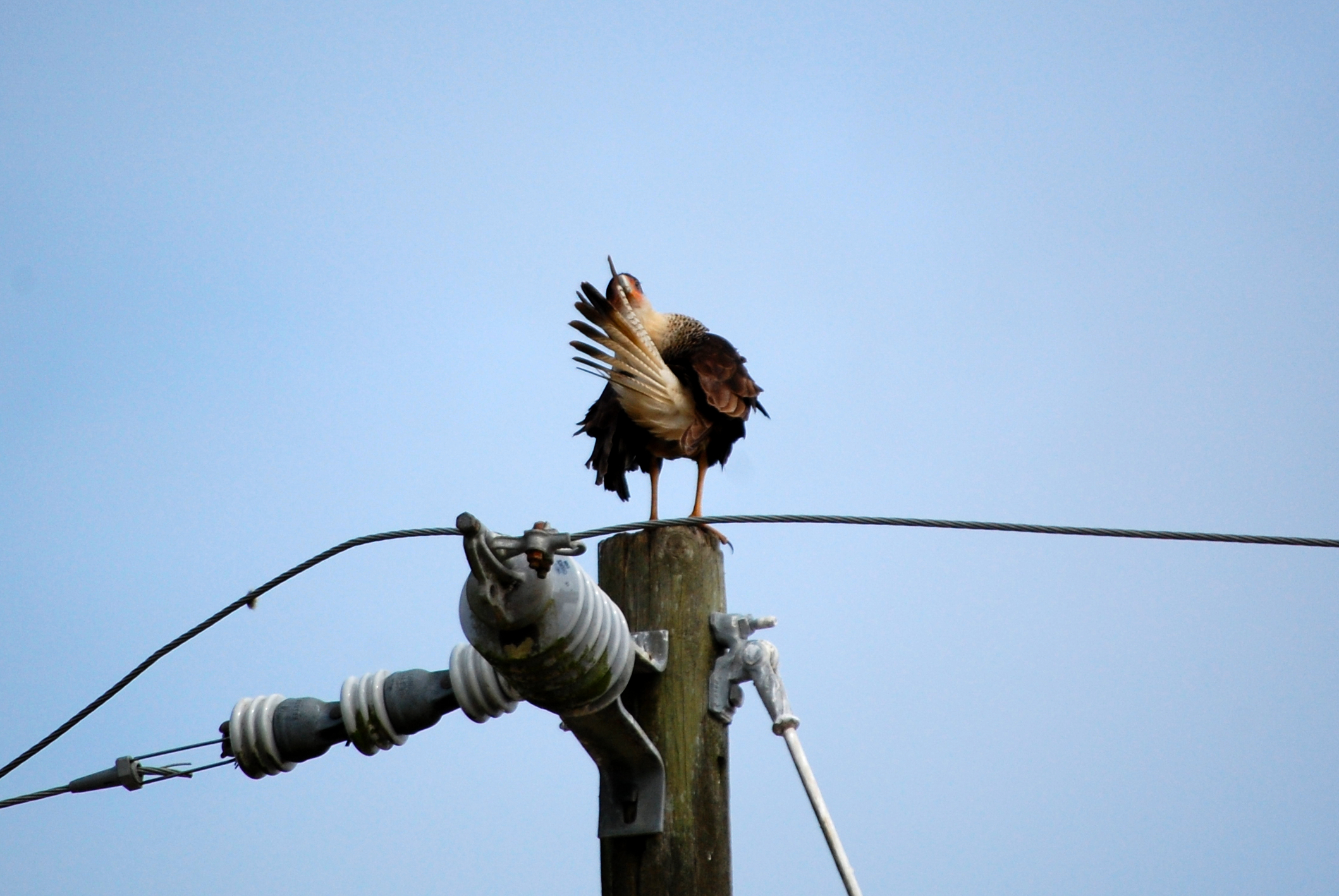
Some nice stretches . . .
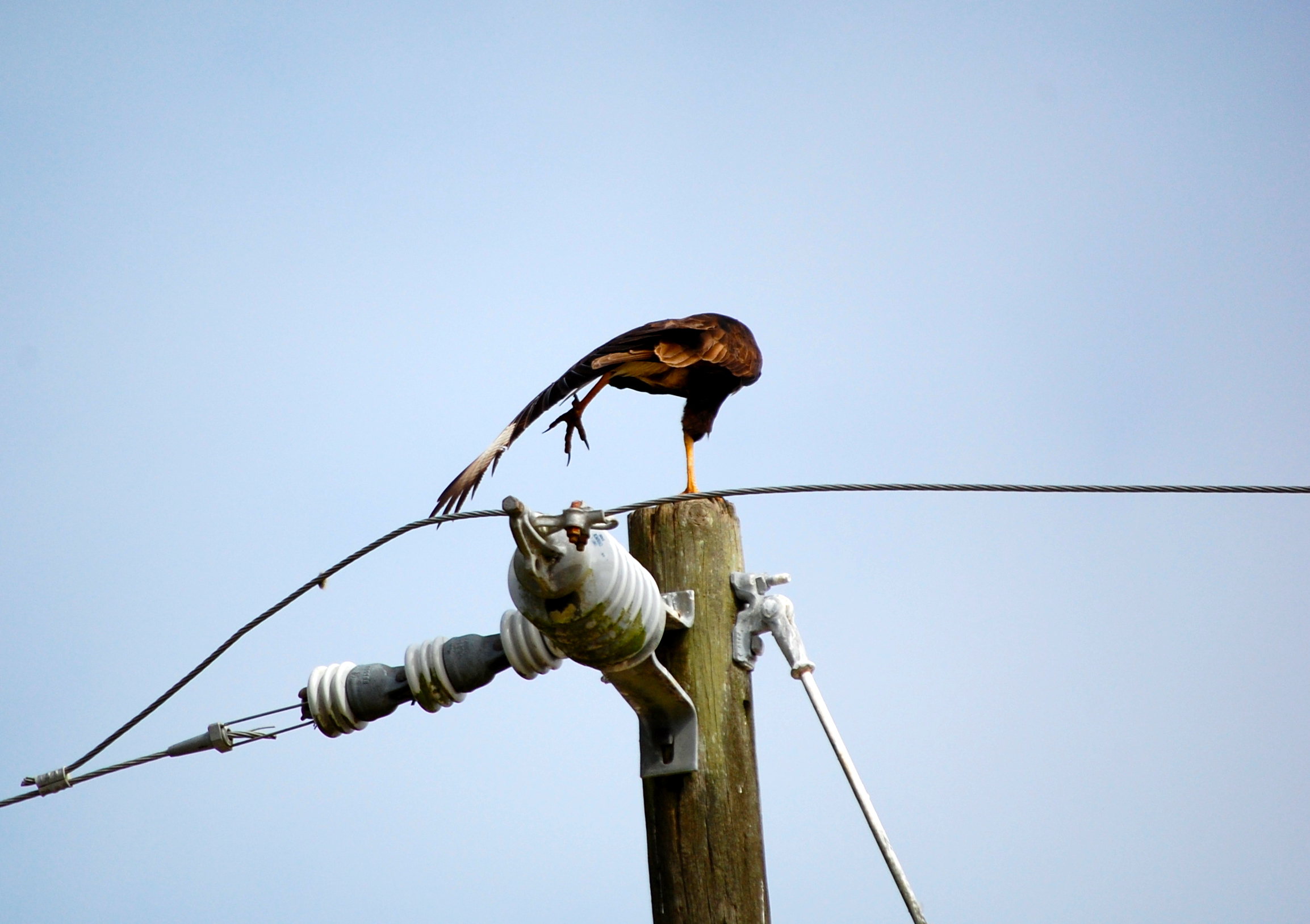
And . . . whatever this is. Yoga, maybe?
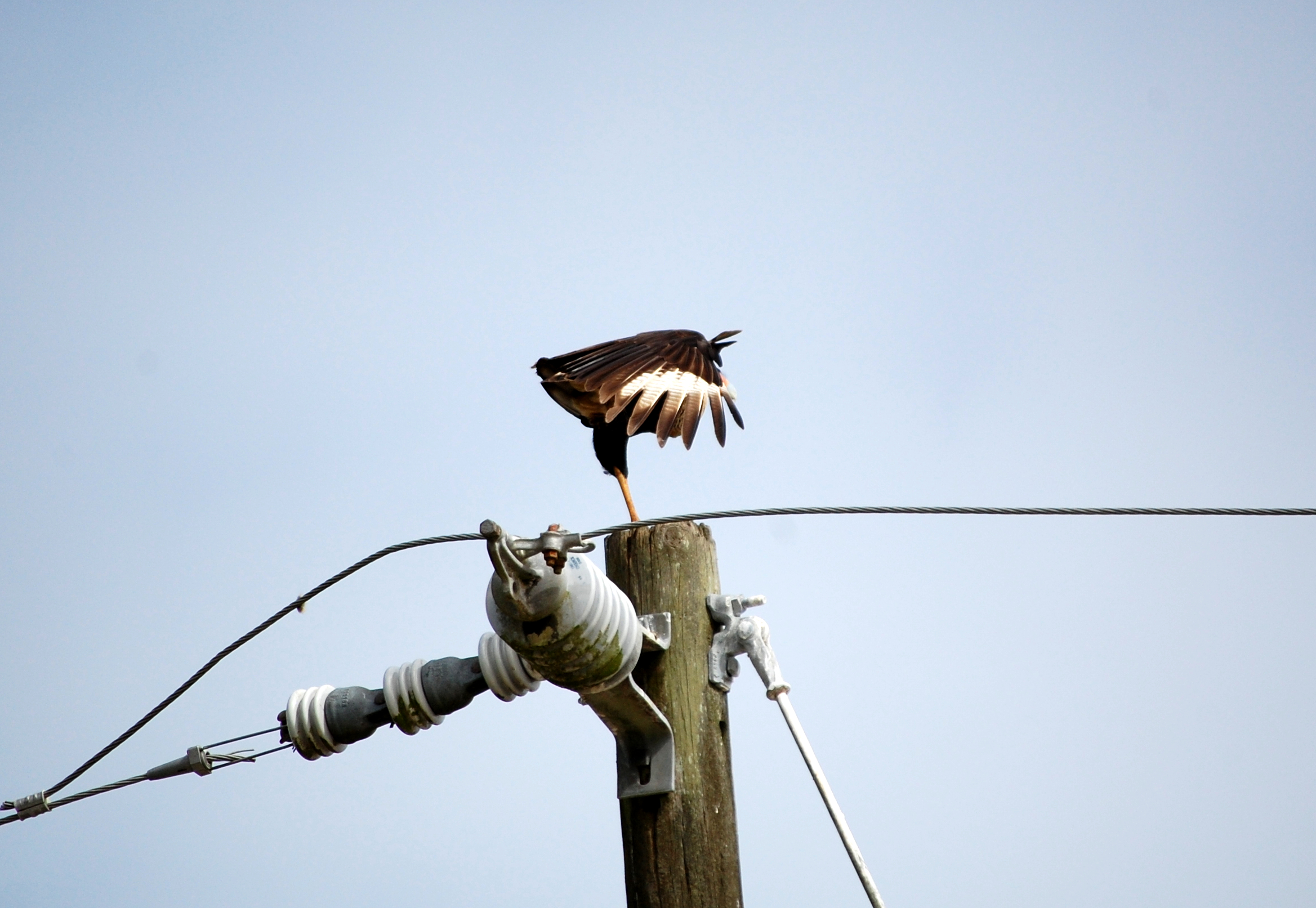
Finally a nice rouse. This is the term used for when birds raise their feathers and shake like a dog. The difference is birds use it for grooming – shaking out dander and resetting the feathers – whereas a dog (unless wet) typically does it as a sort of mental resetting.
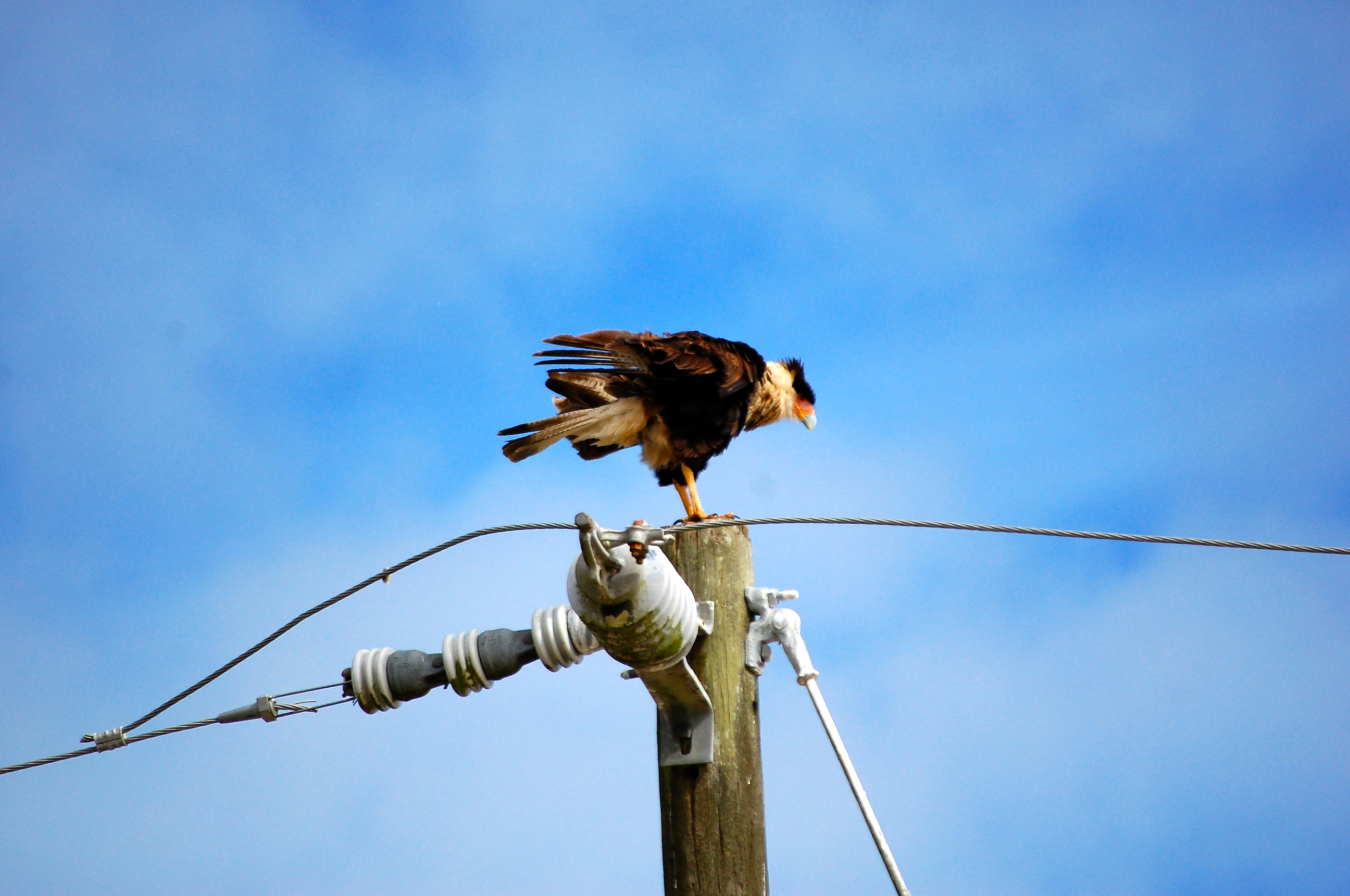
And then she was off.
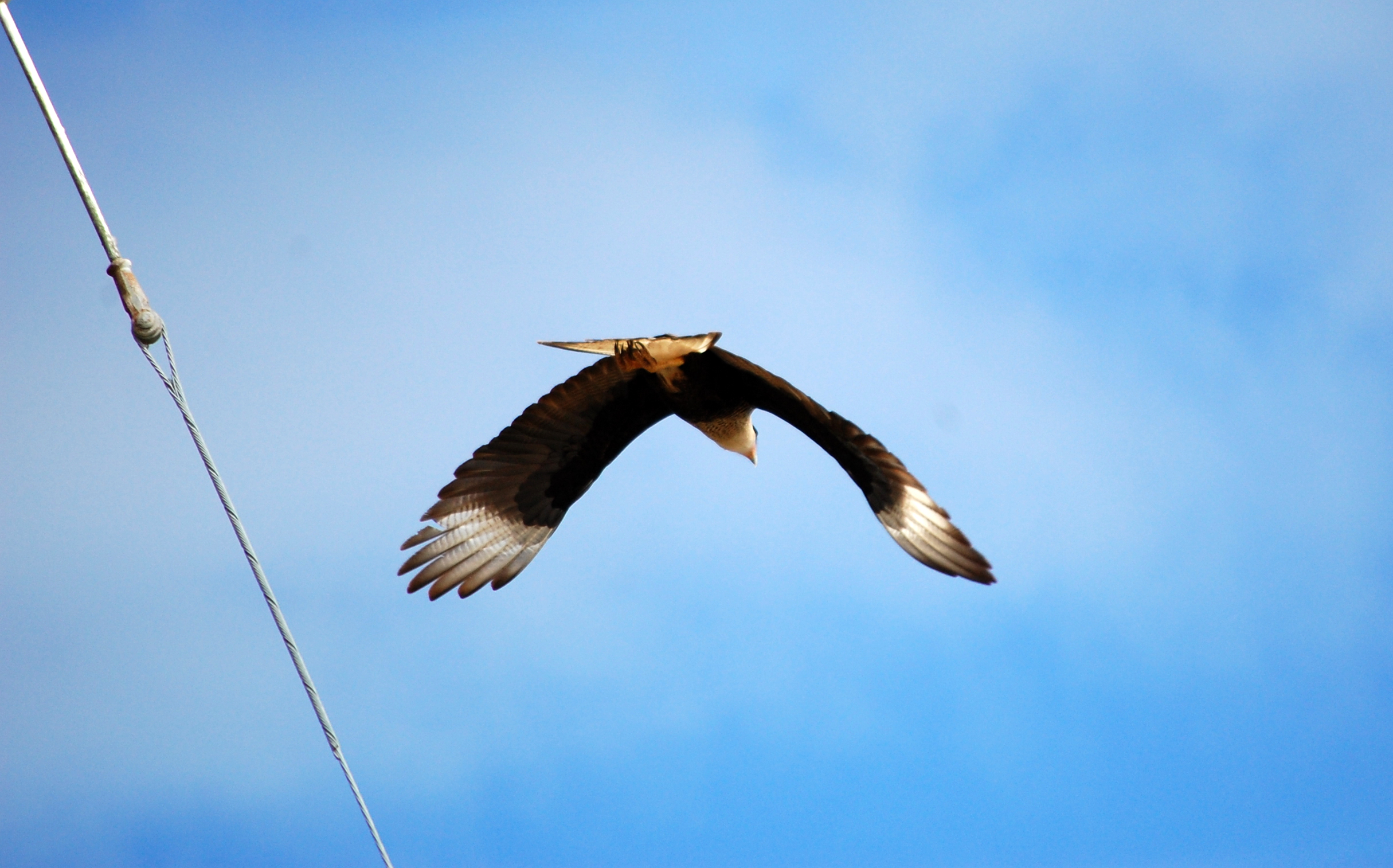
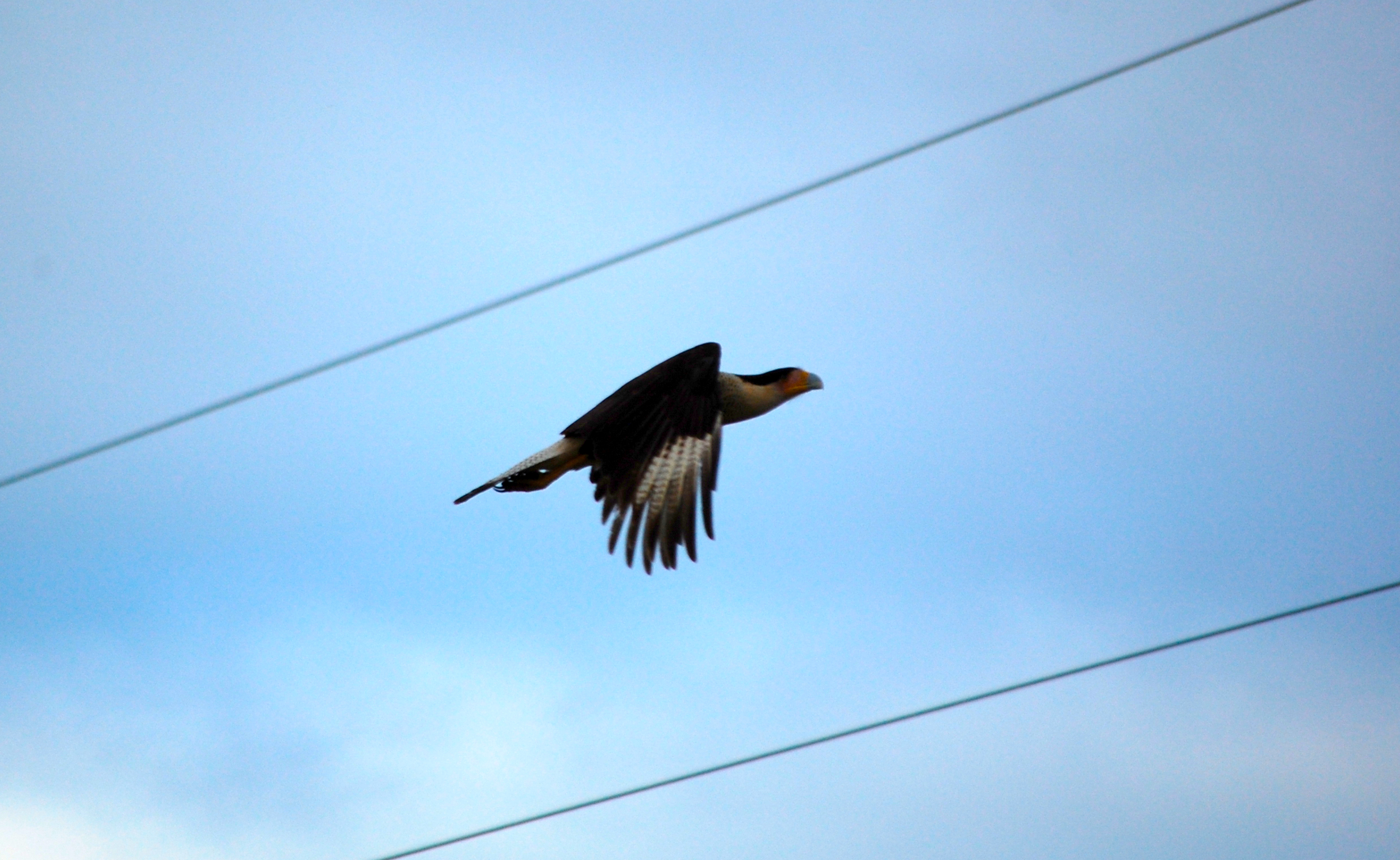
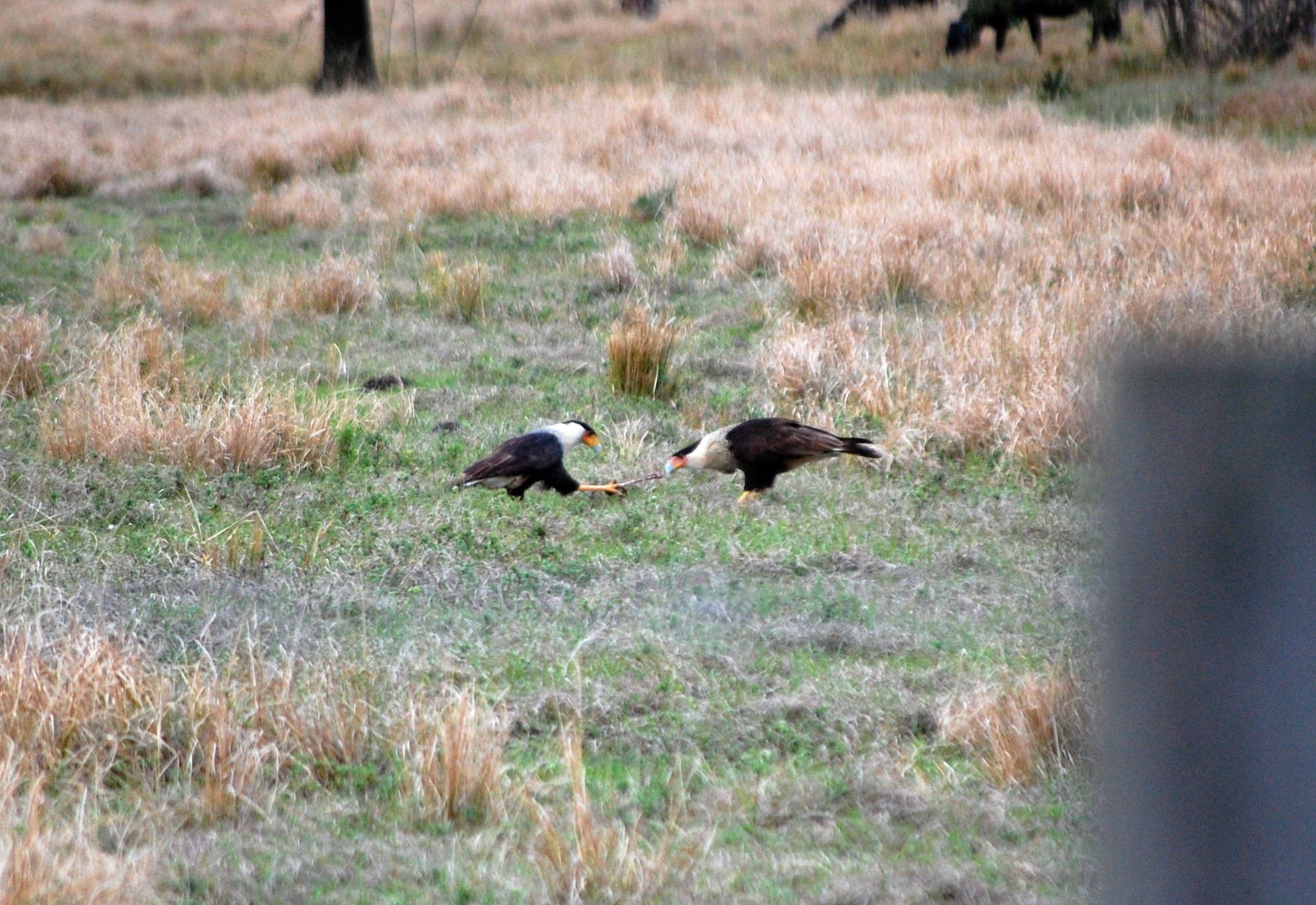
After being gone for what felt like hours (she needed the break that the male was kind enough to give her), She went back to the pole while the male came out and went back to the field to have some leftovers. It’s tough to see in the photo, but there was a little string of something going between their beaks, reminiscent of the famous “spaghetti kiss” scene from Lady and the Tramp. It was a nice final romantic view at the end of the day.

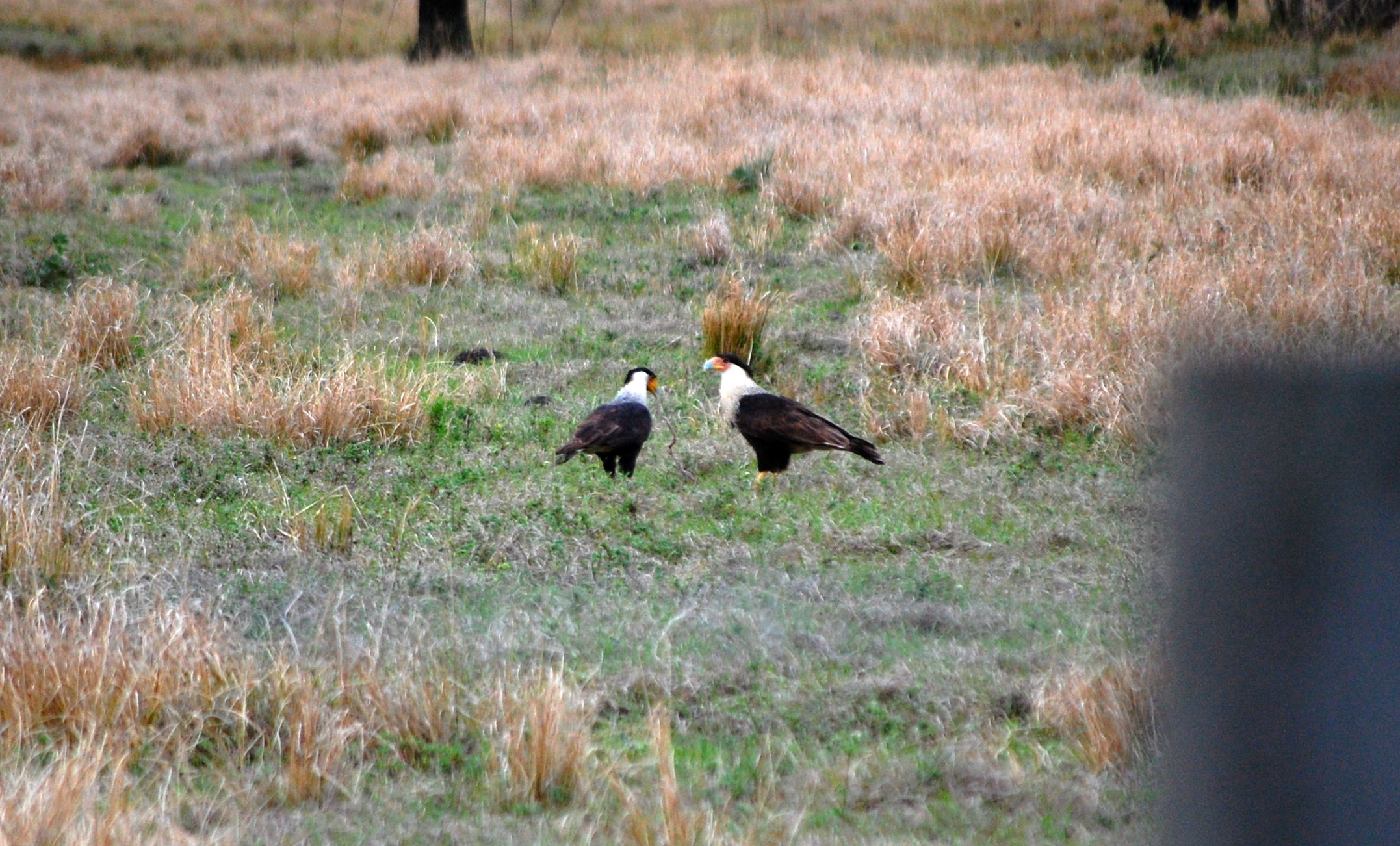
But, before we left, we did get to see one final gesture with which I’m sure plenty of us are familiar. The female reached out and stole food from the male.
As promised, here is a short video showing the preening and food sharing. You’ll have to forgive the quality. We observe them through a large birding scope that looks like a telescope. I had to try to position my phone’s camera over the tiny viewer, which was a challenge.
Between the monogamy, sharing of meals, mutual parenting, and even the fighting over leftovers, I watched these guys throughout the day and couldn’t help but think about all those questions from before. Traditional thoughts on animal behavior suggest that these birds are just performing the behaviors that they have evolved to most efficiently pass on their genes to the next generation. But, practicing that rejection of authority that my favorite music genre has taught me, maybe we don’t know everything we can about such things. Could it be that the birds really are feeling affection for each other? Is that emotion something that they developed? And, if so . . . why?
 BJ Quinton