
I’ve been doing a lot of surveying for shorebirds lately. Between actual project work and some shadowing I’ve been doing, there will be more to come, which is why I am calling this “Part 1”. While the office is amazing (am I really getting paid to be at the beach?), this group of birds can be hard to identify to the species level because they all look very similar, particularly in the winter months before they get their breeding plumage, as is the case with those in this posting (I hope to do a follow-up with differences in breeding plumage). I have apps and books to help out. However, sometimes the differences are so subtle that even directions aren’t very helpful. Maybe one is “slightly larger” or “less grey” than another. Some books even have these similar birds illustrated side-by-side, and even the illustrations look nearly identical. Sometimes it’s a little bit easier to tell the apart if you happen to get the two species right next to each other. However, even though I did have this happen as I’ll show in a later post on wading birds, it is very rare.
I thought I’d start with a couple that are fairly easy to tell apart and are fairly common on Florida beaches certain times of the year, and then throw in another one that can be a little more difficult to tell from one of the first two. Despite one of them not having it in the name, these are all sandpipers, so named because of their foraging technique of probing the sand to find invertebrates.
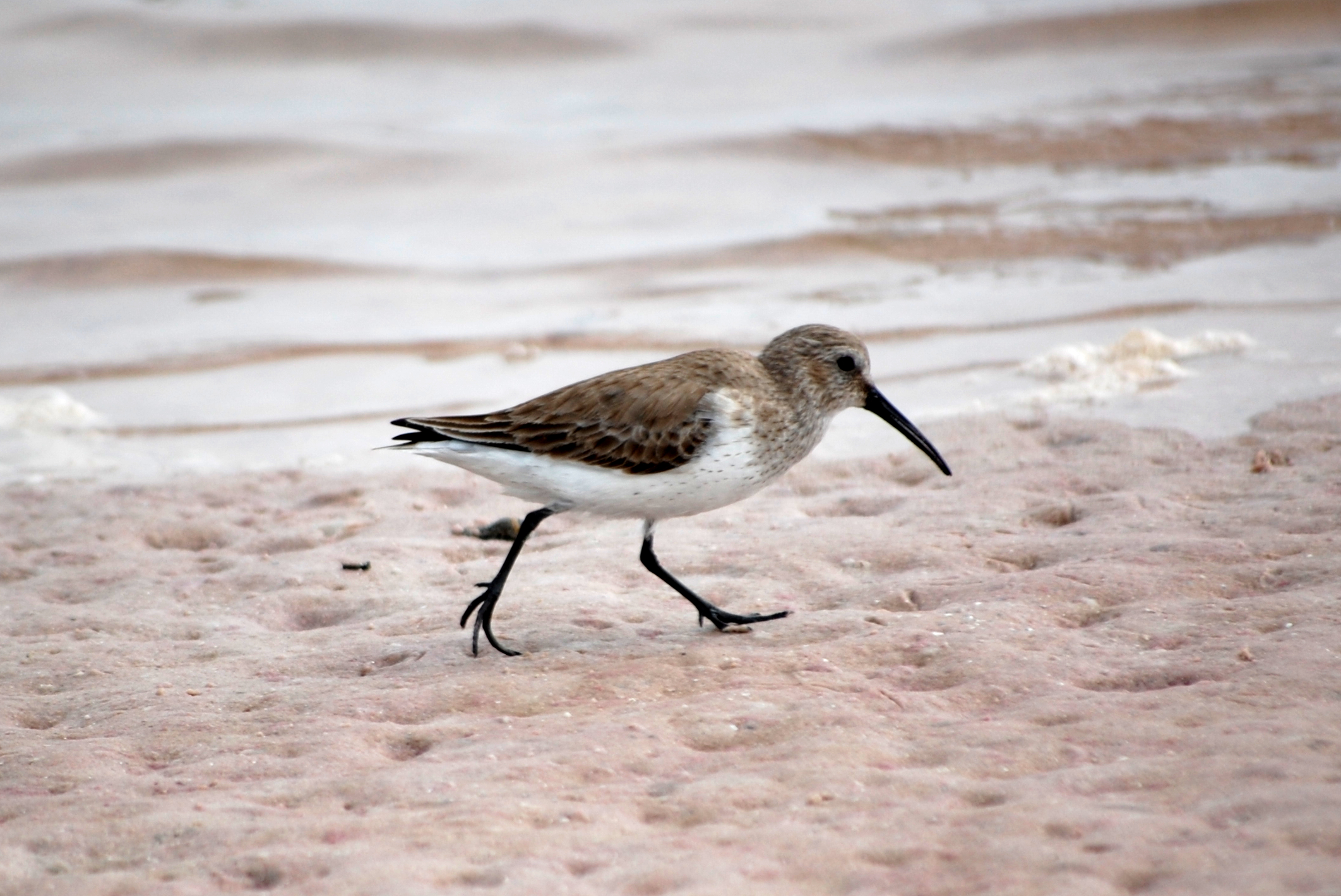
This first bird is known as a dunlin (Calidris alpina). The common name is derived from “dun” meaning dull brown, and “ling” meaning something having that trait. The genus name is from the Ancient Greek kalidris, which is what Aristotle used to describe some grey birds by the water. The species name comes from the Latin term for “high mountains”, which is why the Alps are so called. I have not been able to find out why they gave such a species name to a bird that lives on low lying shores, and not in high mountains.
You’ve probably passed right by a dunlin before and just thought it was a sandpiper, and you wouldn’t be wrong. But you’ve probably passed by this separate species of bird and thought the same thing. This one is the least sandpiper (Calidris minutilla). Notice the genus is the same. However, the species name for this one is from the Latin for “very small” due to its small size. It is the smallest shorebird in the world, weighing little more than an ounce.
The least sandpiper helped researchers discover a new way of feeding that had not been seen in other birds. As they are probing for prey, they will actually use the surface tension of the water to transport the prey more quickly from their beak tips to their mouths.
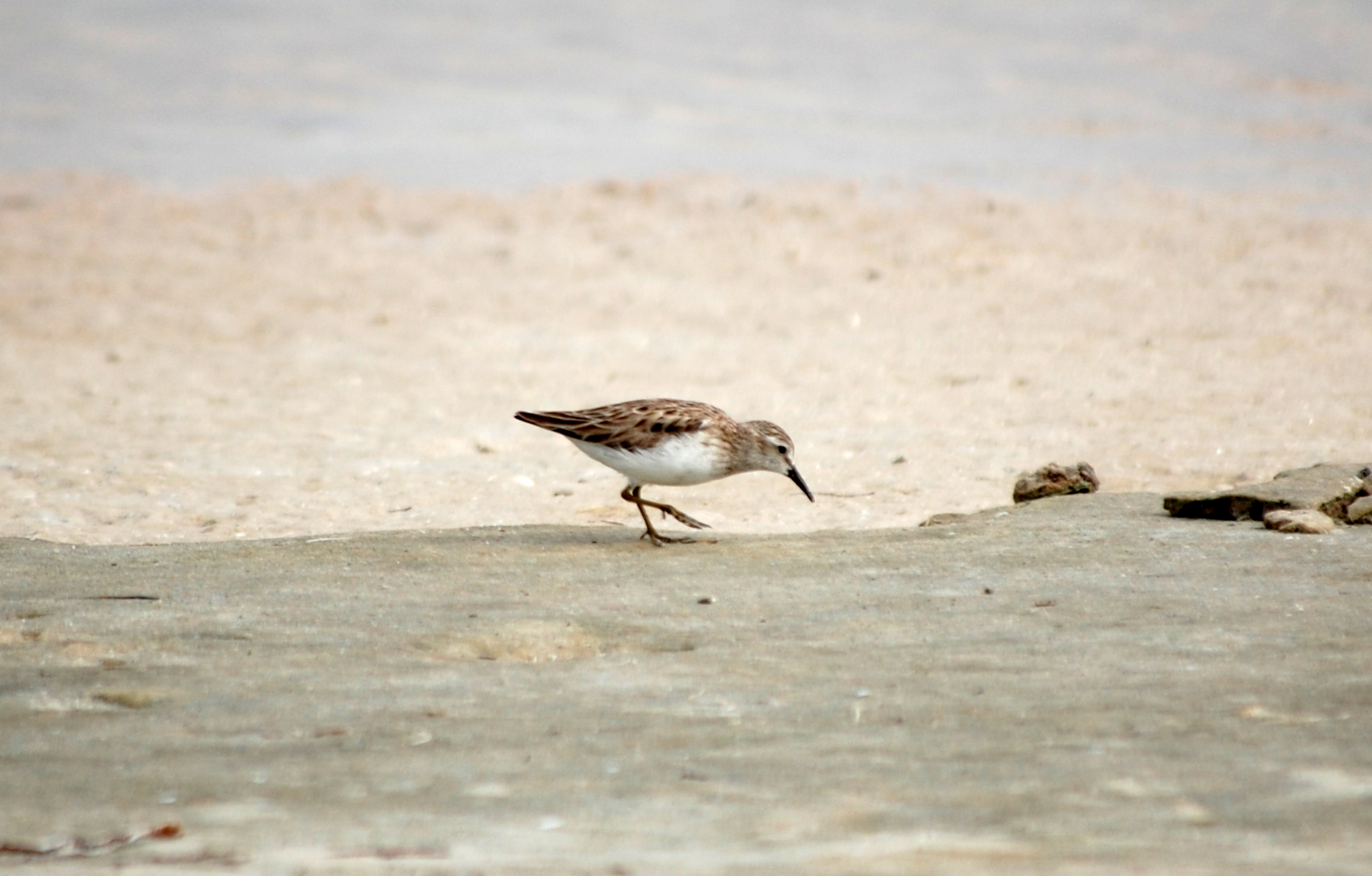
Now you may notice a size difference in the photos. While there is a slight difference, keep in mind these were not shot at the same distances. Their plumage may also look a little bit different, but that could be the lighting as the clouds were intermittent that day. The biggest difference with these two is the bill. While both bills curve down slightly, the curve is more pronounced in the dunlin and the dunlins bill is longer. That’s how I typically tell these two apart. The least sandpiper’s legs are also a paler greenish yellow where the dunlin’s are black. However, since both of these birds run very fast, this can be hard to verify.
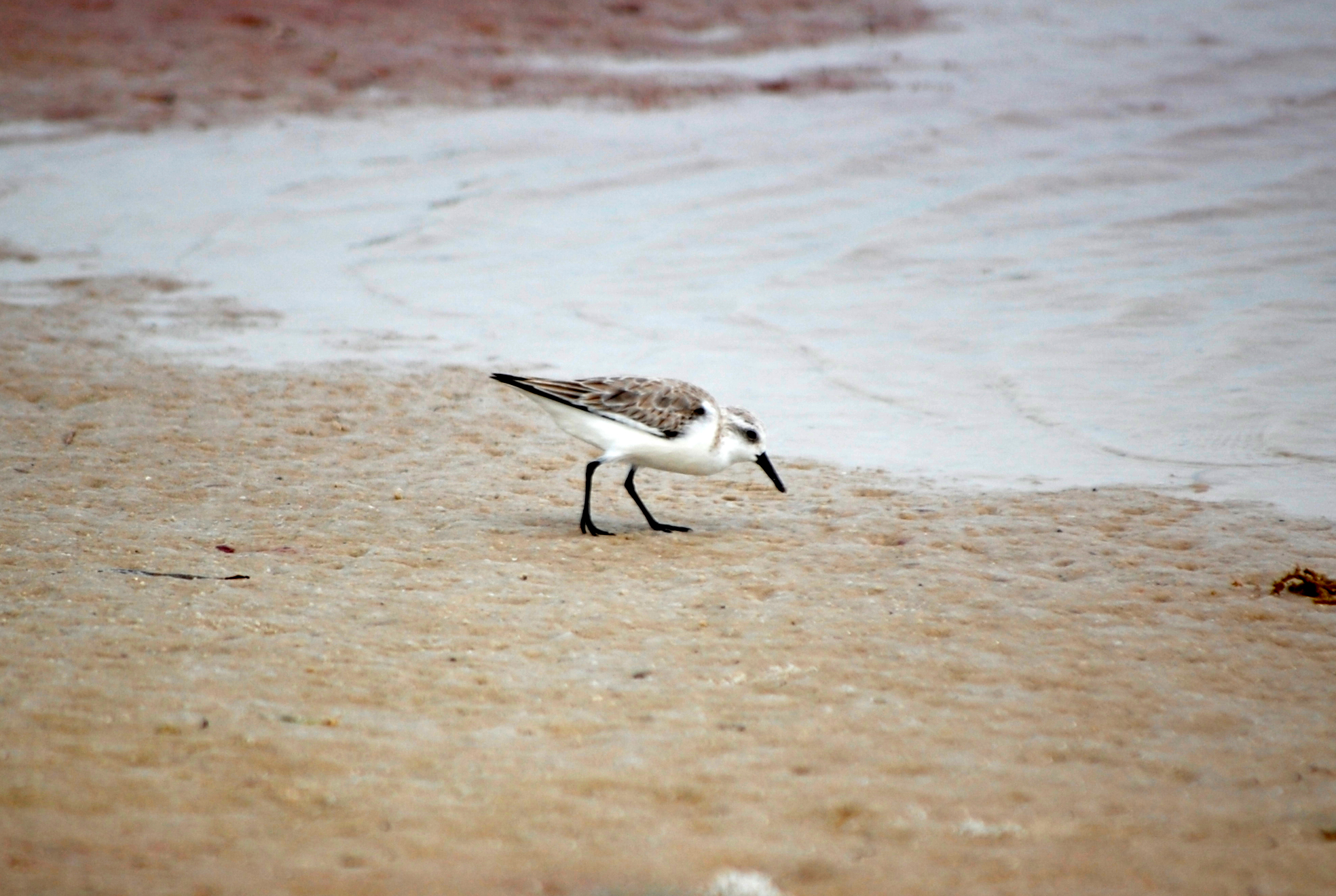
I mentioned that there was another one that could be difficult to tell from the least sandpiper and that’s the one pictured below. This is the western sandpiper (Calidris mauri). Again in the same genus, this bird’s species name is in honor the Italian botanist Ernesto Mauri. This one looks very similar to the least sandpiper, although it does have the black legs like the dunlin. There are some subtle differences in the bill also. However, the biggest difference here is the lack of brown in the neck and breast area.
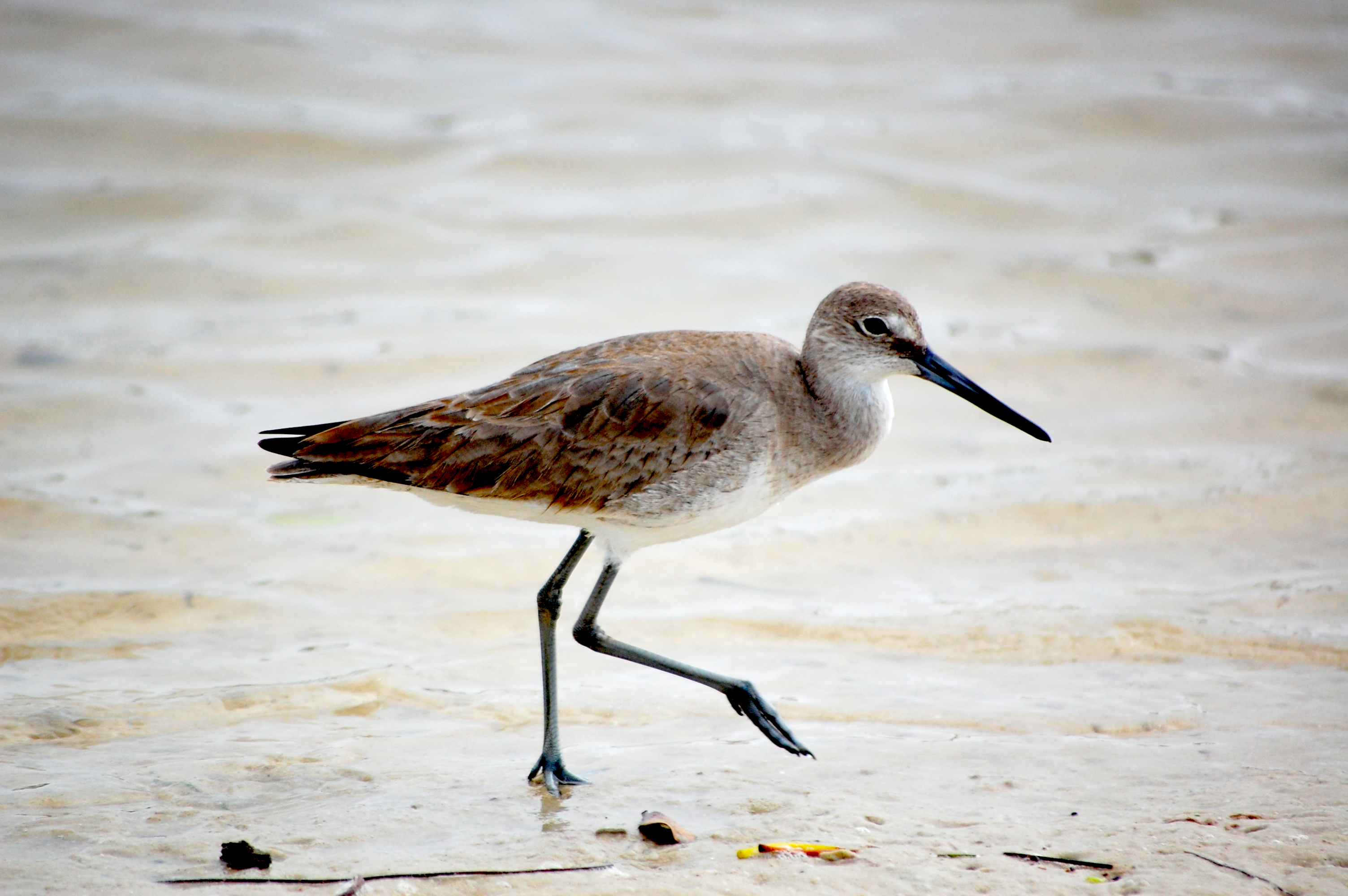
Sometimes these birds are distinguishable just by their size. The bird below is a great example. With no size reference in the photo, it might look similar to the previous ones. The beak is long like the dunlin, but it isn’t curved. There are some more subtle differences also. But the main difference with this one is the sheer size. The previous birds are rather small, standing maybe six inches or so tall. This next bird stands at over twice that height.
This is the willet (Tringa semipalmata). The genus is from the Greek tringus, a word mentioned by Aristotle to describe an unidentified bird that was later believed to be some sort of sandpiper. The genus is from the Latin semi meaning “half” or “very small” and palmatus meaning “palmate”, a term that, in zoology, refers to the webbing between the toes. This indicates that the webbing between the toes only reaches partially to the end of the toes rather than completely, like you would expect in ducks. This is just barely visible in the photo.
The willet is a great example of why the Migratory Bird Treaty Act of 1918 was established. Most people don’t realize that nearly every bird you see is actually federally protected under this act. James Audubon, when writing about which birds were edible, wrote that the willet was particularly delicious. As a result, they were nearly wiped out in the early 1900’s. The act was designed to prevent such things.
There are some birds out there that are afforded protection under the Endangered Species Act, something with which most people are much more familiar. I had the privilege of seeing two such birds recently. Since I just discussed size, I’ll start with the larger one first.
When I went out with someone from the Audubon Society to learn about these birds, I asked questions on how to identify them. This next one usually has much brighter plumage. However, we were there when they had their non-breeding plumage, which is very grey. The breeding plumage is where they get their name – the red knot. When I asked how to identify this one during the non-breeding season, I was told they are an average size, the bill is an average length, and they have a sort of drab brown color. “So, they are remarkably unremarkable?” I asked jokingly. She said that’s about right.
The red knot (Calidris canutus) is another bird that is named after a word used by Aristotle. The species name comes from King Canute, king of England in the early 11th century. King Canute, much like James Audubon said of the willet, regarded the red knot as a delicacy. Specifically, he said it should be flatted and consumed with white bread and milk. A less gruesome fact about this bird is that they have special sensory organs called “Herbst corpuscles” that they use to sense the difference in pressure as they are probing in order to detect buried prey.
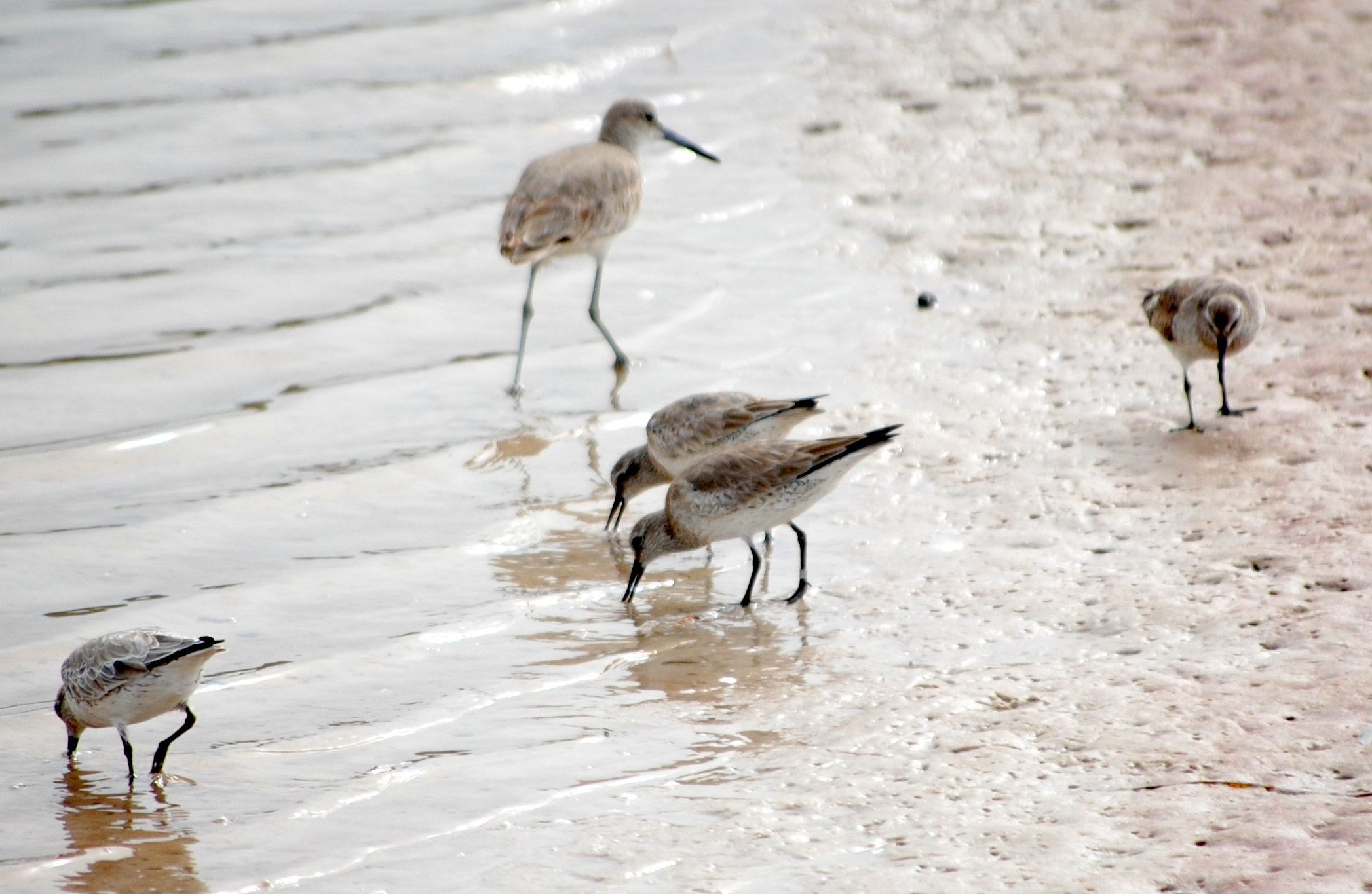
Since these birds are federally protected, they are part of a banding program. It just so happened that one individual in this group was banded. If you look closely, you’ll see a band on the left leg of the third bird from the left. It is marked with “>2Y”, meaning it is at least two years old because that is how long they’ve tracked it. The color is significant too. I can’t remember exactly, but I think she said it indicates the county.

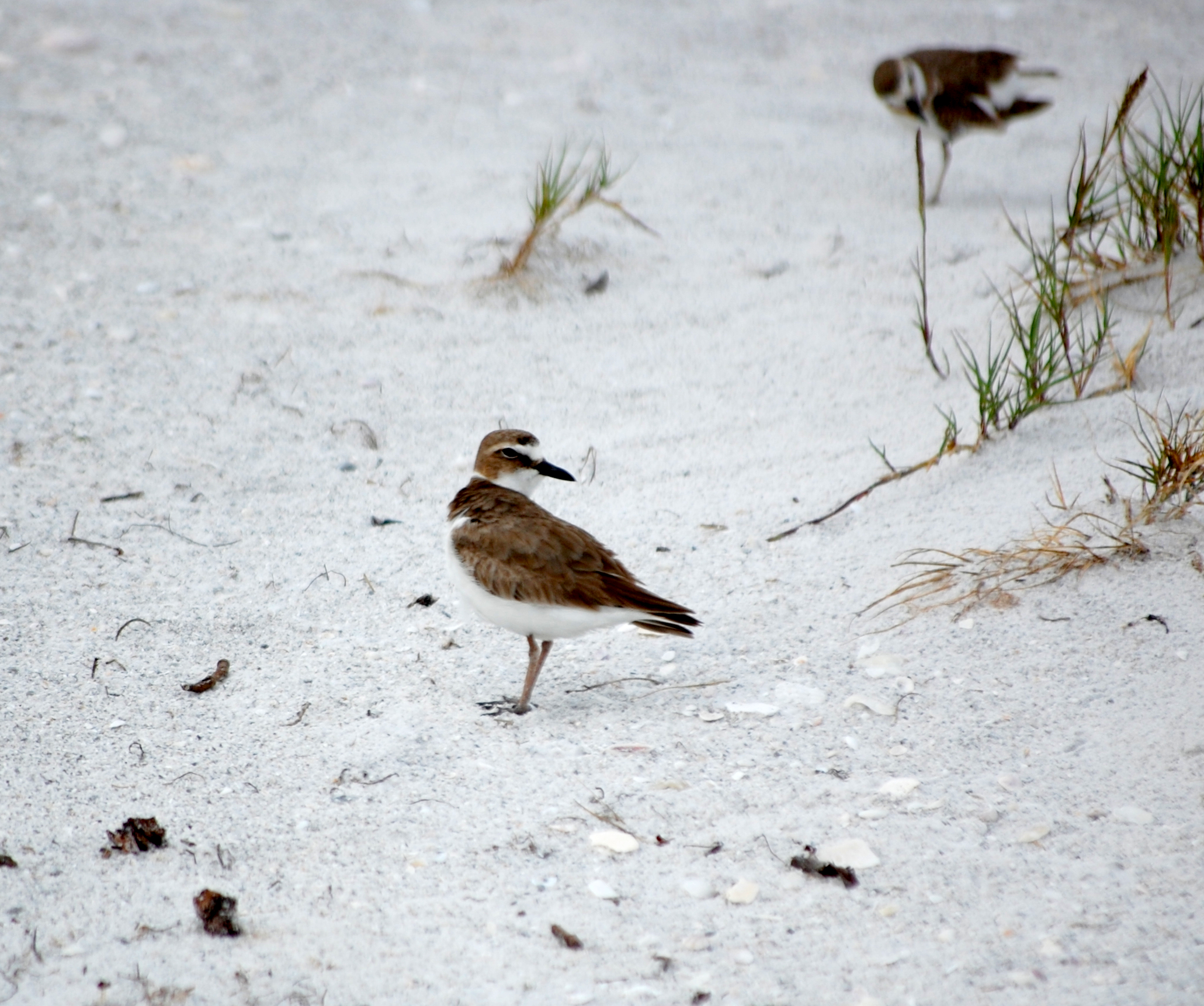
The next federally protected species is a good segway into another type of shorebird – the plovers. This one is known as the Wilson’s plover (Anarhynchus wilsonia). The genus is a combination of the Greek ana- meaning “backwards” and rhunkos meaning “bill”. The species (and common) name refers to Alexander Wilson, a Scottish naturalist who is considered the father of American ornithology and has several birds named after him. I’m not sure why the bill would be described as backwards, but it is the featured that easily distinguishes it from other plovers because it is much more robust.
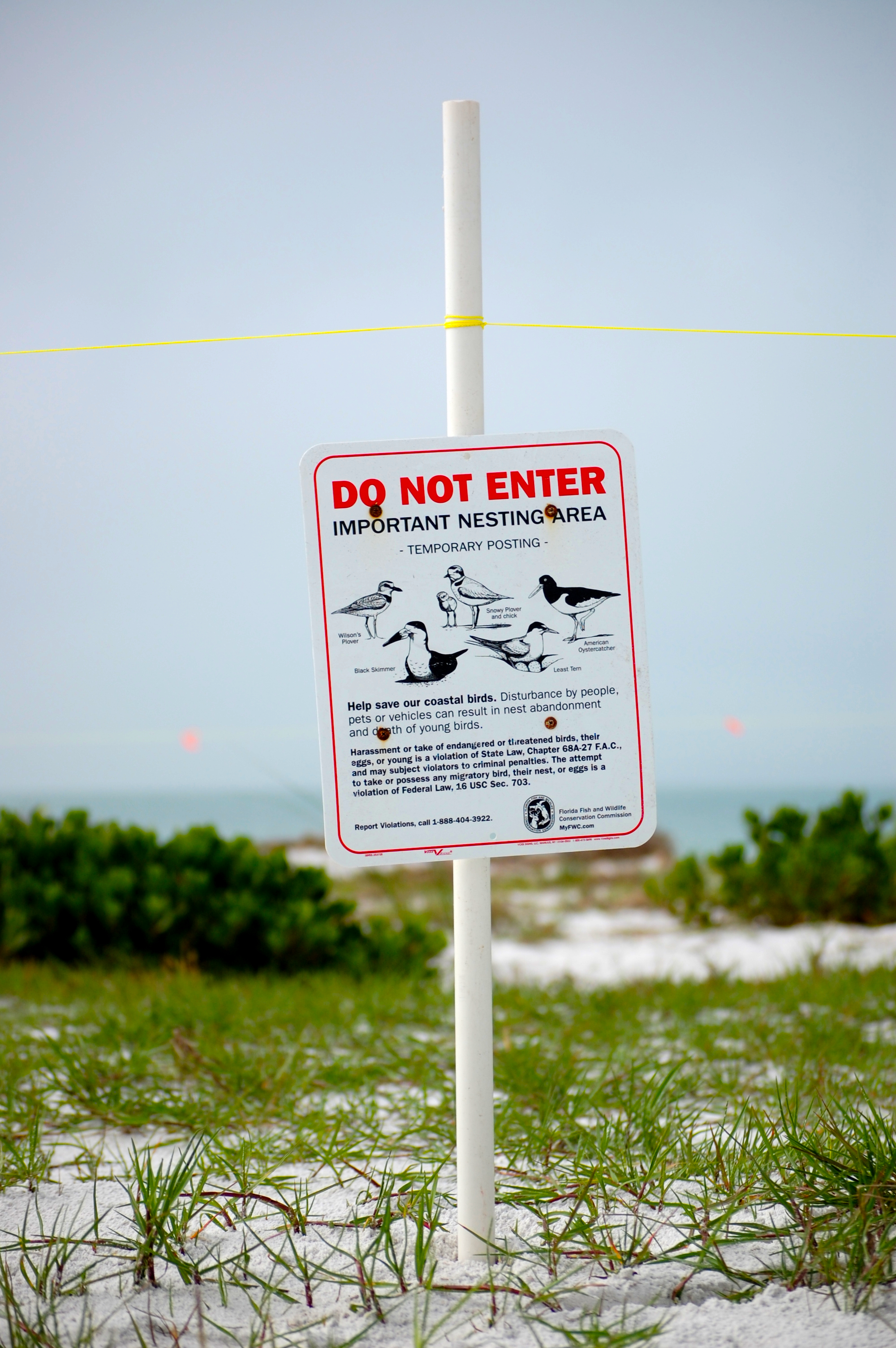
You may sometimes see signs warning to stay out of dunes and marking them as important nesting sites. Most people think of birds as nesting in trees, off the ground and protected by branches. This is not the case for most shorebirds. These birds will make a nest by scraping the ground to create a sort of divot. There might be some pebbles and some grass, but the nest is otherwise open. Additionally, the eggs are camouflaged. So, it would be very easy for someone to accidentally step on the eggs, which is why the signage is necessary.
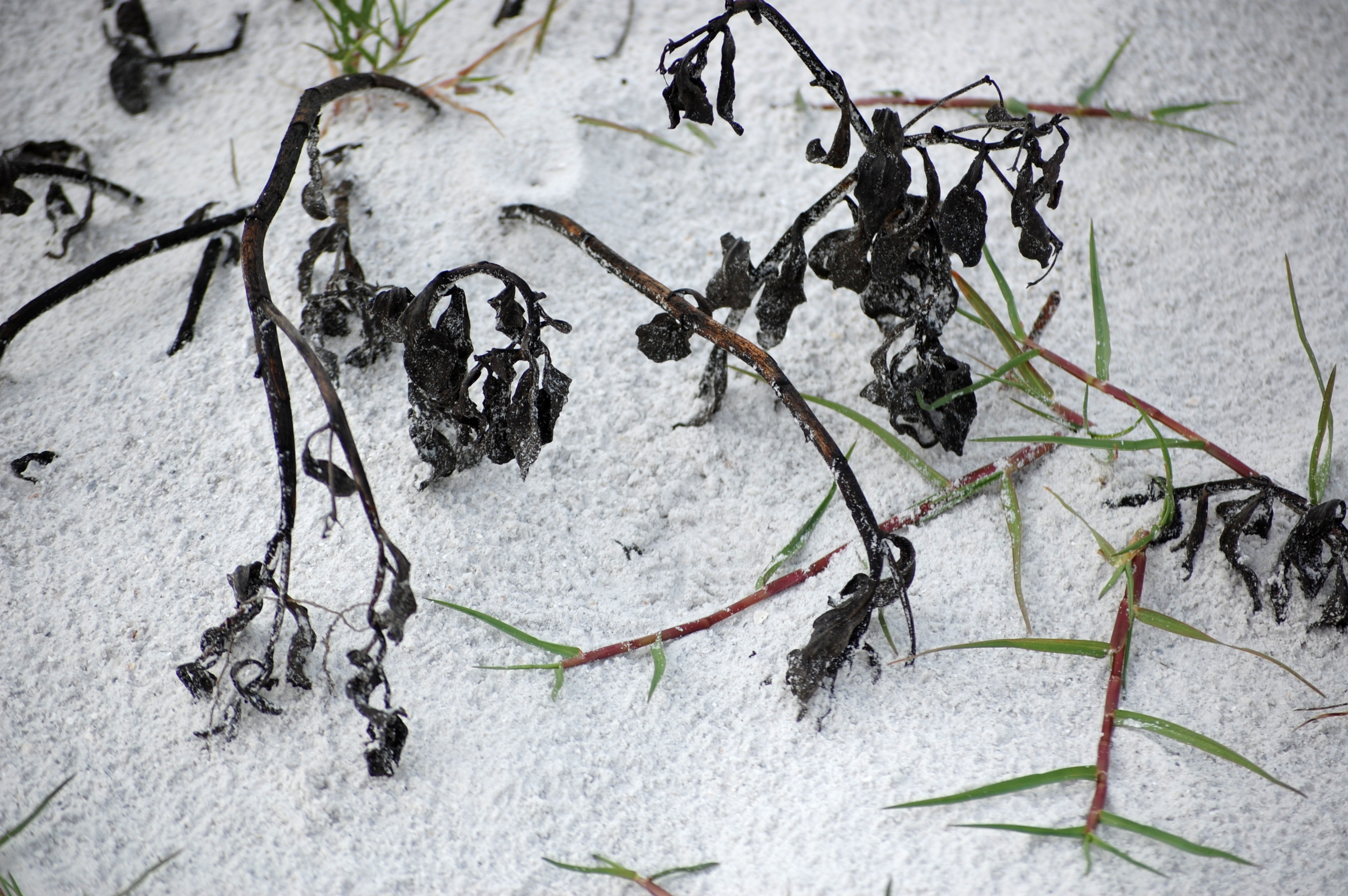
The initial scrapes can be very difficult to find. This is why there is a rule in place for shorebird monitors to be certified, which is why I have been shadowing the Audubon during their surveys. We were lucky enough to see one of these initial scrapes. You can see in the photo below how difficult they can be to spot and why this certification is necessary.
A much more common plover on our beaches in the semipalmated plover (Charadrius semipalmatus). Again, as the common name and species name indicate, they have partially webbed toes and are even known to swim short distances. The genus is from the Greek kharadrios, which was used to describe a pale-colored nocturnal bird. The interesting thing about that story is that the sight of the bird was believed to cure jaundice. These are easily distinguished from other plovers in the area by the bold colors and stripe along the neck. It has one stripe, as opposed to the similar killdeer which has two.

The final bird I’m writing about today is another plover and I found this particular individual to be inspiring. This is the piping plover (Charadrius melodus). The species name is from the Latin melodus, which you’ve probably guessed means “melodious”, perhaps because the calls are melodious compared to the screeching calls of some other shorebirds. During the breeding season, this one will also get a fuller neck band than the one shown here. However, it will not develop the strong colors of the semipalmated plover. I thought it was interesting that this one appeared to have buried its feet in the sand. I watched it a little longer and that’s when I realized what was really going on.
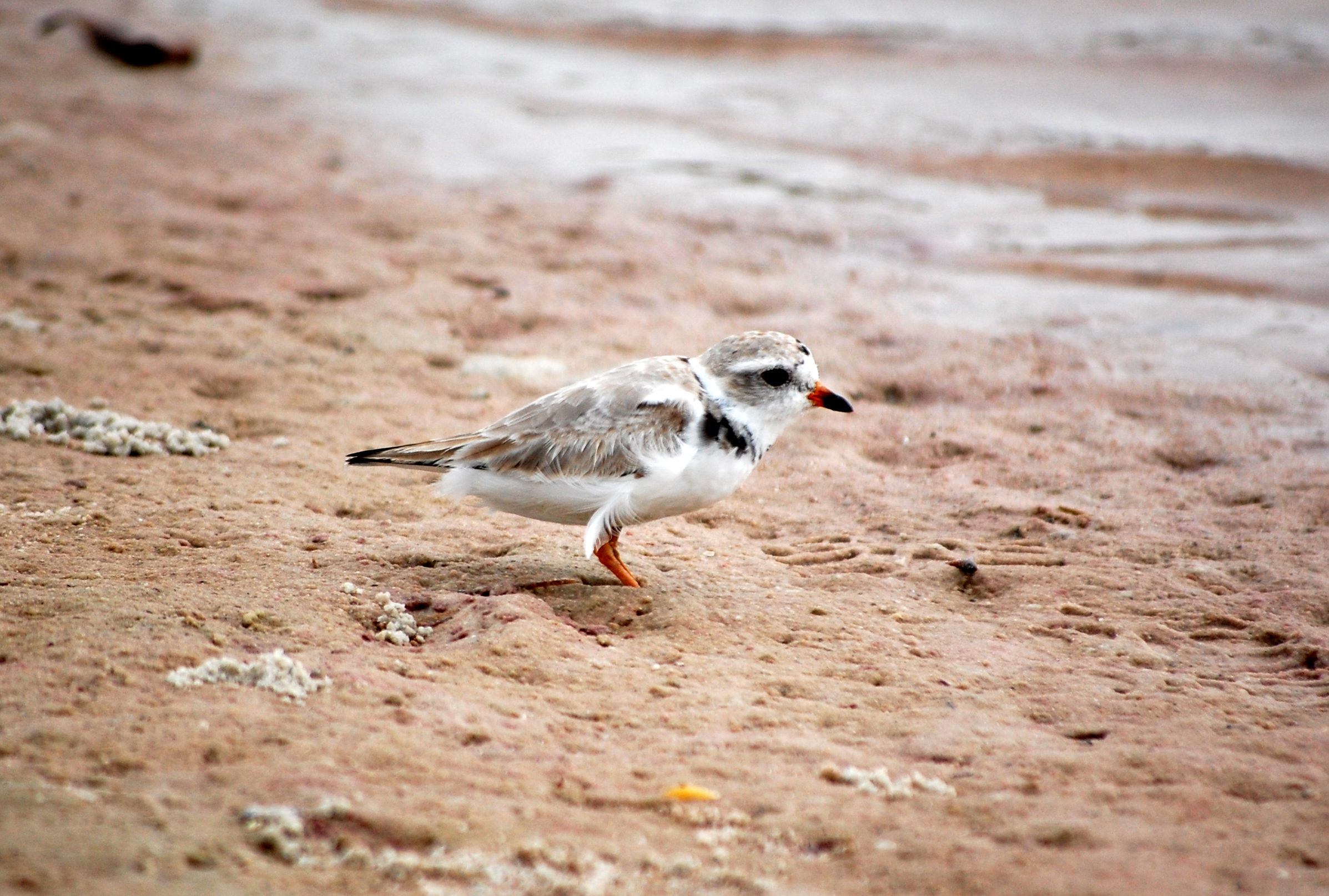
It turned out that this bird’s feet weren’t buried at all. They simply weren’t there. I can’t imagine what sort of trauma could cause such a tiny bird to lose both feet and not have anything else happen to it. But I found it very inspiring to see such a tiny and solitary bird going about its day hopping around on these little stubs. Life can be a little crazy sometimes and we have the right to get stressed and frustrated. But sometimes it’s a bit much. I know people whose day can be completely ruined by coffee not being hot enough or having to wait in a long line. Since the day I got to sit and watch this bird, if something is irritating me, I think about how tough of a life this must be and how it doesn’t seem to bother it one bit. I learn about nature every chance I get. But learning from it I find much more valuable.

 BJ Quinton