Well, I have officially done enough shorebird surveys to apply to become a permitted shorebird monitor. The application is in, so I hope to hear something soon! Specifically, I would be monitoring Imperiled Beach Nesting Birds, or IBNB’s (pronounced ib-nibs). Through the process, I’ve gotten to see some amazing breeding behaviors that I am very eager to share. First, a quick update on our little friend with no feet. After talking with Audubon, apparently, he is a little celebrity on that beach and does quite well for himself. As far as what might have caused the loss, I’m told they are so sensitive that even a hair getting wrapped around the foot can cut off circulation and they can lose it.
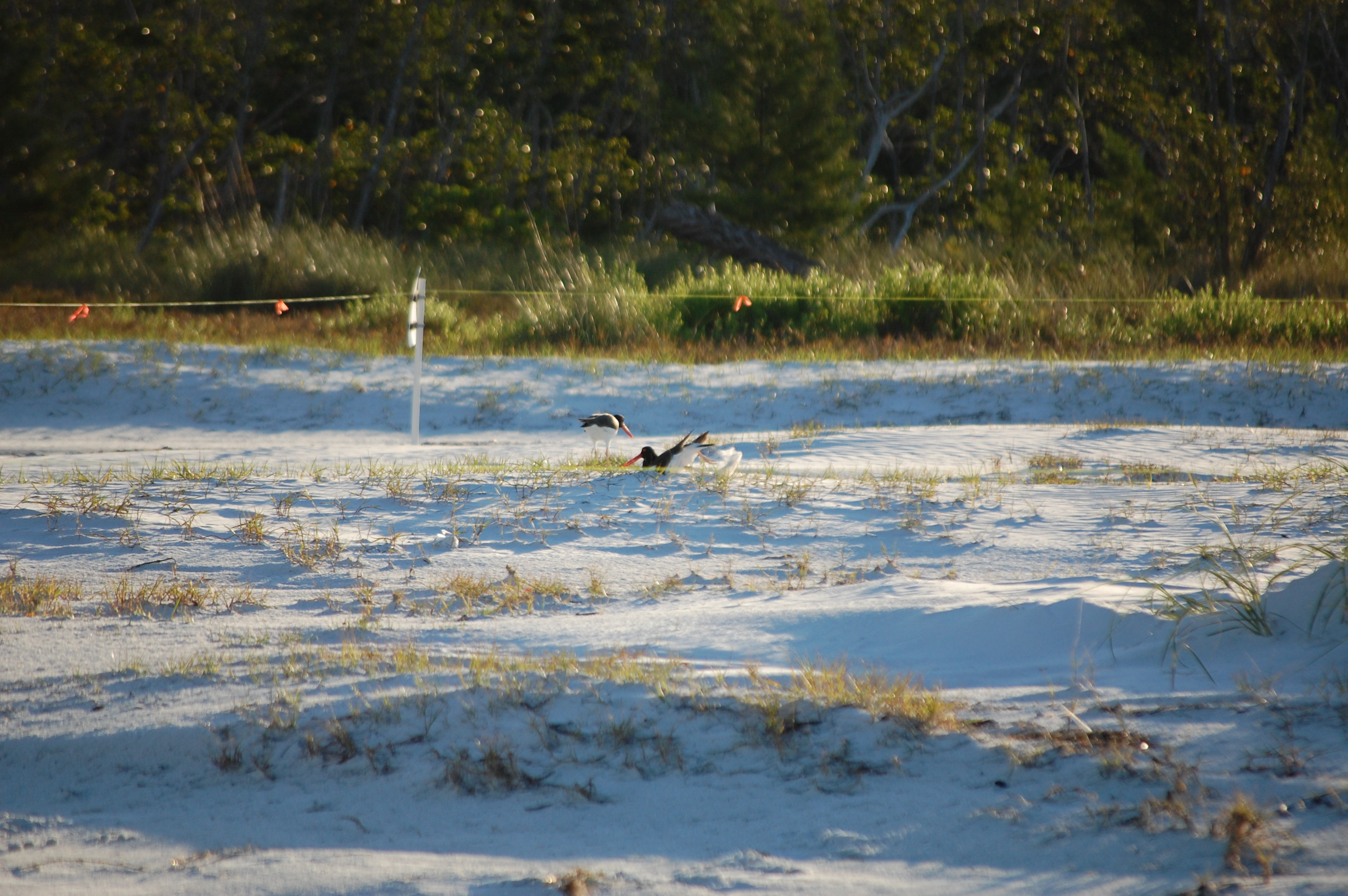
But on to happier topics. I shared in my last writing the beginnings of the nests that IBNB’s build, which are basically divots in the sand, known as scrapes. I was extremely fortunate and got to witness this actually occurring when a pair of American Oystercatchers chose a nesting site within a roped off area. We did keep our distance, but you can see the one individual kicking with its feet to create the scrape.
Side note: You may notice I’ve switched to capitalizing the bird names. Unlike other animals and plants, birds mostly have one accepted common name. So, in scientific writing, we have started capitalizing the names and I will continue that here.
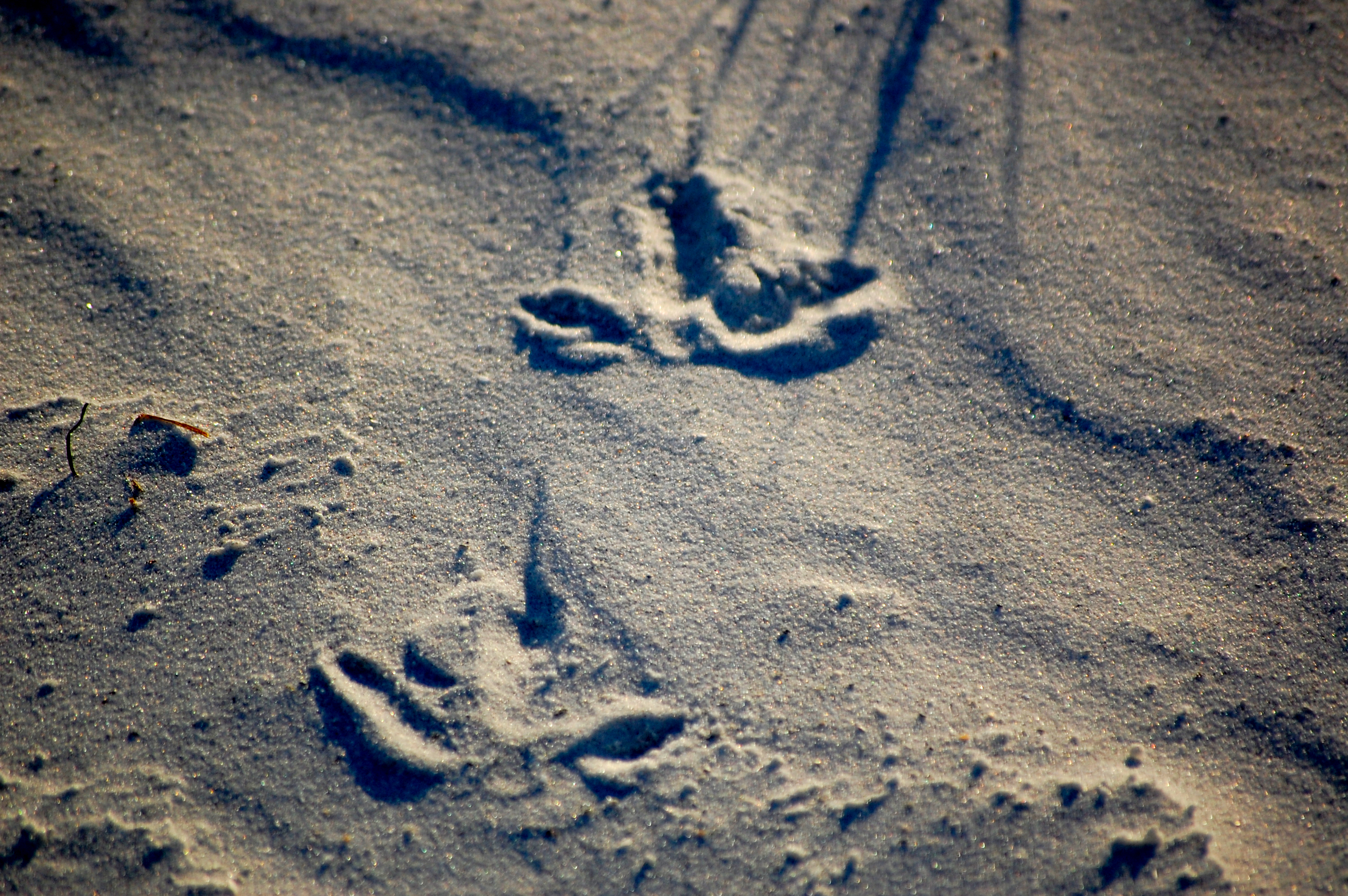
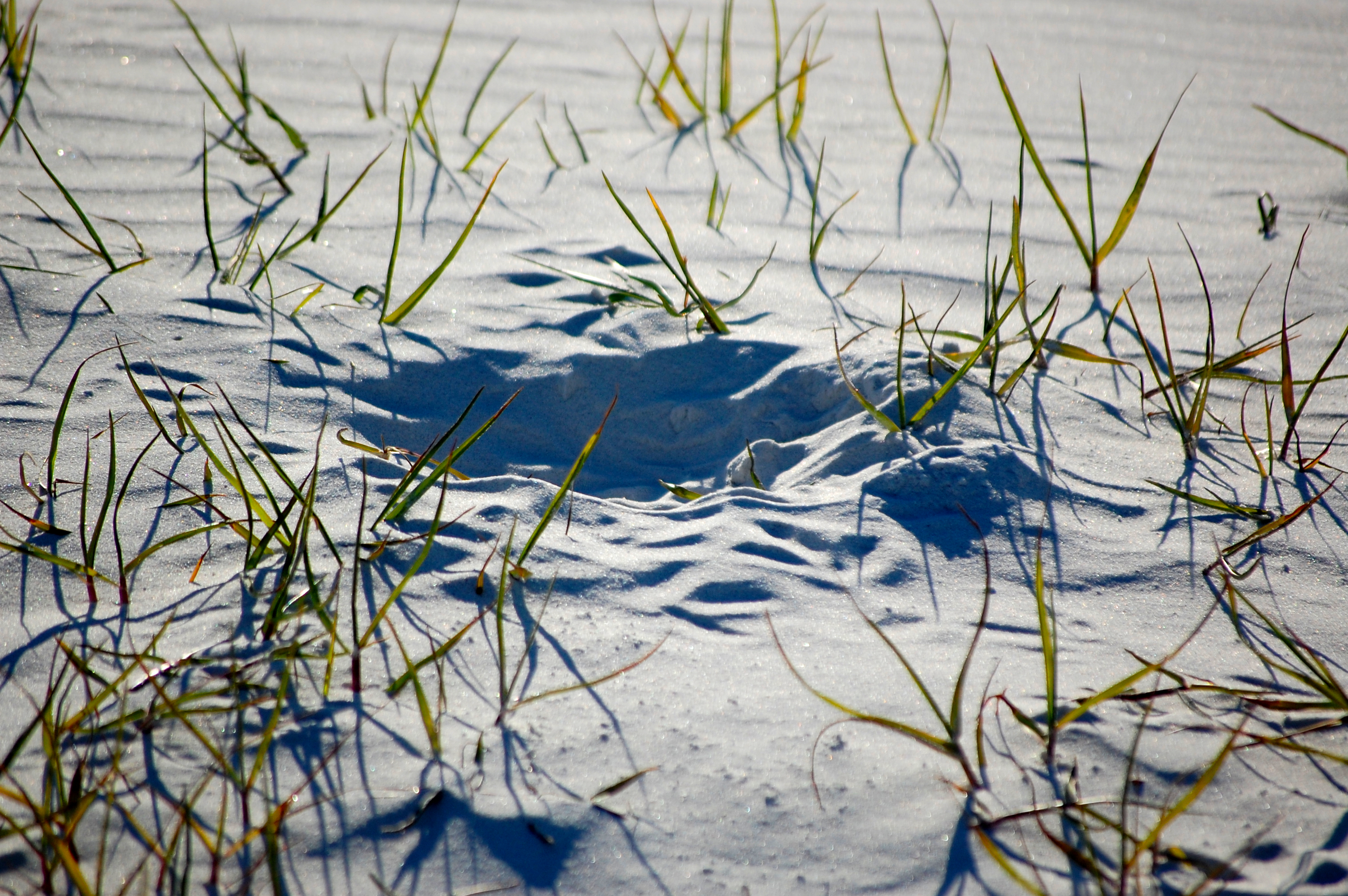
Eventually, they left the area, and we were able to get a closer look. This also illustrates how these nests are sometimes found by surveyors – through footprints. As long as people do the right thing and stay off of the dunes, they are generally a blank slate for all types of footprints. Oystercatchers, being rather large, leave a pretty obvious footprint, as you can see below. They tend to take a similar path when going to and from the nest, which gives us a sort of road map straight to it.
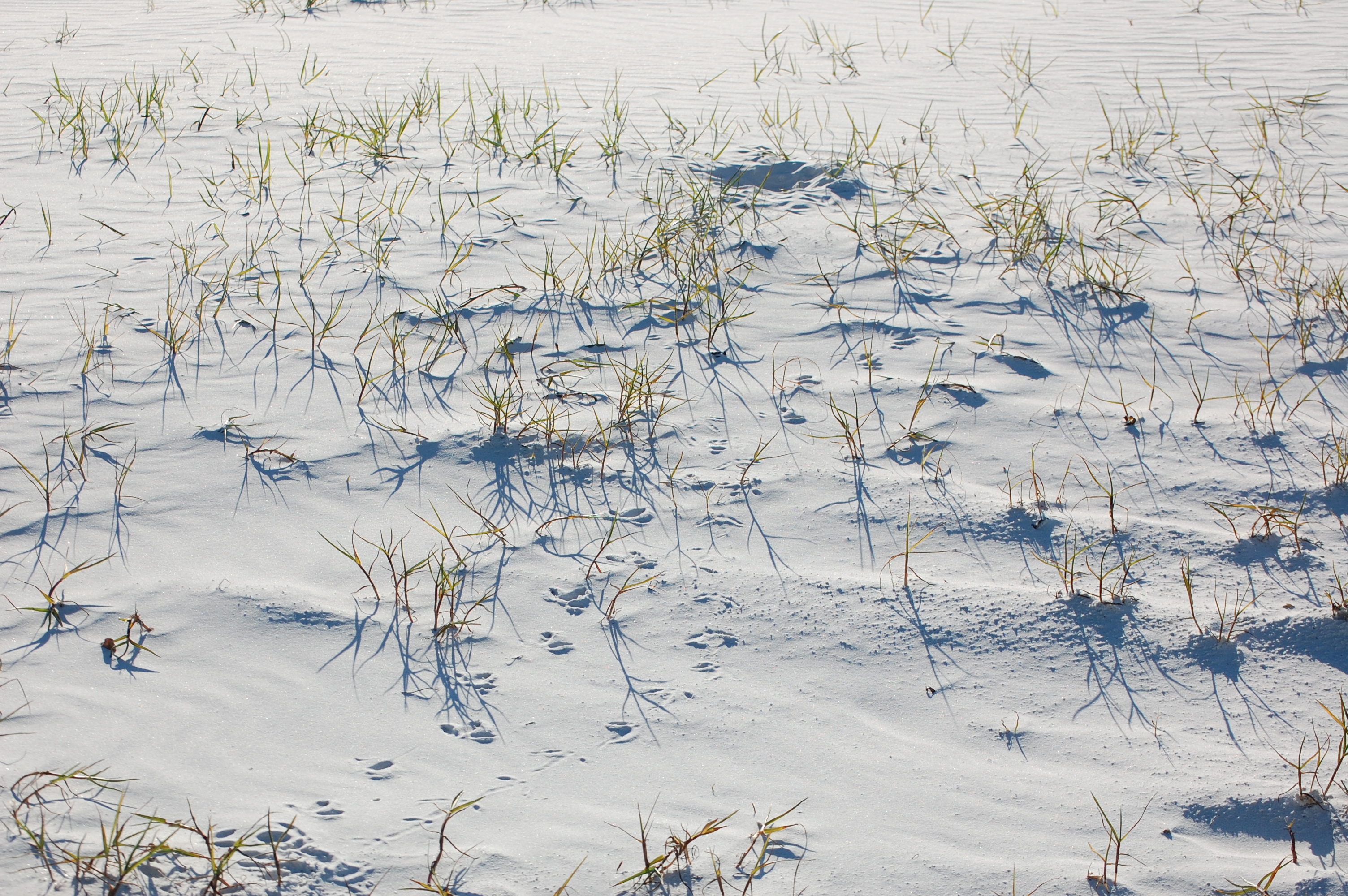
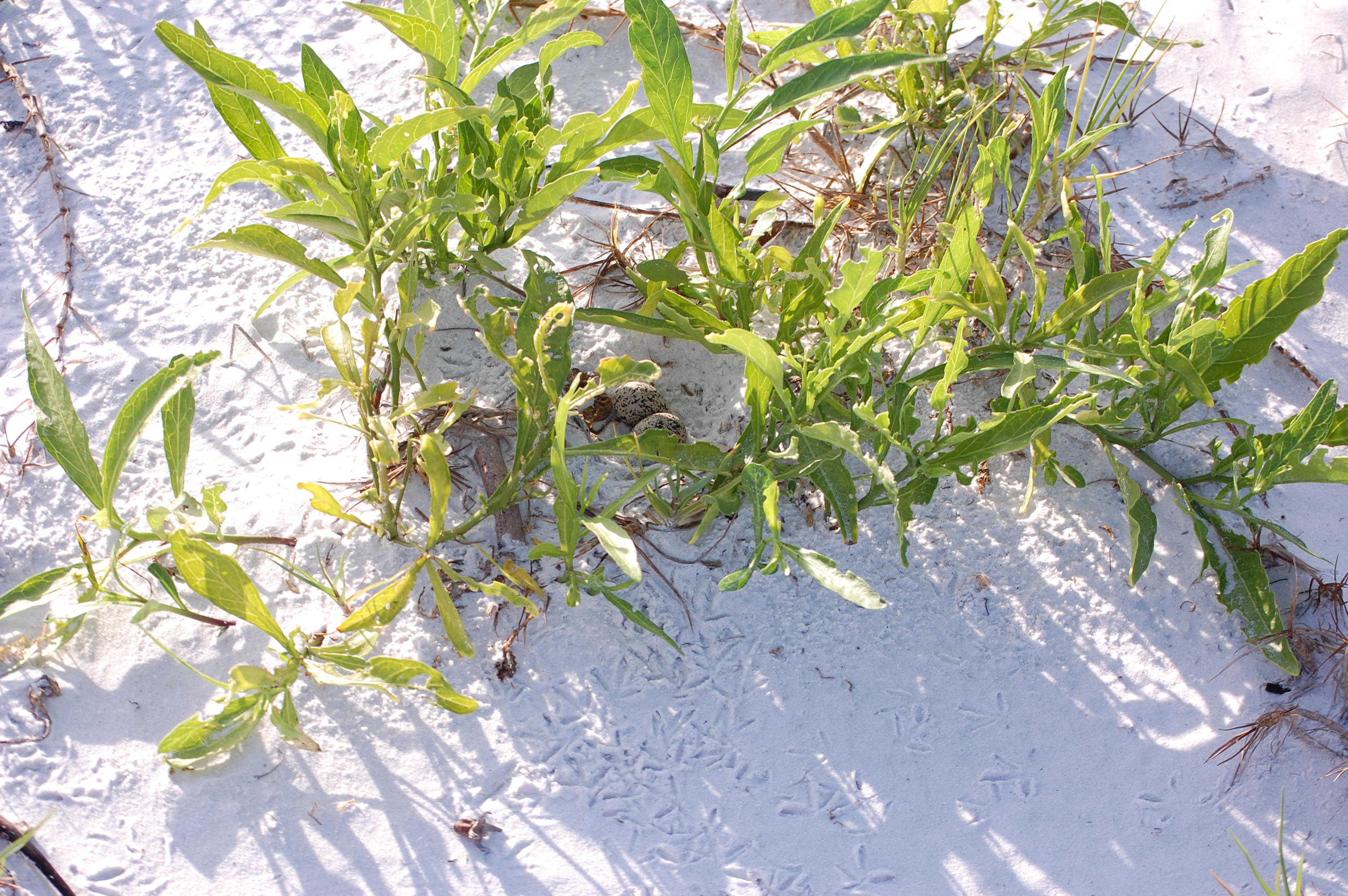
One nest that is quite a bit more difficult to find is that of the Wilson’s Plover. During the visits for my last writing, we got to see a couple small test scrapes. Now, further into breeding season, we were able to find a couple of actual nests. Here you can see the nest that is usually somewhat hidden in the vegetation. With eggs that are camouflaged in the sand, you can see how easy they can be to miss. It’s also not uncommon for the adults to leave the nests like this early on in incubation. This is why it is so important not to cross dunes in undesignated areas. You can also see the little footprints that led us to the nests. These footprints look very similar to those of the various doves, which we also saw a lot of. However, plover footprints include only the front three toes, whereas dove footprints also have a small dot on the back side.
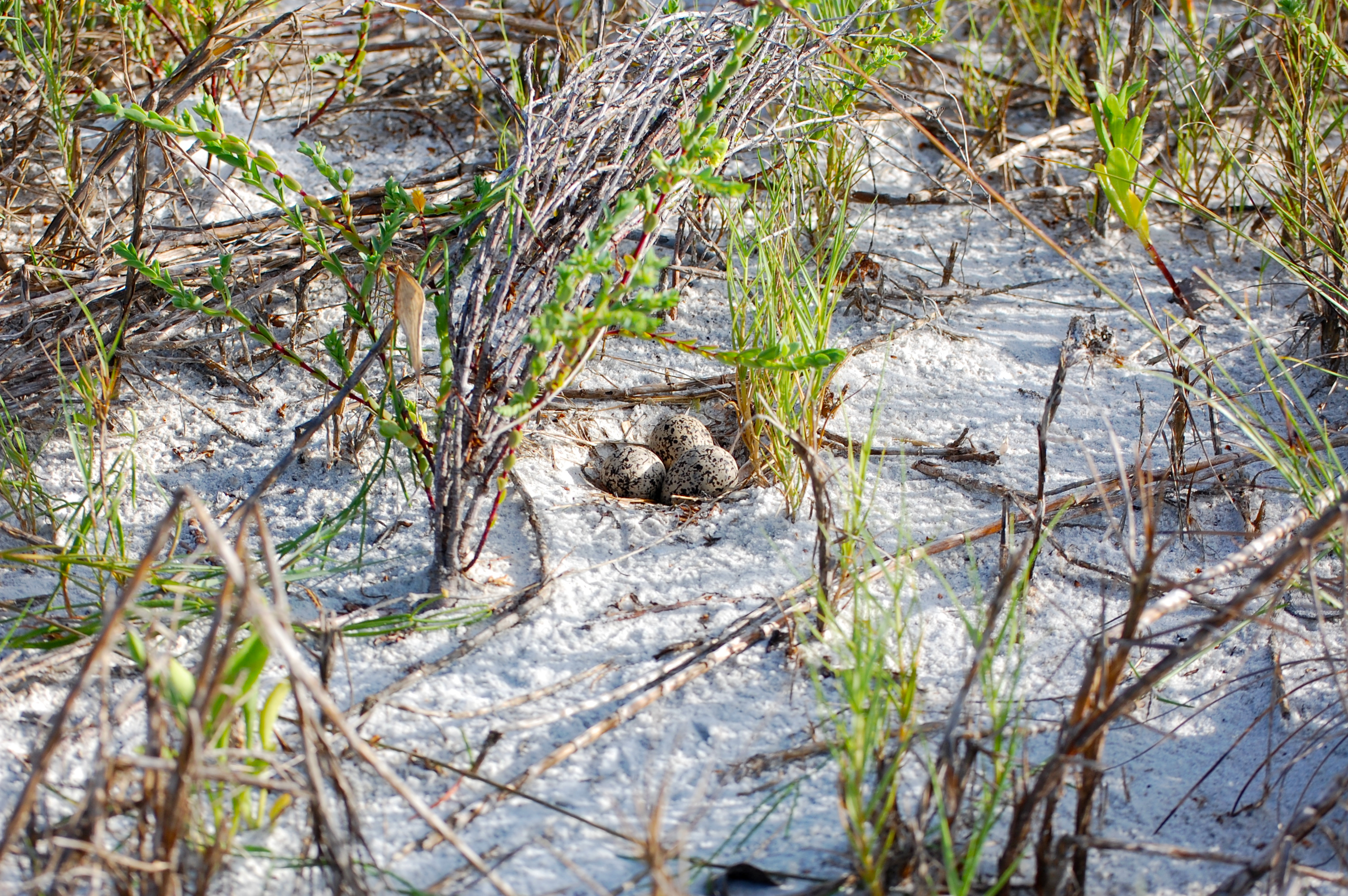
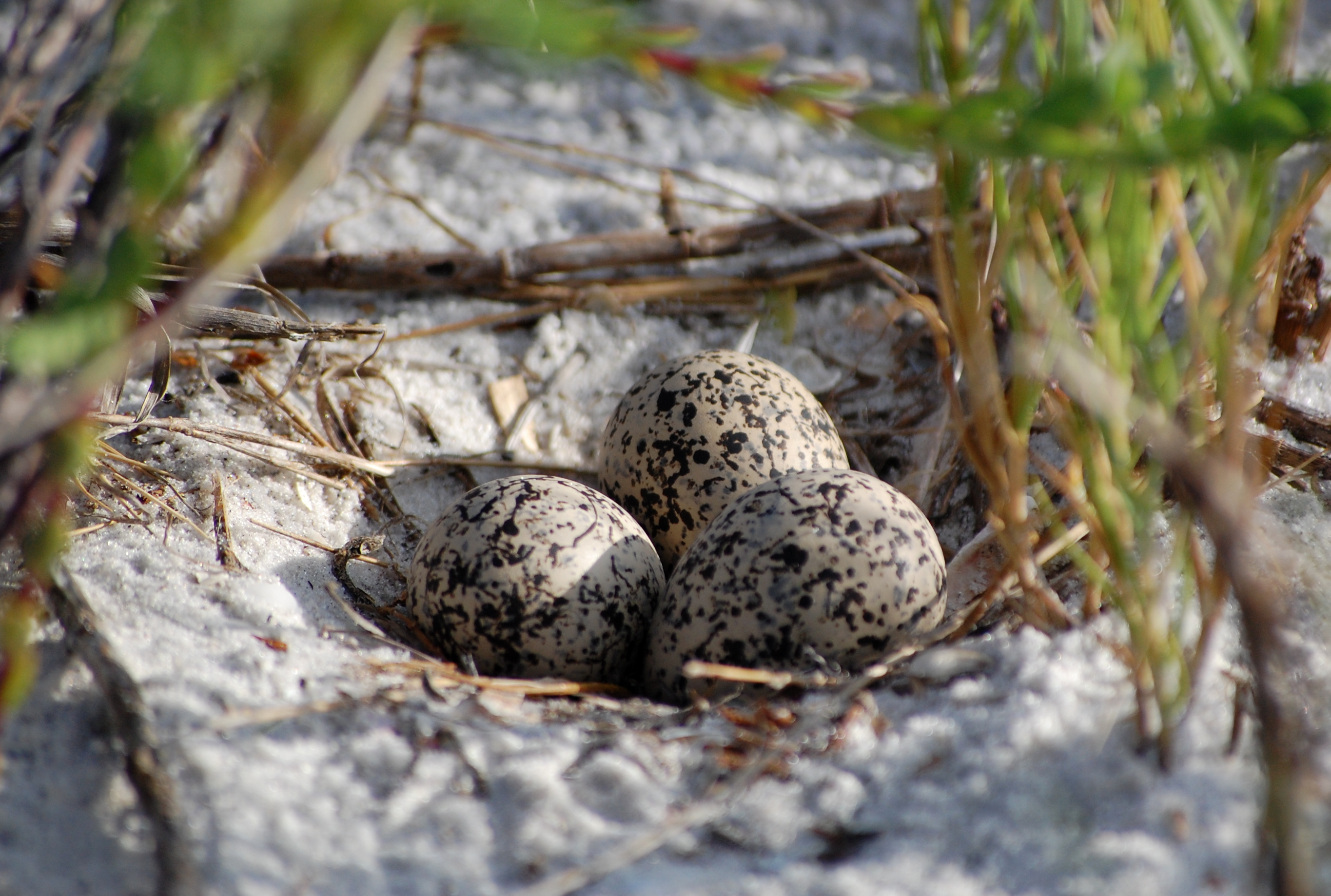
While this nest had heavy vegetation around it, we did find another nest that had a bit of an opening on the side that allowed for a much better view of the eggs. Always keep in mind, I have a zoom lens on my camera. So, we are not as close to these nests as it appears.
I mentioned the footprints as a way to find where the nests are. We can also look at the behavior of the adults. On a separate survey, in an area where no nests had been previously found, I did see a pair of Wilson’s Plovers on the beach. I watched them carefully as I searched the dunes. Suddenly, I saw a very cool behavior from one of the adults. It’s called a broken wing display. Basically, this adult bird is defending the nest by pretending to be hurt. Seeing me as a predator, it is trying to get me to go after it as vulnerable prey. Had this been a possible impact area, I would have found the exact nest location and created a buffer with rope and signs to keep people out of the area. However, this was about a half mile from any potential impacts, and it wasn’t worth the stress on the adult. So, we marked the area as a possible nesting site and left it alone.
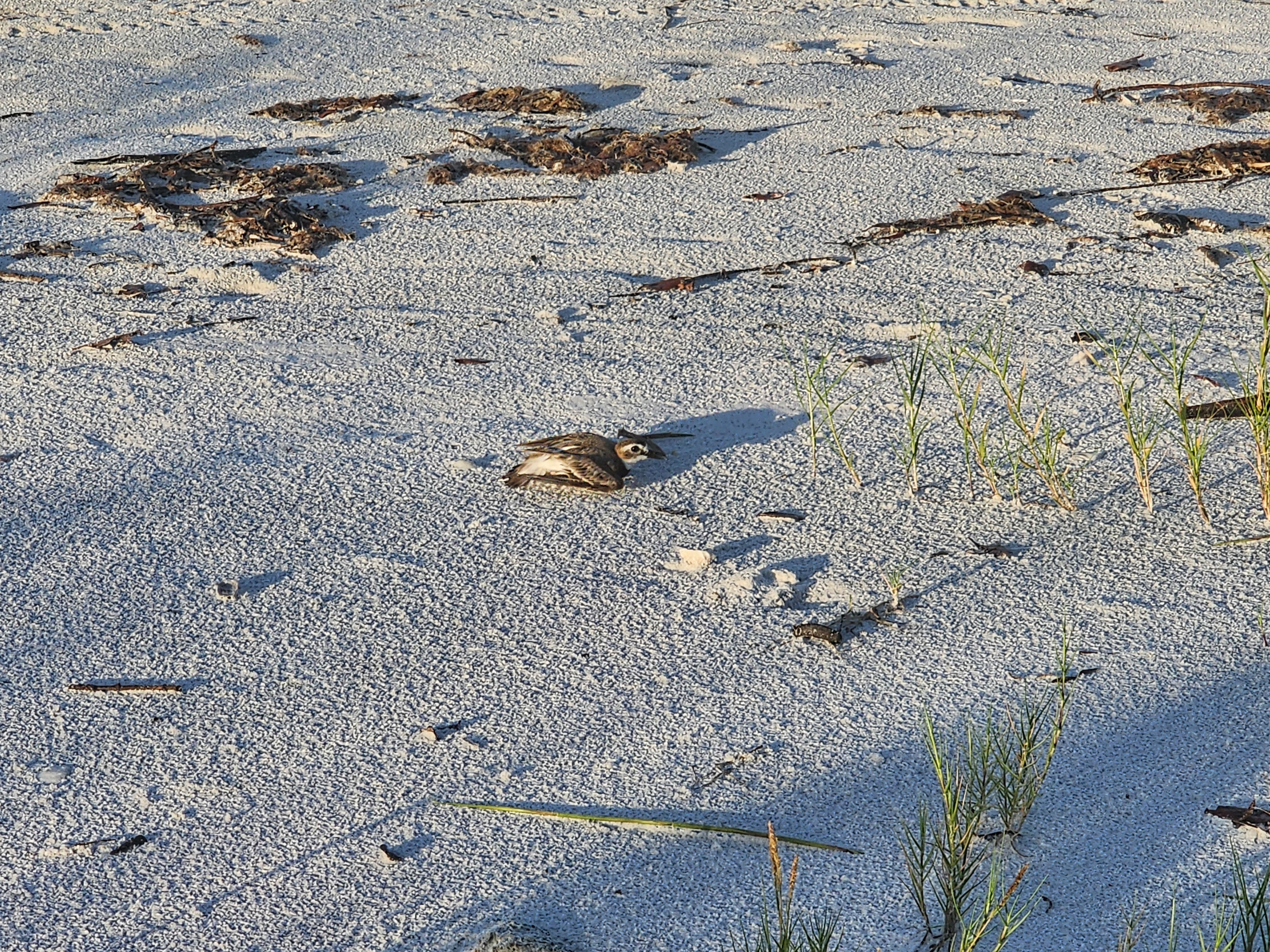
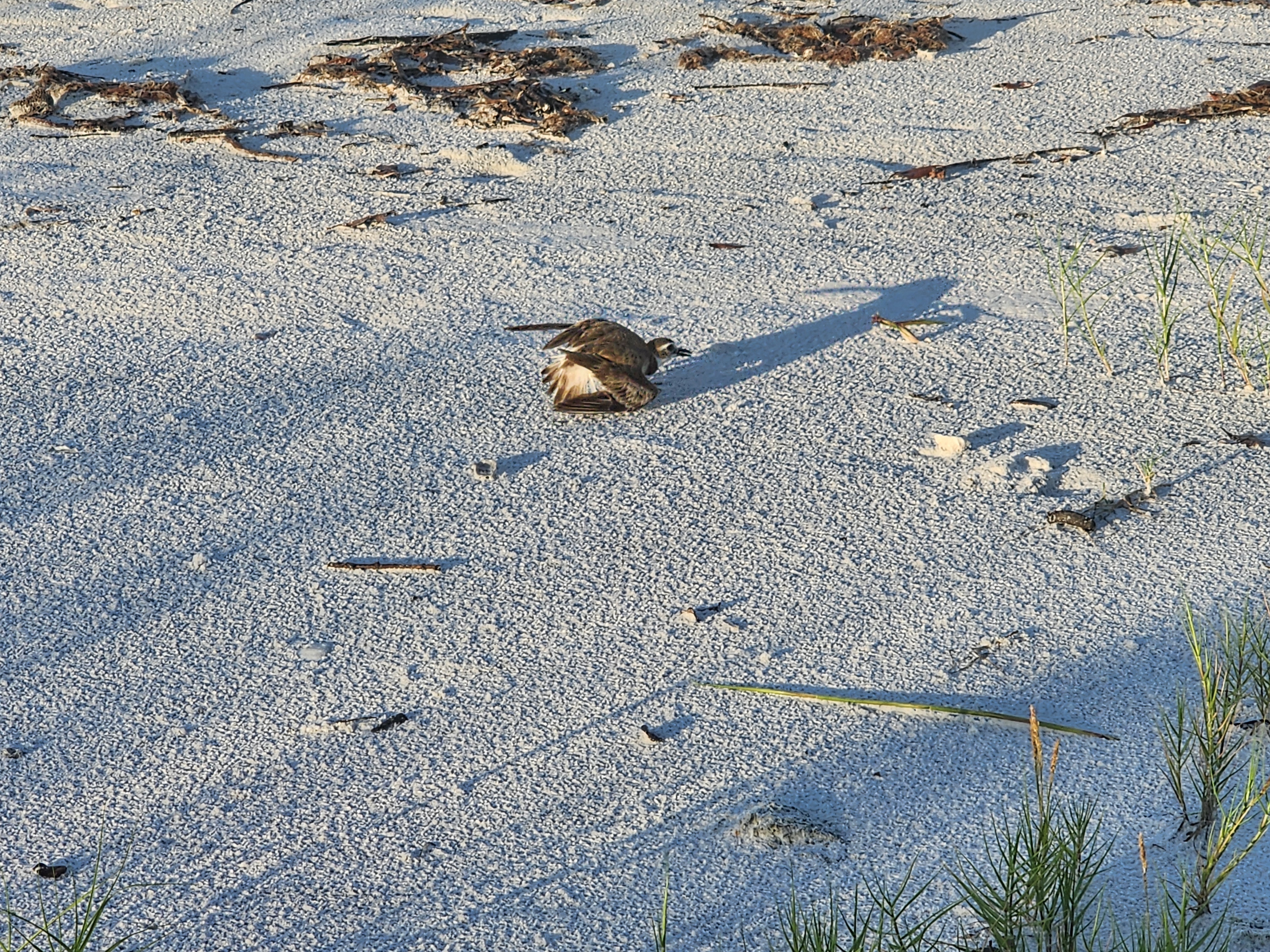
I had the privilege of doing this survey with someone who specializes in sea turtle nest surveys. She got some great video that really shows how this behavior works. One is considered a short and can only be viewed by this link. This next one is my favorite though where, at the end, it’s clear the bird is just fine.
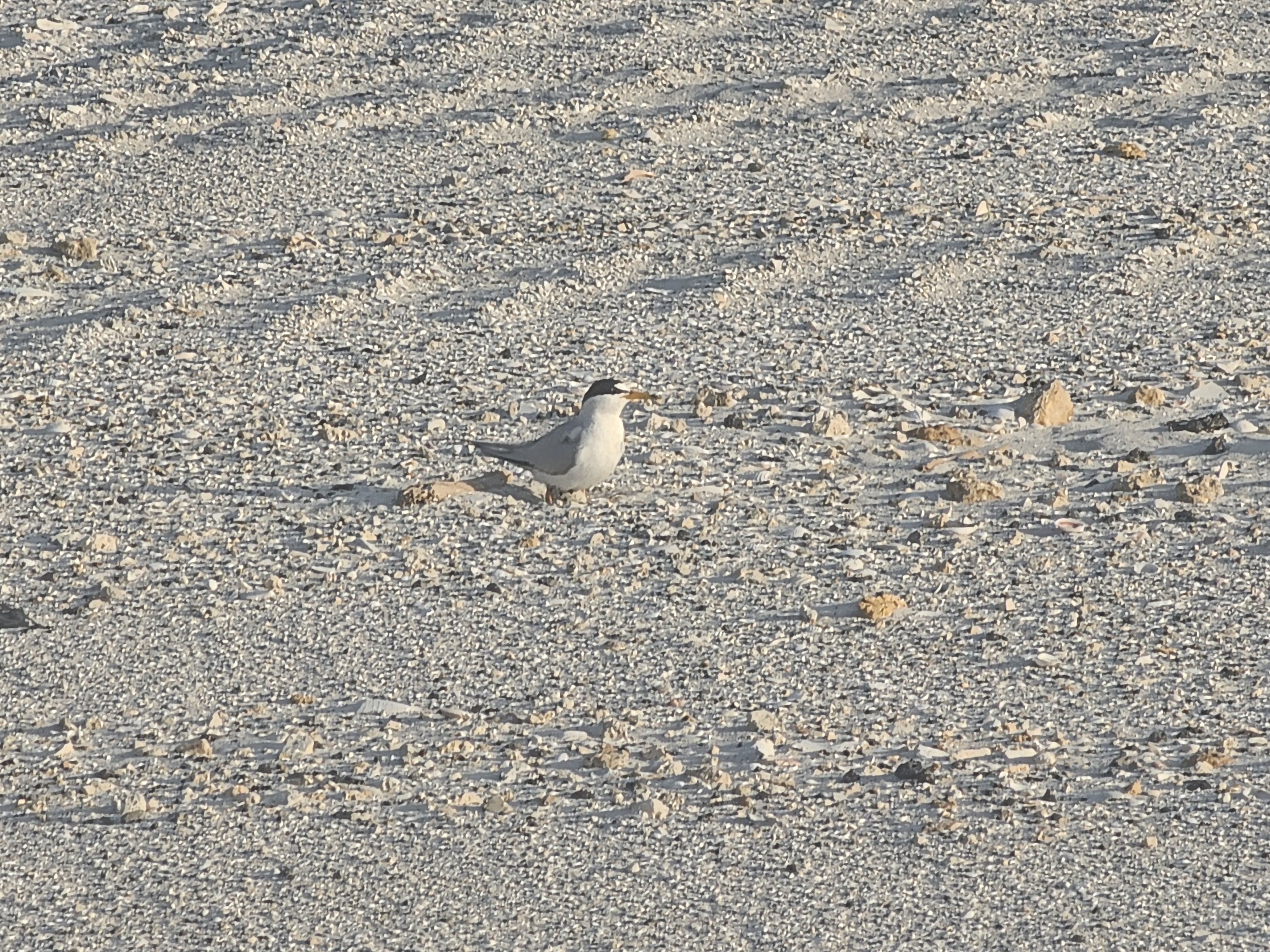
This next photo isn’t a very good one because I neglected to take my good camera with me. But it’s one I’m particularly proud of, being somewhat new to the shorebird monitoring game. I should point out that the previous species were known as solitary nesters. That is, they make nests on their own, independent of other individuals. These next two species are colonial nesters, nesting together in large colonies.
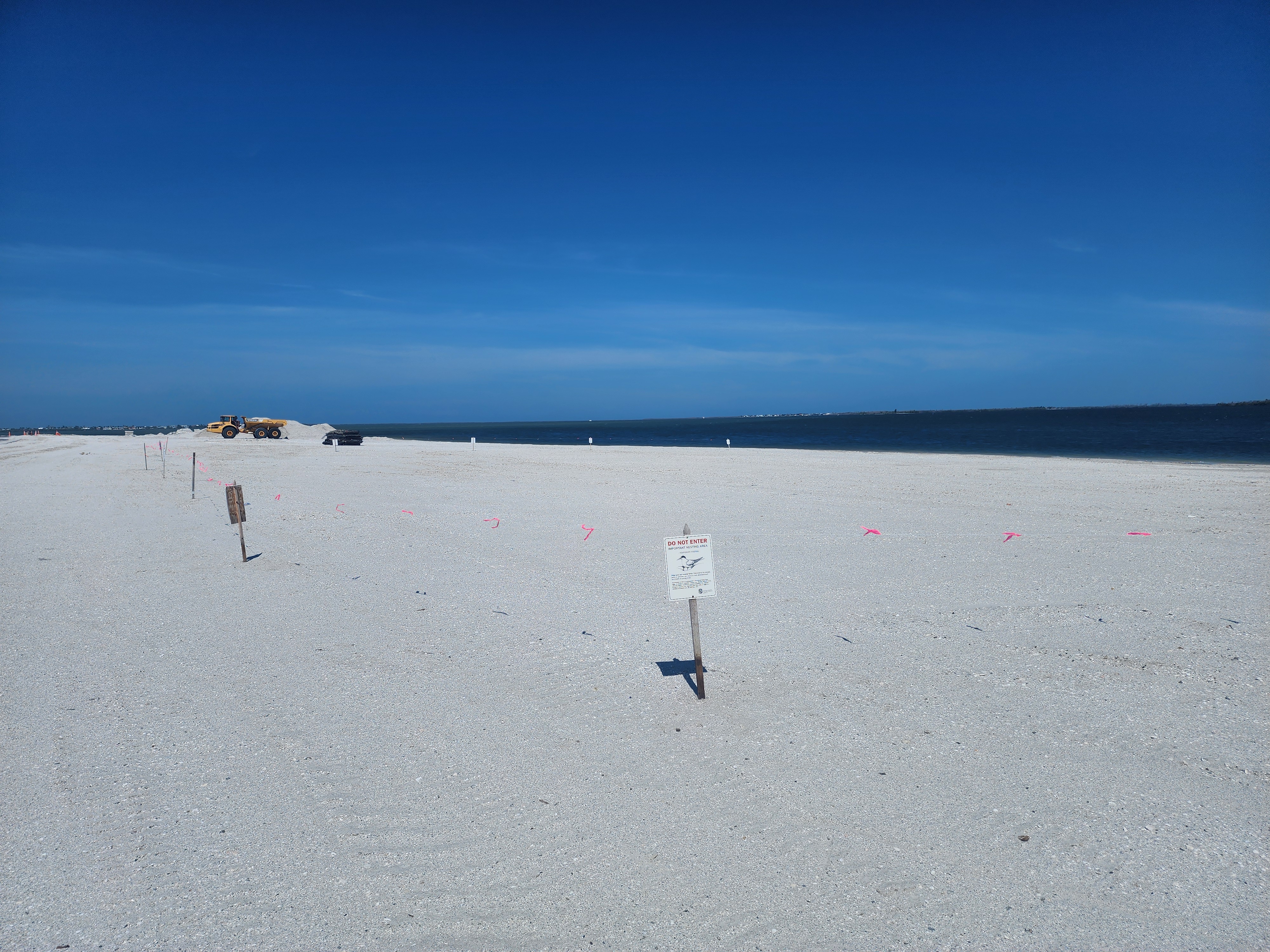
For my Floridian readers, you probably remember in 2022 when Hurricane Ian nearly destroyed Sanibel Island. It wiped out part of the causeway and caused extensive other damage (the survey with the broken wing display was for removing vessels from the mangroves in the same area). When they brought in all the substrate to start rebuilding the causeway, Least Terns decided it was the perfect nesting opportunity for them. Now, we have to monitor the area to see how many nests we suspect and report any loss or production numbers.
A quick note on the species, since I haven’t written about them yet. The Least Tern (Sternula antillarum) is the smallest tern, not only here in Florida, but in the world and is state protected as threatened. They are also known as “strikers”, not only because of their tactics of dive bombing their prey, but also because they will dive bomb people when they approach their nests. The scientific name isn’t very exciting, with the genus stemming from the Old English term Sterna for the Black Tern and the species name referring to the Antilles, the islands in the West Indies.
The reason this photo excites me is because it gives a rare view of the bird over the egg. You can see how hidden the egg is, another reason these areas need to be protected from human traffic.
While there is a “typical” buffer around these areas, these birds were monitored first by the Florida Fish and Wildlife Conservation Commission (FWC) and they determined, based on their behavior, a minimum buffer so that the nearby construction could continue. Based on these recommendations, we provided signage and roped off the area. Since the birds are so small, they are hard to see in this photo, but they were everywhere, especially concentrated in the background.
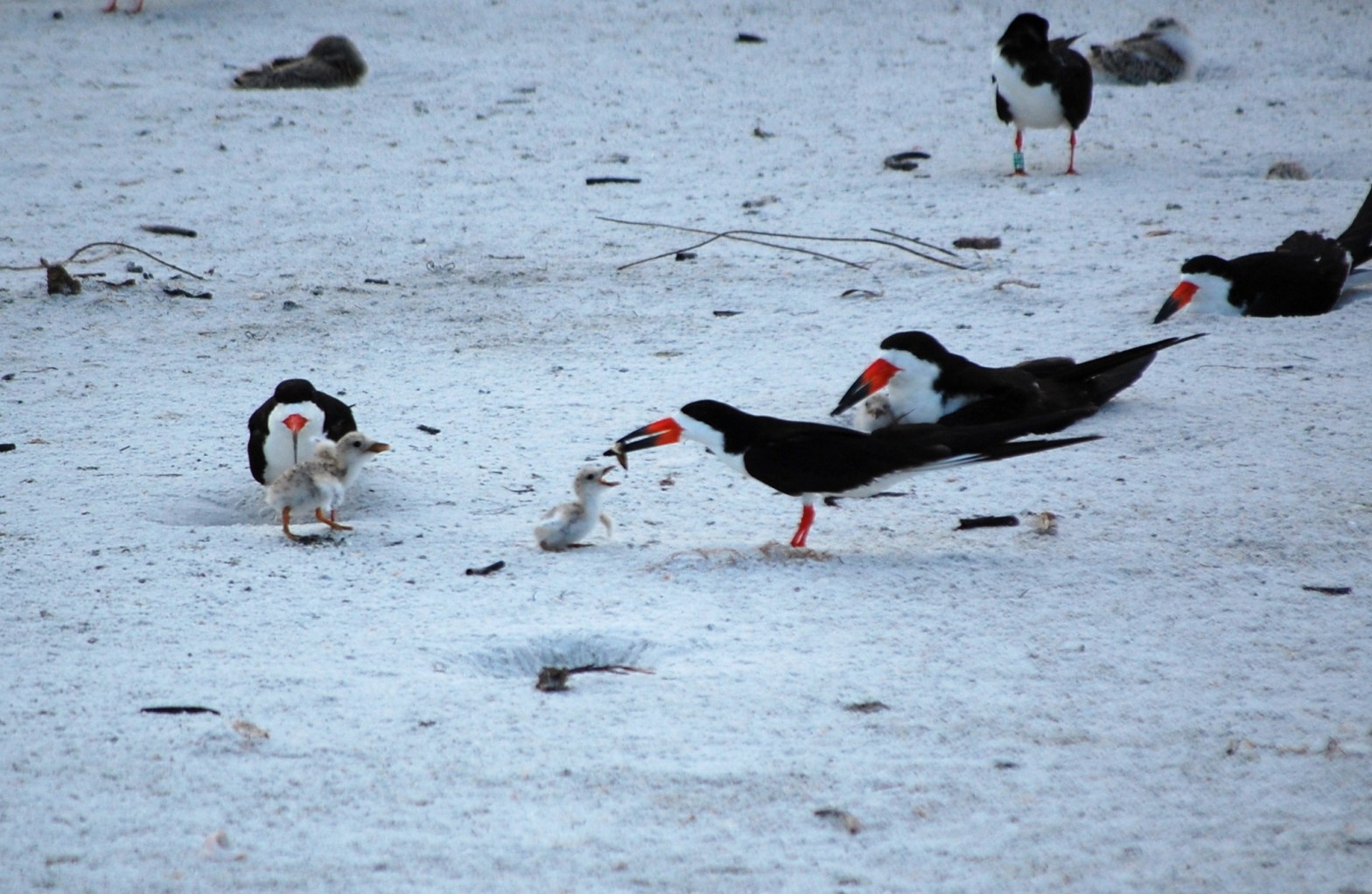
I took a ridiculous number of photos at this next colony, for several reasons. One, the bird itself is quite photogenic. Second, there were so many interesting behaviors occurring. And third, of course, the babies are cute. This is the Black Skimmer that I have mentioned before. This is a very active colony on the beach of Reddington Shores. It was a wonderful experience for my monitoring, as we saw nearly every stage of young (we did not see flight-capable young or eggs). This first one is interesting because it shows many different stages of raising young. In the foreground, to the left, you can see an adult protecting its young chick. Based on the hunkered down posture, we also think that this one may still be incubating eggs (they don’t all hatch at the same time). Behind that, you can see an adult in a scrape. It appears to be resting there and not incubating any eggs. To the right, you can see a chick taking refuge in a scrape of its own with the adult nearby. Finally, behind that are two other adults in scrapes that, based on the posture, may also be incubating. You may notice I’m using non-specific pronouns. This is because, while it could be guessed based on the time of day (although I can’t remember which does it early versus later), both the male and female will incubate the eggs. Furthermore, they are not sexually dimorphic, meaning the males and females cannot be told apart based on any physical characteristics.
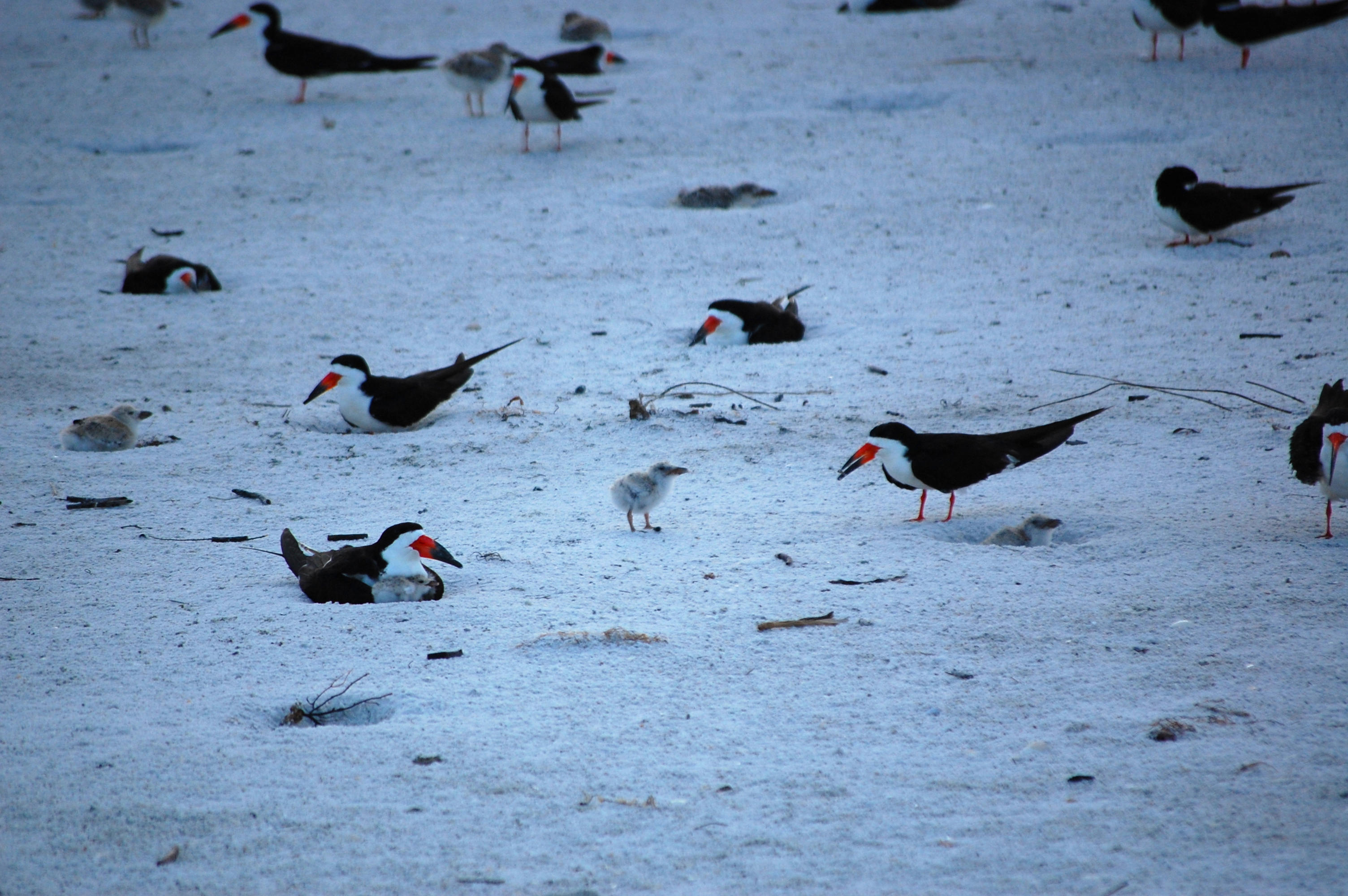
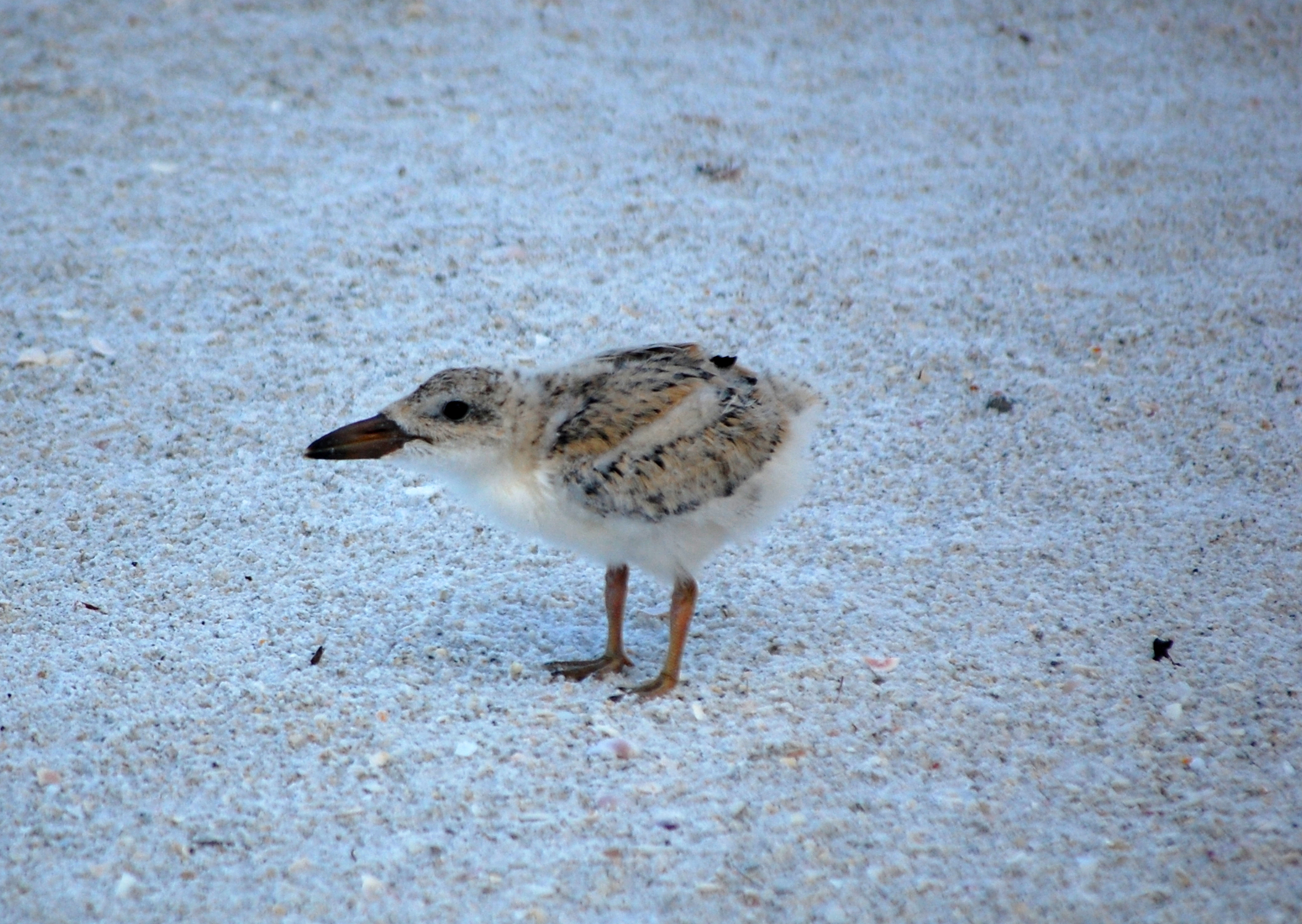
When it comes to the young, there are various levels of maturation. The first is downy. These are the freshly hatched chicks that are covered in down feathers (this species is precocial). This stage lasts about a week, after which they start to develop thicker feathers. During this stage, which lasts another three weeks, they are known as feathered chicks. Over the next couple of weeks, they will mature to where they can make short flights, a stage where they are known as flight capable young. These first few photos show chicks clearly within the downy stage.
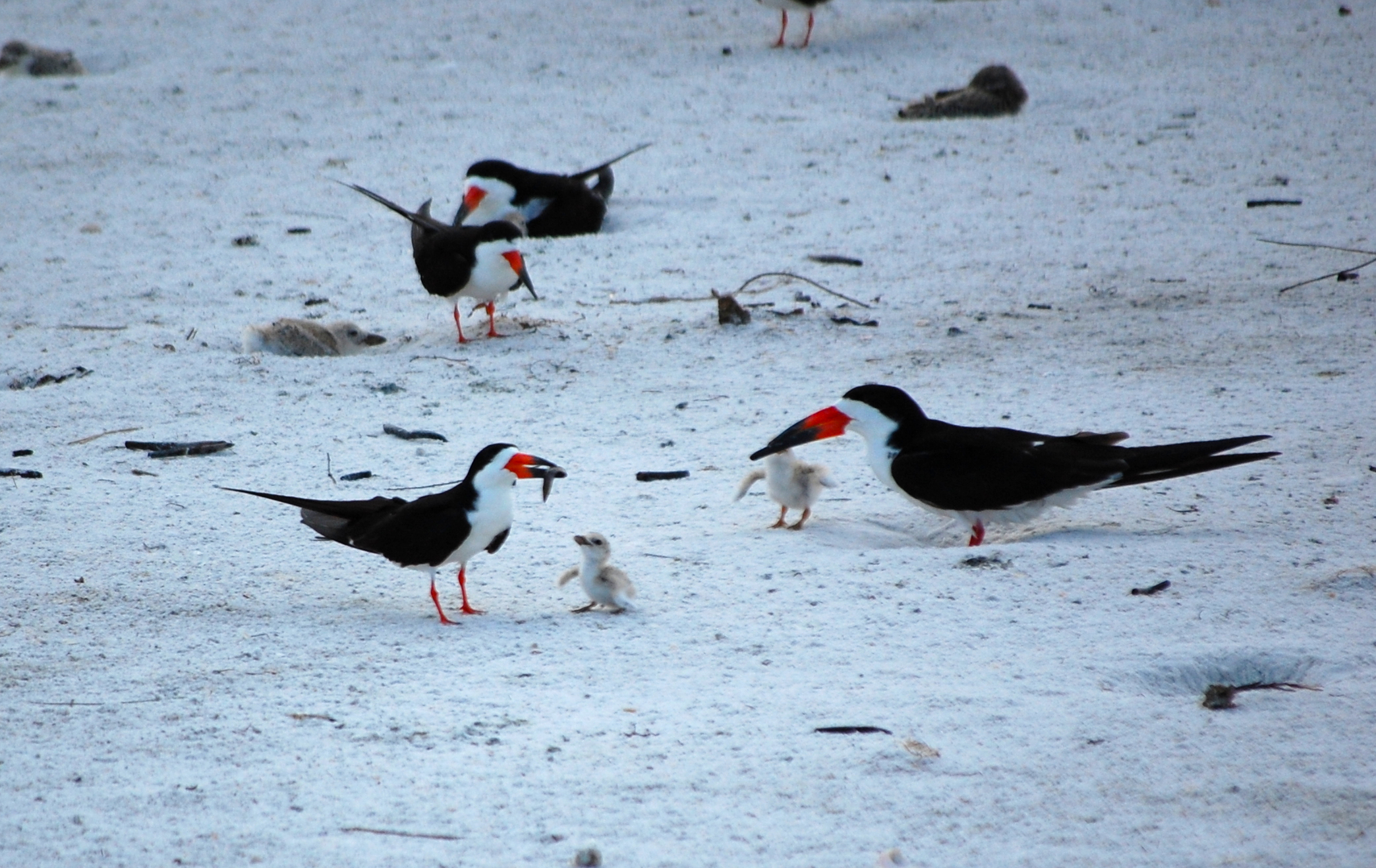
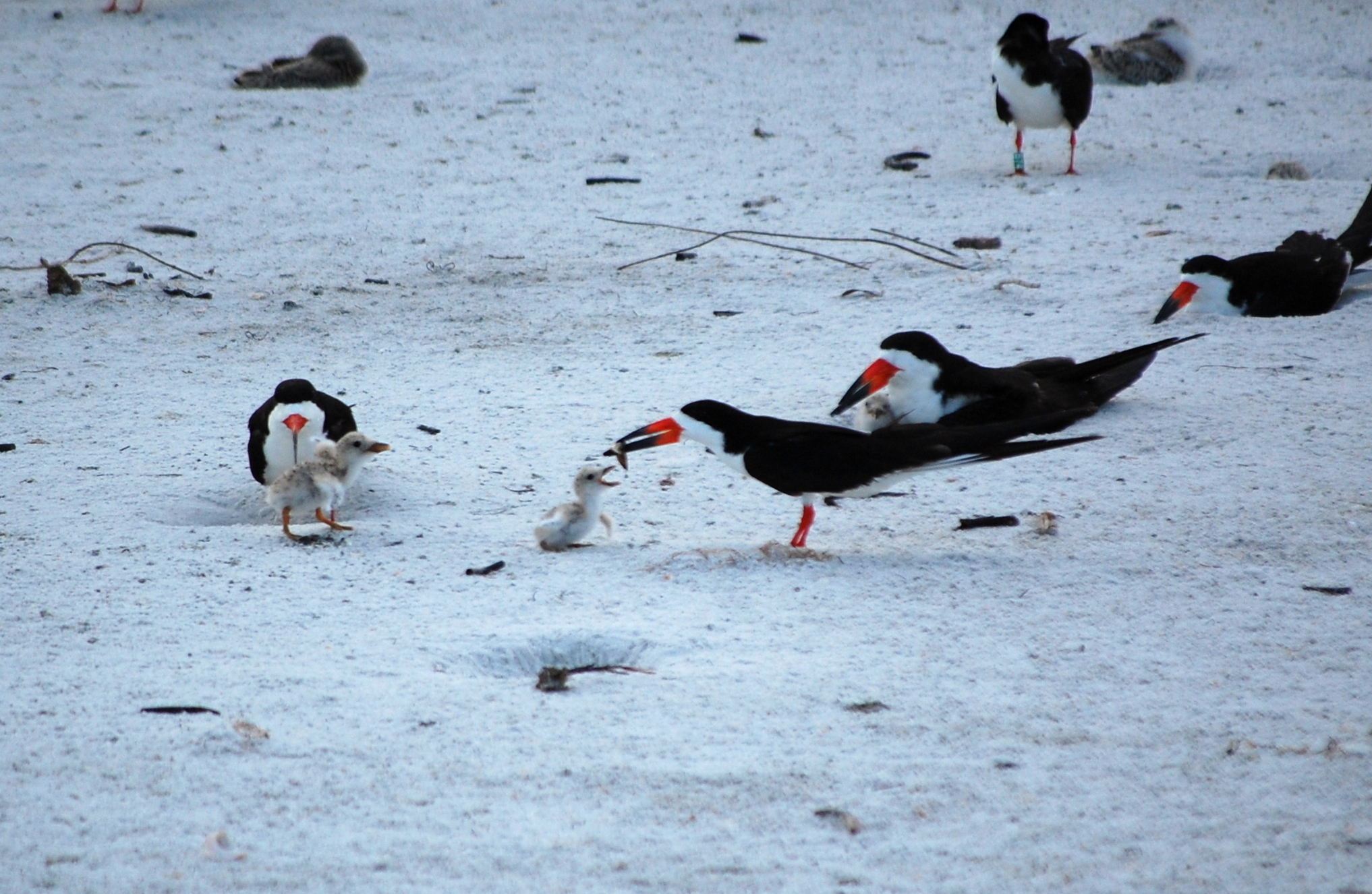
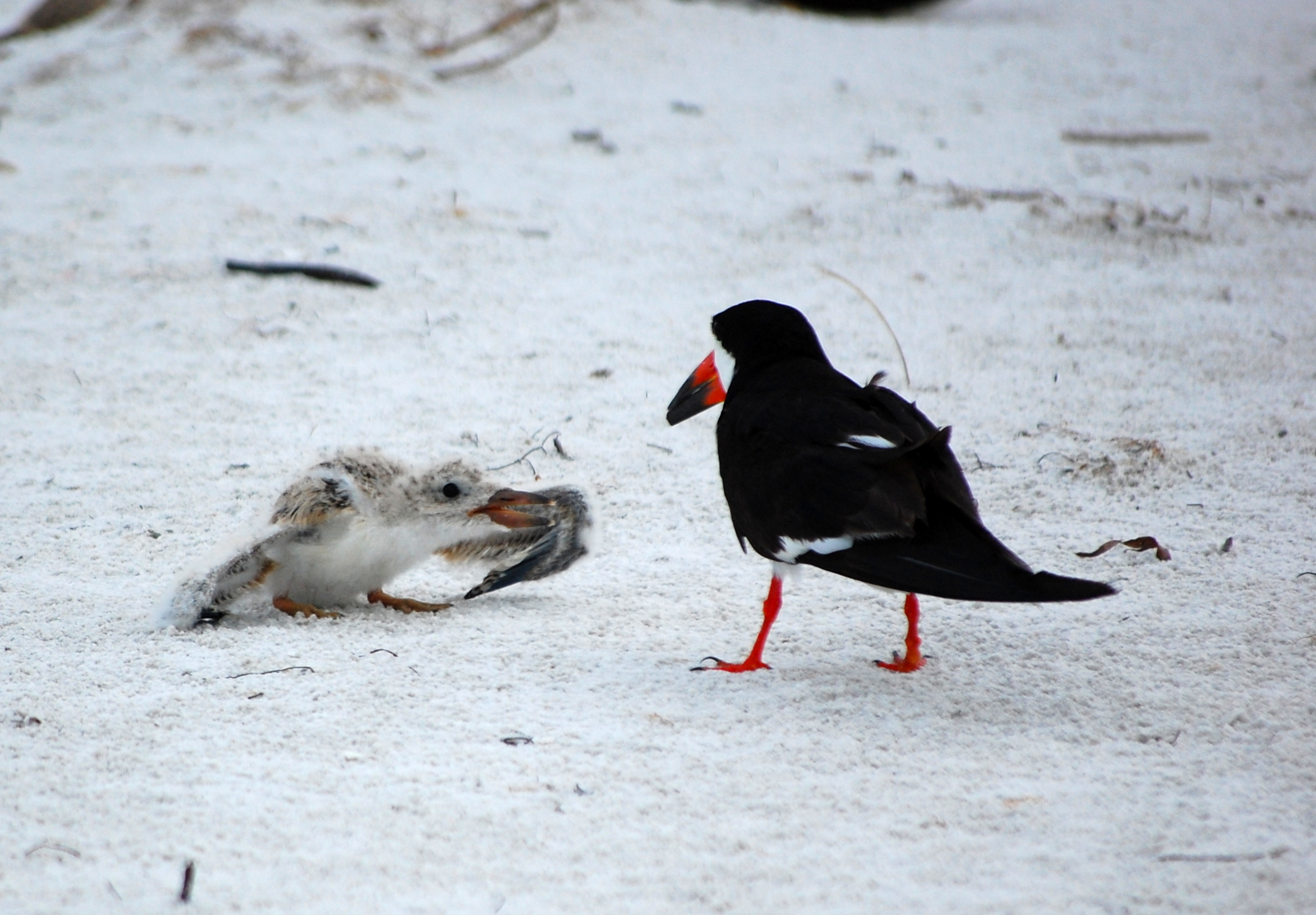
In the previous photos, you see the young trying to get food from the adult. At times, we would see the young run toward the adults with their wings slightly open and their heads tucked down. This is a begging behavior where the young are letting the adults know they are hungry.
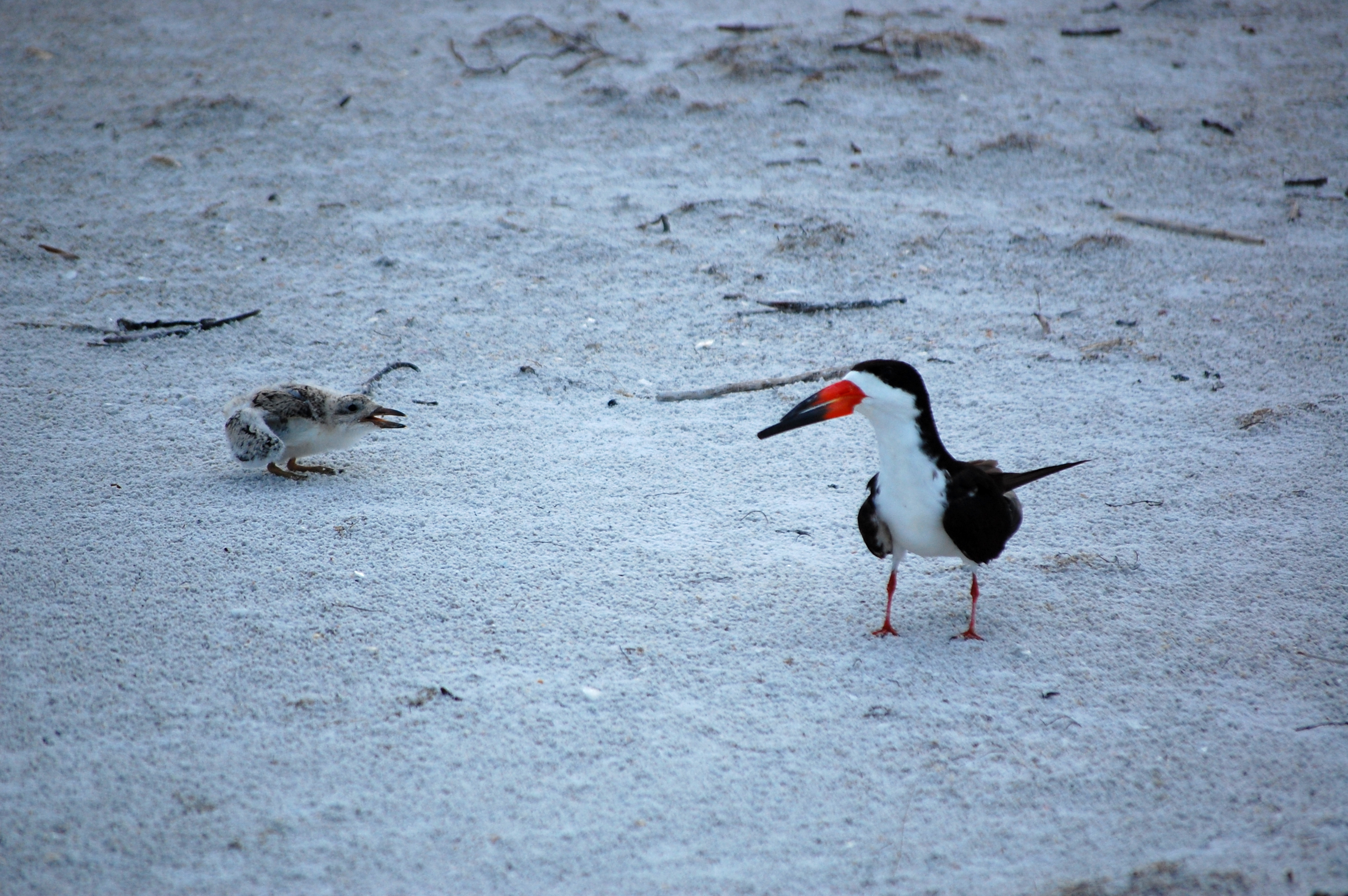
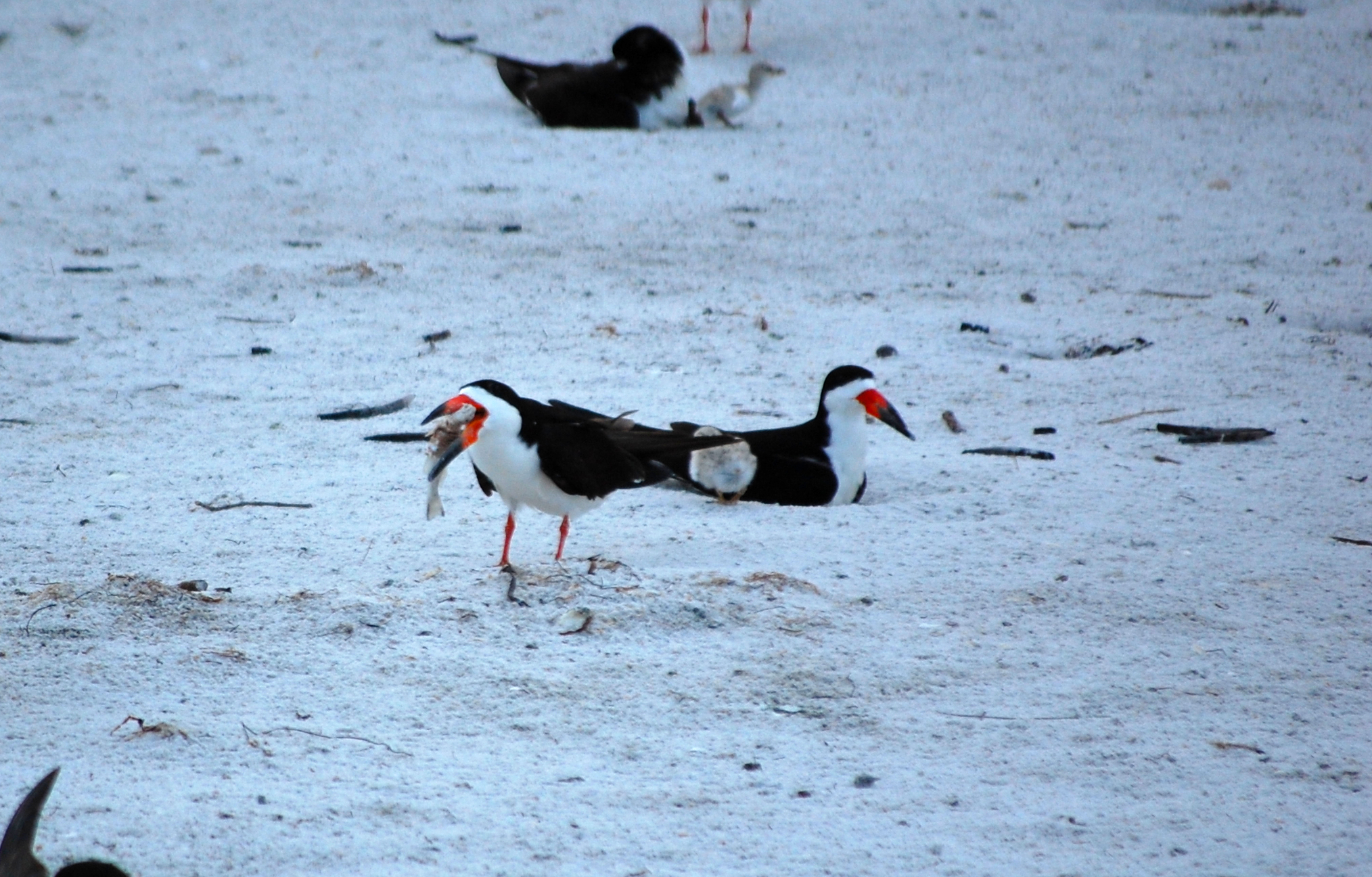
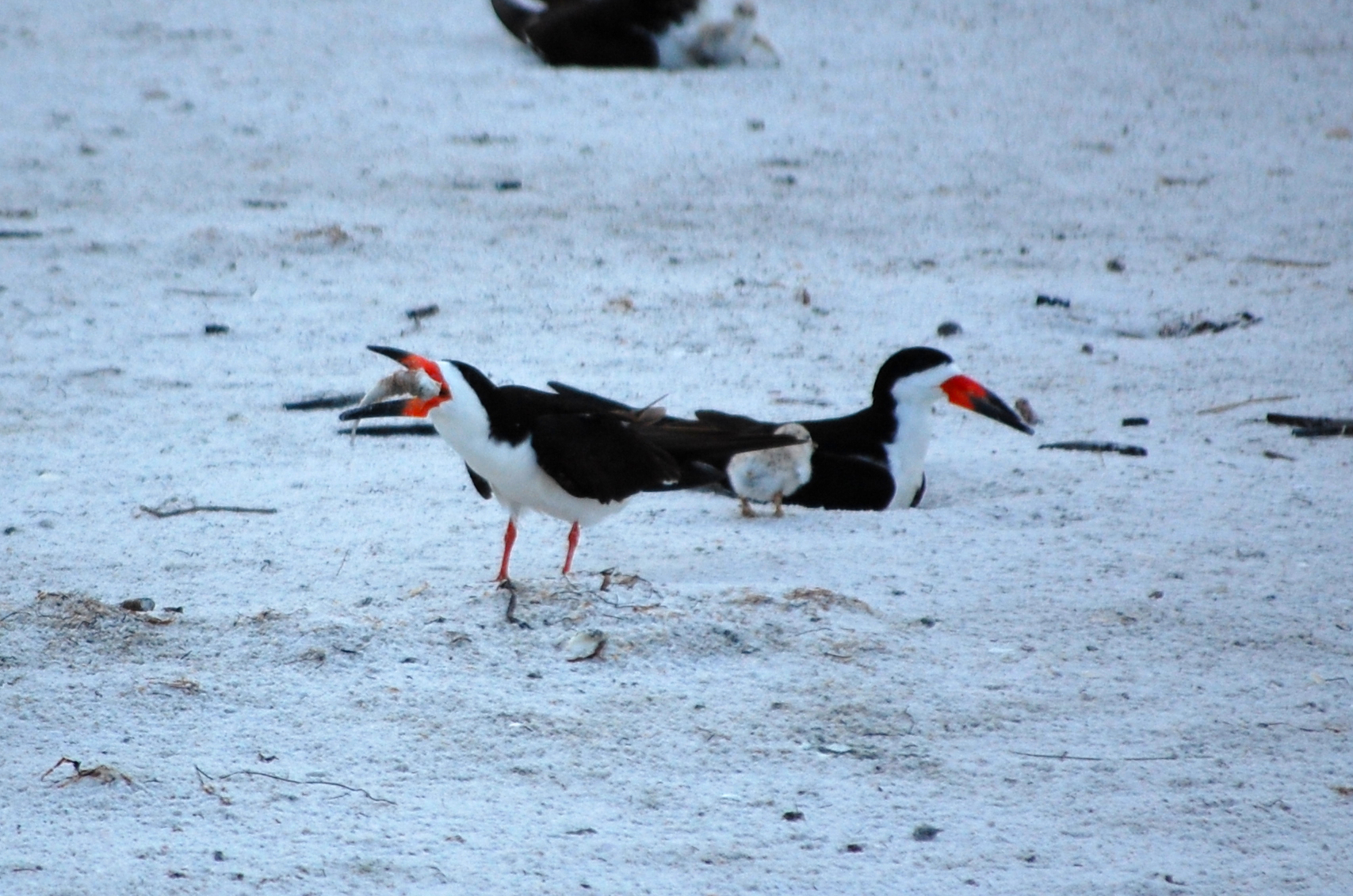
Of course, the adults have to eat, too. It was funny watching this. While they have a very streamlined means of foraging with the skimming, watching them eat what they catch is rather awkward.
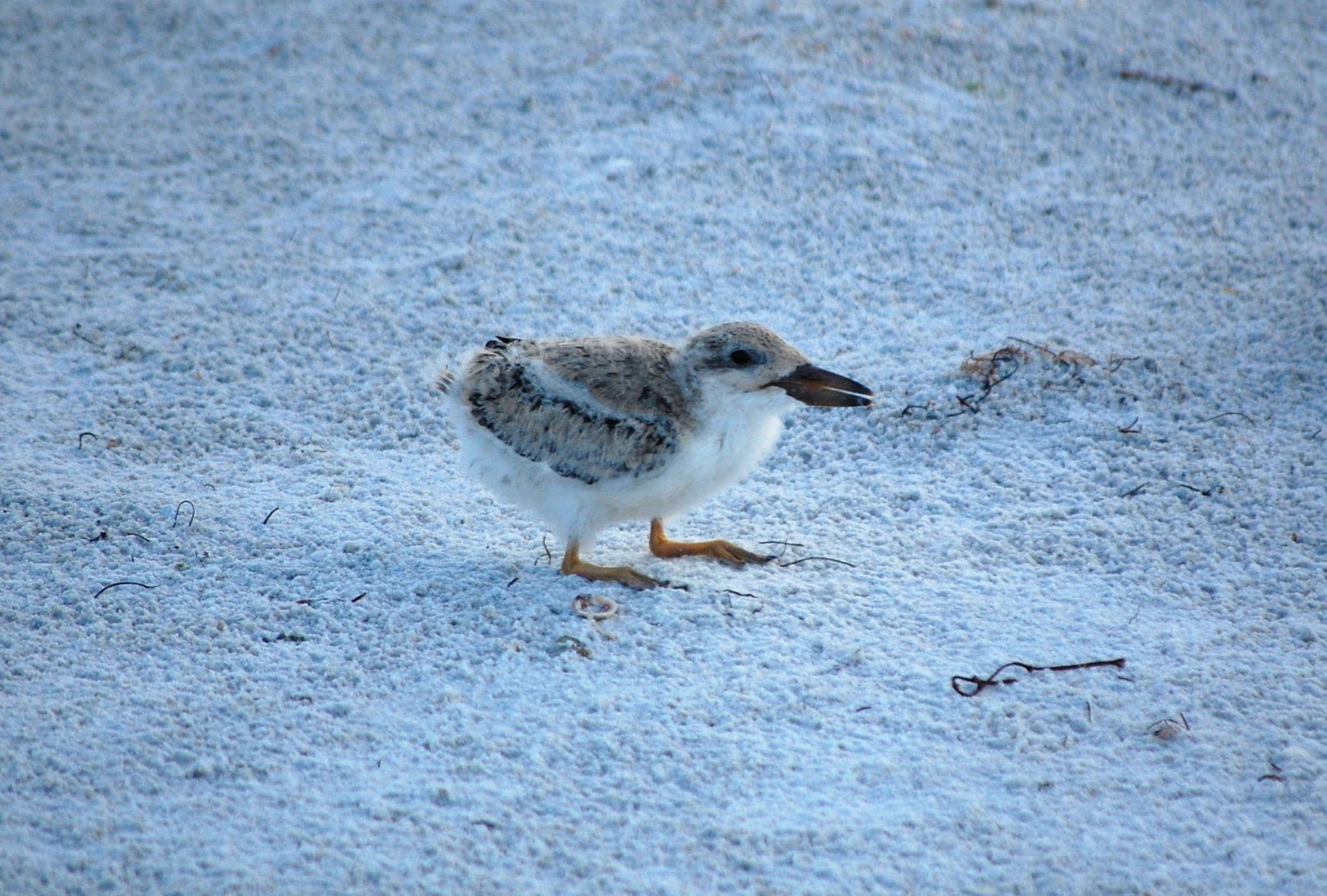
It was interesting watching how the young would sometimes stand on their feet, but sometimes sort of kneel. Now, for me personally, I would call the first one feathered and the second one downy. However, even the Audubon folks admit there isn’t a definitive way to determine this, and it is up for interpretation. I came to my conclusion based on the rufous (reddish) and brown coloration starting to appear in the first one.
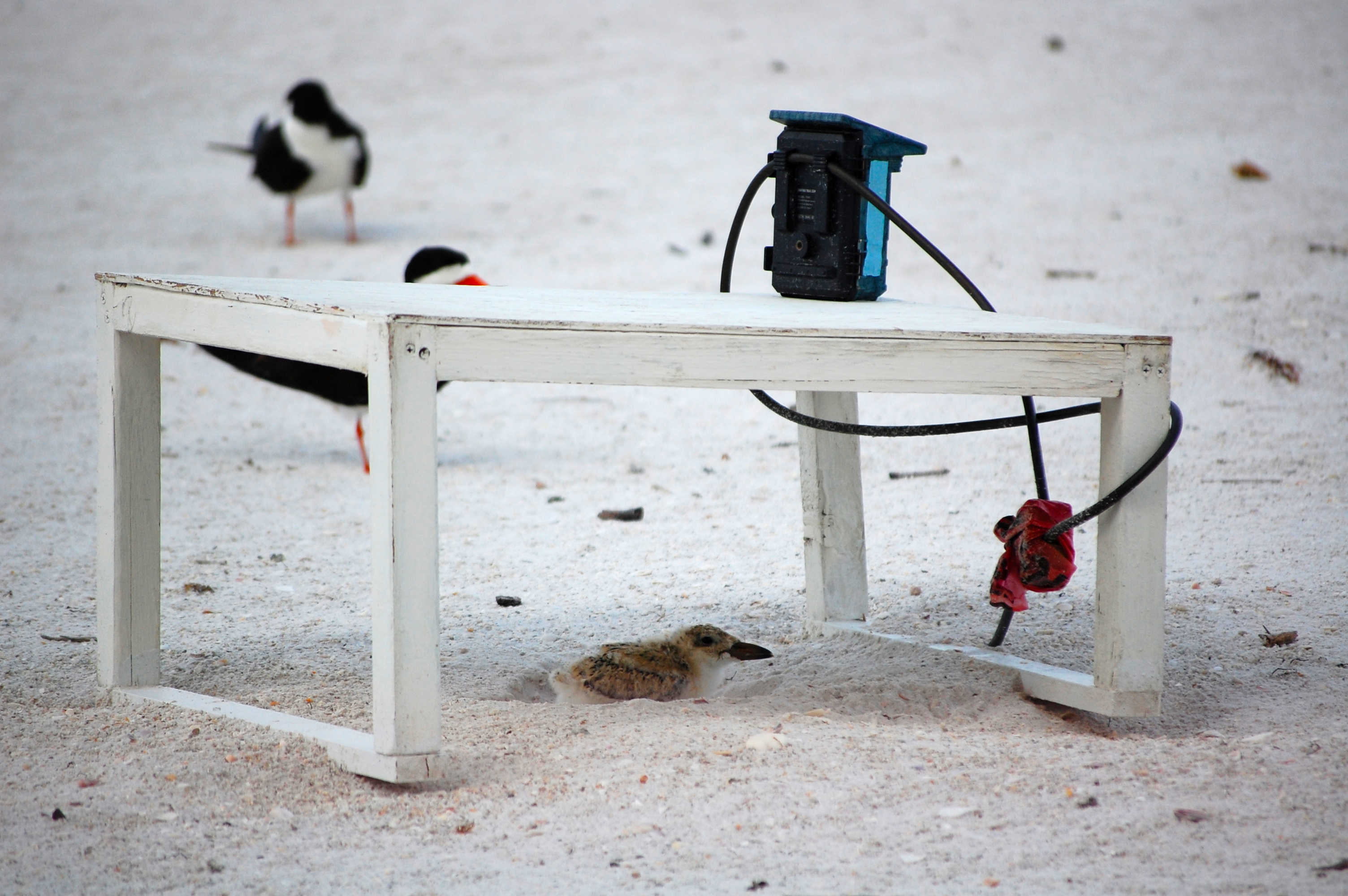
In order to provide shelter from the blistering heat, Audubon also provides shelters so the young can get shade. In addition, you may notice the wildlife camera on the shelter. These are being monitored by a local university student who is studying predator behaviors in colonial nesting birds.
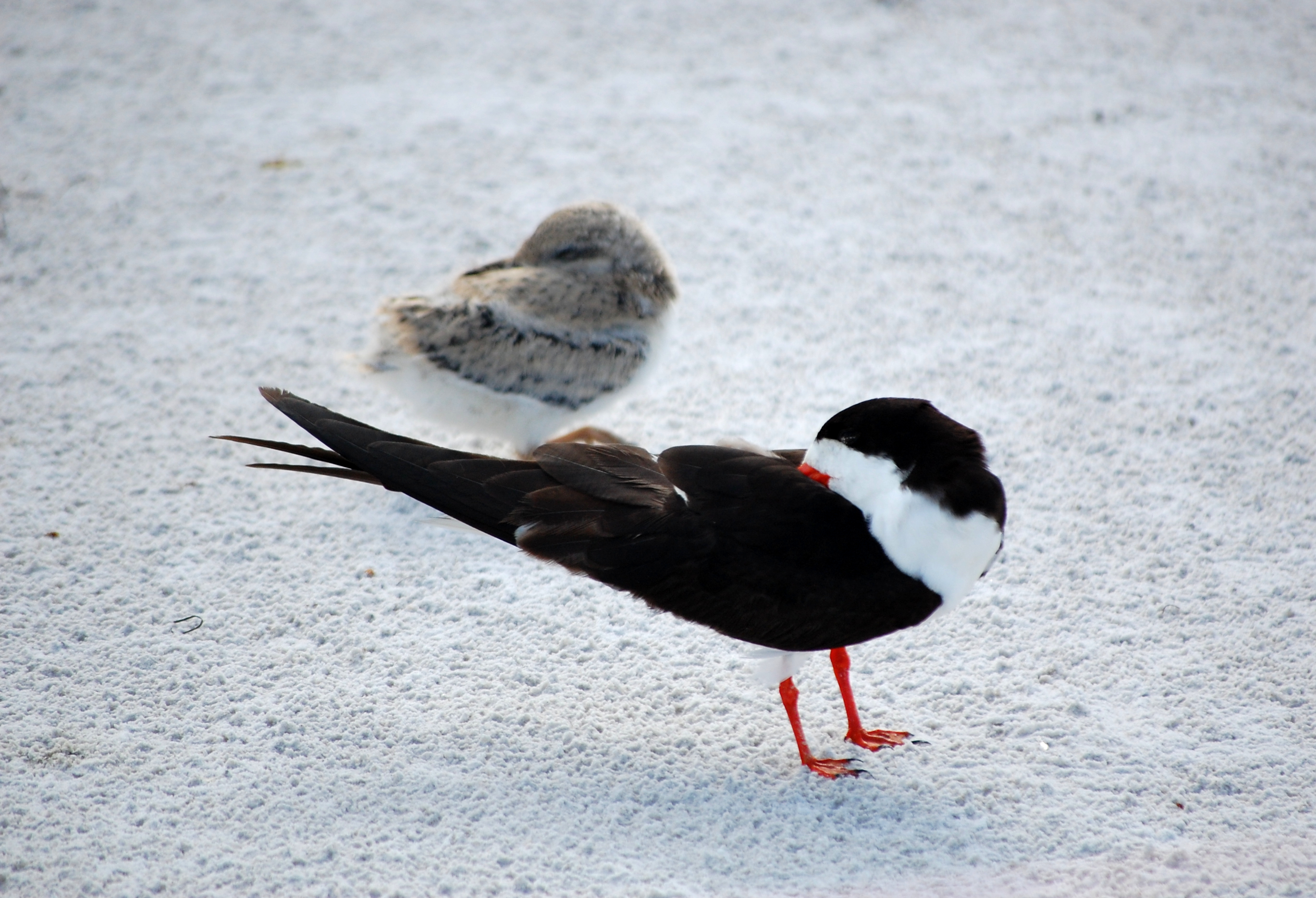
And one final photo. I thought I’d close with this one because, while it has no scientific or educational value, it’s just cute to see the younger one in exactly the same position as the adult.
 BJ Quinton
