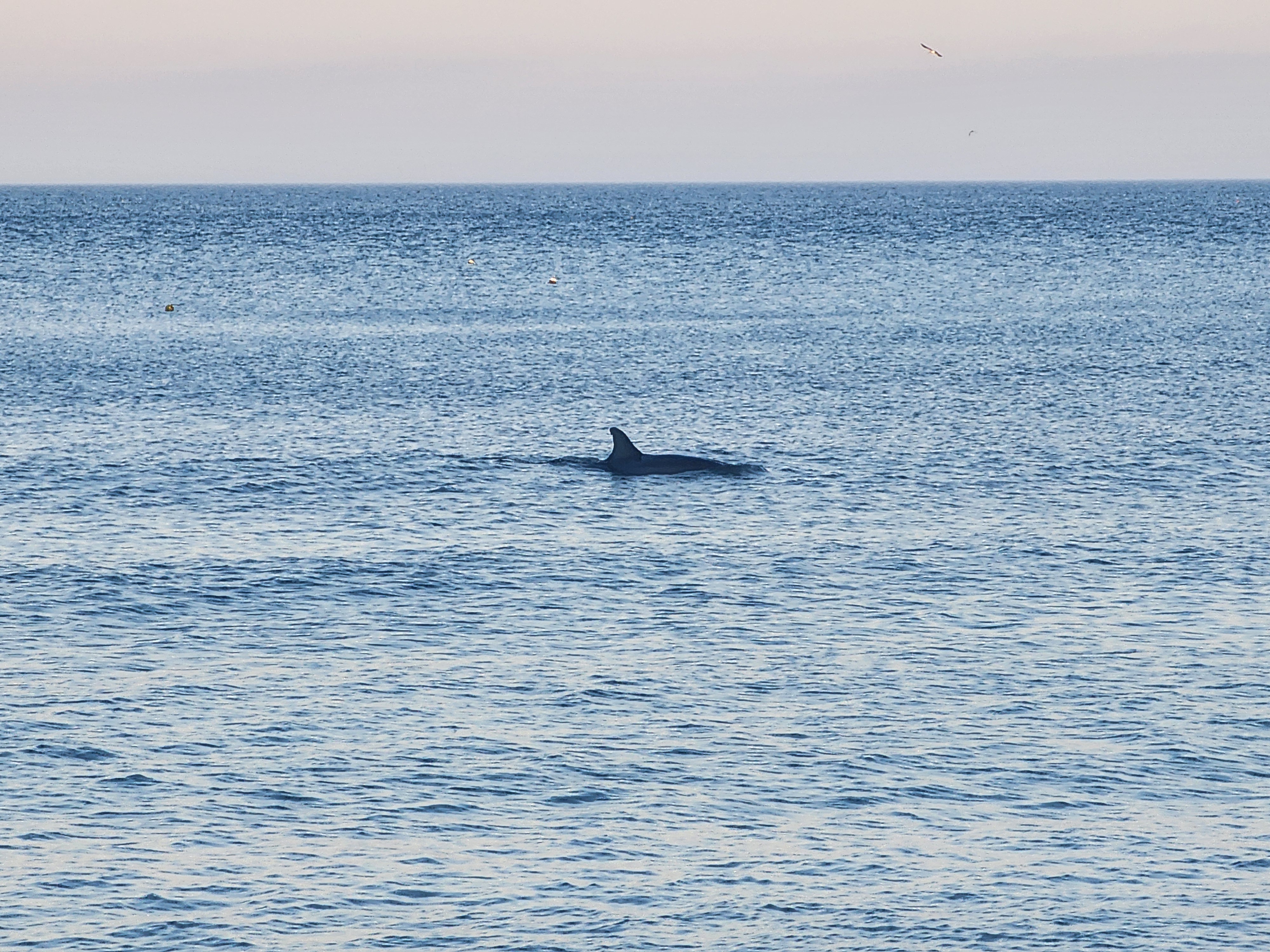
We are not even through the first quarter of the new year and lets be real, it hasn’t had the greatest start. Fires in California, planes colliding with helicopters and, sometimes, just falling out of the sky, and, no matter which side you are on, you have to admit that the political climate is tense, at best. Through it all, I always find that nature, even if it is in a controlled environment, brings me back to realizing that things can really be ok if you just take time to disconnect from all that and look around at the world around you. If you’ve been reading my blog long, you’re probably thinking this is going to lead to me discussing the beauty in some of the smaller, less desired animals. And you’re absolutely right. There are plenty of other things in this world where you can find beauty. It doesn’t take a lot for some things, such as a dolphin breaching the surface of the water near the beaches of St. Pete Beach on a cool February morning. But, as you know, I like to find a deeper appreciation for some of the smaller things out there.
I generally write about the science of these animals – their behaviors and adaptations. This post will be a bit more “hippy-ish” of me, but I thought it would be important for people given the things I mentioned above. Not to mention, it will be therapeutic for me to write it. I first had the thought for this post a few months ago while I was performing a gopher tortoise survey in a remote area of Florida. It was in a ranch pretty far back from the main road. There were several cattle gates we needed to go through to get to our site. I went to close this one gate and saw this spider web, covered in dew and glistening in the early morning sun. We were just two weeks away from the election and stress levels were high. But, in that moment, I didn’t care about any of that. I thought about the immense work that a spider puts into building a web (a reason I go to what some might call extreme measures not to disturb them). I thought about the resources the spider’s body has to use to create the silk and the precise way it stitches it together. And here it is, soaked from the morning dew and probably no longer of any use to the spider that built it. But, to me, it was very useful. It pulled me back to reality and helped me realize that, in moments like these, I can detach myself from all the human noise and just enjoy a little piece of nature.
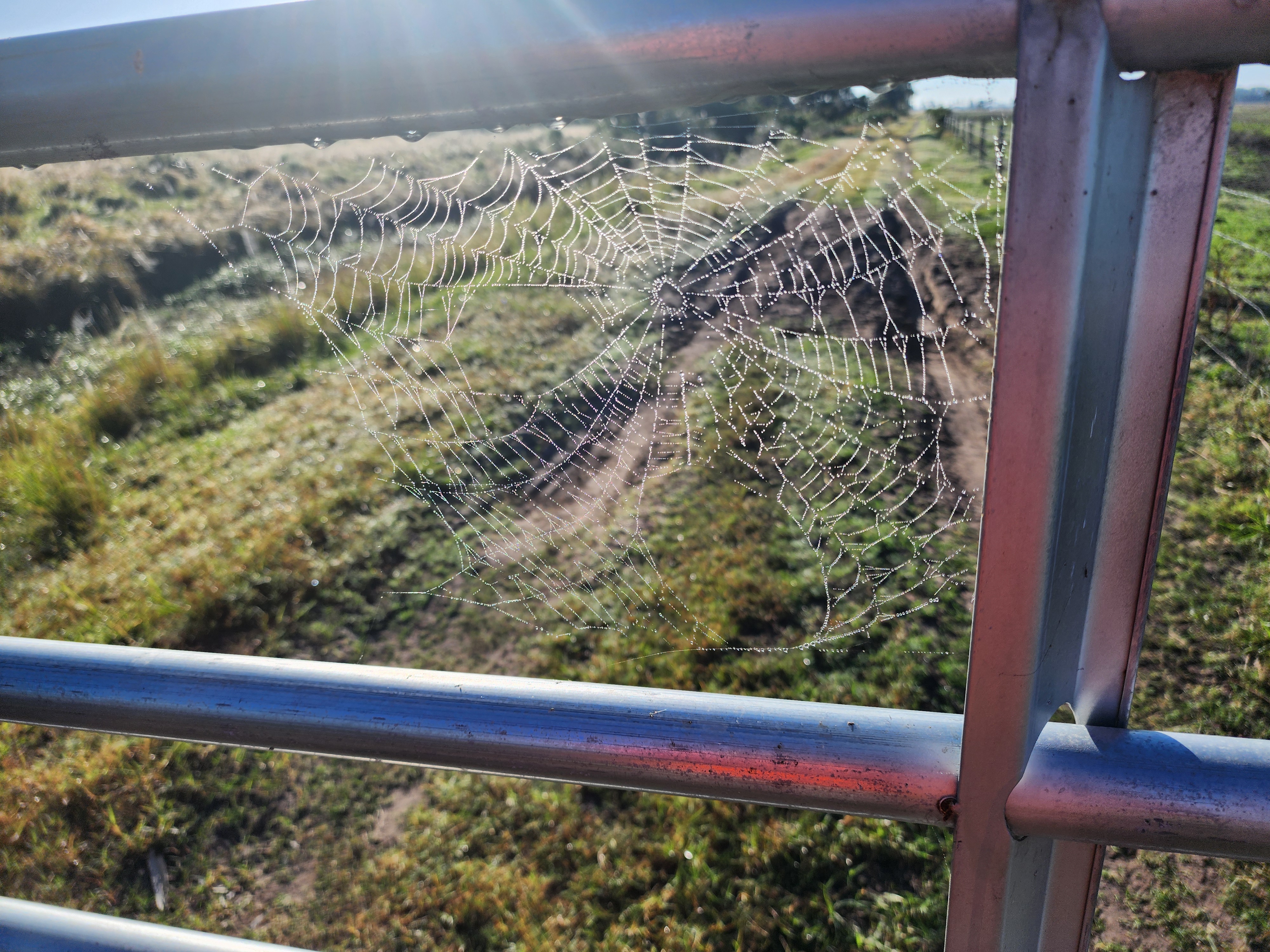
This web was likely built by one of the orb weavers we have here. Brace yourself. Here comes another attempt by me to get you to appreciate something ugly/fear-inducing. This is the yellow garden orb weaver (Argiope aurantia). The genus name means “gilded” while the species name means “silver-face”, basically alluding to it being gold and silver (see, even the scientific name is positive). It goes by many other names, which I’ll describe next. The first thing I’d like to mention is, of course, putting to bed the stigmas associated with spiders in general. First, a bite from one of these will not kill you, make you go insane, or turn you into a superhero. The bite would be no more serious than a bee sting. Also, this spider is not going to leap from the web and attack you. You are much larger than it is, and it knows this. These spiders are not aggressive and rarely bite humans, usually only resorting to this as defense if handled. Not to mention they eat insects that are more likely to bite than they are. And, if you put the fear aside, you really have to admit those colors are beautiful.
So, about those other names. There are several: corn spider, writing spider, zigzag spider, zipper spider, even the Steeler spider which makes me wonder if it’s because it shares its colors with the football team. The names writing, zigzag, and zipper refer to an interesting behavior that you can see just below the spider in the photo. Orb weavers will oftentimes create thick, zigzagging patterns in their webs, known as stabilimenta. The purpose of these is debated. What isn’t debated is that having them there must have a massive benefit. In animal behavior, there is something called a cost/benefit ratio. Basically, the benefit of a behavior needs to be equal to or greater than the cost. Otherwise, the animal would not do it. The cost to the animal to make such a massive structure is very high, so the benefit must be high as well. Some of the more recently accepted theories as to the purpose of these stabilimenta include making the web more visible to birds and other animals to prevent damage, attracting mates, and reflecting ultraviolet light to attract prey. Whatever the purpose, I think this just adds to the aesthetic nature of these webs, so thin and fragile, yet supporting such a large creature.

While going through the site, I noticed a pond with a small anomaly on the smooth surface of the water. As I got closer, I noticed it was something that we see all the time here in Florida, but that is still one of the few animals I am equally amazed by no matter how many times I see it. As I approached the murky water, I was delighted to see the beady eyes and bulbous snout of the American alligator. Since I’ve mentioned them in a previous blog, I’ll skip the science and get right to the hippy part. I never get tired of seeing these modern-day dinosaurs. It amazes me to think you could travel 30 million years into the past and they’ve remained the same. And why wouldn’t they? They have the perfect design for an aquatic predator. I love how they can float in the water with their bodies hanging almost vertical while just the tip of the nose and the eyes peak above the surface. While this one was a bit young, it also amazes me to see the large adults basking on the banks. They are massive in size, and you know the power and the danger that lurks behind those toothy smiles. Yet, again letting go of the initial fear response, if you take the time to watch them basking, they look so peaceful and beautiful.
On the way out of the site that day, I brushed against some branches and some twigs got stuck to me. As I picked them off, I noticed something odd about one of them. It was moving. Of course, it wasn’t a twig at all but, rather, a stick insect. Identifying it was a little tough. I even consulted with my supervisor who is a bit of an insect expert. There were two possibilities, but neither seems to be an absolute fit. The two lines running down the back made us think it was the southern two-striped walking stick (Anisomorpha buprestoides). From what I can tell, the genus is a mix of anisos, which is Greek for “unequal” and morpha, which basically means a type of form. My complete guess (I couldn’t find anything describing this) is that this genus gets the name due to the males and females being very different in form – males being smaller than females. The large size of this one made us think female. However, not only are two-striped walking sticks much wider than this, but they also occur in three color morphs: brown, white, and orange. Therefore, one wouldn’t expect it to have this green color. Finally, while I’d like to think I handled it with enough care not to elicit such a response, they are also known for defending themselves with a spray that not only smells horrible but can also cause temporary blindness, even in humans. The green color is more indicative of the common or northern walking stick (Diapheromera femorata). The reason this doesn’t really match as an identification is because it does have the two stripes for which the other is named and that are not indicative of the common walking stick. Furthermore, the common walking stick’s antennae are about 3/4 the length of the body, much longer than is seen here. Maybe one day I’ll have an answer and can provide an update. But no matter the species, there was so much to appreciate in this brief encounter. It was amazing to watch the intricate ways those tiny, long legs moved. It was interesting to think that all the organs necessary to sustain life are all organized into such a slender frame. It was also interesting that, when I gently placed this one back into some vegetation, even though I knew where I’d placed it, it disappeared immediately. It makes me wonder how many of these exist that I pass all the time without noticing. All these little lives that are their whole existence, but that I and many others pass by without ever knowing they exist. Who knows, maybe I’ll eventually find out that this is a new color morph that no one has documented because they have just gone unnoticed.

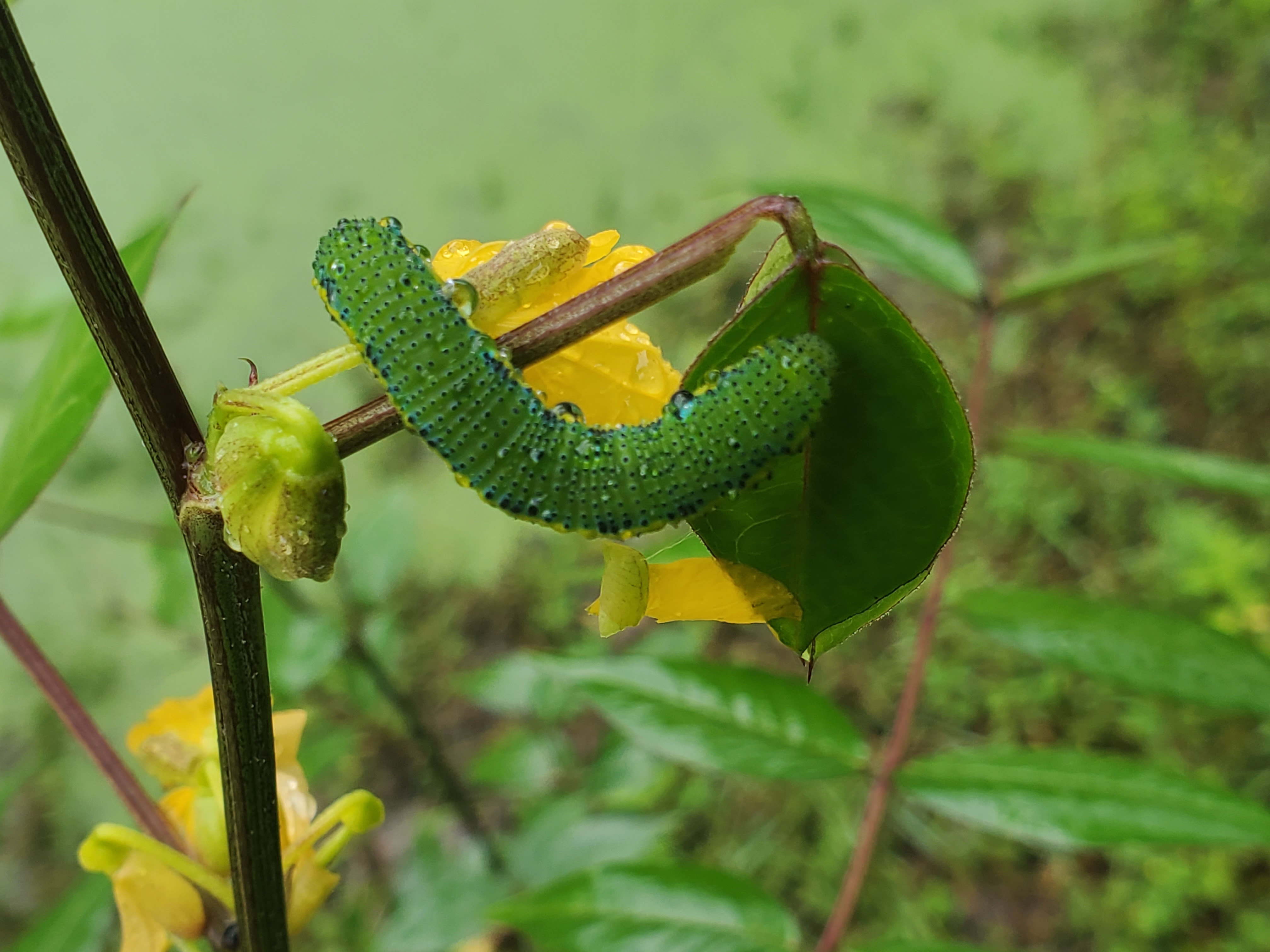
I don’t even remember where I was when I took this next one. According to the title, it was back in 2021. I don’t remember where I was or what the project was (if I was at work). But I still remember the feeling I had. It was a muggy early morning. Dew was all over the plants, making it a little difficult to walk through as I was getting soaking wet. Then I saw this little guy, equally covered in dew, having its morning meal. It was so peaceful, not even realizing I was there watching it. There was just something beautiful about the dew clinging to its body, already pleasing to the eye with its vibrant colors. I believe this is the caterpillar (or larva stage) of a cloudless sulfur (Phoebis sennae), which will become a yellow butterfly when it matures.
And this leads me to something else that I will never grow tired of seeing. The amazing transformation of a caterpillar into a butterfly. Despite being a biologist and having a rudimentary understanding of how it works, I am still in awe of how something as worm-like as a caterpillar can create an encapsulation around its body, using its own body, and transform into a flying insect. I have never had the pleasure of watching a cocoon hatch in real life. However, one day I was close. In the photo below you can see the cocoon just below the butterfly in the grass. At first glance, you might think this is the popular monarch butterfly. However, there are a few hints that this is a different species – the viceroy butterfly (Limenitis archippus). There are some subtle differences in their sizes and in some of the details of their wing patterns. However, the most obvious difference is in the hind wing, the one closest to the camera in the photo. You’ll notice a black band that goes across it. This is absent in the monarch. If you were to view them in flight, the viceroy is more erratic and glides with the wings flat, whereas the monarch flies more eloquently and with their wings in a V shape. The caterpillars are quite different with the viceroy resembling more of a brown stick while the monarch is more thick and striped. Another difference, as shown in this photo is the cocoon. The monarch cocoon is more of a smooth green cylinder with golden trim.
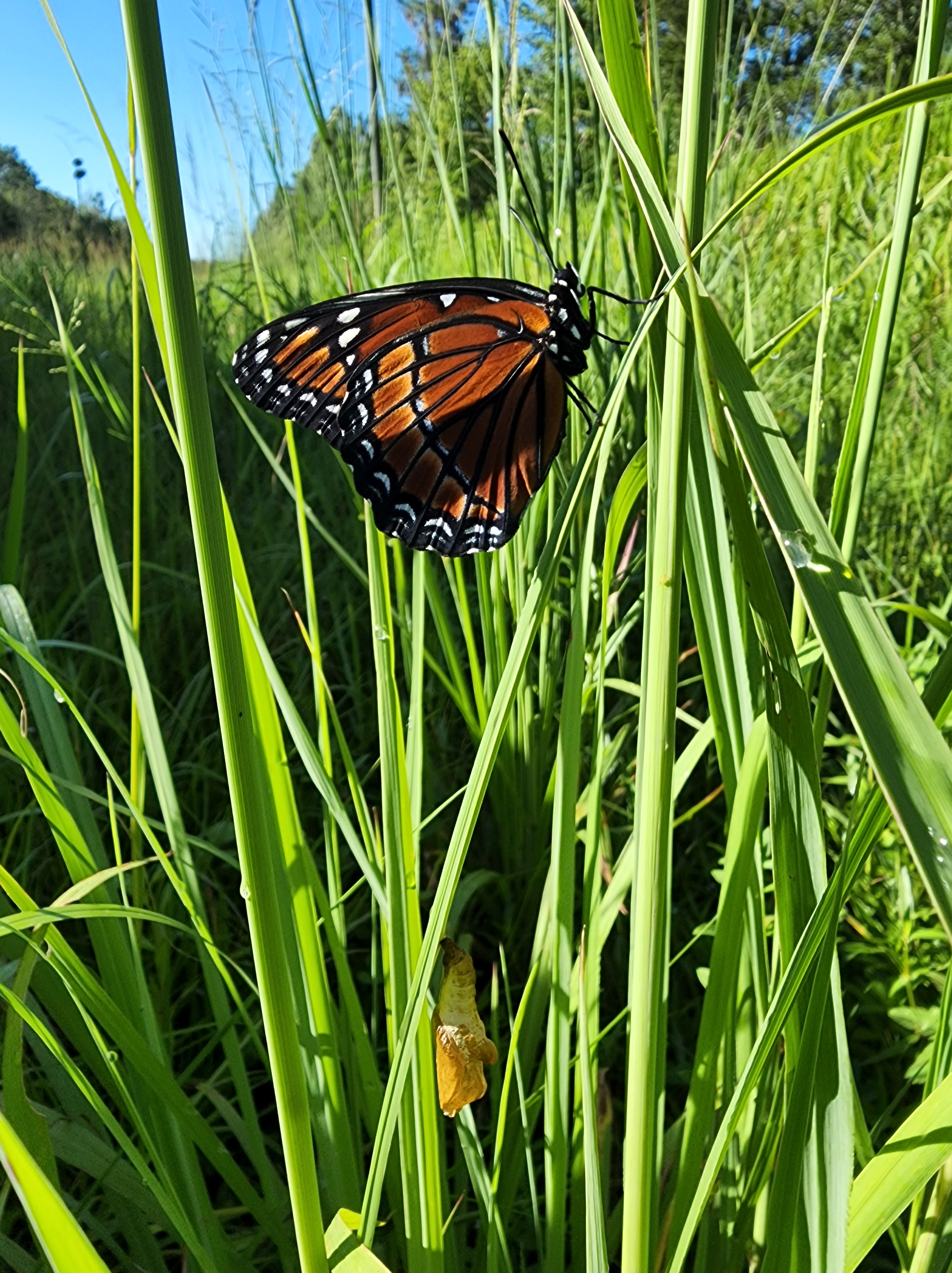
I know I said this post would be less about behaviors and adaptations, but the viceroy is too interesting not to mention the mimicry. It looks like the monarch, which is toxic to most vertebrates. At first, this was believed to be what is called Batesian mimicry – a harmless species mimicking colors or behaviors of a dangerous species. However, it was discovered that the viceroy, while not toxic, is distasteful to other species. Therefore, it is believed that the two species evolved to mimic each other, which is known as Müllerian mimicry.
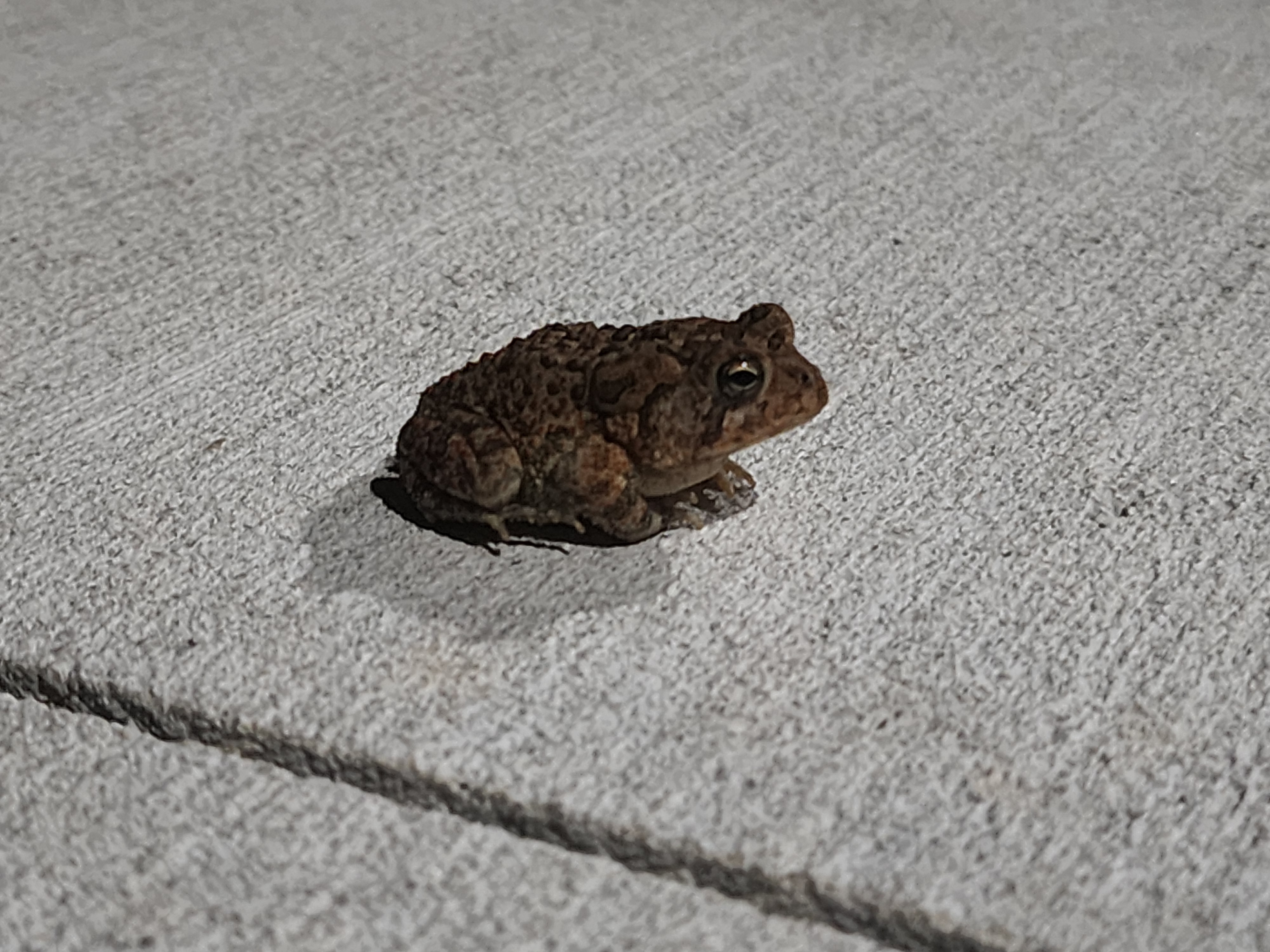
Anyway, back to finding beauty in things. Sometimes I find it not just in physical appearance, but in behavior. Not everyone can find physical beauty in a toad. But I saw this little one in my driveway one night and I couldn’t help but admire the attitude. As humans, we have everything handed to us. We don’t have natural predators. While we can fish and hunt, we don’t need to capture our food. We have a pretty easy life, yet complain and get stressed very easily. I saw this guy just sitting in the middle of my driveway. While not obvious in the photo, it was young and very small. Yet it was just sitting there, not a care in the world. It made me feel very much at peace with my own life witnessing it.
The next few photos are from a trip I took to San Francisco, California. The underwater photos and videos are not from the natural environment, but from the aquarium at Pier 39. They still show some very beautiful wildlife. The very first thing I’d like to show though is not wildlife or nature at all, but still quite beautiful and a nice reminder that the world isn’t always so ugly. This is a section of a barrier that is completely covered in what are known as love locks. Couples can get a lock, write their names on it, and affix it to these areas to show their affection. This started back in World War I in Serbia when a woman named Nada fell in love with a man named Relja. After their engagement, Relja went to the war in Greece and fell in love with someone else. This left Nada heartbroken and she died alone. Other women in the area started putting locks on the bridge where Nada and Relja used to meet to ceremoniously show their commitment to their partners. The practice grew from there. This location happens to be dedicated to such a practice. Doing this sort of thing in an unauthorized area is seen as a form of vandalism and the locks are removed. I just think it’s wonderful to see the overwhelming number of couples that have been here showing their affection for each other in such a way.

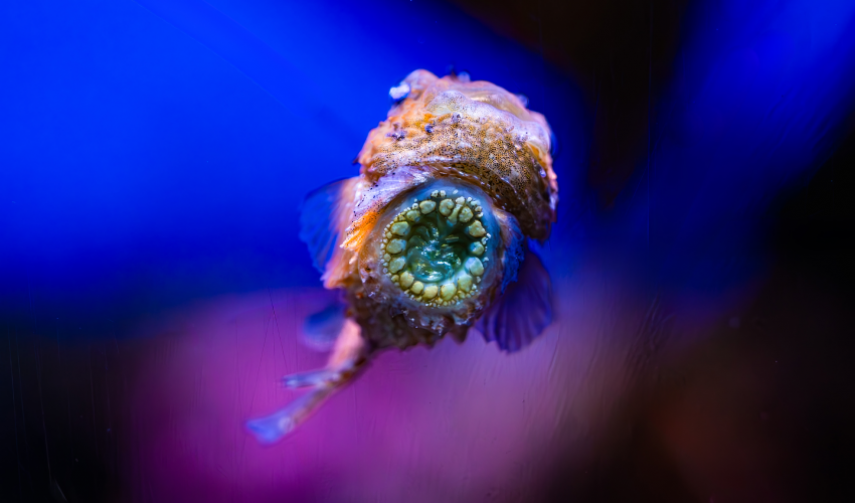
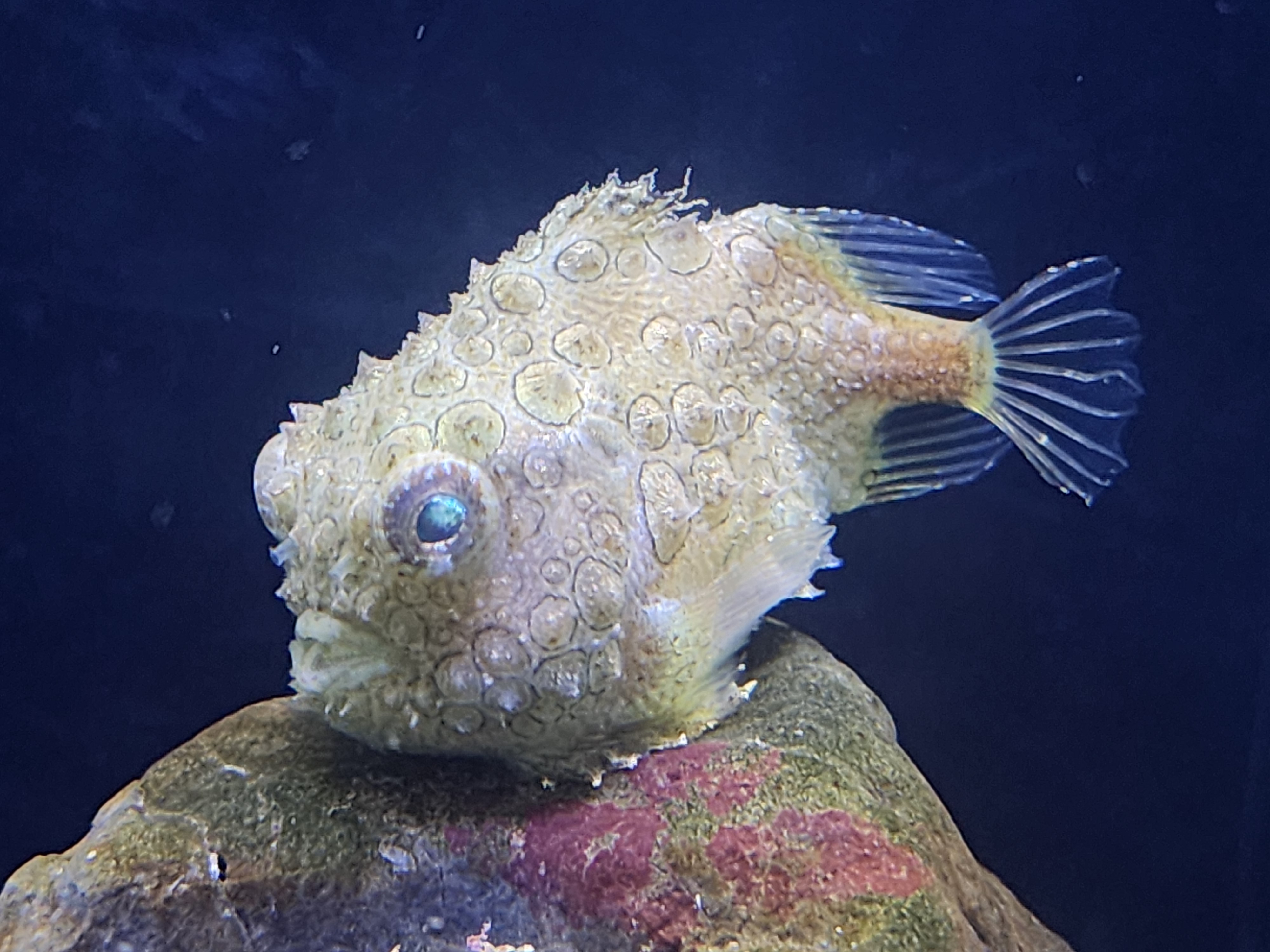
Ok, back to the wildlife, heading underwater this time. I’ll start with a fish that I love because of, if for no other reason, its name. This is the Pacific spiny lumpsucker (Eumicrotremus orbis). The genus is actually made of three parts. The Greek eu- meaning “good”, mikros meaning “small” and trema meaning “hole”. The species name is Latin for something round, like an orb – likely referring to its rotund shape. This fish is very tiny, barely larger than a nickel. Yet is has very unique and intricate spines all over its body. You can imagine having such a bulbous body with tiny little fins doesn’t make this fish a very good swimmer. An interesting feature that isn’t visible in the photo is a suction fin, formed from its pelvic fins. This allows this fish to stay stuck to kelp, rocks, and other surfaces. I haven’t had the pleasure of seeing one of these in the wild. But, like the stick insect, I imagine it could be easily overlooked. Just another reminder to stop and notice the little things.
I took a few photos of this next animal, but ended up deleting them. The beauty of this creature can really only be appreciated by viewing its movements. This is the Pacific sea nettle (Chrysaora fuscescens). The genus is from a figure in Greek mythology known as Chrysaor whose name translates to “he who has a golden armament, I’m guessing because of the golden bell that resembles a helmet (a feature that sets it apart from the Atlantic sea nettle). The species name is Latin and translates to “dark into light”. This is because sea nettles, like fireflies, are capable of producing their own light, a feat known as bioluminescence. The more frilly tentacles are known as “oral arms”. These are what they use to sting prey and bring it to the mouth, which is on the underside of the bell. I watched these animals for quite some time, marveling at how such a simple creature could display such mesmerizing movements.
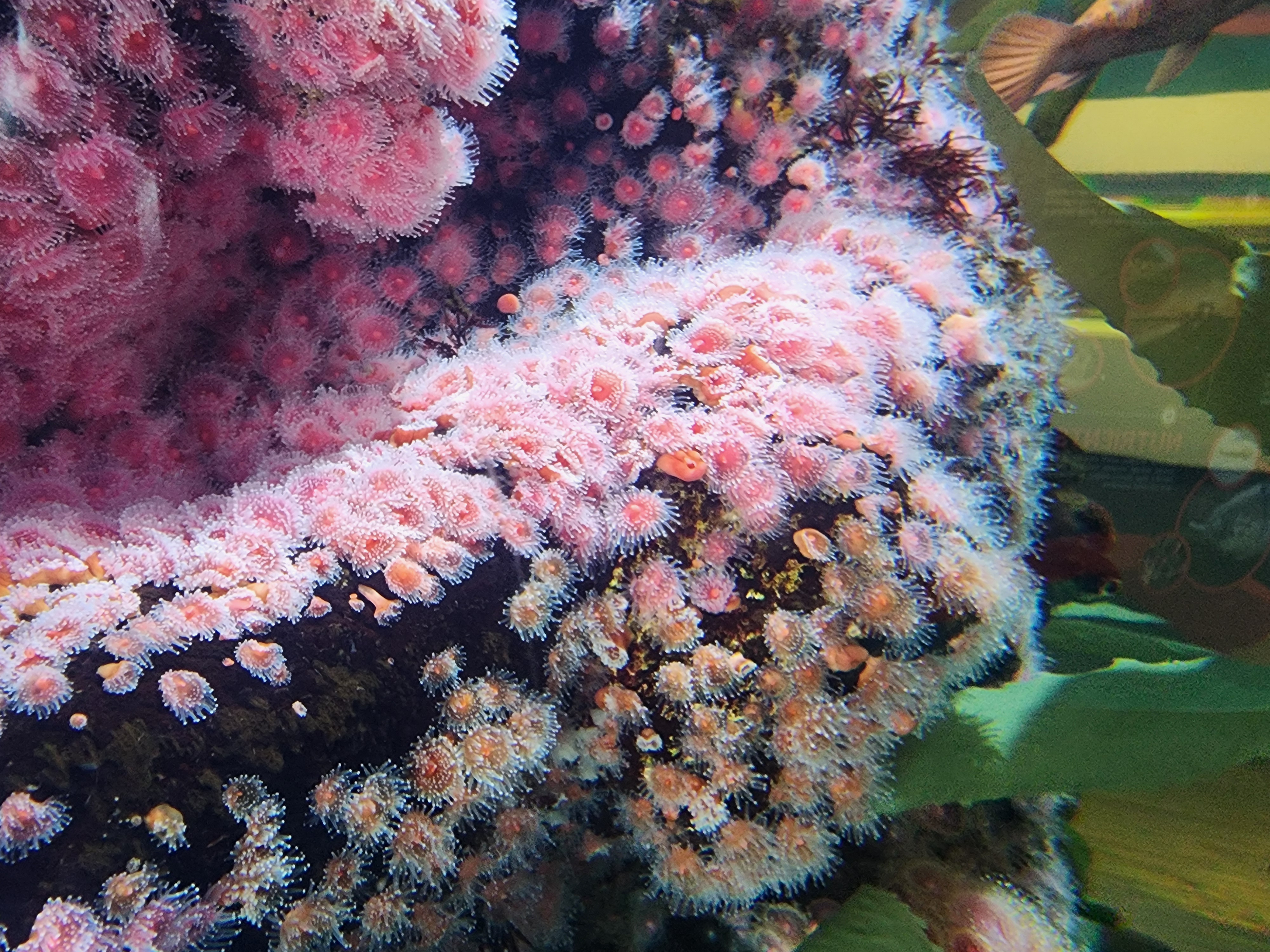
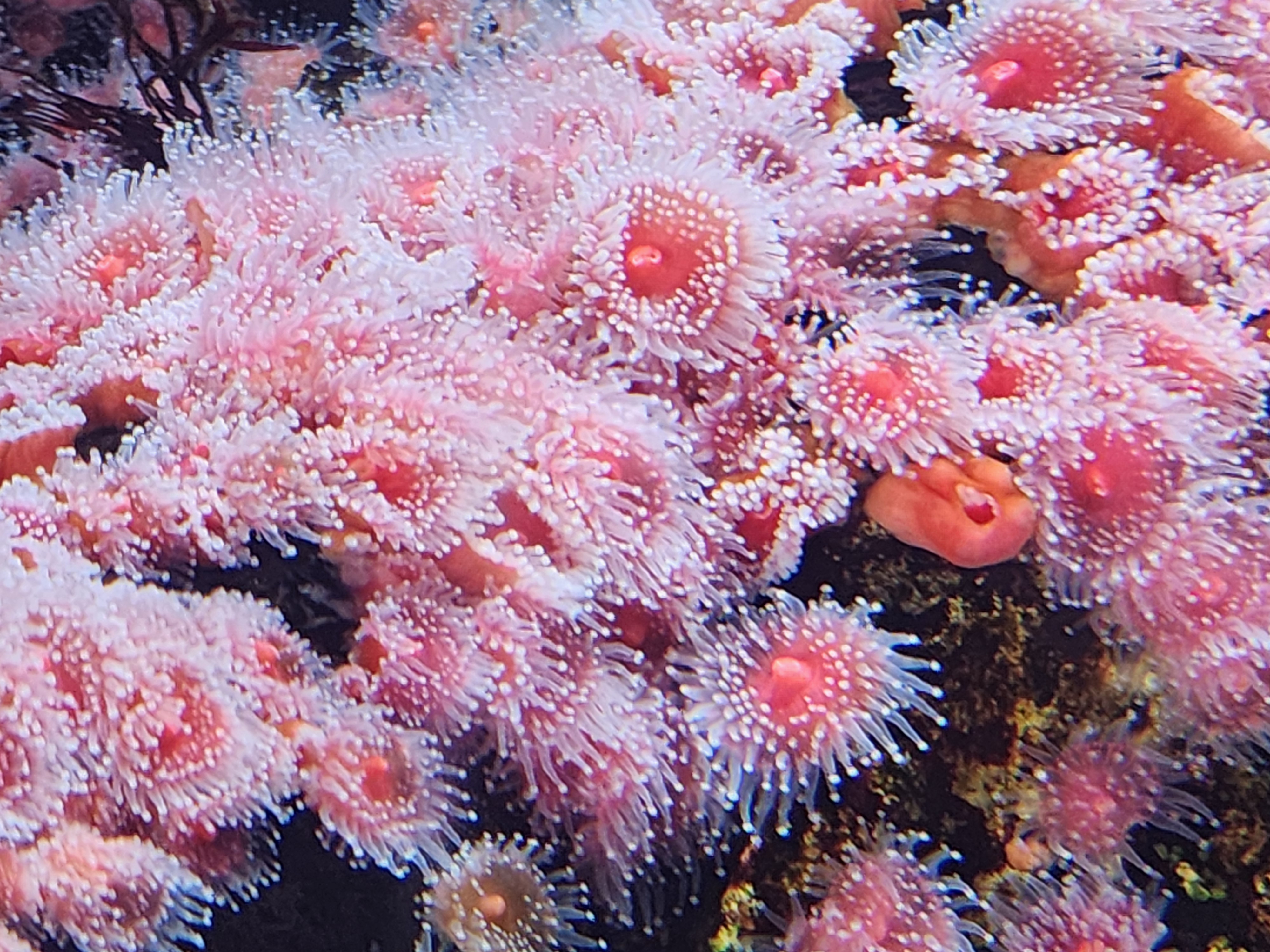
For these next animals, I regretfully didn’t get the names of. So I won’t be able to talk much about the species. They are species of sea anemone. One interesting thing is that they get their name from the genus of flowering plants. So these creatures are so beautiful they are actually named after flowers. The word “anemone” itself is Greek meaning “windflower” or literally “daughter of the wind” due to the flowers opening up when the wind hits them. Whatever these species are, whether large or small, they are always very interesting to watch with their very subtle movements, waving their tentacles through the water. While they are able to move, they are most often seen in one place. It reminds me to stop sometimes and just let the world pass by me, appreciating its beauty in all things.

 BJ Quinton