This will be one of my shorter posts. While I find these animals fascinating, I know very little about them. But, as with most of these posts, I learn as I write. Since this group is a bit removed from the others, I’ll start with some of the basics of this group as a whole. Snails are mollusks, a word dating back to Aristotle’s ta malákia meaning “soft ones”. More specifically, they are gastropods which is a combination of the Greek gastḗr meaning “stomach” and poús meaning “foot”. This is in reference to how the foot (the large rear portion of the body) is basically attached to the underside. From there, the taxonomy gets a little crazy, so I will do my best to talk through just the species names.
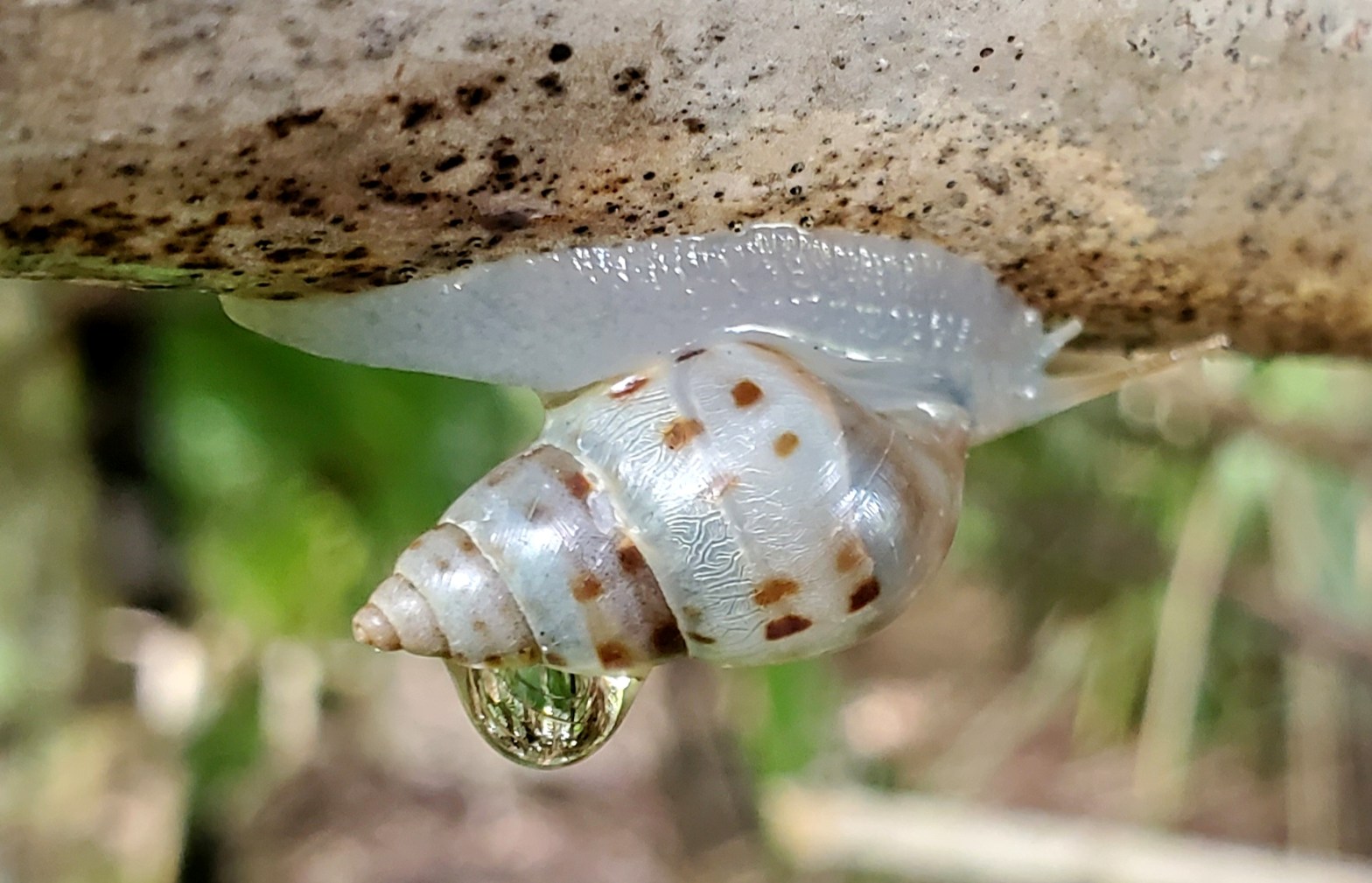
It was also very difficult for me to figure out which species these were. Some snails in Florida look very similar, so I did my best comparing photos and using any distinguishing features I could find. My best guess for this first one is that it is a manatee treesnail (Drymaeus dormani). I couldn’t find much about the meaning of the name. There are several bird genera that start with “Drym-“. These are from the Greek drumos meaning wood, which makes sense as it is known to occur in wooded areas. The great thing about this photo is that you can actually see part of the snail’s respiratory system. Similar to turtles and tortoises, the shell of a snail is more than just an empty home. It is an integral part of the body and houses many vital organs. If I understand it correctly (again, I’m by no means a snail expert), The large white part in the middle of the shell is the lung, complete with blood vessels (snail blood is colorless). In addition to breathing through the skin, snails living on land breathe into a lung through a small respiratory hole located on the back portion of the head.
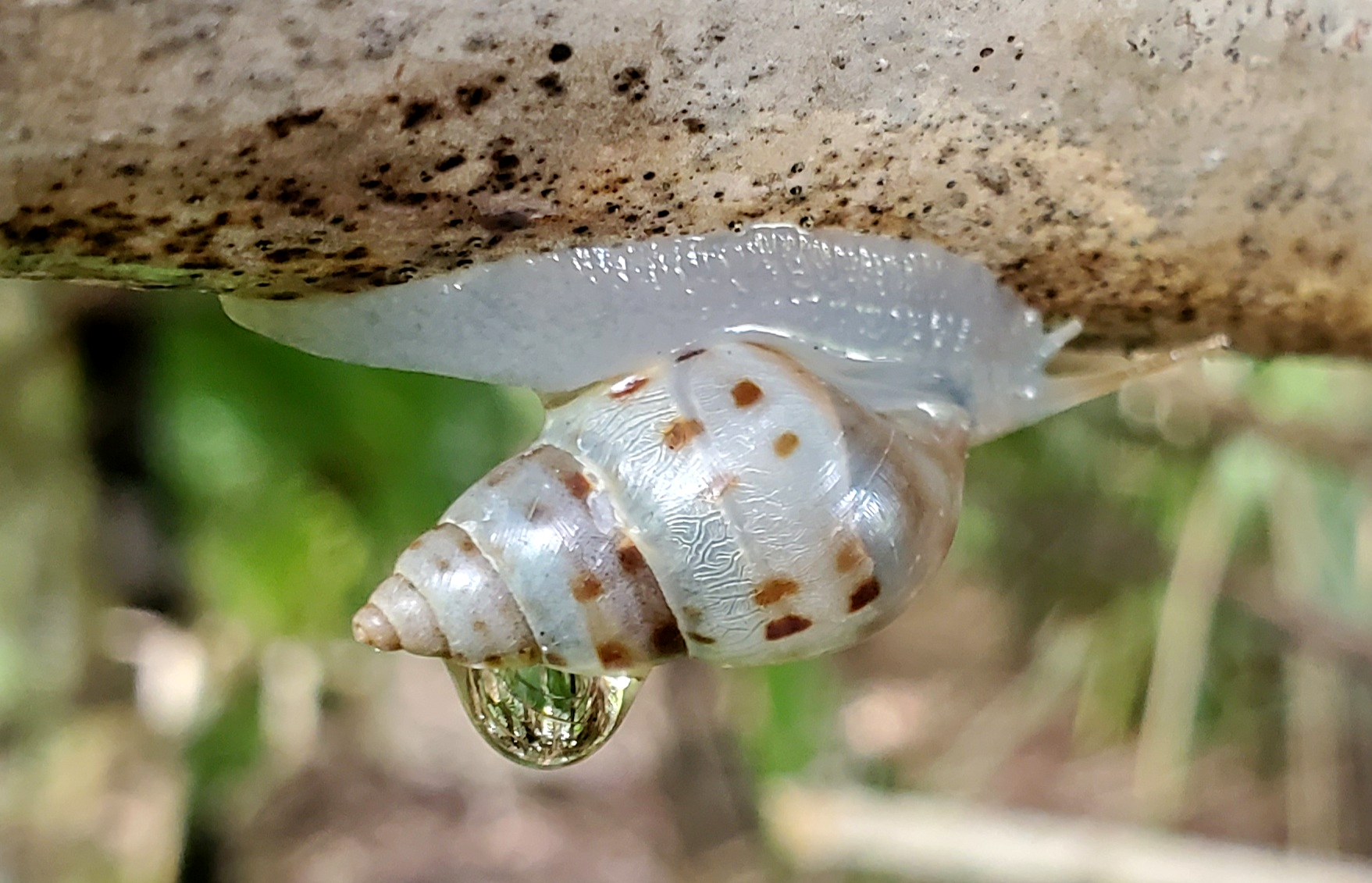
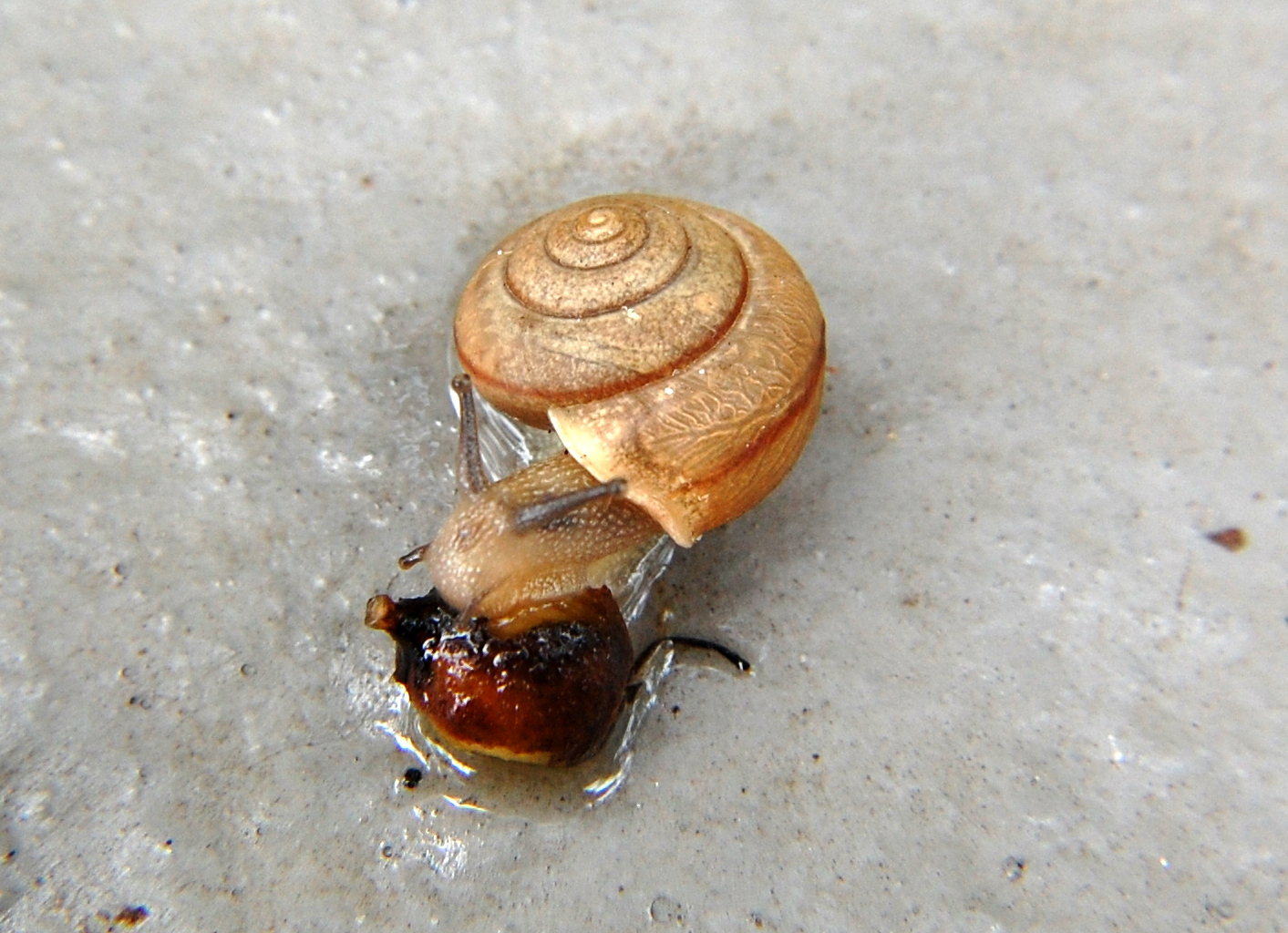
There’s a good chance I’m wrong on this next one due to so many small, circular snails looking the same. However, the lighter, slightly flared portion of the shell makes me think this may be a white-lipped globe (Mesodon thyroidus). I know that meso- generally means “middle” and -don generally refers to “tooth”. The species may be a combination of the Greek thureos meaning “oblong shield” and oides meaning “resembling”. In the first photo you can again see the blood vessels near the shell’s surface. This one was feeding on some sort of seed or nut on the wet sidewalk. While snails don’t have teeth, they do have a rough, ribbon-like organ called a radula (Latin for “little scraper”). The radula is used to scrape food items off of a surface. If you look carefully, you can see the lighter parts of the seed where the darker outer skin has been removed.
The next photo is a bit out of focus as I was using a macro lens which generally focuses on a smaller subject. But here you can see the snail actually has four tentacles. The two longer ones on the top of the head have the eyes at the tips. The two lower tentacles are used for touch and smell.

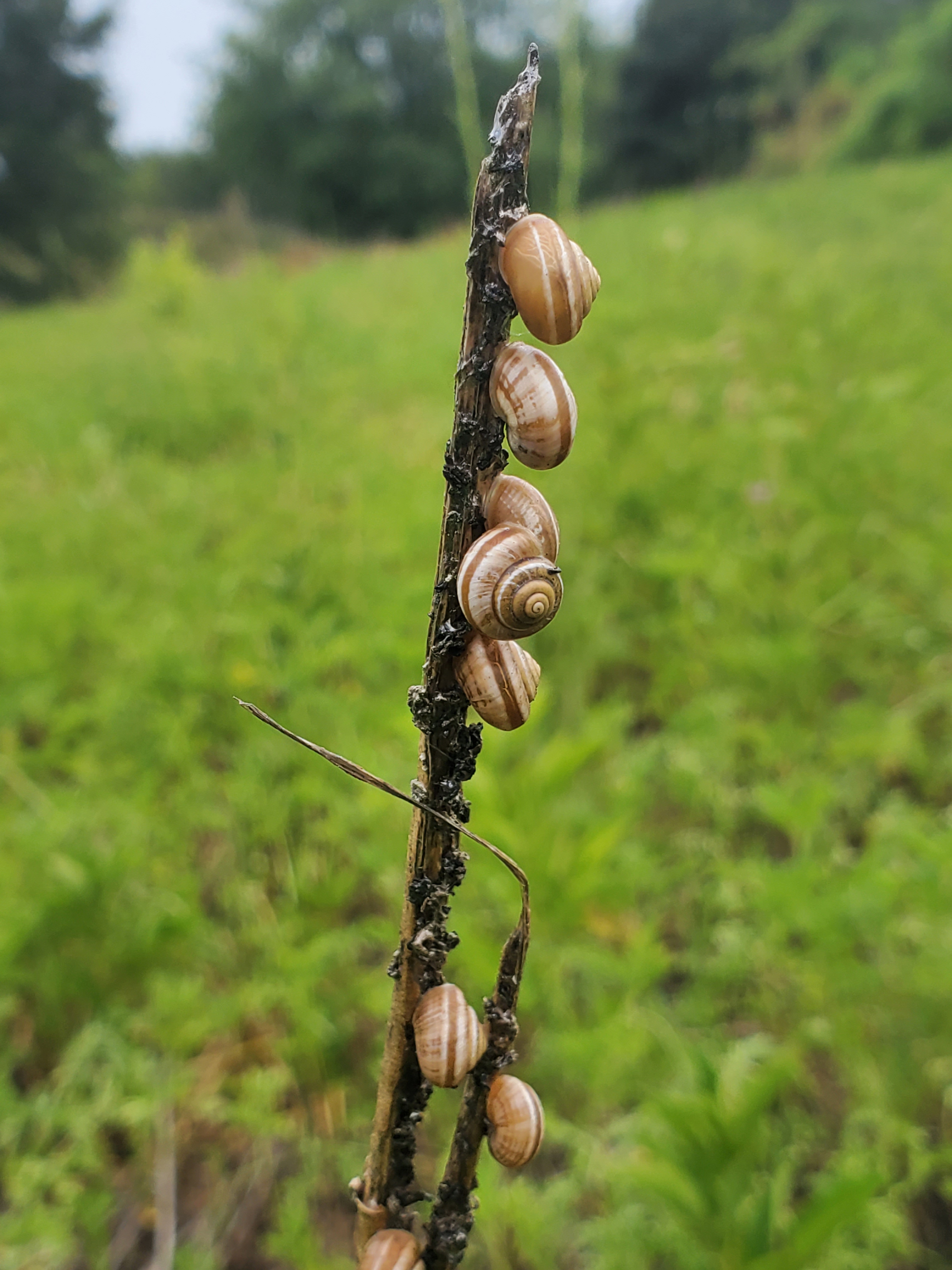
This last photo is an interesting phenomenon I see in the field quite often. Based on the white stripes, the size, and the fact they are in a large group, I guessed these to be vagrant scubsnails (Praticolella griseola). I couldn’t find anything on the genus name, but the species name comes from the Latin griseolus meaning “grey”. From what I’ve read, these snails have entered sort of a temporary hibernation due to lack of moisture. They’ve sealed their shell openings with a mucus membrane to maintain the moisture in their bodies. These were atop a rather tall stick, probably three of four feet off the ground. That part I haven’t been able to figure out yet. I understand them being up high so they don’t get trampled. But I don’t quite understand why they would benefit from being out in the open and vulnerable. If I learn more about that, I’ll be sure to do an update.
 BJ Quinton