In my last post, I mentioned the term “charismatic megafauna”. Also called “flagship species”, these are the larger, more popular animals, that are usually at the forefront of advertising for zoos and other conservation efforts. While I tend to focus on the lesser liked critters, as those are the ones that I think need more attention, I can’t take away from those that are on the frontlines. Also, while I do specialize in Floridian fauna, I consider myself a globalist when it comes to conservation. That is to say, I may work with local species directly, but I support conservation across all corners of the earth.
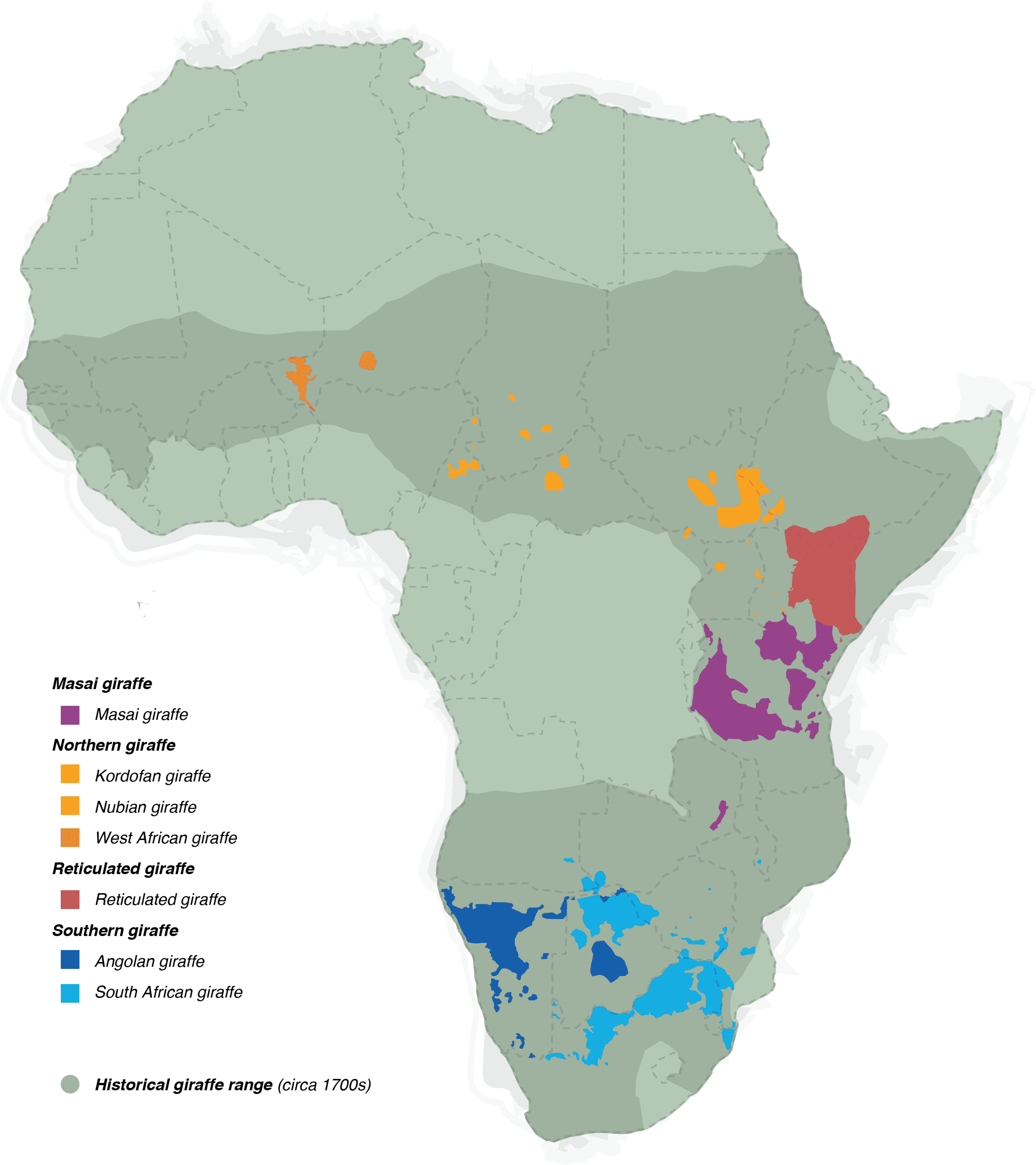
I might as well start with the tallest animal on earth – the giraffe. There are four giraffe species in the world occurring exclusively on the continent of Africa. While their historic range covers much of the continent, the remaining species are limited to only isolated areas. Depending on the species, giraffes can reach heights of 15 to 20 feet. Much of this height is in the neck, which you might think would have a lot of bones. However, giraffes have the same seven bones in their necks as humans. They are just much longer. They also have ball and socket joints for more flexibility.
Of course this height has advantages, such as reaching leaves in a tree much higher than other competing species are able to get to. However, there are some challenges as well. First, as long as their necks are, they aren’t long enough to reach down to get a drink of water. So, when a giraffe takes a drink, it has to spread its legs awkwardly to get down far enough. Fortunately, they only have to do this once every few days as most of their water comes from the vegetation they eat.
Another disadvantage to this height has to do with the cardiovascular system. The long neck produces a challenge since blood has to fight gravity. There are a few adaptations that giraffes have to overcome this. First, they have twice the blood pressure and twice the heartrate of a human. Also, the arteries below the heart are narrow with thick, rigid walls. Those above the heart, reaching into the neck, are wider with flexible, muscular walls.
I wasn’t able to get a photo of it, but another anatomical feature that makes giraffes unique is their tongue. It is very long – about 2 feet – and can extend out about 16 inches. They wrap this long, sticky tongue around the vegetation to pull it from the trees. And yes…they also clean their noses with it.
Conservation concerns facing giraffes include habitat fragmentation and loss. Illegal hunting is also a terrible reality for them, with one article stating that at least 3,700 giraffes have been killed just for hunting trophies. And, of course, the overwhelming majorities of these illegal hunters come from the US. Fortunately, a Giraffe Conservation Foundation exists that seeks to help these beautiful animals through donations, education, and retail sales that provide awareness as well as funding.
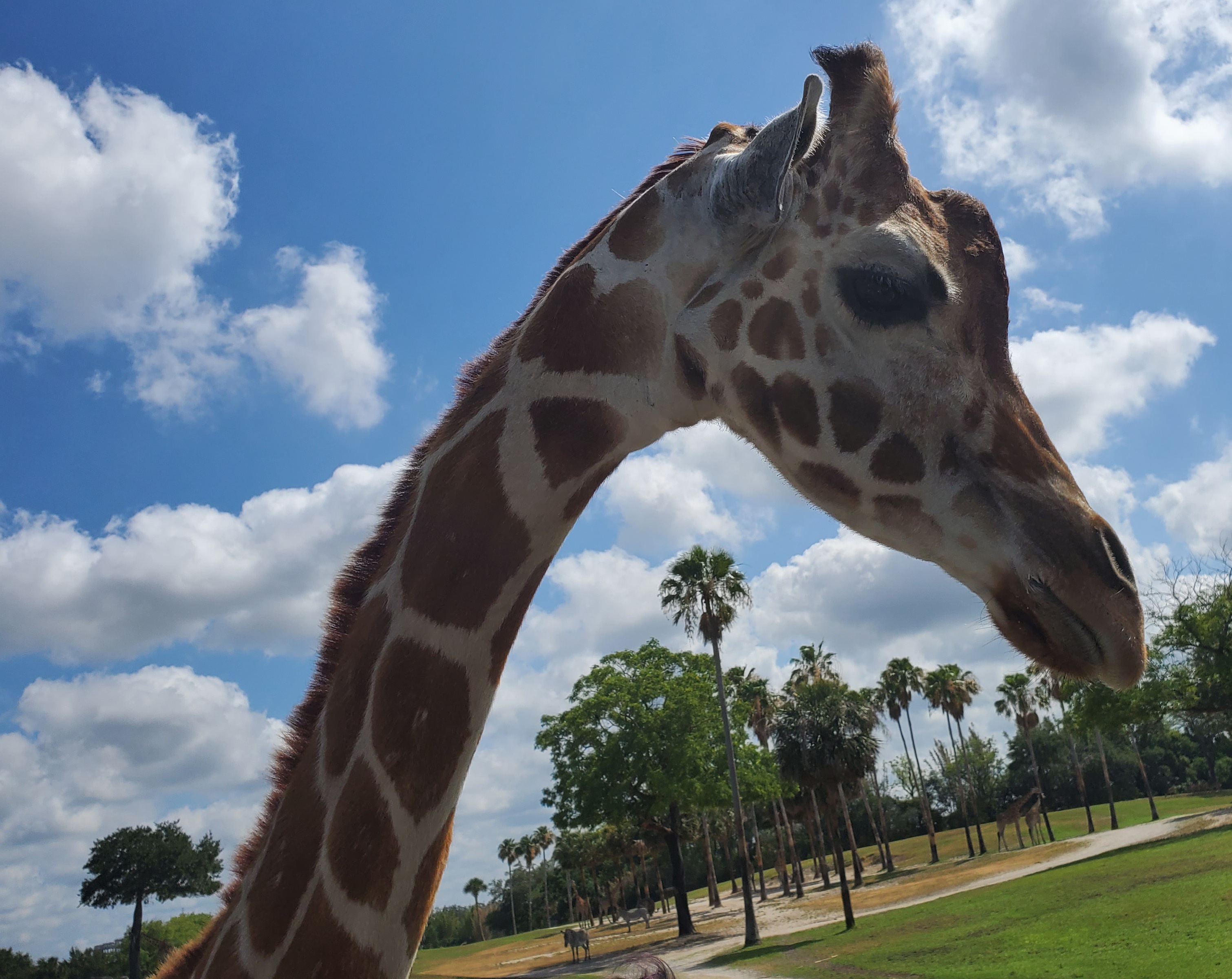
I’m not an expert in this area but, judging by the size and color of the spots, as well as the thickness of the lines between them, I believe the giraffe in the photo below is a reticulated (Giraffa reticulata). The genus comes from the Arabic zarāfah meaning “fast walker”, as they can walk quite fast with their six-foot long legs. The species name is clearly a reference to the reticulated pattern from which it gets its common name. Based on the lighter color of the spots, I think this one is quite young as the spots become a darker brown as they age.
From the tallest land mammal, I’ll transition to the largest and one that is indisputably regarded as charismatic – the elephant. There are two genera of elephant. The larger African elephant, pictured below, and the Asian elephant, which is differentiated from the African by several features, namely the ears. The African elephant has larger ears, which also happen to be the shape of the continent, whereas the Asian elephant has smaller ears. The African elephants have two different species which are discussed below.
Elephants are interesting creatures for multiple reasons. One, of course, is the large trunk which is incredibly powerful, yet also very maneuverable. I have personally seen them pick up a single peanut with the trunk barely touching the ground, and have heard stories of them picking up things as small as a grain of rice. Their skin is very thick, nearly one inch thick to be exact. Their skin is also full of wrinkles which retain water and, in addition to the heat lost from their large ears, helps keep them cool. As thick as their skin is, it is sensitive to sunlight. This is why you may notice elephants throwing dirt and mud on their bodies. Not only does this act as a natural sunscreen, it protects the skin from parasites as well.
Elephants are extremely intelligent and social creatures. They communicate in several ways, from their trumpet sounds to gestures. One of the most interesting is a very low vibrational sound. So low in frequency that humans can’t even hear it, these low sounds can travel very far distances and are believed to be a form of communication to lost herd members.
As you can imagine, the largest land mammal in the world needs to eat a lot. In fact, they are big eaters right form the beginning. Newborn calves drink over 2.5 gallons of their mother’s milk per day for the first six months before being slowly weaned off. Adult elephants eat nearly 300 pounds of grass, tree bark, and fruits per day and drink over 50 gallons of water.
The term “memory of an elephant” isn’t just an old wives tale. The temporal lobes of the brain (those responsible for memory) are enlarged in their already massive brains. There have also been reports of herds stopping at a spot where a heard member dies several years prior and appearing to mourn.
As such massive creatures, they essentially have no natural predators. A desperate predator may make an attempt every so often but are almost never successful. Yet 90% of the elephant population has disappeared over the past century. And, of course, it is from human poaching. Ivory is one of the main treasures for which these animals have been hunted. That’s why it’s always a good idea to stay away from anything ivory, even if it may be fake, to decrease the demand for it. Like the giraffe, there is an International Elephant Foundation to help with conservation efforts.
The African elephant has two species – the bush and forest elephants. Based on the shape of the ears and skin color, I think the one pictured below is the bush elephant (Loxodonta africana). The genus name comes from the lozenge-shaped molars, which differ from the round molars of the Asian elephant.

Another large, rather impressive land mammal that is quite charismatic is the rhinoceros. Of the five species of rhinos, one of the most interesting and common in zoos is the Indian rhino (Rhinoceros unicornis). The genus and common name come from the Greek ris meaning “nose” and keras meaning “horn of an animal”. The species name is a reference to the species having one horn, like a unicorn.
Rhinos are poached for their horns which are made of a special keratin (the same substance that makes up hair and fingernails). Despite there being no evidence that it works, the horn is believed to have special properties for use in Traditional Chinese Medicine. Unfortunately, this belief is enough for the demand for these horns to continue. The good news is that, although they are still endangered, the Indian rhino is a conservation success story. Their numbers were down to only 600 in 1975, but have since increased to over 2,200. While I tend to write about the animals I photograph, the Indian rhino isn’t the only one that needs conservation efforts. That’s why the International Rhino Foundation exists to help all rhinoceros species.

Part of an animal being charismatic is its relatability. As primates ourselves, other primates tend to be very relatable to us. There are three typical primates that you can see in a zoo setting. I’ll start with the largest – the gorilla. The taxonomy of gorillas gets a little bit confusing. There are only two species, each with two subspecies. However, the common and scientific names are so similar, they can be a bit overwhelming to try to explain. So I’ll just give a few facts about gorillas as a whole.
If you’ve been a loyal reader, you’ve probably noticed I like to find out where words come from. The story of where the gorilla gets its name is one of my favorites so far. It comes from the ancient Greek gorillae which means “a tribe of hairy women”.
Gorillas are the largest primates in the world. The size records include a height of 6 feet 5 inches tall and a weight of 590 pounds. And, while humans have an arm span the same as their height, a gorillas arms span closer to seven or eight feet. They can run up to 20 miles per hour with one individual clocked at 25 miles per hour. They are very intelligent as evidenced by Koko, the gorilla who knew around 1,000 words in sign language and showed signs of understanding about 2,000 words spoken in the English language. She is also the face of The Gorilla Foundation which seeks to provide help to these species which, in addition to the habitat loss and poaching, have been subject to diseases and parasites.

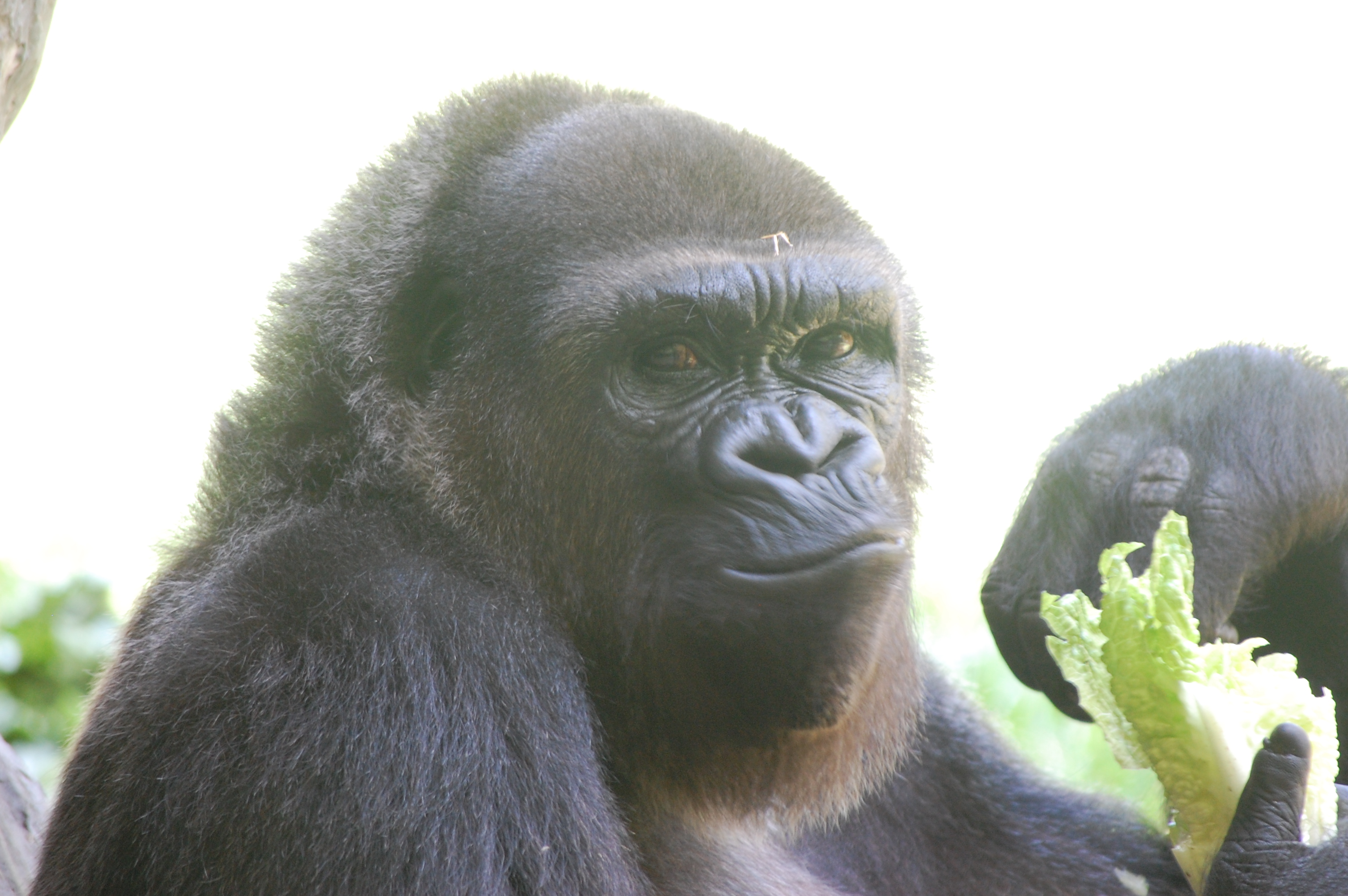
While my main motivations for sharing photos is to educate, inform, and hopefully inspire, I also love it when I can get a shot that is just plain entertaining. I always wonder what some of these smarter animals must think when they see us get excited about them doing their normal everyday routines. The face on this guy says it all.
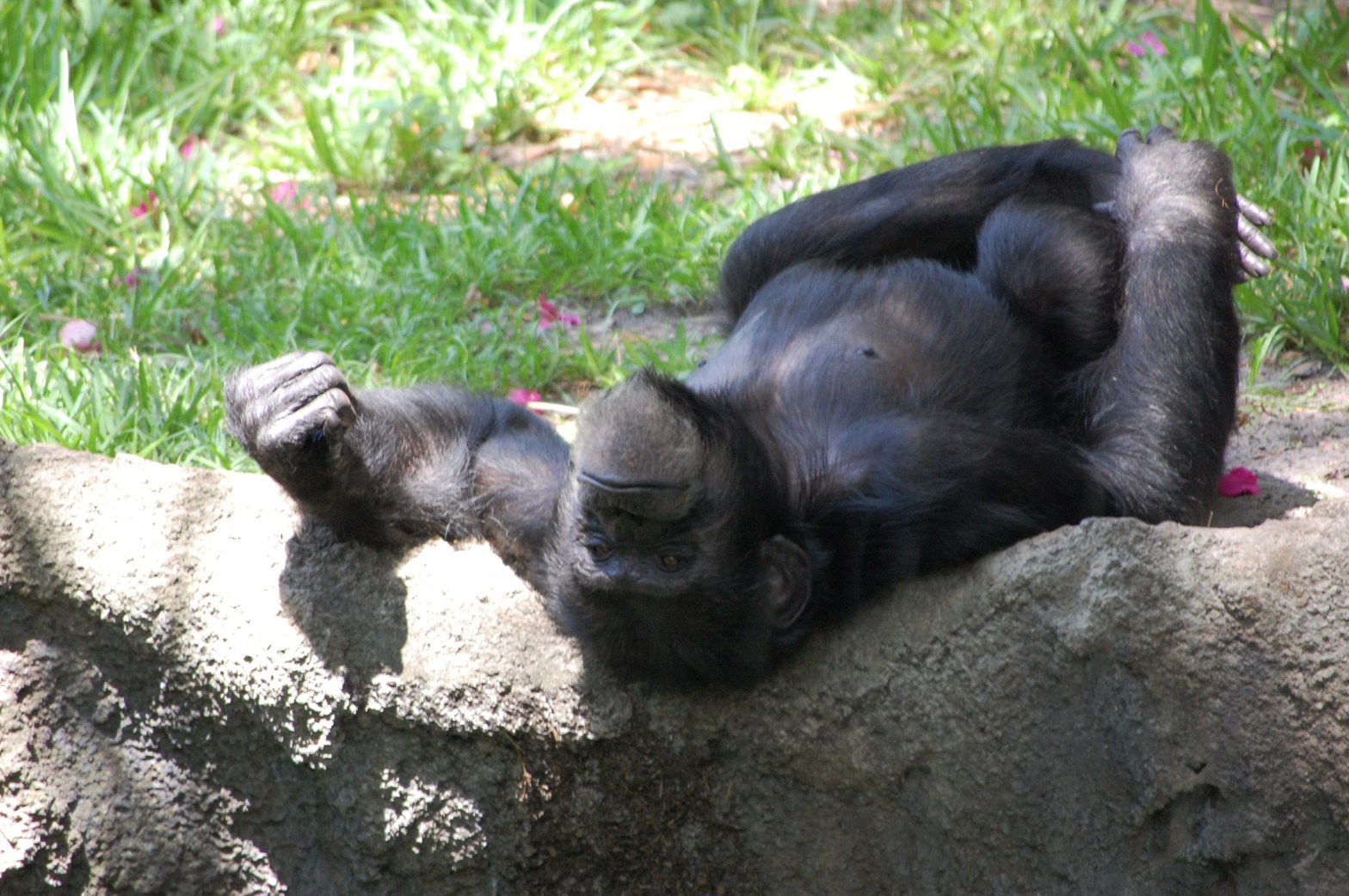
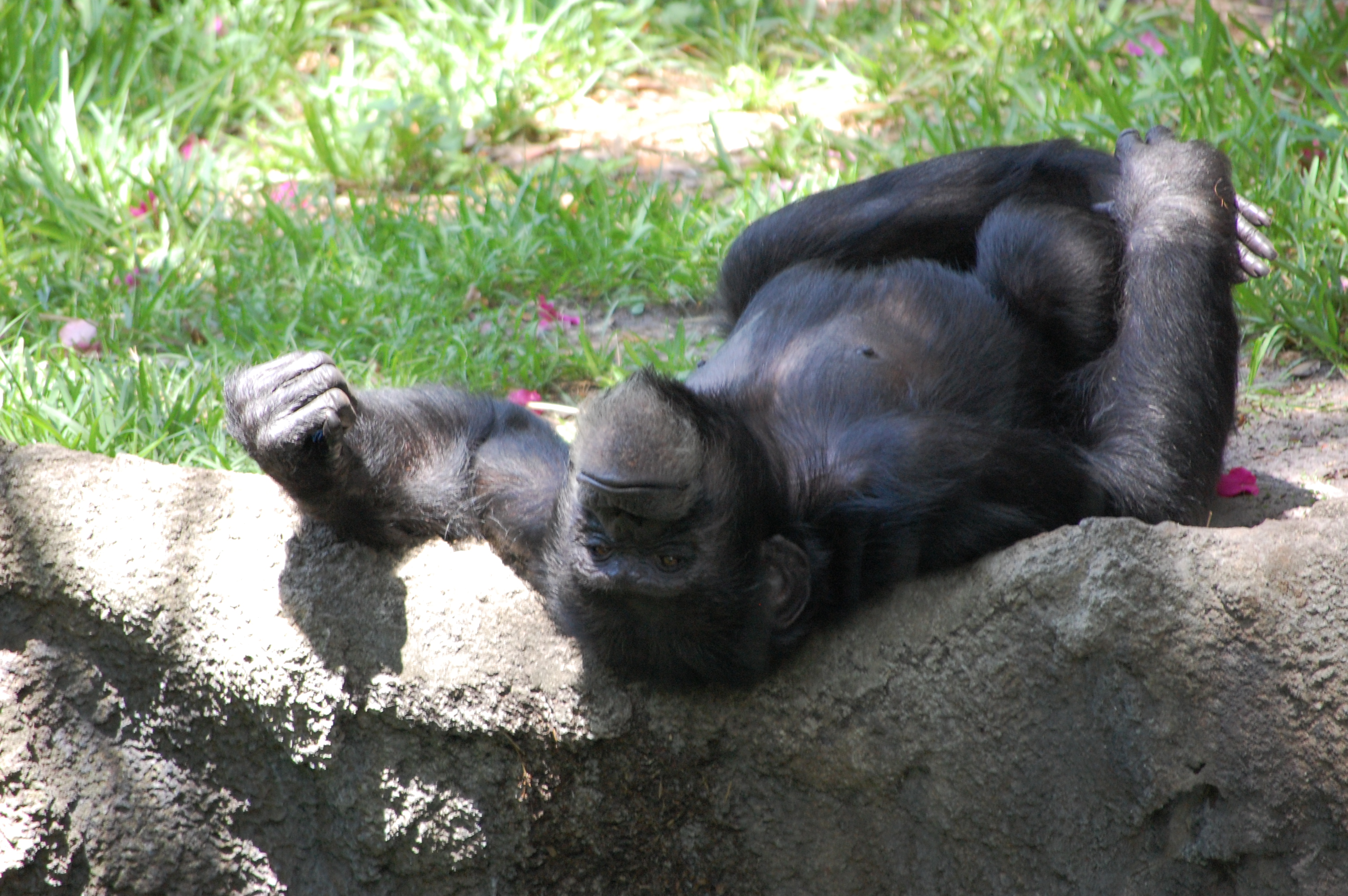
Another primate that is actually the mostly closely related to humans genetically is the chimpanzee (Pan troglodytes). The common name comes from chimpenze which comes from an African language known as Tshiluba and simply means “ape”. While I couldn’t find why this was used, the genus is a Greek god with torso of a man and the hindquarters of a goat that watches over shepherds. The species name comes from the Troglodytae, a mythical group of cave dwellers.
Being so closely related to humans, they have many of the same mannerisms which can make them very entertaining to watch. At the local zoo where I used to work, there used to be one chimp that liked to stick his hind end out at people, then smile widely and applaud himself. Their intelligence has been documented by their use of tools, including using large leaves like umbrellas.
With habitat loss being the main threat to this species, The Jane Goodall Institute is one of the main groups looking to provide conservation efforts for this species. Other threats include hunting and capturing for use in zoos and medical research.
A final primate, and one whose young provide for some very entertaining antics, is the orangutan. Specifically, I believe this one is the Bornean orangutan (Pongo pygmaeus). The genus is from a Bantu word mpongo meaning “large primate”. The species name comes from the Greek pygmy meaning “dwarf”. The common name is from the Malay words orang hutan meaning “human of the forest”.
Orangutans rely heavily on trees and spend much of their time in them to protect them from the ground-dwelling predators below. As a result, deforestation is the main threat to this species, with 80% of the habitat lost just in the past 20 years. There were fires in the late 90’s that also estimated to have taken 1/3 of the population. The Orangutan Conservancy is working to slow these devastating rates.
I mentioned that young orangutans can be very entertaining. This one in particular was quite a ham for the cameras. I feel like he or she was enjoying us as much as we were them.


 BJ Quinton